
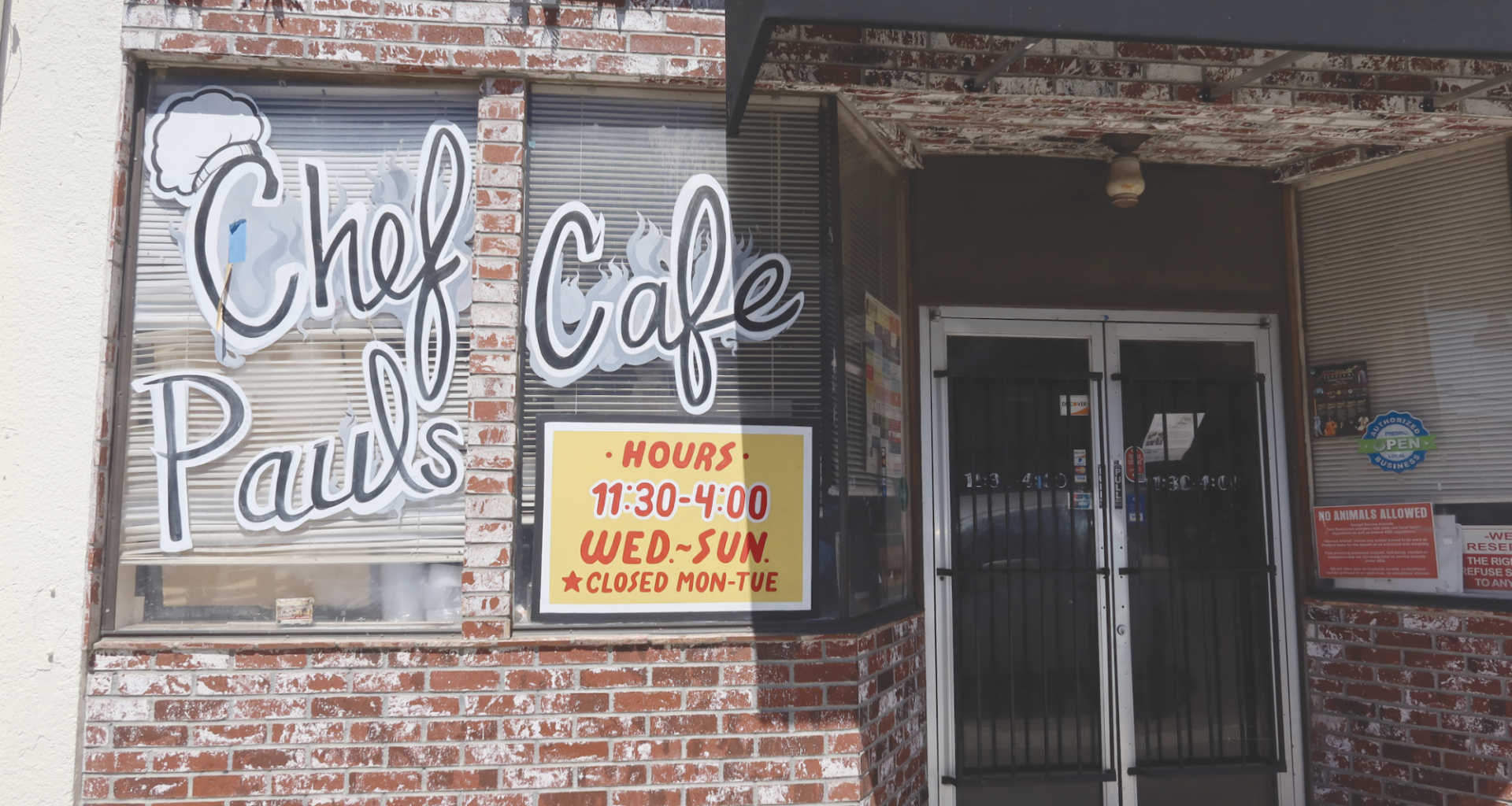
Someone once bet Chef Paul Pearson $1,000 that he couldn’t make a restaurant work in Fresno’s Chinatown.
At the time, Pearson wasn’t planning to open one. He had owned restaurants elsewhere in Fresno and was only looking for a kitchen where he could operate his catering business.
Then came the bet.
“I said, OK,’” Pearson said. “We open in two weeks.”
Eighteen years later, the person who made that bet would have lost.
Chef Paul’s Cafe has become known for Southern cooking and customers willing to travel beyond their own neighborhoods for lunch. Pearson said people come from Visalia, Porterville and even the Bay Area. Some Fresno State students may know him from the years he prepared meals for the university’s football team.
Still, many students may not know his restaurant sits in Fresno’s Chinatown. Some may not know that Fresno has a Chinatown at all.
That’s the generational gap Morgan Doizaki, owner of Central Fish Company, hopes to close.
“You ask them a simple question,” Doizaki said. “‘Did you know there’s a Chinatown in Fresno?’ And they have no idea.”
Ask their grandparents, however, and the answer may be completely different.
“They’ll tell you fabulous stories about Chinatown,” he said. “It’s just the new generation. There’s a gap that needs to be filled.”
That gap is about more than knowing the name of a neighborhood. It’s the distance between a city’s history and the people inheriting it.
At Central Fish Company, that history is carried through three generations of family ownership. Around the corner, Chef Paul’s represents a newer chapter, showing that Chinatown is not only a place where history is preserved, but also one where new traditions continue to form.
Together, the two businesses challenge the idea that Chinatown belongs only to Fresno’s past.
A neighborhood built across boundaries
Fresno’s Chinatown developed west of the railroad tracks, where Chinese residents and other communities facing discrimination established businesses, gathering places and institutions.
Doizaki describes the neighborhood as a shared center for Chinese, Japanese, Filipino, Black and other communities that were not always welcomed elsewhere in Fresno.
“If you were nonwhite, you couldn’t own a business on the other side of the train tracks,” he said. “We called this our downtown.”
That multicultural history is embedded in Central Fish Company.
Doizaki said his great-uncle, Akira Okomi, founded the business in 1950, beginning with a smaller store down the street from its current location. Another Japanese-owned fish market already operated in Fresno, and Okomi did not want to take business away from it.
Instead, he began serving customers from Fresno’s Black, Mexican, Filipino and other communities.
“If he would’ve focused on just Japanese, I don’t think we would still be here,” Doizaki said.
Central Fish remains a Japanese grocery store, seafood market and restaurant, but the people moving through it reflect the neighborhood Okomi served.
“From a judge to a lawyer, to a homeless person, to Black, white, Asian, we’re kind of mixed with everything,” Doizaki said. “It’s so special here.”
The store does not look like it was designed for social media. Doizaki acknowledges that it is older. But that is part of what he wants first-time customers to understand: They are not walking into a newly constructed version of the past. They are entering a business that has lived through it.
He wants visitors to recognize that they are standing in a historic neighborhood and pay attention to the people who continue gathering there.
For Doizaki, keeping the store open is personal.
His great-uncle and his wife did not have children. After Okomi was killed at the store, the business eventually passed to Doizaki’s father. Today, Doizaki represents the third generation of the family carrying it forward.
“To see it still being kept in the family, I think he would have been really proud of that,” Doizaki said. “He just worked his butt off.”
Central Fish is more than its history. Customers still come for fresh seafood, groceries and meals such as fish and chips, keeping a business that has been part of Chinatown for generations alive today.
Around the corner, another business shows that Chinatown is still making room for new traditions.
Taking the bet
Chef Paul’s Cafe does not carry the same generational history as Central Fish. Its 18 years in Chinatown are relatively recent compared with a business founded in 1950.
But that difference is exactly what makes the restaurant important to the neighborhood’s story.
Central Fish represents an inherited legacy. Chef Paul’s shows how Chinatown can continue creating new ones.
When Pearson opened the restaurant, he wanted customers to feel transported from the environment outside its doors.
“One of the things I wanted to do was take people out of the environment out there,” he said. “When they walked in, they got that Southern feel.”
Pearson believes outsiders often carry misconceptions about Chinatown.
“I don’t think the neighborhood is as bad as they say it is,” he said.
His experience in the neighborhood has also shaped how he sees the people around him. Pearson said he has loaned money to people who asked him for help and that most returned to repay him.
Inside, his connection with customers is easy to see.
During a quiet afternoon at Chef Paul’s, Pearson called out to an older couple as they prepared to leave.
“Thank you, guys,” he said.
“We’ll be back,” the woman replied.
She explained that a friend and her husband visited often and had recommended the restaurant. She had been searching for Southern food because she grew up eating it.
“If there’s something you think you’d like to have, if you call me a day in advance, I’ll make it,” Pearson told her.
The couple had driven from Kingsburg.
“Thank you for traveling here,” he said.
The goodbye turned into a longer conversation. Before leaving, the couple began recommending even more restaurants to try.
It was a small interaction, but it showed why people return. Customers may initially arrive for fried chicken, BBQ combo or another taste of Southern cooking, but the experience does not end with the plate. Pearson remembers people, talks with them and makes their presence feel noticed.
That is how a restaurant becomes part of a neighborhood.
It is also how a neighborhood often overlooked by outsiders continues drawing people from across the Valley.
What students may be missing
Fresno State students are often encouraged to explore the city beyond campus, but the same few destinations tend to dominate the conversation. River Park, the Tower District and Old Town Clovis are easy to name.
Chinatown is easier to overlook.
It is also easy to understand why. There are empty buildings, signs of years of neglect and people experiencing homelessness. Those are real parts of the neighborhood and should not be ignored.
But they are not the whole story. People still work here, run businesses and welcome customers every day.
It also misses part of what makes Fresno, Fresno.
At Central Fish, a Japanese American family business survived in part because its founder served Black, Mexican, Filipino and other customers. At Chef Paul’s, a Black chef opened a Southern restaurant after someone doubted it could succeed there and built a loyal customer base far beyond Chinatown.
These stories do not fit neatly inside one cultural label.
That is the point.
Chinatown became a home for communities that lived and worked alongside one another. Its identity was shaped not by one group alone, but by generations of people building businesses and relationships in the same neighborhood.
For students, learning that history does not have to feel like an assignment. Sometimes it begins by walking into a grocery store that has served Fresno since 1950.
Sometimes it begins over lunch with a chef who said that, as a sixth grader, he wanted to be a chef, a hit man or a minister. He joked that all three have to know their customers.
Pearson chose cooking.
It appears he was right about knowing his customers.
Looking toward the tracks
Standing outside Central Fish today, the neighborhood’s past and future are visible at the same time.
Older buildings are reminders of the communities that once made Chinatown one of Fresno’s busiest neighborhoods. Nearby, construction for California’s high-speed rail project shows how much the area could change again.
Doizaki hopes that change means Chinatown has not been permanently forgotten.
“You can see the past,” he said, “and if you look toward the tracks, you can see the future.”
What that future looks like for the people and businesses already there is still unclear. New development may bring more people to Chinatown, but longtime businesses like Central Fish are what continue to connect the neighborhood to its history.
A neighborhood continues through the people who choose to carry its stories, operate its businesses and keep walking through its doors.
Central Fish Company has done that for generations.
Chef Paul took a $1,000 bet and gave people another reason to return.
Now, the next chapter may depend on whether a younger generation learns to see Chinatown not as a place Fresno left behind, but as a place still helping define what Fresno is.