
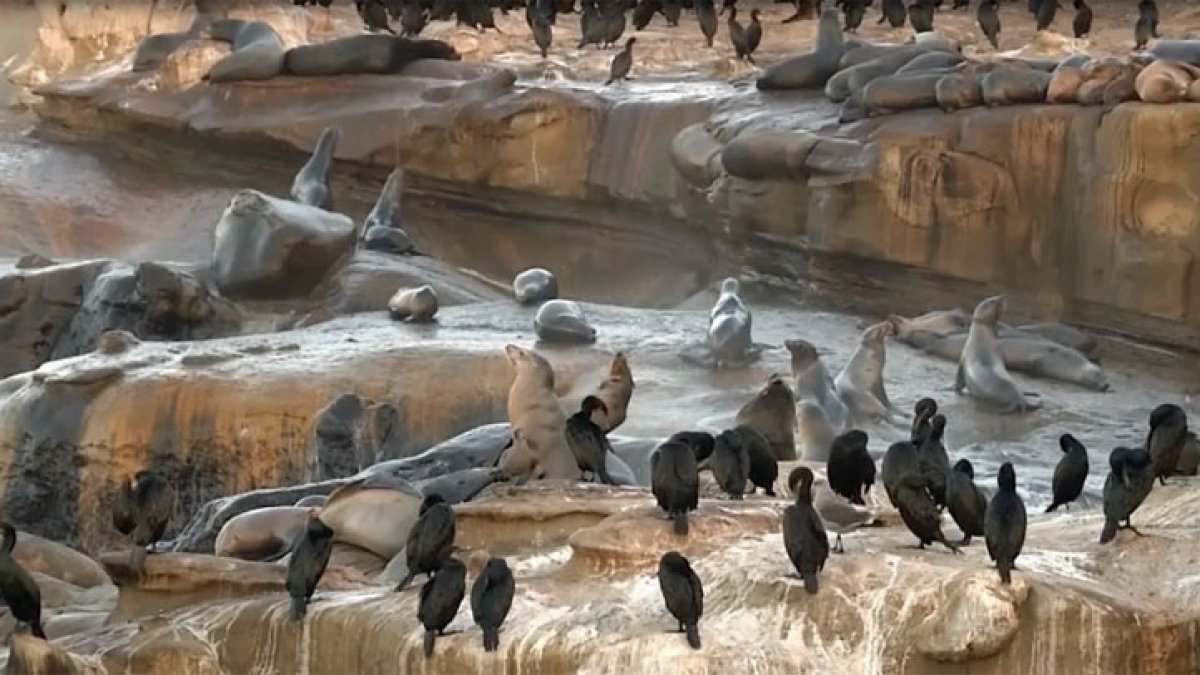
A La Jolla community group is asking the city of San Diego to restrict access to La Jolla Cove during peak sea lion pupping season, a proposal that follows incidents of animal abuse and growing debate over how best to protect the federally protected animals.
The La Jolla Parks and Beaches Commission, a five-person volunteer board, is proposing that La Jolla Cove be restricted to water access only from June through mid-September. The proposal was discussed Monday during a crowded and contentious community meeting where more than a dozen speakers weighed in on protecting the Cove’s more than 300 sea lions.
The meeting followed viral video including one showing 18-year-old, Tyler Muehl, hitting and kicking a sea lion at the Cove.
Community members disagreed over who bears responsibility for incidents involving the animals and what should be done to prevent them.
“Let’s go after the tour buses! Make a requirement for them to educate,” one person said during public comment.
A former marine biologist addressed people who want the sea lions removed, holding photos of 80,000-year-old sea lion fossils found above the Cove.
“I know a lot of you say you’ve been swimming since 1979. Guess what? They’ve been here longer. They belong. They should not be removed,” she said.
“I hear a lot of divisiveness right now and a lot of very strong opinions from people who have no skin in the game,” said another person during public comment. “They either want to keep the cove open and they don’t care about the animals, and they see the animals as an invasion. Or they blanket want to close the cove.”
The La Jolla Parks and Beaches Commission’s proposal seeks a compromise, asking the city to restrict La Jolla Cove to water access only from June through mid-September, when sea lion pupping is at its peak.
Sea lions are federally protected under the Marine Mammal Protection Act. City council representatives said that makes enforcement at the city level more challenging, but they are open to discussion about possible next steps.
This story was originally reported for broadcast by NBC San Diego. AI tools helped convert the story to a digital article, and an NBC San Diego journalist edited the article for publication.