
At Folsom Lake College’s main administrative building, a flier on the wall tells students living in the country without legal status that “You can still go to college in California even with the current political climate.”
“Keep going,” it says. “You are not alone.”
Nearby is Alicia Alejo’s office at the community college’s Undocu-Falcons Center, where she helps undocumented students access pro bono legal consults, mental health appointments, food pantries and financial aid. But during the Trump administration’s mass deportation campaign, she said, the students she serves are keeping a low profile, sometimes opting for online classes and rarely getting involved with campus life.
“I haven’t encountered a student that’s been very, you know, loud and proud,” she said.
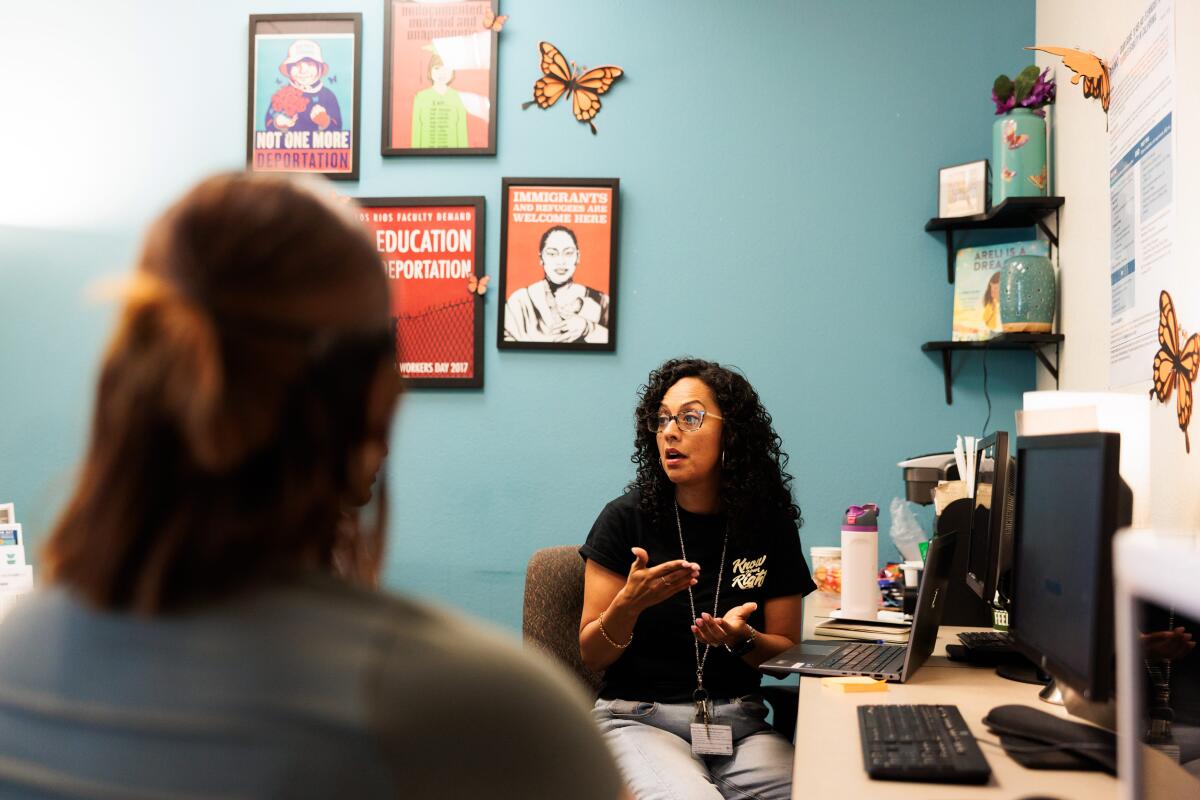
Alicia Alejo, a Folsom Lake College student support specialist, meets with a student in the Undocu-Falcons office for undocumented students.
(Max Whittaker for The Hechinger)
In recent years, California has become an exception nationally for the opportunities it offers undocumented college students. Among the key support: The state provides most young undocumented residents with access to in-state tuition and offers state-based financial aid for those students, through the California Dream Act. Community college enrollment fees are covered; schools are required to have specialized staff who can guide undocumented scholars.
But amid President Trump’s aggressive immigration enforcement, state financial aid applications from undocumented students have dropped. Meanwhile, state policymakers’ innovations to support immigrant students sometimes have proven more difficult to execute than to enact, leaving many students struggling to pursue higher education.
Last academic year, there were 35,949 applications from undocumented students seeking state financial aid, down from nearly 50,000 five years earlier, according to the California Student Aid Commission. And researchers found that between 2016 and 2022, the number of low-income undocumented students enrolling at the University of California and California State University systems dropped by half.
Experts and educators attribute the declines in part to the pandemic and to Trump’s immigration enforcement during his first and second terms. Also, the Deferred Action for Childhood Arrivals, or DACA — the Obama-era program that de-prioritized young immigrants for deportation and granted them employment authorization — is no longer available to first-time applicants, making it harder to envision a career of lawful employment after college.
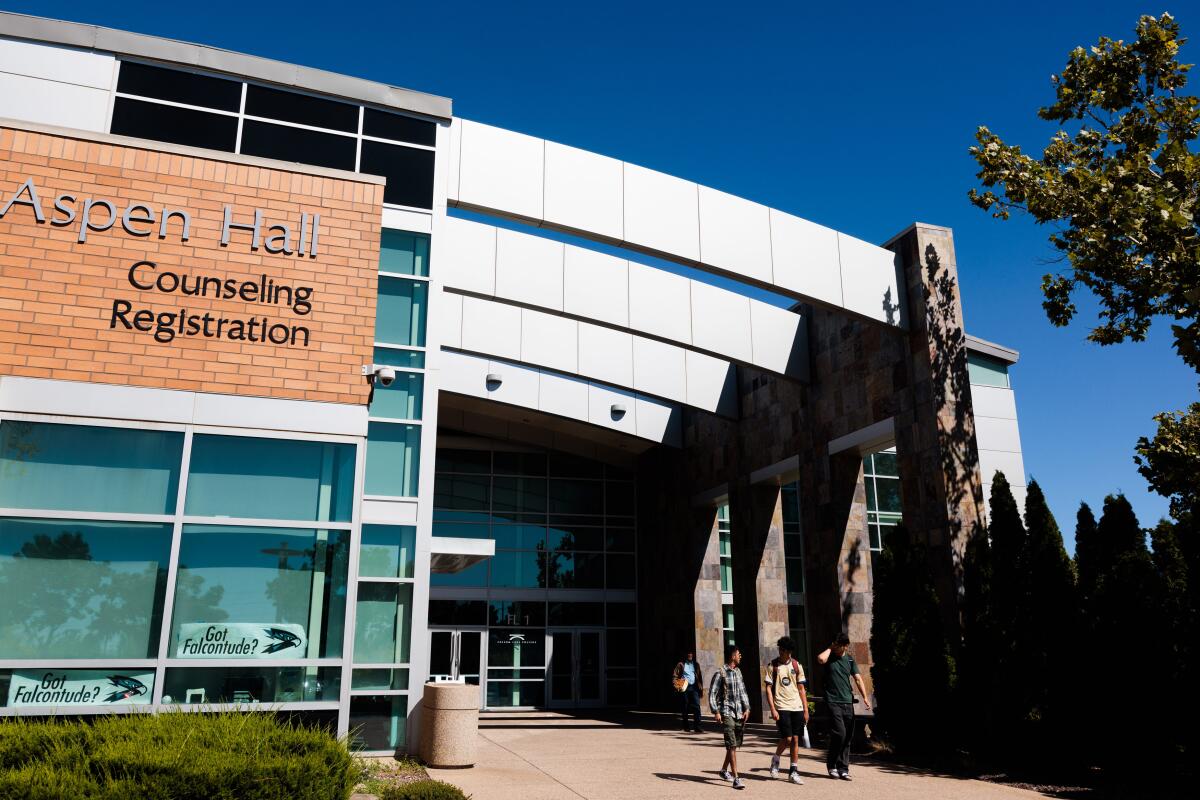
Undocumented students at Folsom Lake College, pictured here, have become less “loud and proud,” student support specialist Alicia Alejo says.
(Max Whittaker for The Hechinger)
At the same time, the Department of Justice has sued California and 16 other states over their tuition support for undocumented scholars, which policy experts say is making families more hesitant to have their children pursue a college degree. The case in California is ongoing.
One student’s experience
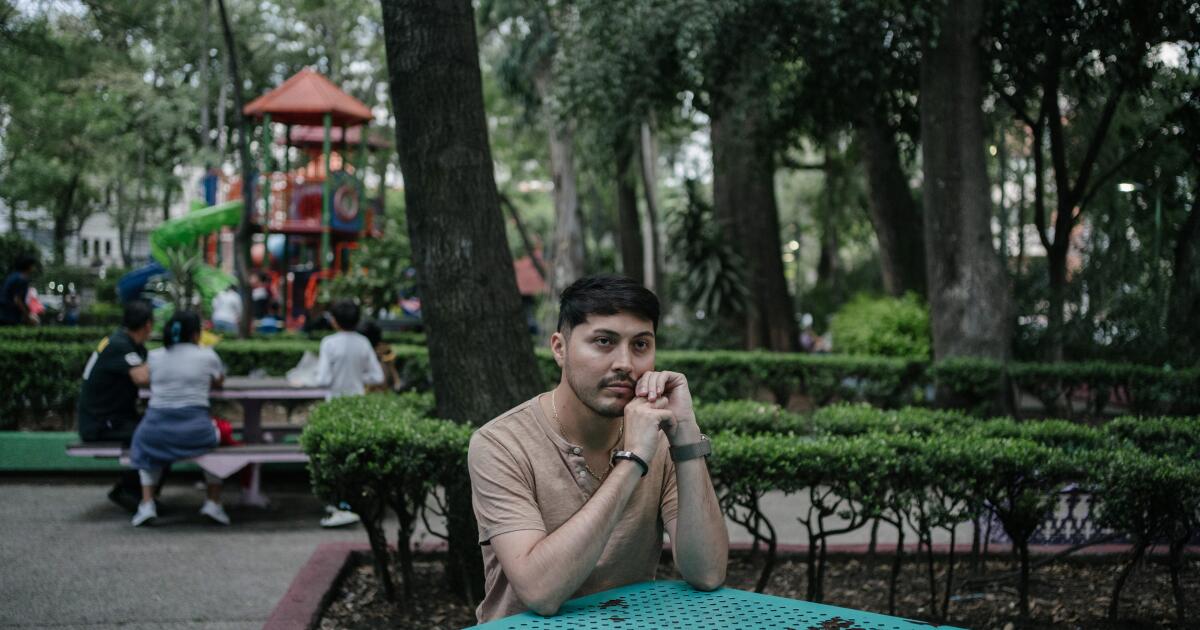
When Christian Espinoza immigrated to the Inland Empire from Mexico at 9 years old, he quickly learned English and graduated from high school among the top 10 students in his class. After studying at a community college, he transferred in 2015 to UCLA, where California Dream Act grants and institutional aid helped him earn dual degrees in sociology and computer science.
While attending UCLA, Espinoza was surrounded by resources for undocumented students like him: scholarships for commuters, designated housing near campus and a program called the UndocuBruins Fellowship that paid scholars to do original research projects.
“I felt like, I belong, because there was something for me I can tap into, something I can get paid and get money for, and someone that I can talk to about my experience,” Espinoza recalled.
After graduation, Espinoza went on to a master’s program before pursuing a PhD at Claremont Graduate University researching undocumented students’ career aspirations at community colleges in Southern California.
In October 2024, he said, he was on his way to school when he was stopped at an Immigration and Customs Enforcement checkpoint in San Bernardino and detained for a month. After his release, he applied for asylum based on being an openly gay man in Mexico, where homophobic violence historically has been common.
But within a year, after Trump retook the White House, he said he was told during immigration proceedings that he could leave the U.S. on his own or be deported. Without a better option, he decided to leave.
Espinoza finished his doctorate and virtually “walked” at his graduation ceremony from his new home in Mexico City. Now, he is having trouble finding a job within Mexico’s different higher education structure, and his dreams of becoming a college administrator are on hold.
“It’s not that I’m lazy or unmotivated or not educated,” Espinoza said. “It’s a system that’s in both countries working against me, and I’m trying to figure out where I fit in.”
Limited options without work permits
Students and graduates have had to contend with the lack of work permits as they try to secure internships and jobs. In response, California universities and state lawmakers have created professional development opportunities that don’t require federal employment authorization.
For example, officials at Dream Summer, run by the UCLA Labor Center, have provided more than $6 million in fellowship awards for around 1,000 students working at social justice organizations.
The UC system does not put undocumented students on its payroll. Advocates have pressed UC for years to hire students who lack federal work authorization. A state appeals court said last year that UC’s policy of refusing to do so discriminates on the basis of immigration status and ordered the university to reconsider its practice.
The state Supreme Court declined to hear the case, leaving the lower court ruling in place. But the lower court did not require UC to hire undocumented students, and UC has not changed its policy.
Some advocates and lawmakers want to implement access to campus jobs statewide, proposing legislation that would allow undocumented students to work at their colleges and universities, even without permits. Champions of the bill say it could encourage more students to attend college and potentially even give them access to state jobs after graduation.
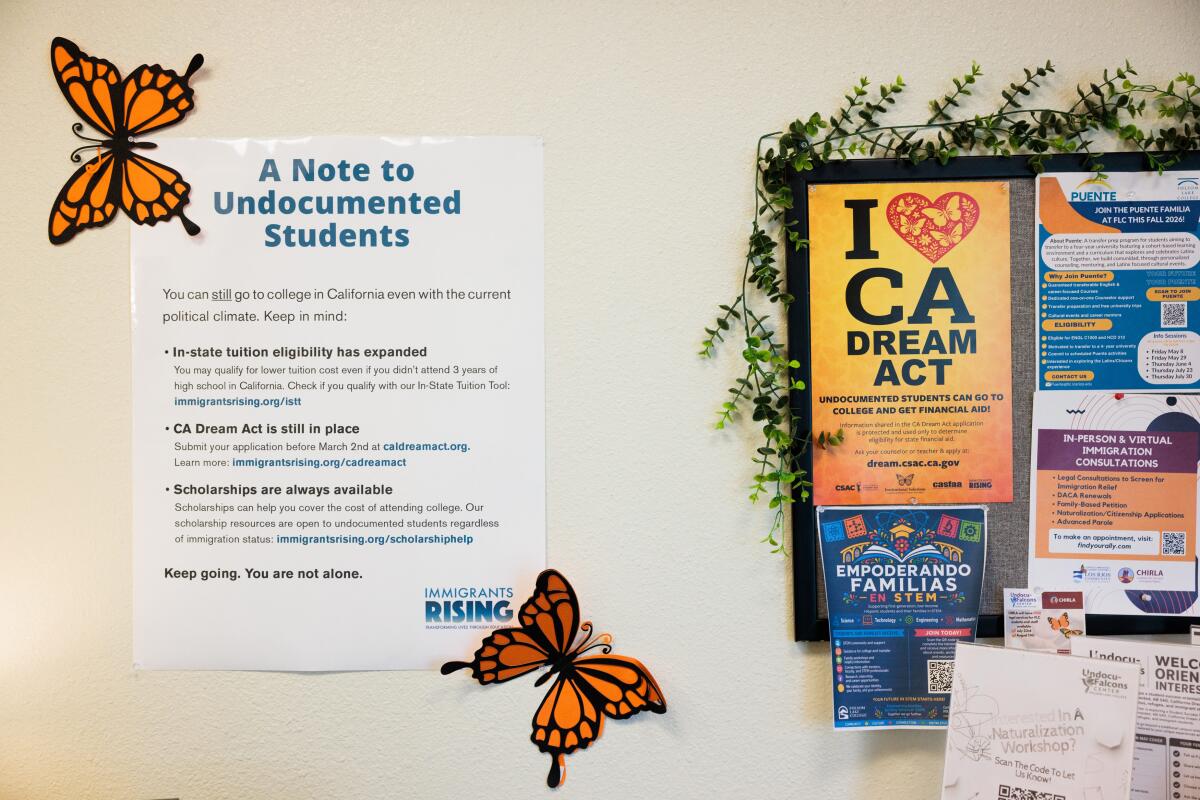
Signs supporting undocumented immigrants in the Undocu-Falcons office on the Folsom Lake College campus in Folsom.
(Max Whittaker for The Hechinger)
Educators in California also are helping students build entrepreneurial skills, as people without lawful immigration status legally can operate their own businesses in the U.S. In 2020, state lawmakers approved a grant program specifically helping immigrants and others “who face significant barriers to employment” to start or maintain a business.
Experts hope these kinds of initiatives will keep undocumented students going to college, despite the federal landscape, and warn about the loss of their potential talent if not.
“Could they have become the next doctors, the next researchers, the next trailblazers, the next person who finds something in a corner of a universe that we never knew about?” asked Parshan Khosravi, California policy director at uAspire. “Yeah, I think so.”
Villarreal writes for The Hechinger Report, which produced this story and is a nonprofit, independent news organization focused on inequality and innovation in education. Times staff writer Jaweed Kaleem contributed to this story.