
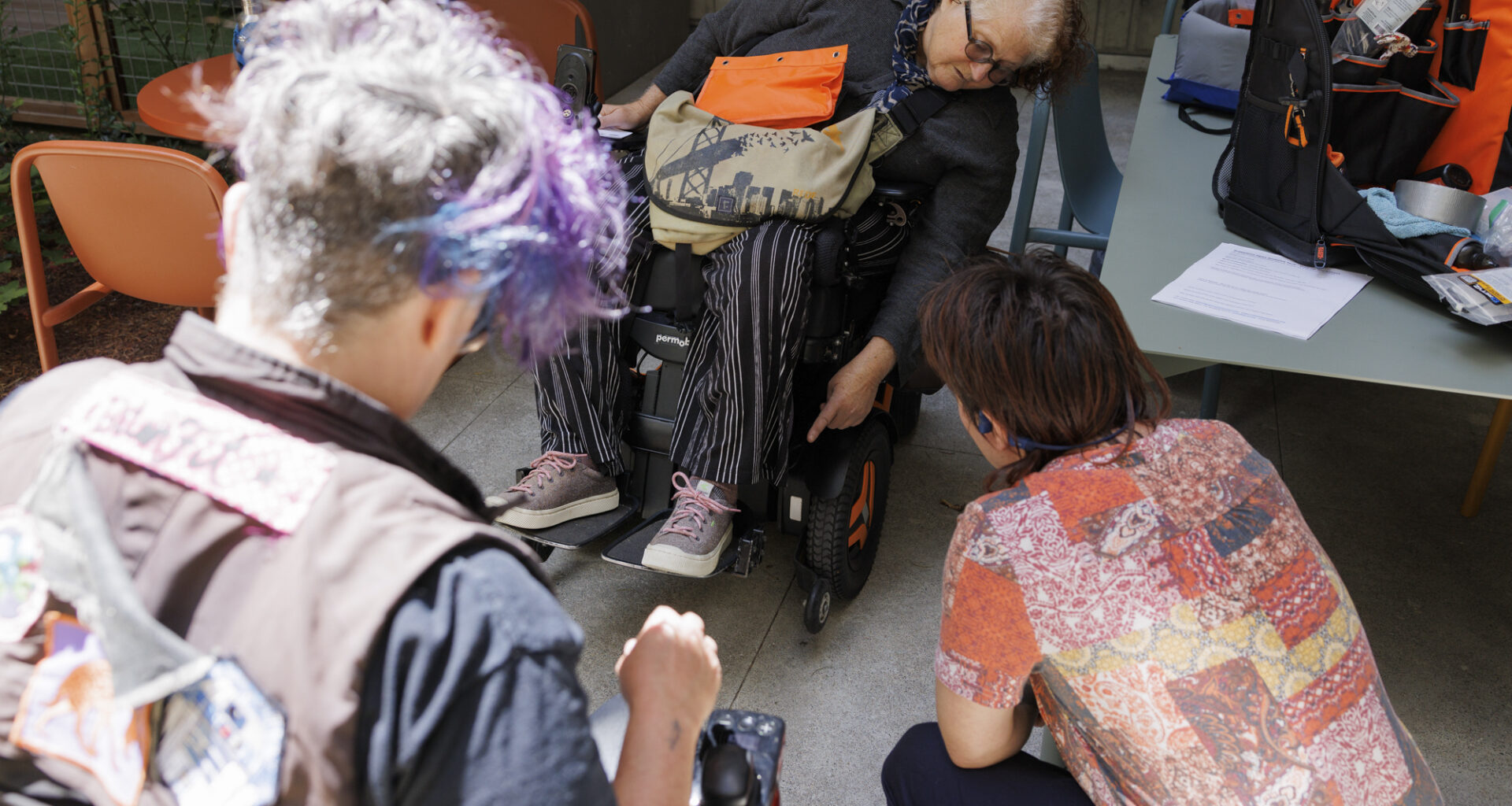
People come to fix loose armrests and squeaky wheels. They often leave with a newfound sense of community.
Aug 25, 2026
Updated 9:39 am PT
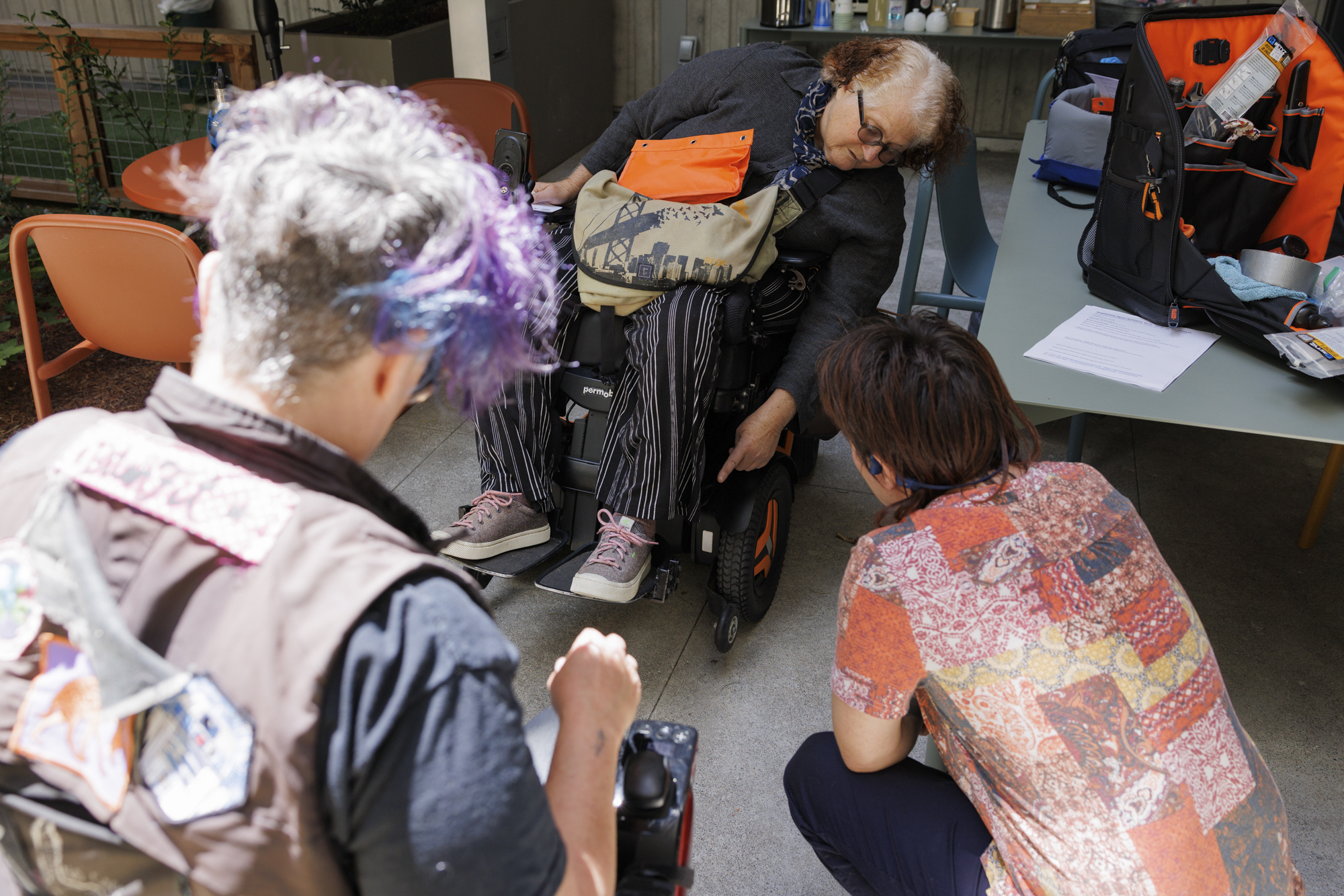
Rena Fischer (center) describes an issue she has with her powerchair at the Grassroots Open Assistive Tech Tune-Up Tuesday event at the San Francisco Disability Cultural Center on August 4, 2026, in San Francisco. (Miles Cull/KQED)
Everyone could tell that Kristina Moreno was uncomfortable. Her chair obviously didn’t fit her body well. And everybody wanted to help.
“Did you get that through insurance?” someone asked. The answer was far more complicated.
For the past week, Moreno had been using a powerchair her unhoused neighbor left behind when an ambulance took him away during a health crisis. She only knew his first name, but every night, Moreno charged the man’s chair inside her apartment. She was there when he suddenly needed medical care one afternoon.
While Moreno supported him that day, a passerby stole her chair, so she felt she had no choice but to use her neighbor’s much smaller one. Every day since, she’s wondered when he might return and whether she can finally convince Medi-Cal to replace her stolen chair before that happens.
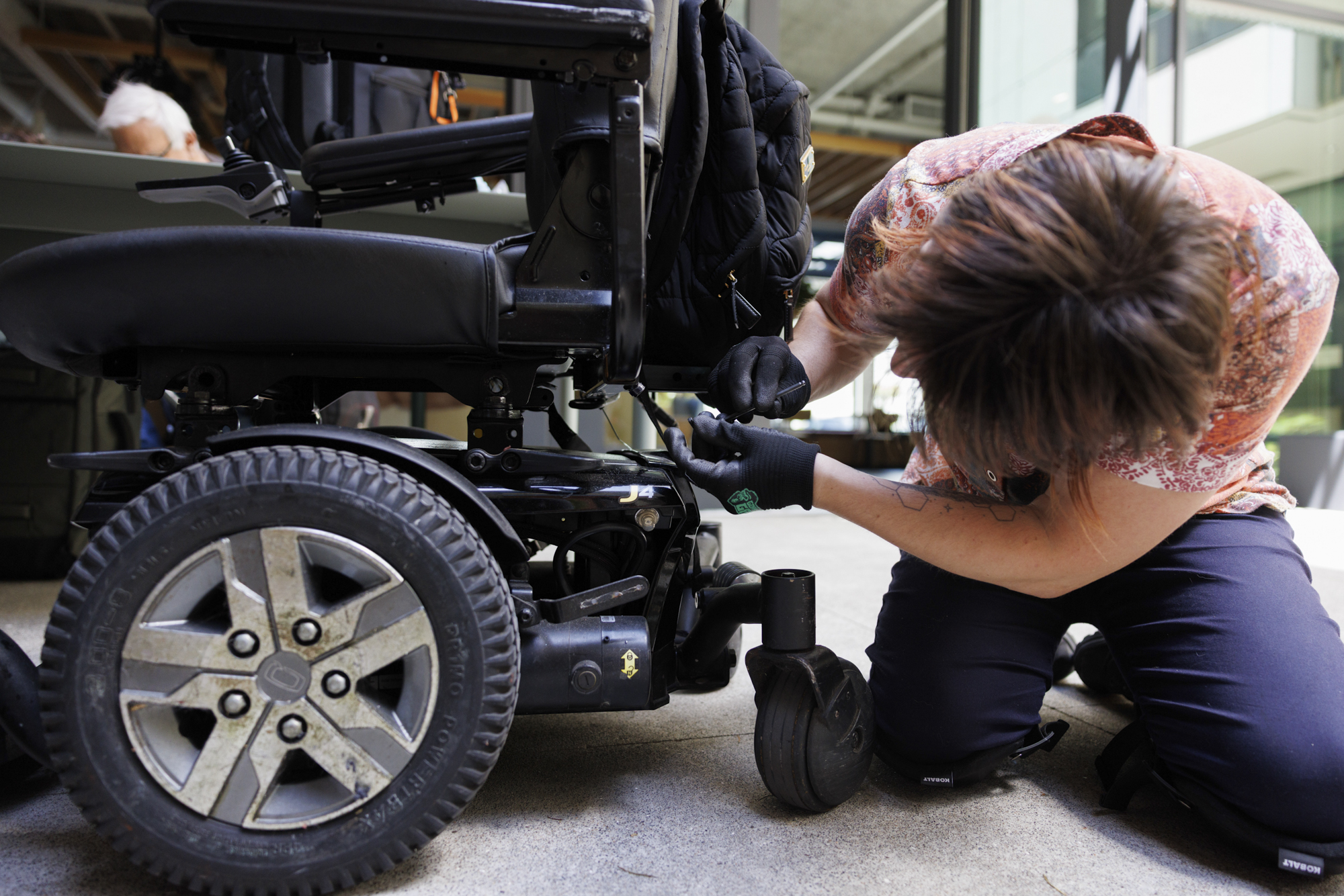 Olga Prilepova adjusts the armrest height of Kristina Moreno’s borrowed powerchair at the Grassroots Open Assistive Tech Tune Up Tuesday event at the San Francisco Disability Cultural Center on August 4, 2026, in San Francisco.
Discussing difficult experiences while tending to equipment repairs is at the core of Tune-Up Tuesdays. The monthly repair event is held at San Francisco’s Disability Cultural Center, or DCC. Tune-Up Tuesdays are organized by Grassroots Open Assistive Tech, or GOAT, a nonprofit working on projects at the intersection of do-it-yourself repair and reuse, open source hardware and software, and disability justice. In addition to the DCC, GOAT partners with regional organizations serving similar needs, such as the Independent Living Resource Center of San Francisco (ILRCSF).
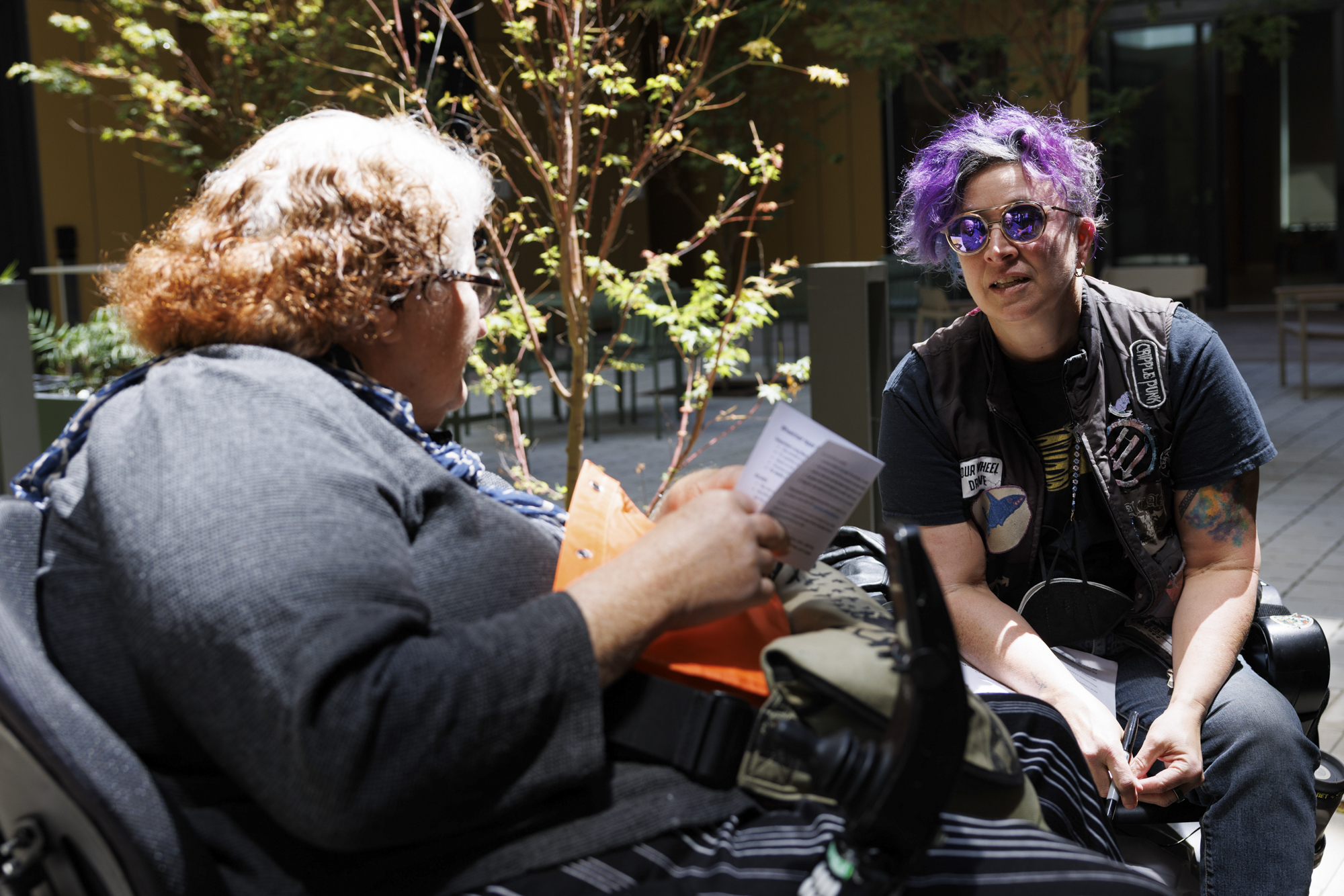 GOAT executive director Liz Henry (right) speaks with Rena Fischer (left) about her powerchair at the Grassroots Open Assistive Tech Tune Up Tuesday event at the San Francisco Disability Cultural Center on August 4, 2026, in San Francisco.
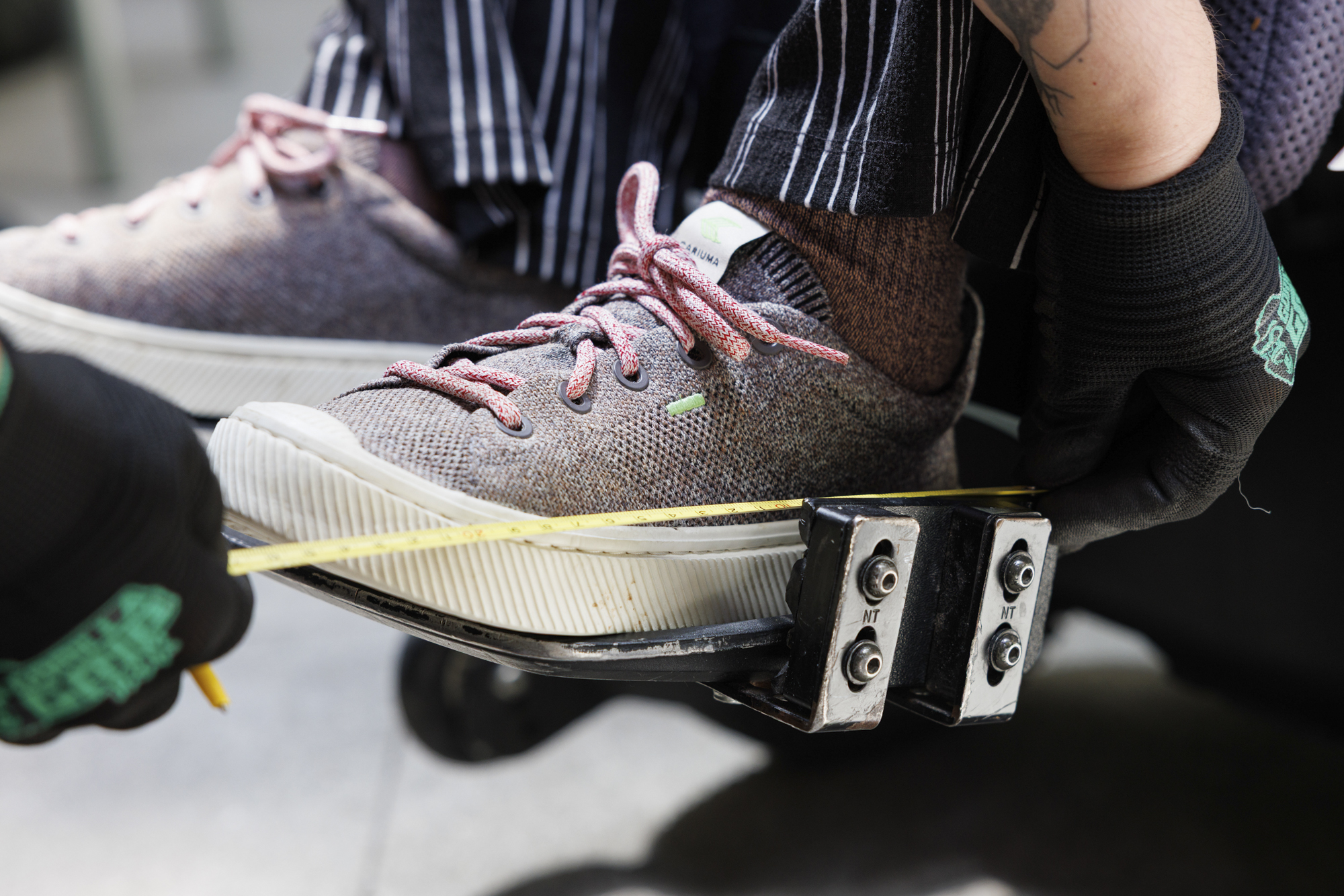 Olga Prilepova measures the footrest of Rena Fischer’s powerchair to make a modification at the Grassroots Open Assistive Tech Tune Up Tuesday event at the San Francisco Disability Cultural Center on August 4, 2026, in San Francisco.
The same ethos powers GOAT’s physical space in downtown Oakland, which is now open weekdays 10 a.m.–4 p.m. Tucked behind The Bookmark Bookstore, the GOAT space serves as a storage area and distribution center for free devices and accessories, as well as a workshop for maintenance and enhancements. Henry urged Fischer to visit the following week, to discuss her footrest modification and to volunteer. Fischer insisted she would. “I’m useful,” she emphasized.
On her way out, Fischer picked up one of GOAT’s free toolkits. The take-home kit includes tools for simple upkeep and to prevent anyone from becoming stranded if their device malfunctions or breaks. Every colorful fabric pouch contains small wrenches, a tiny bottle of machine oil for lubricating wheels and bearings, and fasteners including cable ties, strong paracord and sturdy tape.
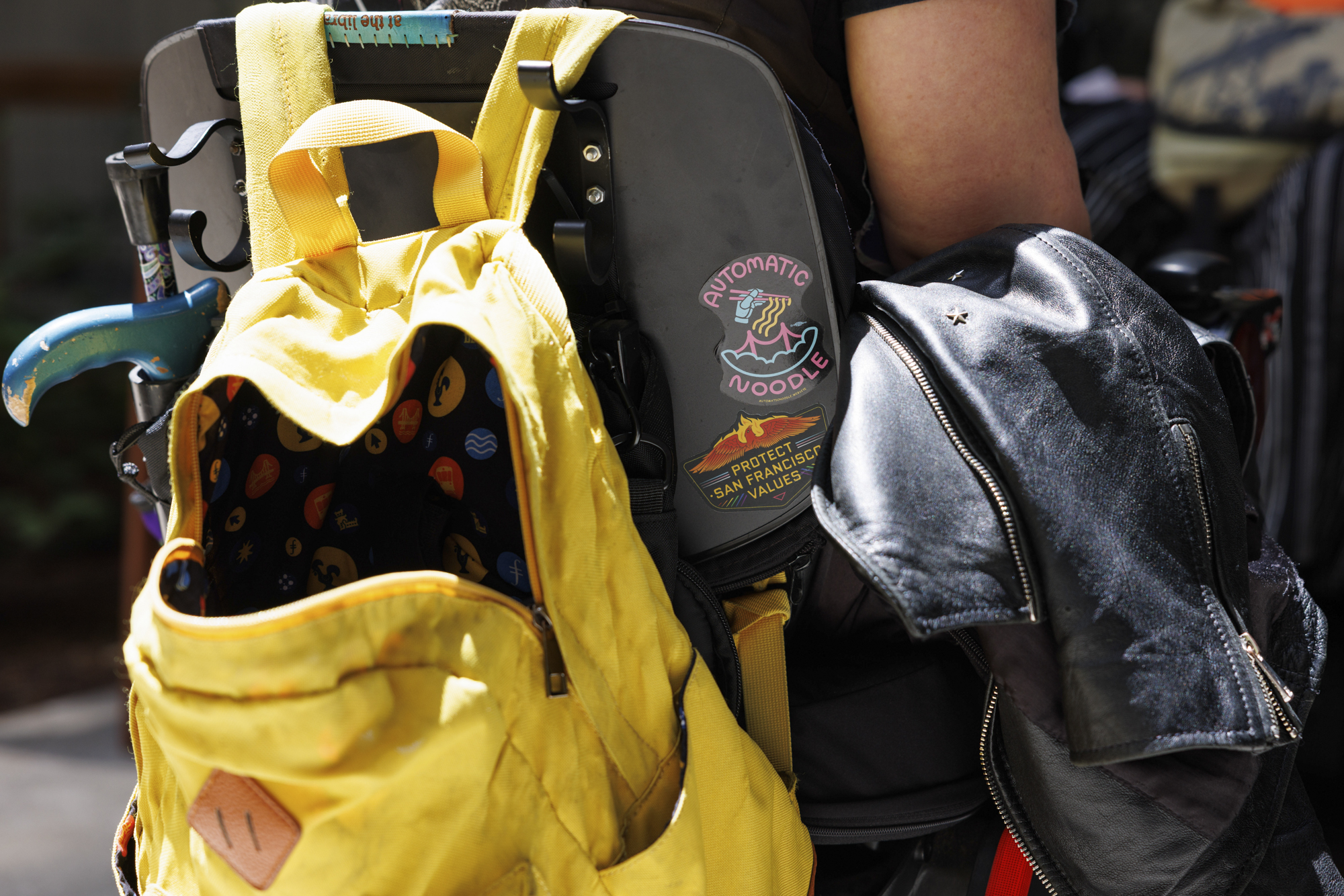 GOAT executive director Liz Henry displays customizations to their powerchair at the Grassroots Open Assistive Tech Tune Up Tuesday event at the San Francisco Disability Cultural Center on August 4, 2026, in San Francisco.
Tune-Up Tuesdays are delightfully focused yet totally unpredictable. In June, about 25 attendees came through, some lining up starting at noon for the 1:30 p.m. event. August drew a smaller but no less soulful group, with participants seeking maintenance support for loose armrests and low tire pressure and asking questions about where to test mobility equipment.
Jen Holthaus took time off work to attend. She’s at the beginning of her wheelchair journey and didn’t know any other disabled people, so she asked Henry how to begin researching chair options. As Henry described how the West Oakland Center for Independent Living’s Wheelhouse offers a variety of demonstration chairs, they moved onto a plush loveseat so that Holthaus could take a spin in Henry’s powerchair.
“Being here is how I move from feeling stuck to having a direction,” Holthaus explained, noting she gained practical tips and also felt less alone.
Henry remembers that isolation. “I had a lot of trouble in my early twenties,” they said, noting that even though the Bay Area has a rich history of disabled advocacy, they initially connected with other disabled people on Usenet forums and got around in a wheelchair stolen by necessity from a hospital.
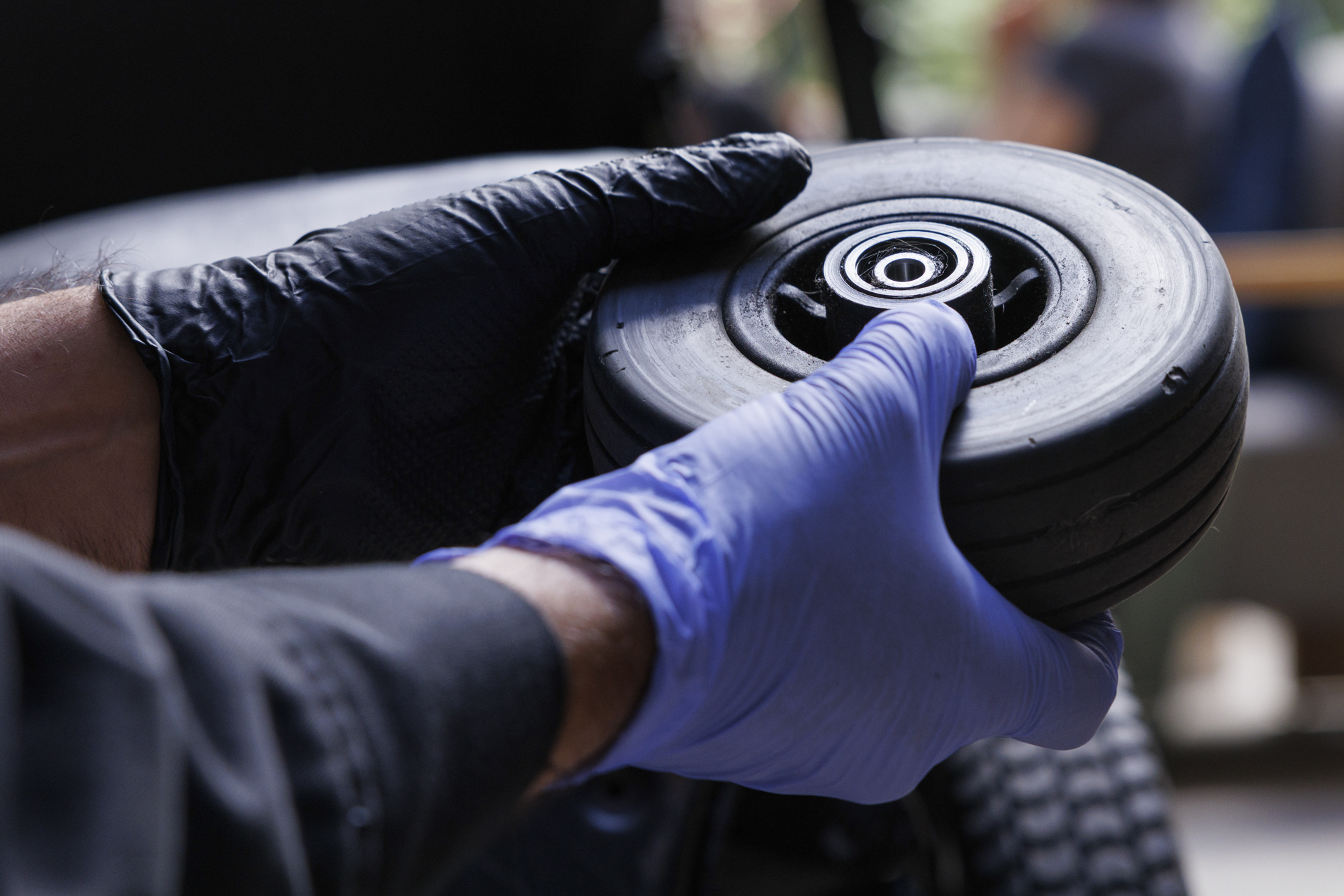 GOAT member Vincent Lopez finds out that the left castor wheel bearings of Kristina Moreno’s borrowed powerchair are completely gone at the Grassroots Open Assistive Tech Tune Up Tuesday event at the San Francisco Disability Cultural Center on August 4, 2026, in San Francisco.
ILRCSF mobility device technician Vince Lopez arrived on a red scooter and pulled up a seat next to Moreno to talk through the features she might consider in selecting a better chair for her body: seat style, motor type and rear-, mid- or front-wheel drive. Last year, before getting a chair through Medi-Cal, Moreno was stranded in her apartment for months. She’s afraid she could get stuck again when her neighbor is discharged from the hospital and reclaims his chair. While they talked through options, several attendees helped themselves to hot tea, and a young couple arrived to get their rollators serviced.
In a shady area of the courtyard nearby, GOAT’s Olga Prilepova used pliers and a wire brush to clean Fred Lopez’s suitcase wheels, which collect debris as he moves around the city on public transit. Lopez, who lives in SoMa and has low vision, travels to the San Francisco Public Library main branch most days to read in the Talking Books and Braille Center. When grimy, the wheels on his green fabric suitcase jam. Dirty wheels also squeak loudly, which he finds embarrassing. He’s become a regular at Tune-Up Tuesdays, relying on practical support while savoring the socializing.
“It’s too bad this is only once a month,” he murmured before pulling his serviced suitcase onto quiet, well-working wheels and heading across Civic Center to the library.
The next Tune-Up Tuesday takes place at the Disability Cultural Center (165 Grove Street, San Francisco) on Sept. 1, 1:30–4:30 p.m.