
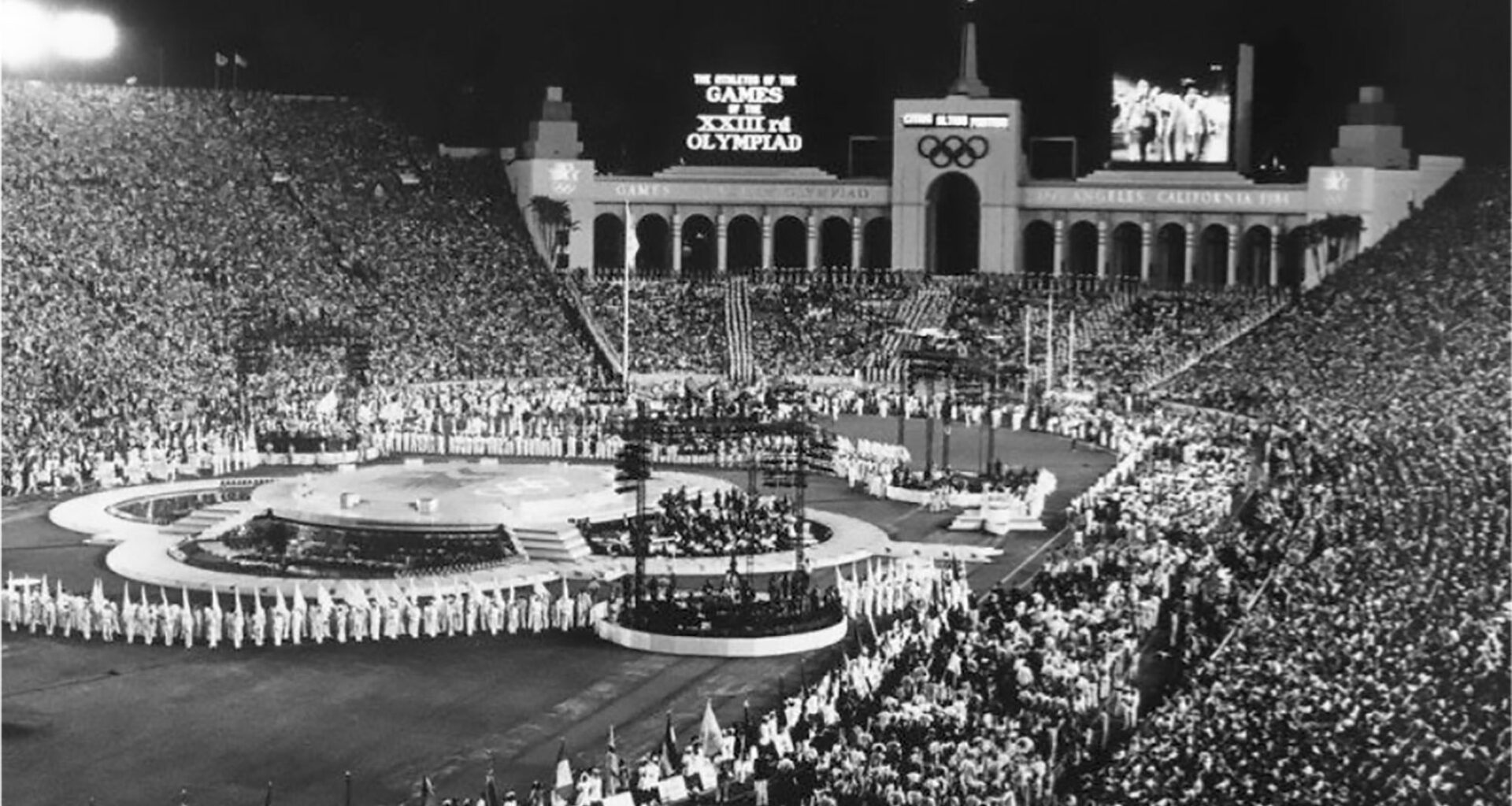
When it comes to the Olympic Games sprinting our way in the summer of 2028, everyone wants to talk about money, and no one wants to talk about sports.
Having been a witness to the glorious Southern California-wide fun that were the Olympics of 1984, not to mention their making so much money that we are literally still spending it on youth athletics throughout the region, makes me seriously question all that has gone wrong in the four decades since. In early ’84, I easily bought mail-order tickets to South Korea-U.S. baseball at Dodger Stadium and to the finish of the first-ever women’s marathon at the Memorial Coliseum, site of the first L.A. Olympics in 1932.
It wasn’t just sports. The Olympic Arts Festival was 10 weeks of world-class music and dance. And thanks to the management of Peter Ueberroth, we had a fiscal surplus of over $230 million. The ‘84 Olympics were an in-the-black blast.
But is it still fun if it bankrupts the already virtually bankrupt city of L.A.?
I figured I had that part figured out when the event tickets began to drop over the last several months. Clearly, given the thousands of dollars that tickets to the premiere events such as track and field were going for, the powers that be had an economic strategy: They were going to revenue-side their way out of any possible cash-flow problems.
Your best seats for some track and field and gymnastics events will run you $2,461. Apiece. Men’s basketball finals? $3,350. Not just some, but most, tickets for anything at all cost in the hundreds of dollars. In 2024, at the Paris Olympics, ticket prices were considered outrageously high by the French public. Los Angeles will charge more than twice as much for equivalent tickets.
If you can get them. Heard of anyone who has managed to get any of the $28 nosebleed-section tickets organizers tout as available to the hoi polloi? Me, neither. But then, I can’t get any tickets. As a county resident, I applied for the lottery to buy, and twice was rejected.
I guess I was glad that foreigners and bigshots were going to pay so much for ducats that there was no way Oly was going to bankrupt L.A.
But then I dropped a note to the king of cash, L.A. City Controller Kenneth Mejia, for his analysis on whether I was right about revenue trumping expenses.
“Hi Lawrence, thank you for reaching out!!!,” the enthusiastic CPA replied. “Ticket Sales & Hospitality revenue is one part of it! LA28 is budgeting to receive about $2 Billion from Ticket Sales & Hospitality. However, the total budget for the Olympics is $7 Billion, so that revenue is only a portion.”
Indeed it is. No fun. Plus, we may be stuck with the check.
One of the biggest gaps is paying the $1 billion bill for security. That huge expense is omitted from LA28’s $7.1 billion budget, Libby Rainey at LAist reports. Yes, the federal government has “allocated” a cool billion to pay the bill. The White House just loves California, so that’s a lock. Not.
Two ways to stay in the black: First, keep costs down.
The easiest way to do that is to rigorously stick with the logistics efficiency that made both L.A. ’84 and the Paris games work: Use only existing venues. Clean them up, but don’t remake them. You think world cities like Paris and L.A. don’t already have great stadiums and playing fields? They do. The French are spendy, so they didn’t make a profit on the order of L.A.’s. But they still had a fiscal surplus of over $28 million.
So, stop the unnecessary remodel of the Rose Bowl Aquatics Center for diving, for instance. It dives really well right now, same as it has ever since Olympics surplus money helped build it.
Second, better emulate L.A. ’84’s profit model with corporate sponsorships and philanthropic giving, since that City Council wisely declined to be the payer of last resort. A good party doesn’t have to break the bank.
The current L.A. City Council can’t back out of agreements made in 2017 to act as the ultimate financial backstop if the games run a deficit. So the city must find legal ways to exert front-end pressure on spending, including pay-as-you-go oversight, and hands-on tight accounting. If the organizing committee isn’t allowed to go into deficit in the first place, we can all just have fun at the Olympics.
Larry Wilson is on the Southern California News Group editorial board. lwilson@scng.com