
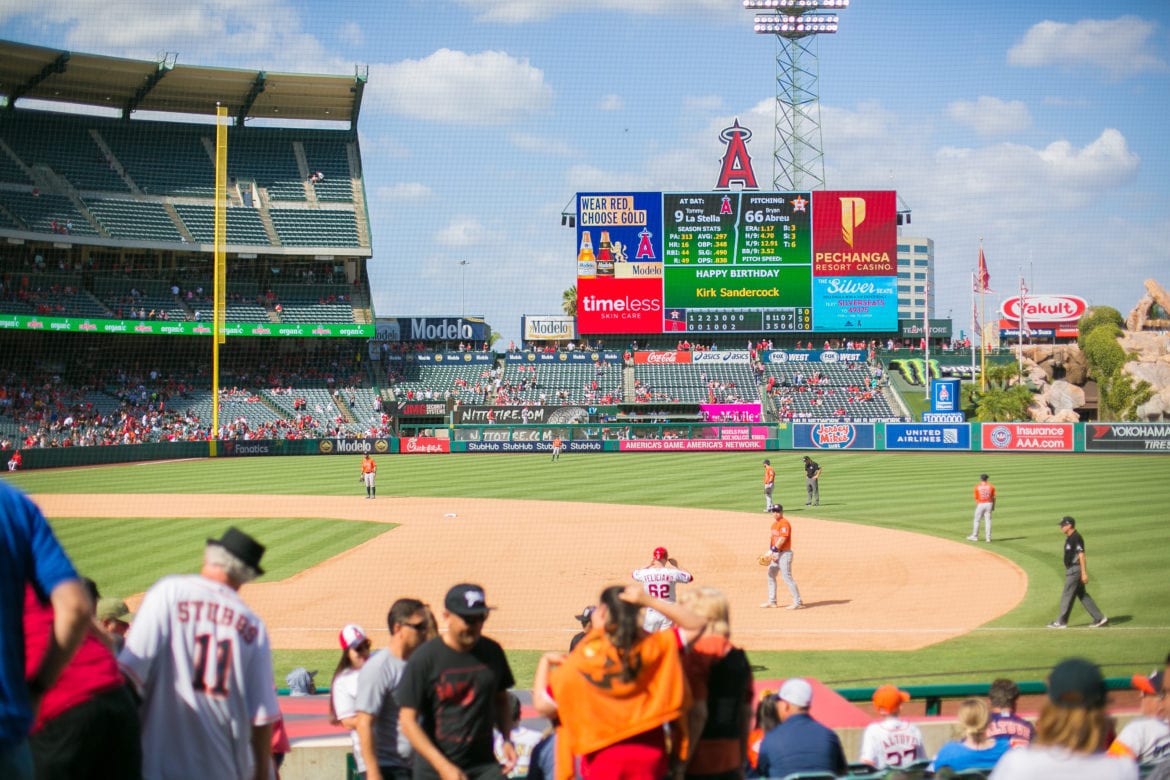
Anaheim officials still don’t know if one of their largest assets – Angel Stadium – is trashed four years after their predecessors ventured to find out the condition of the taxpayer owned property in the wake of a corruption scandal that tanked a previously proposed land sale.
Near the start of this year, city leaders said the results of the long awaited and multi-phased assessment of Angel Stadium would be expected to be finished by mid-2026 as elected leaders began to ponder what the future could hold for the ballpark.
[Read: What’s in Store For Angel Stadium?]
Now officials say the results of the study won’t be completed before the end of the year, possibly after an election that could bring about new faces to the governing dais.
“We selected a structural consultant to perform the final engineering analysis and assessment of the stadium test results. The final assessment is expected to be completed late this year,” said Interim City Manager Greg Garcia said at a city council meeting earlier this month.
“We will continue to provide general updates as the process plays out.”
While officials this year have been giving brief monthly updates on which phase the assessment is on, they won’t share what has been discovered so far and aren’t providing how much they have incurred in costs since they started it.
City spokesman Mike Lyster wouldn’t comment on the assessment’s delay or if the city intended to use the results of the study to ensure the ballclub is fulfilling its stadium maintenance obligations outlined in a reinstated lease scrutinized by auditors and elected officials.
“We are now looking at the end of 2026,” he said in an email last week. “Beyond that, we want to let the process play out and avoid any advance speculation.”
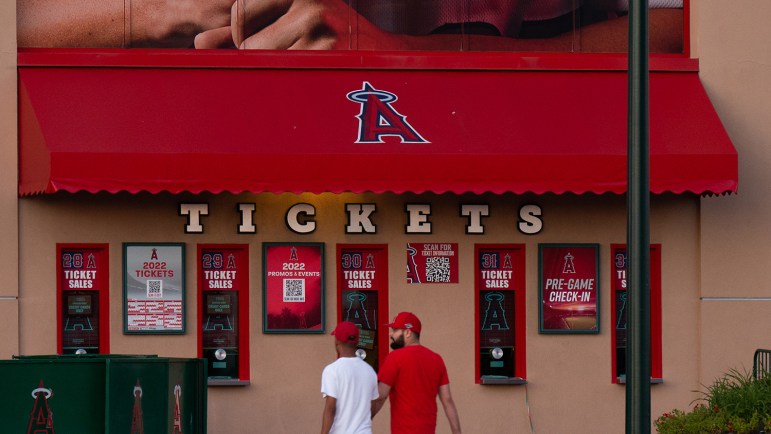 Fans enter Angel Stadium on Monday evening to watch the Angels take-on the Kansas City Royals, June 21.
Marie Garvey, a spokesman for the Angels, directed questions about the assessment and lease to the city.
Mayor Ashleigh Aitken said the city is finishing up the assessment – a report she says will influence future negotiations with the Angels and is important to be done correctly.
“The consultants are concluding the assessment, and I favor getting it right over getting it fast,” she said in a Wednesday text message.
“No one knows what the assessment will reveal. The city is entitled to a first-rate professional stadium, and this study will help inform any future negotiations with the team.”
The rest of the city council did not respond to requests for comment.
Former City Councilman Jose Moreno, who called for the assessment in 2022, said despite some of his successors seeming adamant about getting the study done on the campaign trail when they came into office, they failed to hold top city executives accountable following the corruption scandal.
“That was a really bad sign about getting an honest and thorough assessment in good time, and of course from there begin to look at the lease and the negotiations and hold people accountable,” he said in an interview last week.
“When you put those things together, it becomes actually not surprising that we are now four years later and do not have an assessment.”
State Senator Tom Umberg, who called for an audit on the Angel Stadium with State Assemblyman Avelino Valencia, said he isn’t an expert on property evaluations, but it should be completed quickly so the property can be sold.
“We should get the assessment done as quickly as possible and then sell the stadium,” he said in a Tuesday interview. “The issue is how to get the highest value for Anaheim’s taxpayers from perhaps the most valuable municipal asset potentially for sale in California.”
Valencia said residents deserve to know what state the stadium they own is in.
“Angel Stadium is a public asset, and residents deserve a clear picture of its condition,” he said a Tuesday emailed statement
The Assessment
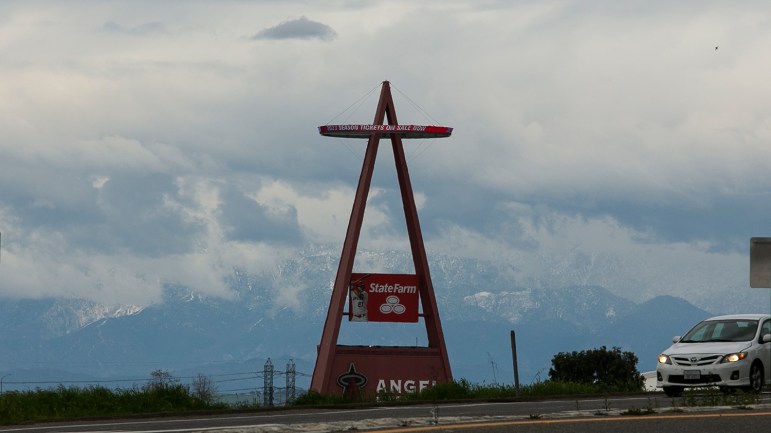 Angel Stadium sign on Jan. 30, 2023. Credit: JULIE LEOPO, Voice of OC
In May 2023, Aitken and the council at the time approved a $325,000 contract with a Missouri-based company to conduct the assessment, with Anaheim Convention Center Director Tom Morton telling officials at the time it would take two months to get results.
In the agreement, officials made it clear the study should be done quickly.
“Time is of the essence in the performance of this Agreement and the Services shall be performed as expeditiously as is consistent with professional skill and care and the orderly progress of the Project,” reads the agreement.
“The failure by CONSULTANT to perform the Services in a diligent and timely manner may result in termination of this Agreement by ANAHEIM.”
Lyster had previously said that was only the first phase of the assessment – a visual survey.
Last week, he refused to provide a list and timeline of the assessment’s phases, the contractors doing the work or the costs incurred for the city so far.
“We do not keep a running timeline and would have to compile other information as well. That will take some time. When available, we look forward to sharing it with the public,” Lyster said in a Wednesday text message.
The Reinstated Lease
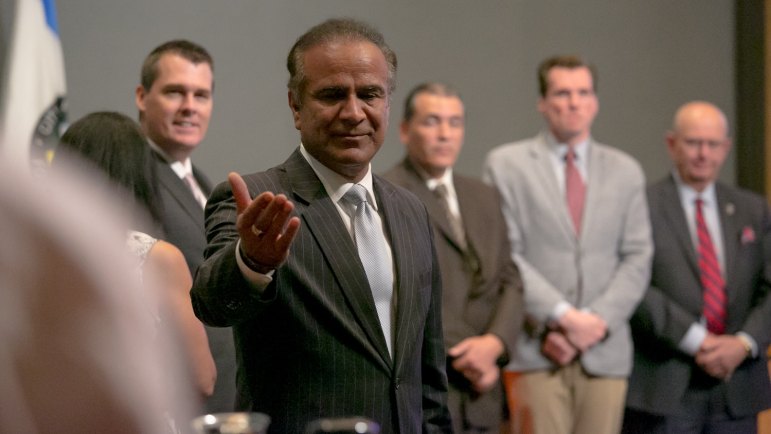 Mayor Harry Sidhu at the Anaheim City Council meeting on Oct. 29, 2019. Credit: JULE LEOPO, Voice of OC
In 1996, the Anaheim City Council helmed by former Mayor Tom Daly approved a 23-year stadium lease agreement with the Angels – a lease that team owner Arte Moreno walked out on just ahead of the 2018 election.
By early 2019, former Mayor Harry Sidhu spearheaded a lease reinstatement, a key step in opening the door to the most recent stadium sale deal that would eventually implode three years later in the wake of a FBI corruption probe.
Under the reinstated lease, the Angels are responsible for maintaining the property at “first class professional level.”
In the fallout from the FBI corruption probe and the city’s own subsequent investigation, state legislators called for an audit into the lease to see if the ballclub was living up to its end of the deal.
The audit, which was launched and completed amid the ongoing property assessment, found the lease severely limits how much revenue Anaheim makes from the stadium and that its unclear terms have kept city officials from being able to see if the property is properly maintained.
Moreno said Aitken and other council members have criticized the lease that can now be extended up to 2038, adding he hopes they will follow through with assessment and hold the Angels accountable for repairs.
“The city gains no revenue from that lease, and we were finally free of that lease to negotiate a good lease, and Harry Sidhu and the corrupt council majority reinstated it,” he said.
“The only silver lining for the people of Anaheim in this lease is that it does, according to the city attorney, clearly state that any upgrades that are needed to sustain the stadium at a world-class level must be paid by the tenant, the Angels organization.”
Umberg said the repairs should fall on the Angels.
“The Angels are the beneficiaries so clearly it should be the Angels that should bear that responsibility,” he said.
City officials had to enter an access agreement with the Angels to conduct their condition assessment – something state auditors said city leaders may have to do every time they want to inspect the taxpayer owned property.
Valencia said city officials should be routinely assessing the condition of the stadium.
“The frequency of assessments is up to the city to determine, however, periodic assessments of infrastructure would prevent the city from future situations like the current one,” he said.
“Unfortunately, the current lease deal is one sided and could leave the city in a liable position, which is why any future deal should include terms that benefit Anaheim and its residents.”
Aitken also said the stadium’s condition should be routinely evaluated.
“Once we have a completed assessment, we should routinely assess our stadium. The stadium is owned by the people of Anaheim, and short of access during a playoff game, all reasonable access should be preserved,” she said.
Will The Assessment Be a Starting Point of New Negotiations?
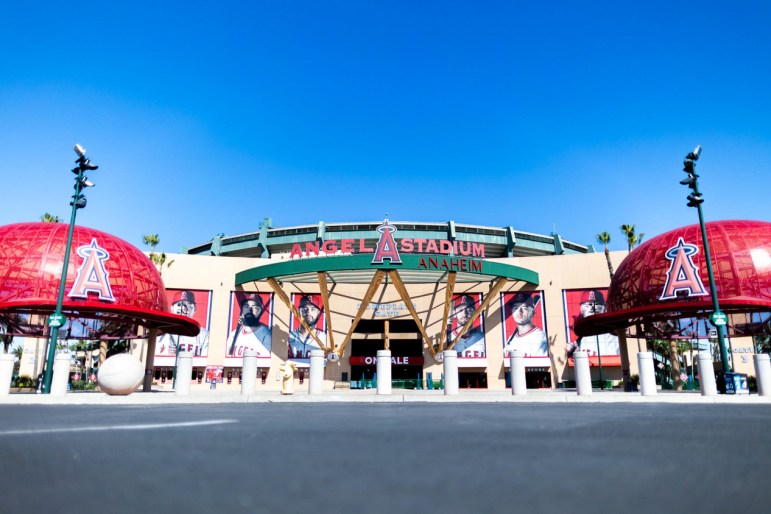 The marquee sign at Angel Stadium is lit up in Anaheim, Calif., on Feb. 24, 2025. The ballpark has been home to the Los Angeles Angels since 1966. Credit: KADE MCKENNA, Voice of OC
As residents continue to wait for the results of the assessment, another land sale of the stadium could be on the horizon for Angel Stadium despite officials denying any long-term talks about the taxpayer-owned property.
In 2025, city officials met with real estate consultants and Angels executives to discuss the surplus land act – a state law about selling public land that State Attorney General Rob Bonta fined Anaheim officials close to $100 million for violating in 2022 when they last tried to sell Angel Stadium while allowing the deal to continue.
By January of this year, Mayor Ashleigh Aitken, Councilman Ryan Balius, Councilwoman Norma Campos Kurtz and former City Manager Jim Vanderpool discussed the surplus land act with lobbyists from the Fanslau Government Affairs firms.
They were later joined by Valencia to talk about Angel Stadium.
That same month, Aitken called for a discussion on a master plan for the stadium site while Councilwoman Natalie Meeks called for a discussion on what their goals are for one of the city’s biggest assets.
By February, Vanderpool resigned after facing renewed scrutiny over his close ties to Disneyland Resort interests that were pushing the sale of the stadium, which would later become enveloped in the city’s corruption scandal.
[Read: Anaheim’s City Manager Resigns]
Umberg said it’s time the city sell the stadium at market value.
“I’d like to see them put it out to bid and see what the market would bear in terms of the sale of the stadium. That’s what the taxpayers, I think, are owed,” he said. “I’d also like to see the Angels sold, so that we could have a first-class team and a first-class stadium.”
Anaheim’s Corruption Scandal & The Canned Sale of Angel Stadium
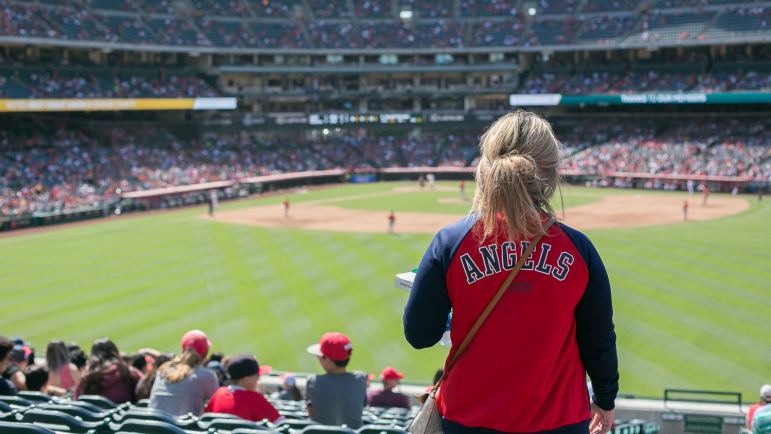 Angels vs Astros game September 28.
After Bonta fined the city for violating the Surplus Land Act but allowed the sale to continue, federal agents in 2022 would go public with sworn affidavits in which they alleged former Mayor Harry Sidhu tried to ram through the land sale for a $1 million in campaign contributions from the Angels.
Sidhu resigned in May 2022 and pleaded guilty to lying to federal investigators about expecting campaign funds from the Angels and for wire fraud.
In his plea agreement, Sidhu admitted to sharing confidential information with an Angels representative – along with deleting emails about the stadium deal to impede an FBI probe including one that laid out preparation for a mock city council meeting to defend the sale of the stadium.
The same day Sidhu resigned, the city council nixed the proposed land sale.
At the time, City Attorney Rob Fabela publicly said city officials might be able to nullify the lease if any wrongdoing was found in connection with negotiations.
Moreno questions if confidential information was leaked to the Angels during the sale negotiations, what was leaked amid discussions of reinstating the lease.
“If this process was tainted to what extent were the Angels also getting documents in the reinstatement of a really bad lease?” he said in an interview.
Moreno said before his term ended he called on Fabela to investigate that within the four-year legal window to cancel the lease and pleaded with new council members to follow up with looking into if they could legally nullify the lease.
“Unfortunately, they decided not to pursue that or at least even publicly asked the questions. They never gave the city attorney any directives to explore that, that I’m aware of,” he said.
“Now we’re stuck with this really bad deal.”
Hosam Elattar is a Voice of OC reporter. Contact him at helattar@voiceofoc.org.
Related