
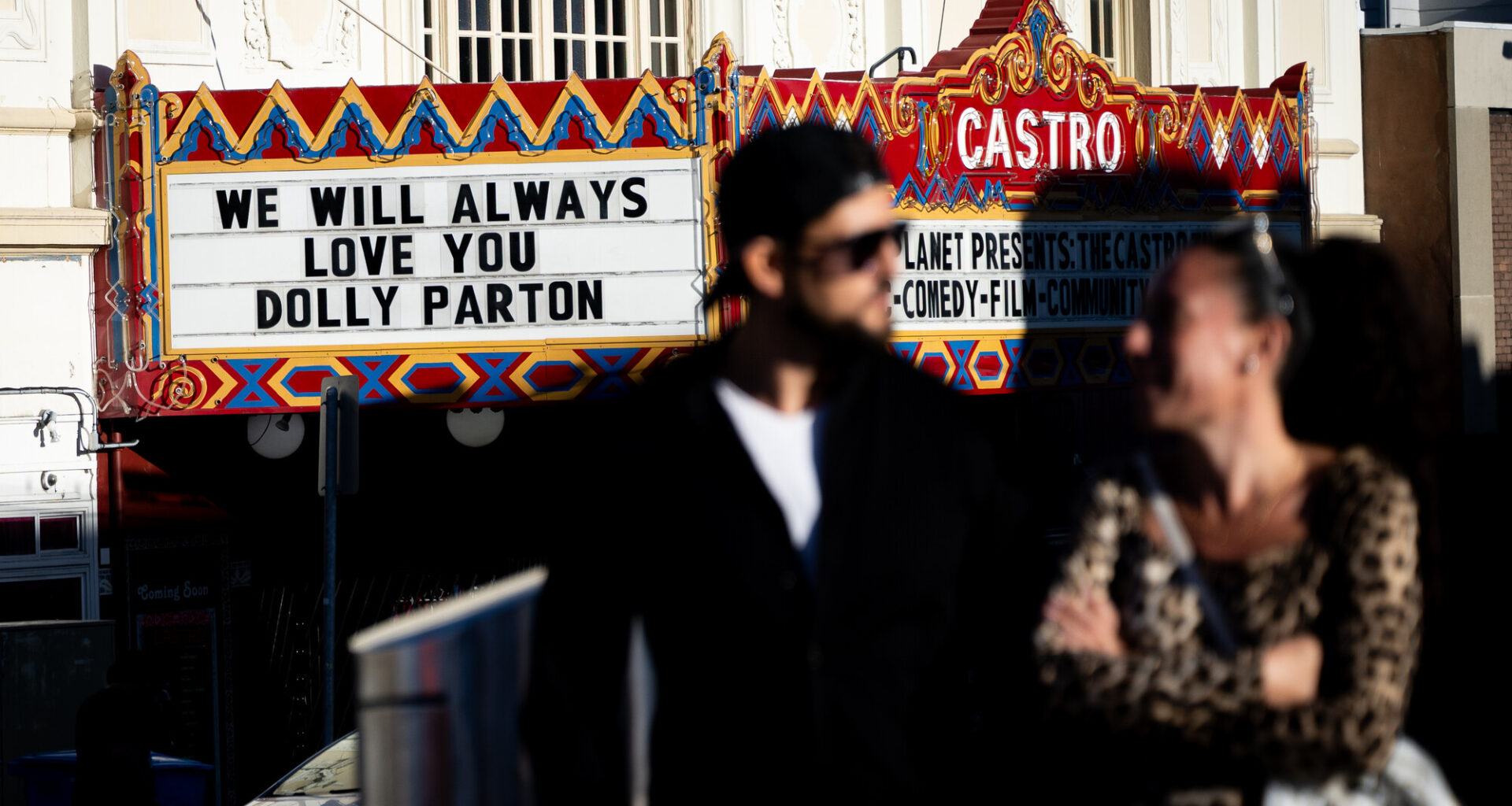
Only hours after one of country music’s biggest stars passed away, hundreds gathered in San Francisco’s Castro District to sing and celebrate Parton’s life.
Aug 26, 2026
Updated 2:41 pm PT
Carlos Cabrera-LomelíBeth LaBerge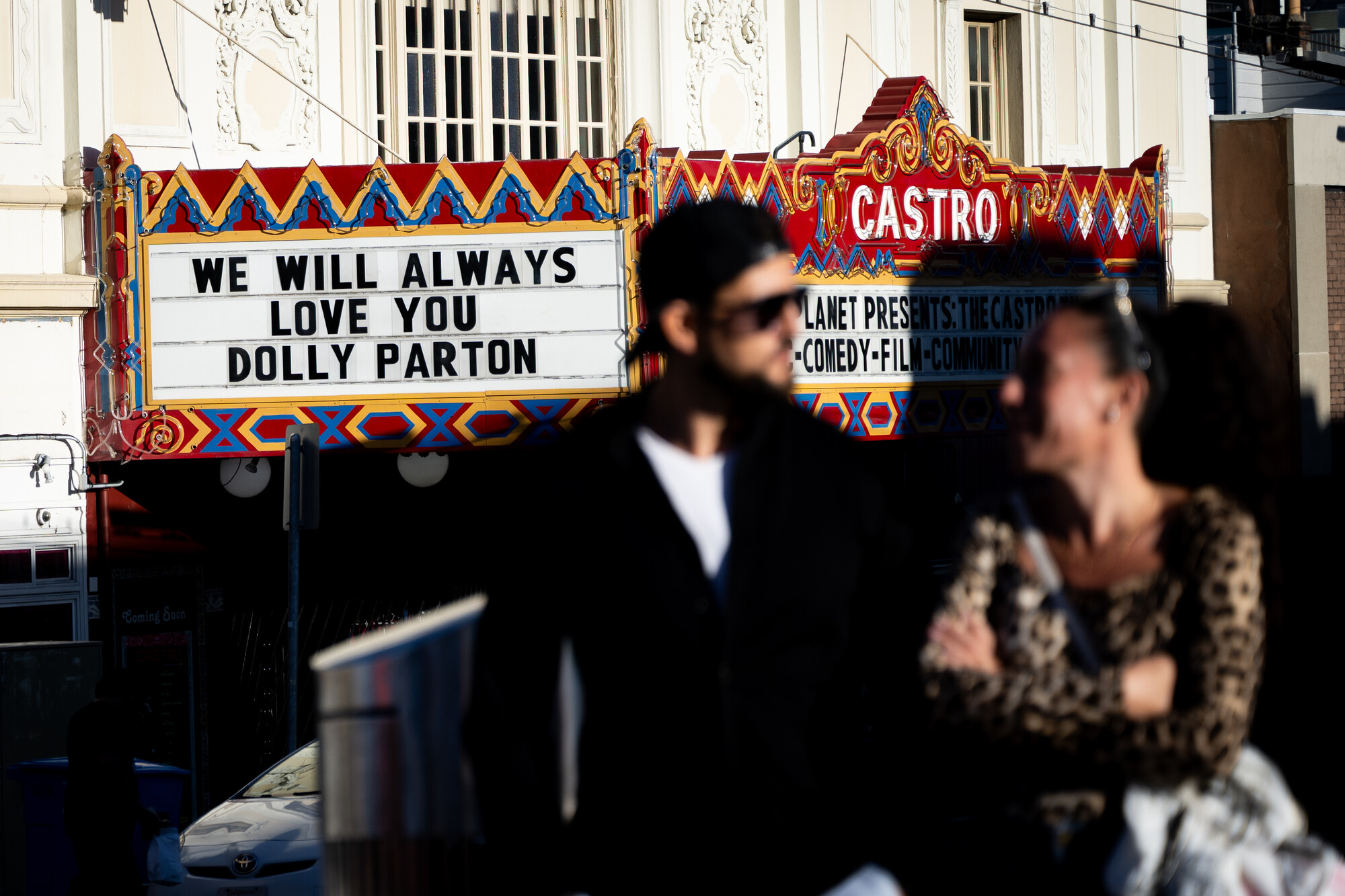
The Castro Theatre marquee reads, “We Will Always Love You Dolly Parton,” in San Francisco on Aug. 25, 2026. (Beth LaBerge/KQED)
Only hours after Dolly Parton, one of country music’s biggest stars, passed away on Tuesday, hundreds gathered in San Francisco’s Castro District to celebrate the musician’s life with a solemn rendition of one of her most enduring hits: “I Will Always Love You.”
Rachel Stassi, a San Francisco resident by way of North Carolina, joined in the singalong. Stassi grew up listening to Parton’s music and travelling to Dollywood, the singer’s theme park in Tennessee.
“She’s basically the patron saint of the Appalachian mountains,” she said, wearing a Dollywood sweater.
It’s been over a decade since she moved to California. When she feels homesick, she’ll play Parton’s music.
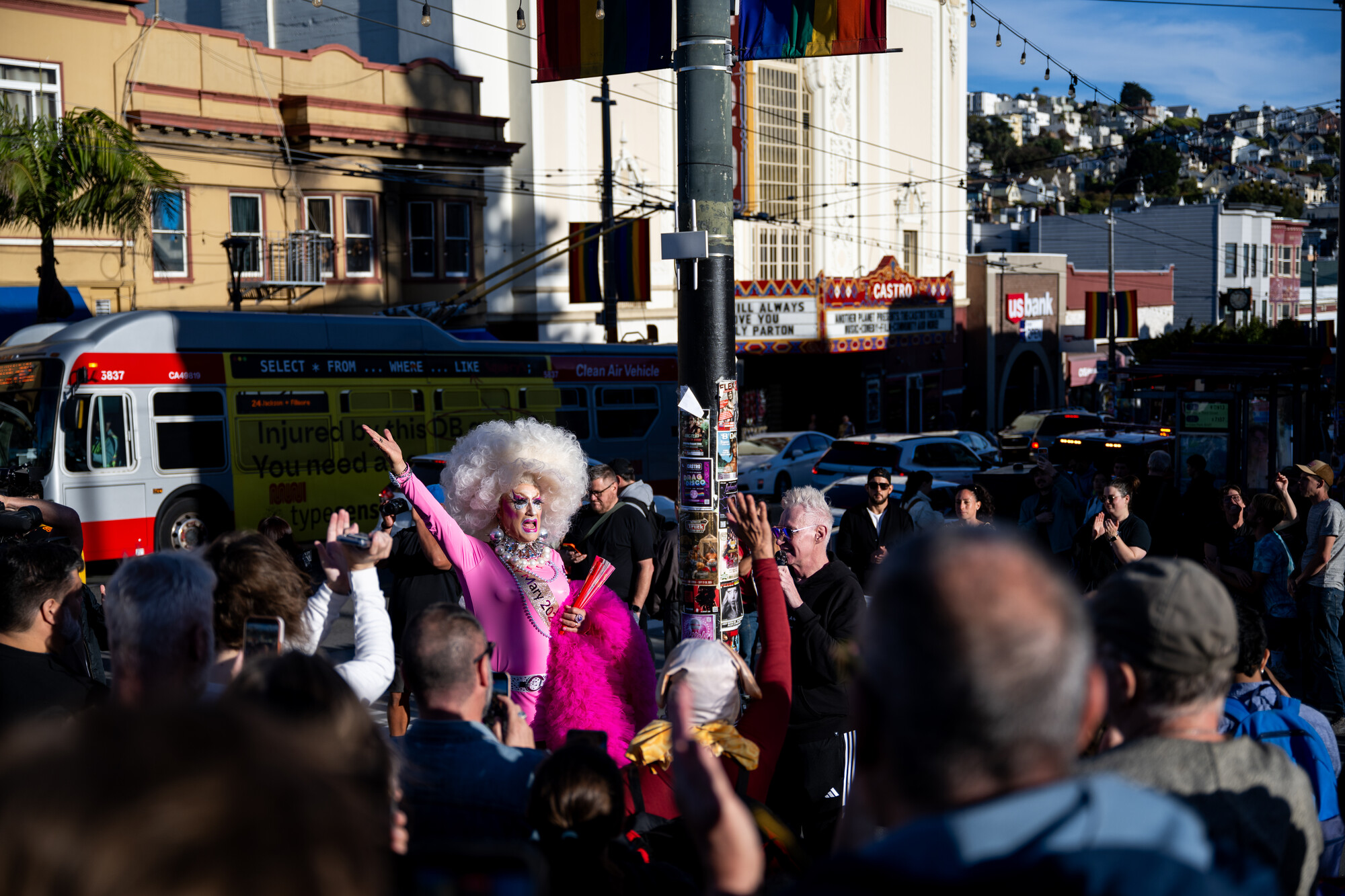 Drag performer Dirty Carol leads a singalong during a vigil honoring Dolly Parton in the Castro neighborhood of San Francisco on Aug. 25, 2026, following news of the country music icon’s death earlier that day.
“She has been nothing but pure happiness, joy, and love in our lives,” Stassi said. “Seeing her gone definitely hurts the soul, but I know she’s in a better place.”
Among San Francisco’s LGBTQ+ community, Parton is a saint — literally. She was honored as one by the Sisters of Perpetual Indulgence, the city’s drag order of nuns, who recognized her on Tuesday as “Saint Authenticity the Utmost, Exemplary Artist, Humble Humanitarian, and Patron Saint of Relentless Glamor.”
Her songs — along with all their remixes — play weekend after weekend all over Castro’s nightclubs. One of them, Beaux, has already confirmed a drag show tribute for this Friday.
Like other local queer icons, including Heklina, Gilbert Baker and, of course, Harvey Milk, Parton was honored in San Francisco with a community-led memorial after her passing at age 80 in Nashville, Tennessee.
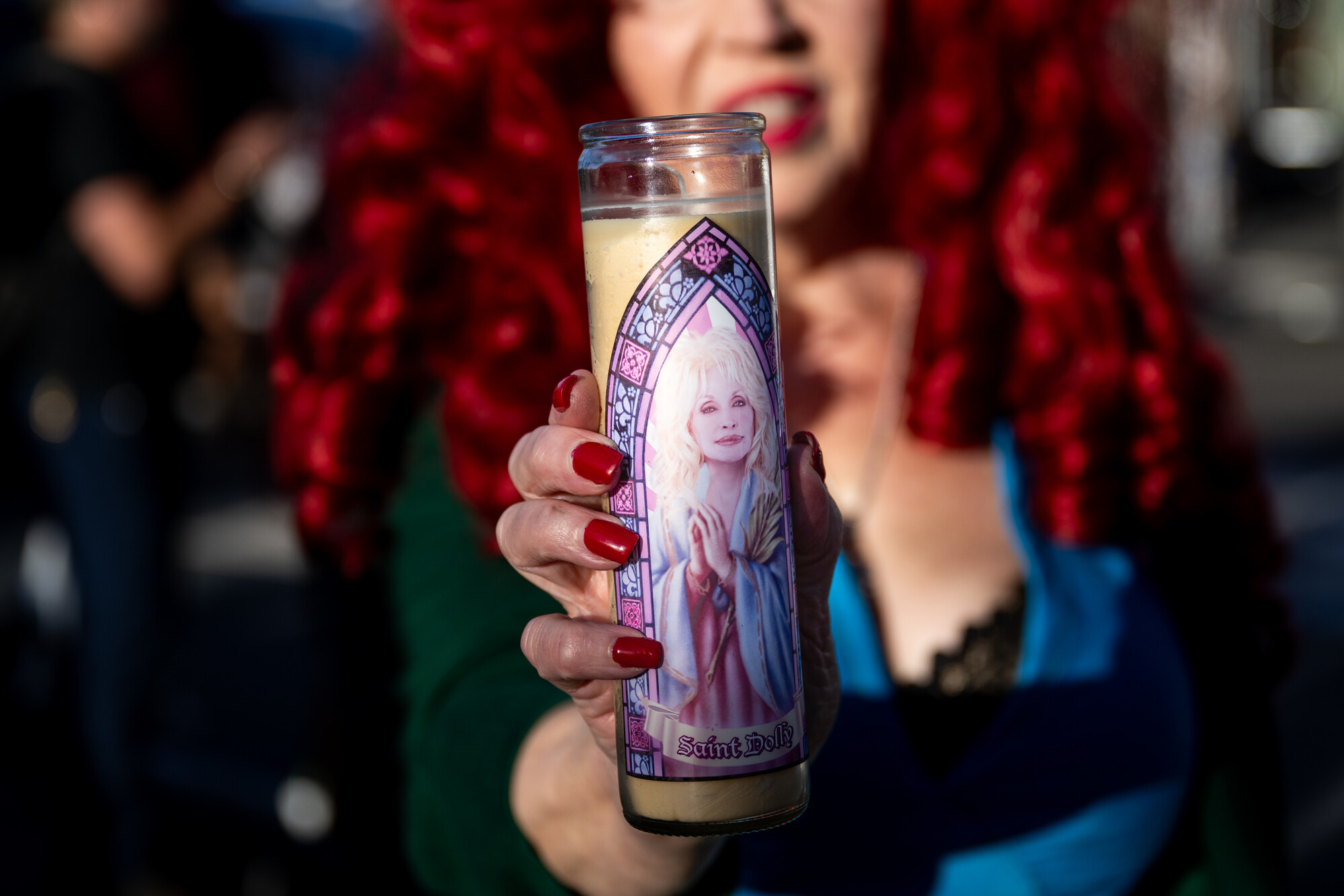 Dixie De La Tour holds a candle during a vigil honoring Dolly Parton in the Castro neighborhood of San Francisco on Aug. 25, 2026, after news of her death earlier that day.
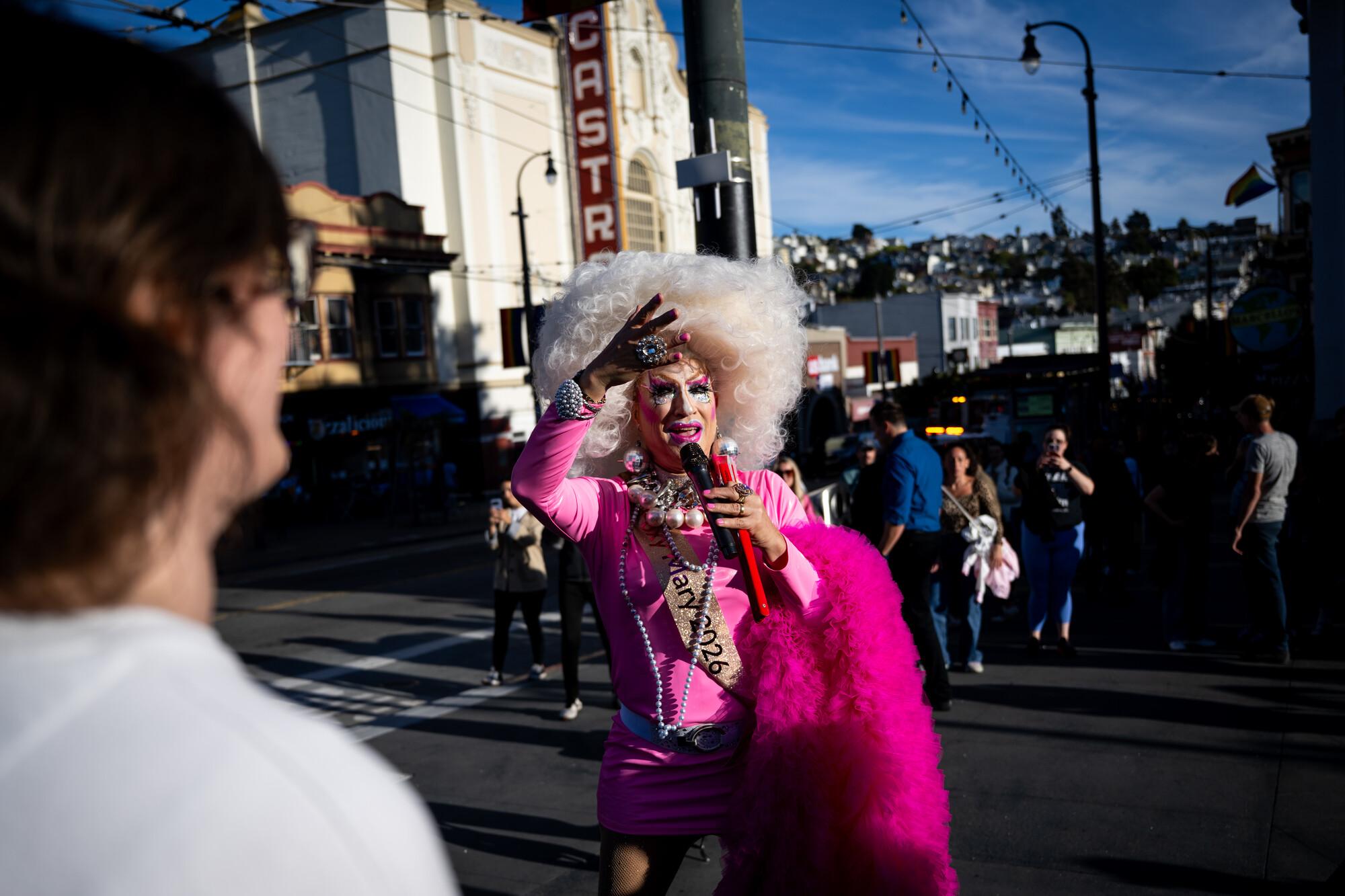 Drag performer Dirty Carol leads a singalong during a vigil honoring Dolly Parton in the Castro neighborhood of San Francisco on Aug. 25, 2026.
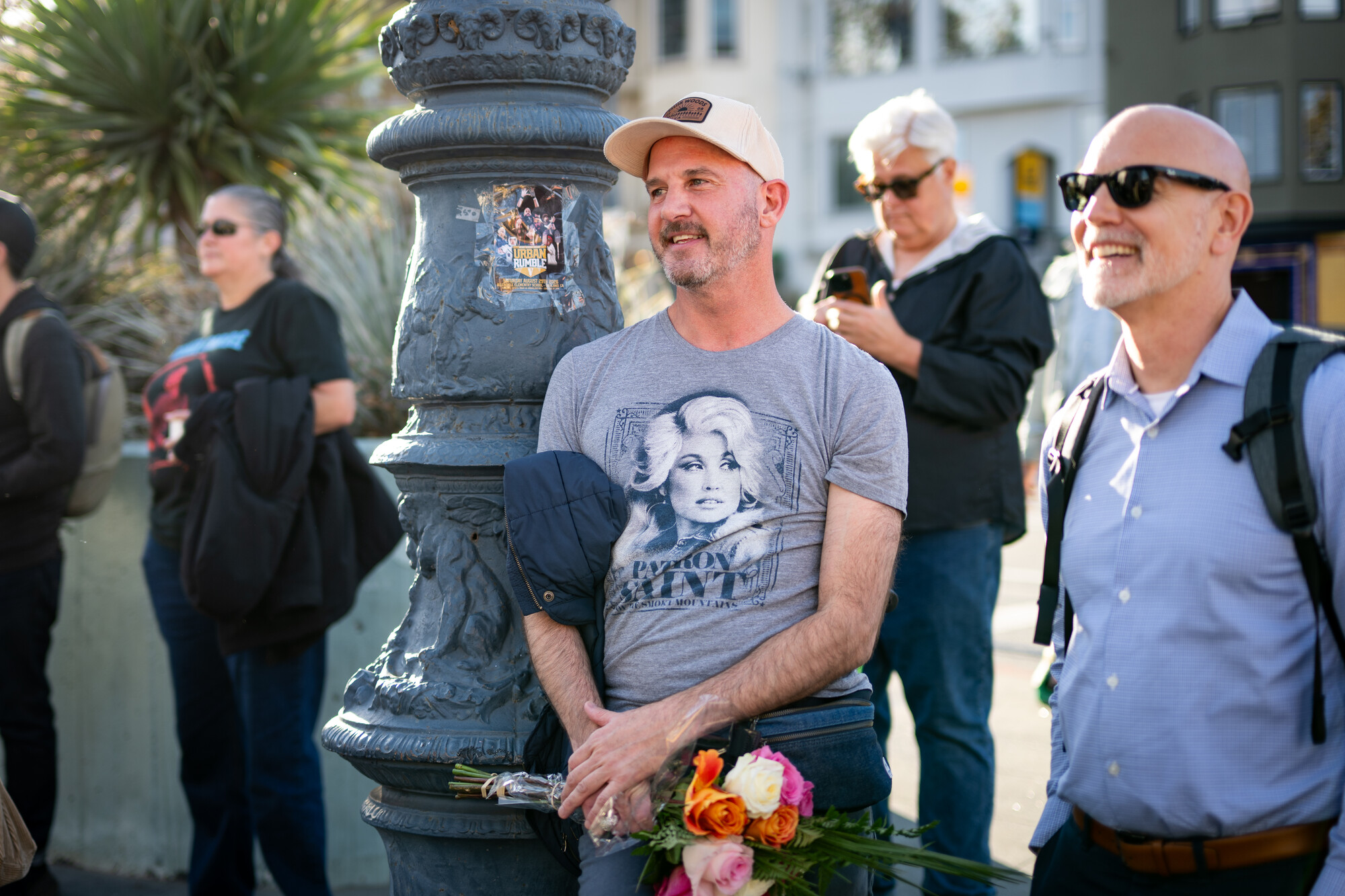 Larry Joe Bridwell (center) joins a vigil honoring Dolly Parton in the Castro neighborhood of San Francisco on Aug. 25, 2026.
The vigil was quickly organized on social media by drag personality Dirty Carol, who told KQED that she was alone when she found out the news.
“Grief is something that needs to be shared. It needs to be communal,” she said. “That’s why we have memorial services. But to me, this is even better.”
Some showed up after seeing Carol’s post. Others were on their way back home and stopped once they heard the music blasting from the speaker Carol wheeled over.
Joe Bridwell brought flowers to the vigil.
“They’re a little pink and a little tacky just like her, so I think they’re perfect,” he said with a sad smile.
“I threw on the fastest thing I could, which was rainbow and queer,” she said. “And the first wig that I could do. But nobody can rock a wig like Dolly.”
In her hands, she carried a candle with Parton’s face.
“The thing that I love most is she never changed herself for Hollywood,” she said. “She always had a raunchy sense of humor.“She always just felt like a real person — who happened to look like a cartoon character.”
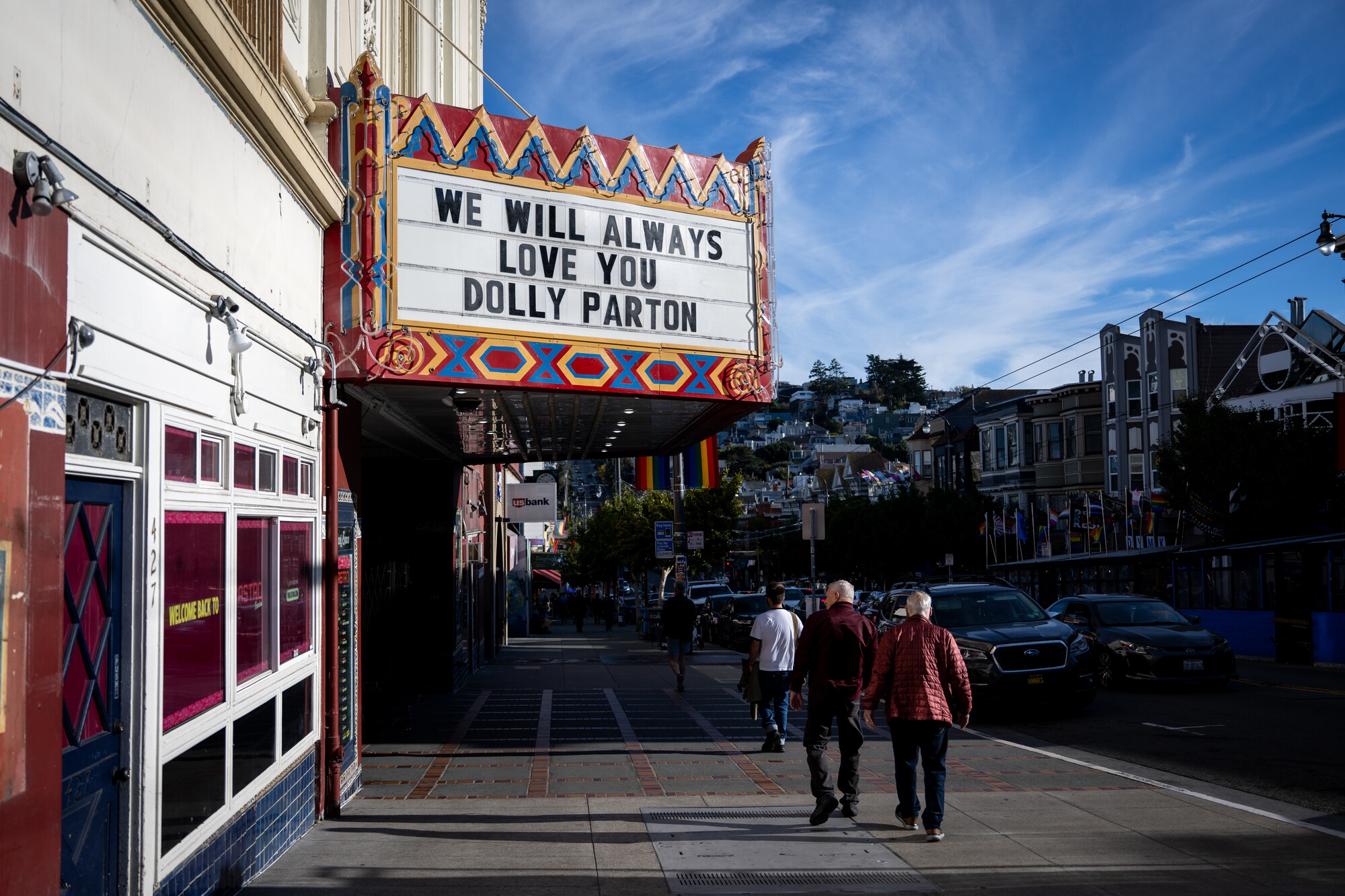 The Castro Theatre marquee reads, “We Will Always Love You Dolly Parton,” in San Francisco on Aug. 25, 2026.
Jokes aside, she said she feels the same loss now as when Supreme Court Justice Ruth Bader Ginsburg died in 2020 — “somebody with a very loud voice who would speak up against all the inhumanity that’s going on.”
Once the singing wrapped up, Dirty Carol turned off her speaker. But Parton’s legacy is forever, she said: “We have to live by her example.”
When Carol was growing up in the ’70s and ’80s, she said there weren’t many public figures publicly supporting the queer community.
“She was one of the few who did,” she said. “Dolly represents love — unconditional love.”