
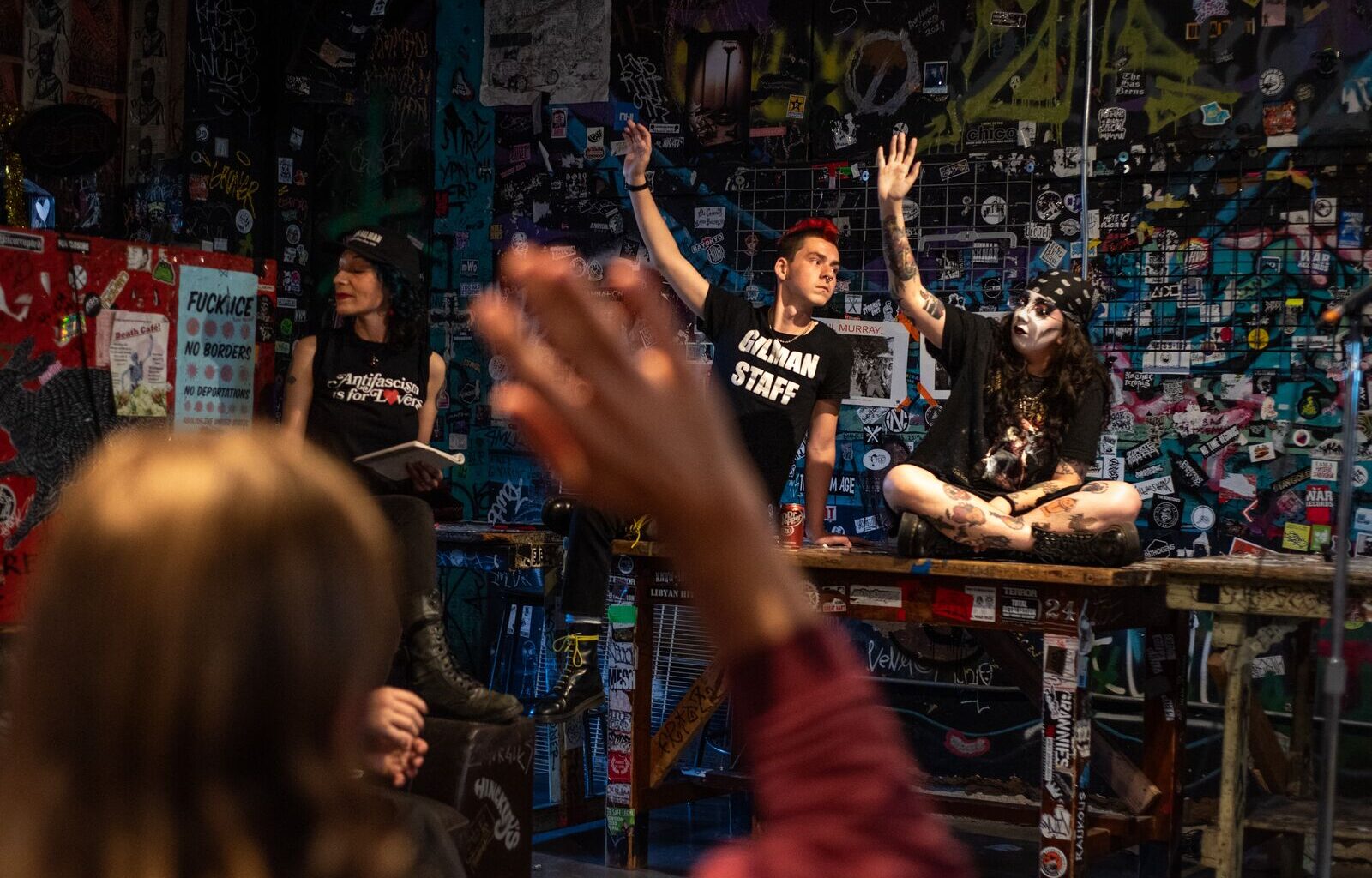
The side doors open and the punks spill onto the corner between sets much as they have for four decades, spikes in their hair and on their jackets, to talk, smoke, take in the fresh air and give their eardrums a few moments of peace.
They filter back inside the graffiti-covered walls as Godstomper, practitioners of the aggressive rock subgenre known as powerviolence, wrap their soundcheck. After several pummeling songs that each burn out after a few dozen seconds, the band’s drummer leads the crowd in an a capella singalong of “A Whole New World,” the anthem from Disney’s “Aladdin.”
While the Central Valley hardcore band Sissyfit tears through its set, a scene veteran known as “Grinch” stomps around the mosh pit with help from his cane; later, a boy of about 10 joins the circle of careening bodies.
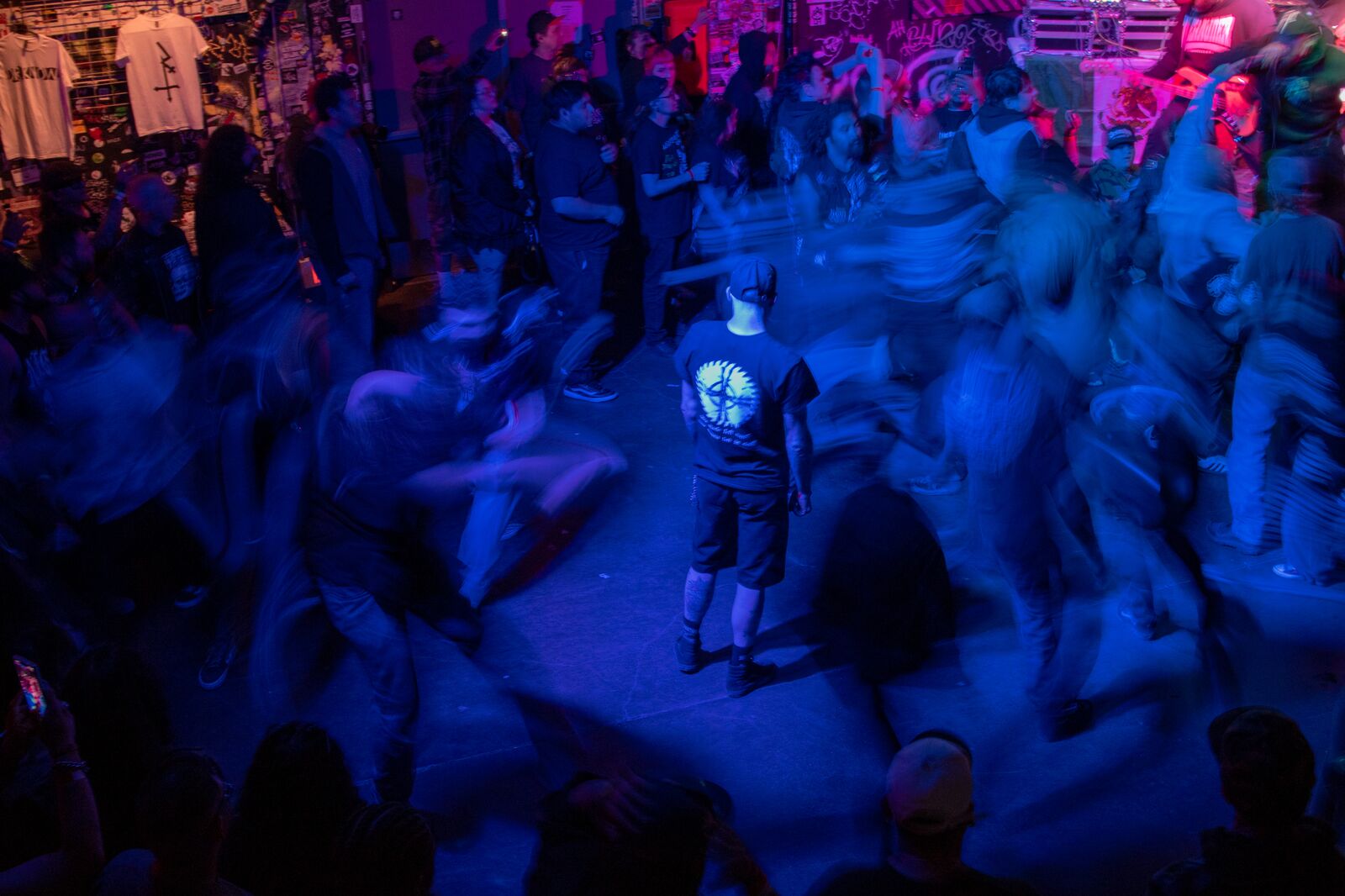 The mosh pit during a set by the Los Angeles hardcore band Desmadre. Credit: Ximena Natera for Berkeleyside
It is, in other words, another night at 924 Gilman, the volunteer-run, all-ages West Berkeley venue that has shaped the East Bay’s music scene for generations. Best known as the proving ground that propelled Green Day to rock super-stardom and the home base of the seminal punk band Operation Ivy, Gilman today remains essential to an ecosystem of local bands, teens with limited options to experience live music, punks looking for a place to crash into one another and anyone searching for community.
“The new generations are coming in,” said Alex Galinda, a Berkeley 13-year-old who came along with her older brother Jesus to the show in May with Godstomper and Sissyfit. “They’re accepted here.”
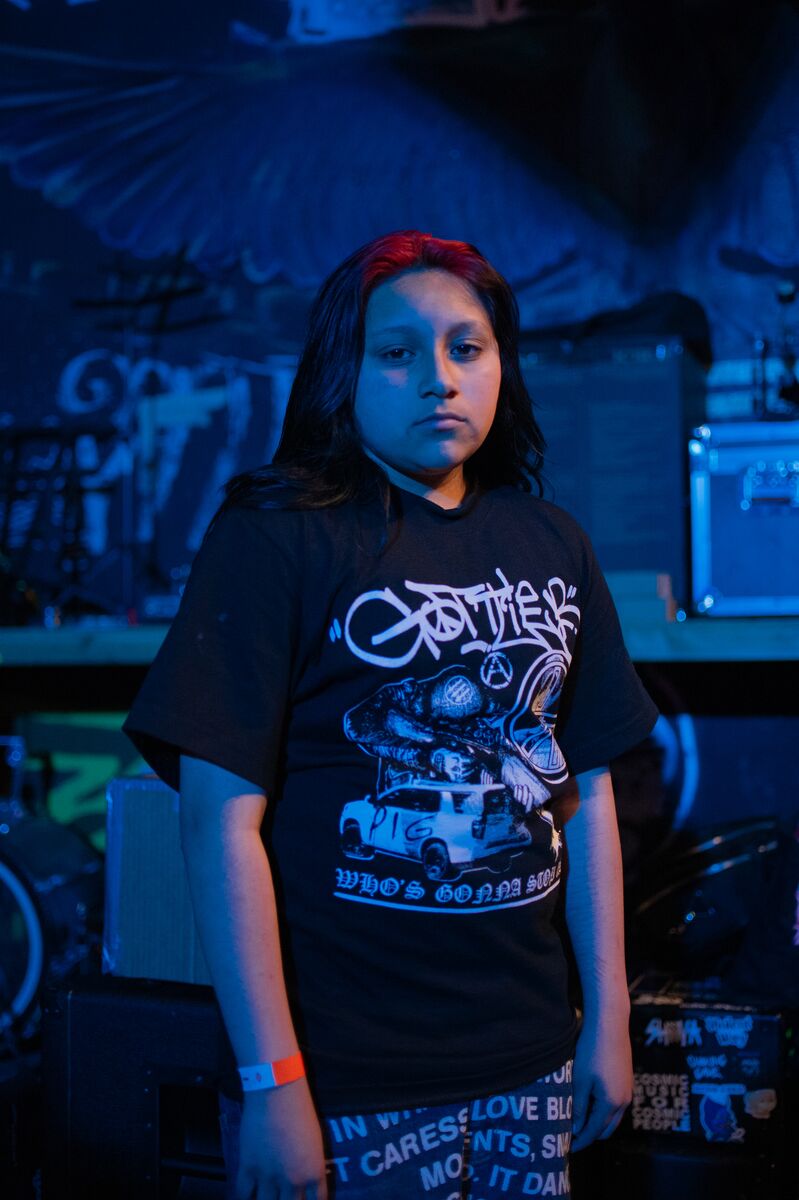 Alex Galinda, 13, inside 924 Gilman. Credit: Ximena Natera
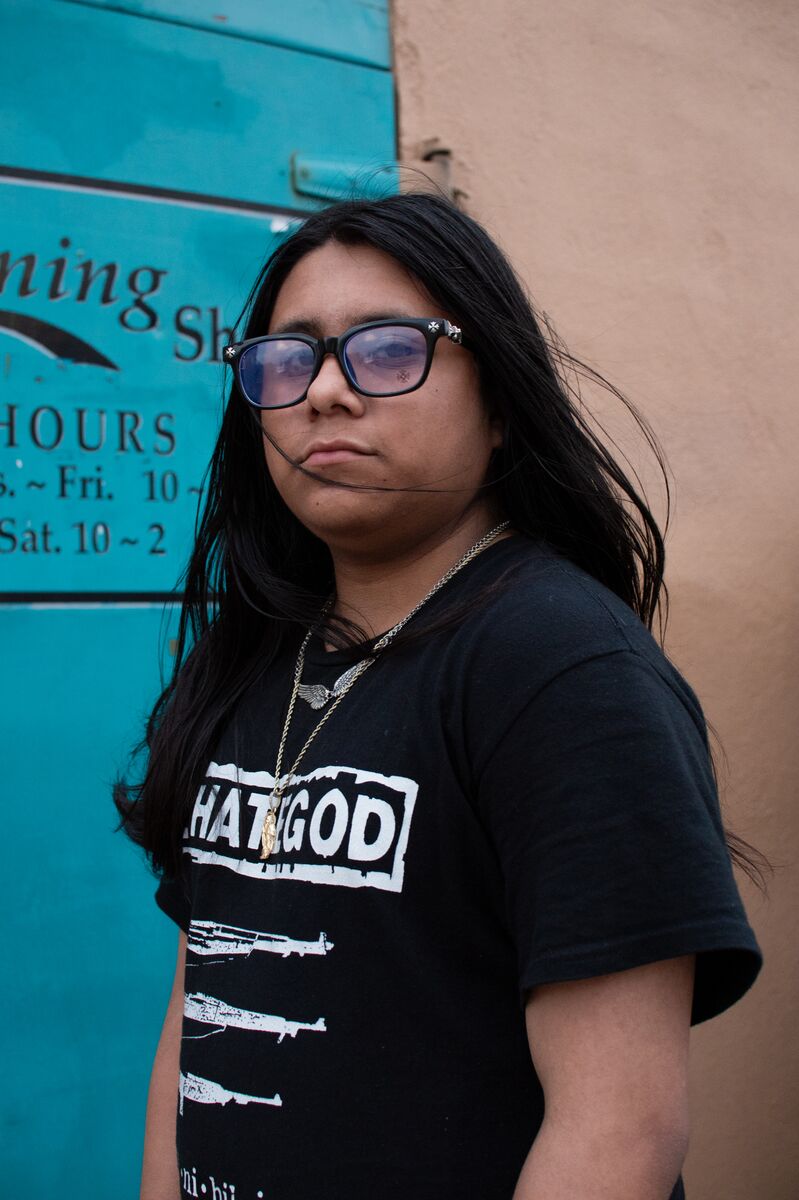 Her brother Jesus Galinda, 16, outside the venue. Credit: Ximena Natera
New Year’s Eve will mark the 40th anniversary of Gilman’s first show, a turn into middle age that seems scarcely believable for a “Do-It-Yourself” punk club in the modern Bay Area.
Beloved independent music venues are shutting down, from Oakland’s New Parish to San Francisco’s Bottom of the Hill and Thee Parkside, while many of those that remain are struggling as giants like Live Nation exert more control over the industry. Artists and creative spaces have been priced out of the region, and audiences still aren’t turning out for live events the way they did before the pandemic. Performing arts groups around Berkeley have closed their doors or say they’re barely hanging on — even Berkeley Repertory Theatre has run multi-million-dollar deficits.
Yet the volunteers who keep Gilman running say their venue is financially stable, which counts as a monumental victory for a place that has flirted with disaster plenty of times. Its longevity is rare for any music club, never mind one as unconventional as Gilman, said UC Berkeley professor and punk historian Tom McEnany.
“I don’t know of any other venue in the U.S. or elsewhere that has been volunteer-run and has lasted as long as Gilman has,” McEnany said.
But the venue has an Achilles heel: 924 Gilman doesn’t own its building in a gentrified corner of West Berkeley. Now the collectively run club is mobilizing to change that, with an ambitious $2.4 million campaign to buy the property from its landlord and, members hope, secure its long-term future.
“If we buy the building, it could take a lot of weight off of our shoulders,” said Kian Alexander, the club’s executive director, and allow Gilman to keep going “as long as humanly possible.”
Gilman has a great landlord. What if that changes?
The future Gilman fans dread can be found at a forlorn red building on 17th Street in San Francisco’s Potrero Hill.
Thee Parkside was a dive bar and music venue with a low ceiling and stage that barely rose off the floor, where bands played intimate and memorable shows from 2007 until it closed for good last month. Owner Malia Spanyol told Mission Local that the husband of the bar’s longtime landlord put the property on the market after her death, and a developer outbid Spanyol for it. People don’t know what will replace Thee Parkside, but they’re pretty sure they can guess, and that’s why if you peer into its dusty windows and look through the empty bar toward its back patio, you can see the wall where someone spray-painted “this will be condos you can’t afford!”
After watching Thee Parkside and other venues close their doors, Alexander said, the Gilman collective felt it was important to start working to buy its building “before it’s too late.”
“We just are really adamant about this place being here and us being able to do something about it now,” they said.
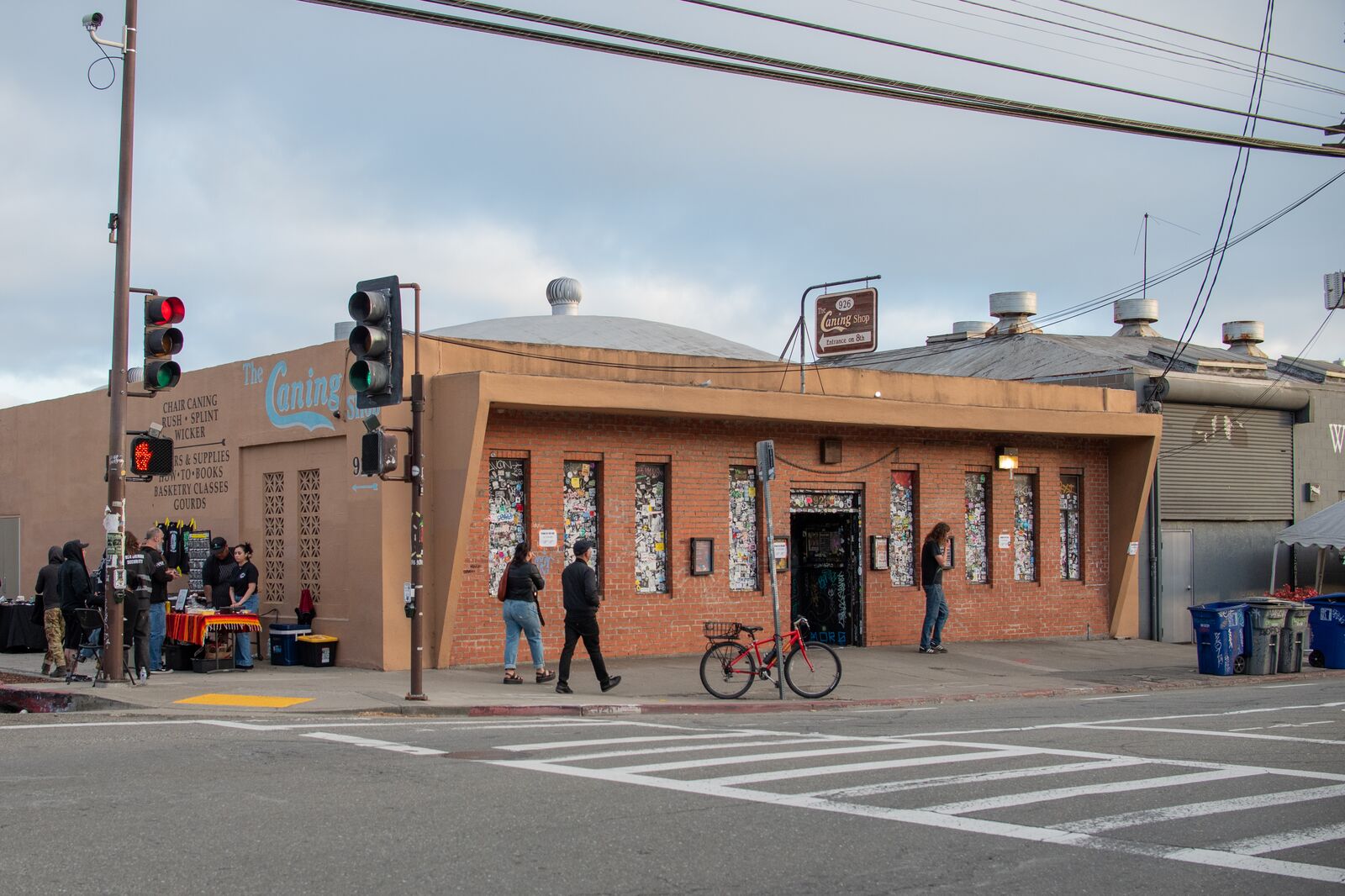 924 Gilman is working to buy its building from Jim Widess, the owner of a cane furniture repair and supply business next door who has been the venue’s landlord for the past 40 years. Credit: Ximena Natera for Berkeleyside
The only landlord 924 Gilman has ever had, Jim Widess, is one of the people who deserve credit for the venue’s survival, volunteers say.
Widess bought the former grocery store at Gilman and Eighth streets a few years after moving his cane furniture supply and repair business in as a tenant in 1979. The Caning Shop, which occupies the southern side of the building, is a dizzying Berkeley institution in its own right: Wicker furniture crowds the aisles, sent in for repairs by people from around the Bay Area, while the walls and shelves are packed with supplies for caning as well as Widess’ other passions, which include musical gourds and Hawaiian leis.
Whether you fought off skinheads, rode Big Wheels in the mosh pit, saw an iconic band or made lifelong friends, tell us your favorite Gilman story and why the club matters to you. We may use your response in a future article.
Send us an email at editors@berkeleyside.org or use the form at the bottom of this article.
Widess isn’t a punk — he prefers classical music — but when Tim Yohannon, the founder of the influential magazine Maximum Rocknroll, pitched an all-ages, alcohol-free music venue for the space, Widess agreed to lease it to him and worked with early Gilman volunteers to convince a skeptical city bureaucracy to sign off.
“I was sold,” Widess said. “I thought Berkeley could really use such a thing.”
Anna Brown remembers plenty of other venues from the 1980s punk scene she grew up in — the Tool and Die in San Francisco, the New Method, the On Broadway and the Farm, to name a few. None of those clubs are still around, Brown said. Plenty didn’t even make it to the end of that decade. Other shows were in warehouse squats, backyards or basements.
Gilman, which Brown walked into for the first time in 1987, was supposed to be different.
“The club spaces were always so ephemeral,” she said. “The whole thinking behind Gilman was just to make a place that was un-shut-down-able — that was totally [above] board and had a permit and everything.”
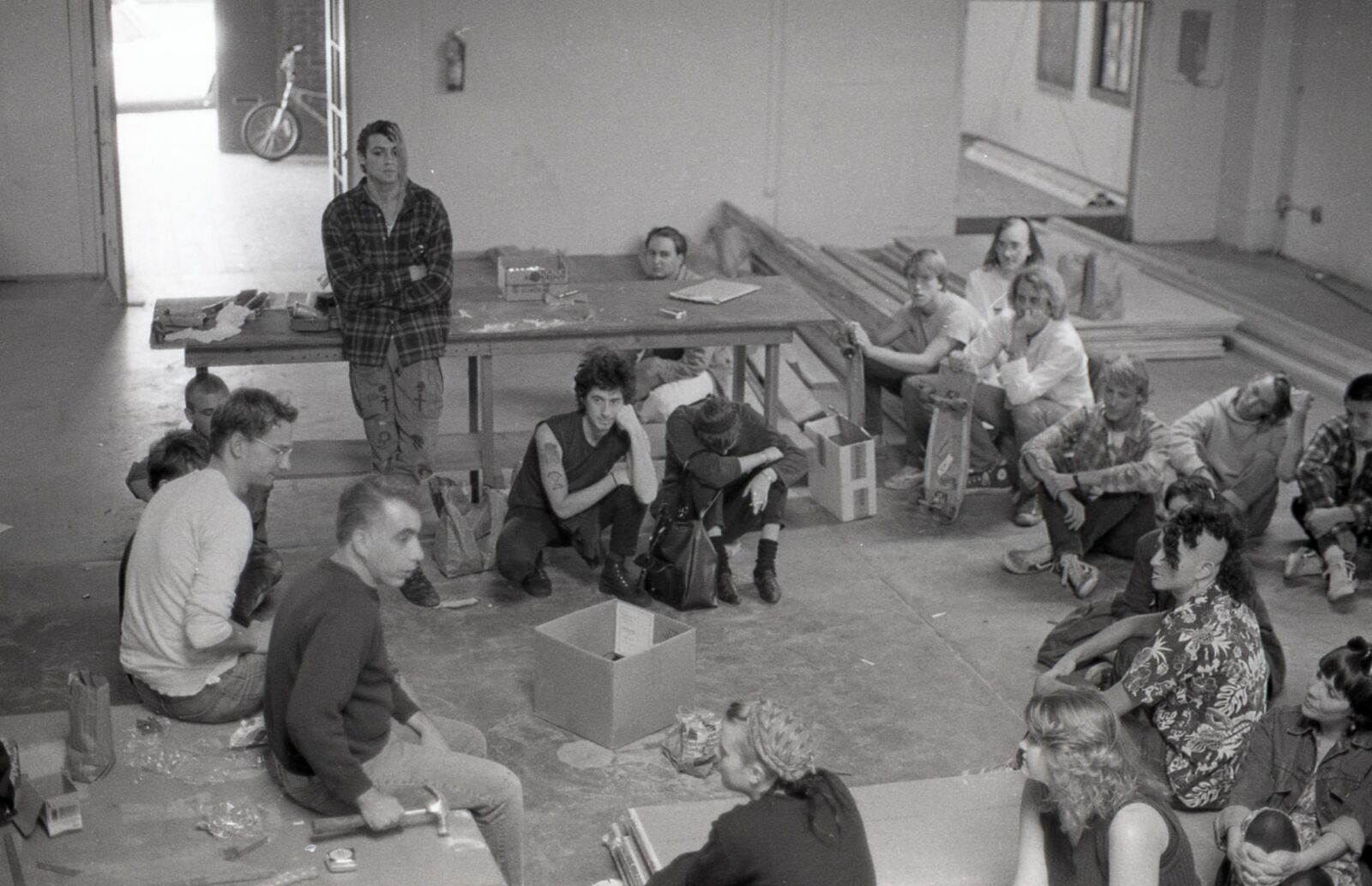 Tim Yohannon, foreground holding a hammer, holds a meeting with early 924 Gilman volunteers as they prepared to open the venue in 1986. This image is one of thousands of Gilman scenes captured by photographer Murray Bowles, a fixture of the East Bay music scene who documented some of its most legendary bands and concerts. Credit: Murray Bowles
The ensuing decade saw an explosion of punk creativity at Gilman that spurred all of the best-known stories about the venue.
These tales focus on tentpole figures such as Yohannon. The DIY values and rules stenciled in the club’s entryway, among them “no racism, no misoginy/sexism, no homophobia.” The night Gilman punks fought off neo-Nazi skinheads who tried to infiltrate the club, a showdown dramatized in the movie “Freaky Tales.” The had-to-be-there shows — by Op Ivy and teenage Green Day, as well as a festival’s worth of other regulars, from Rancid and Jawbreaker to Neurosis, Crimpshrine and Kamala and the Karnivores. The early plays staged by Miranda July. The early zines from punk scribe Aaron Cometbus.
Yohannon, who infused the club with radical politics that shape it to this day, used revenue from Maximum Rocknroll to backstop it financially early on, while also chronicling the Gilman scene for readers far and wide. McEnany said the magazine was a “punk bible,” and its coverage put Berkeley and Gilman on the map for a generation of fans across the country.
“People know Gilman, and they know it before they know maybe any other place, other than CBGB,” he said, referring to the legendary New York club where The Ramones, Blondie and other foundational bands got their start. “And CBGB is another place that closed down.”
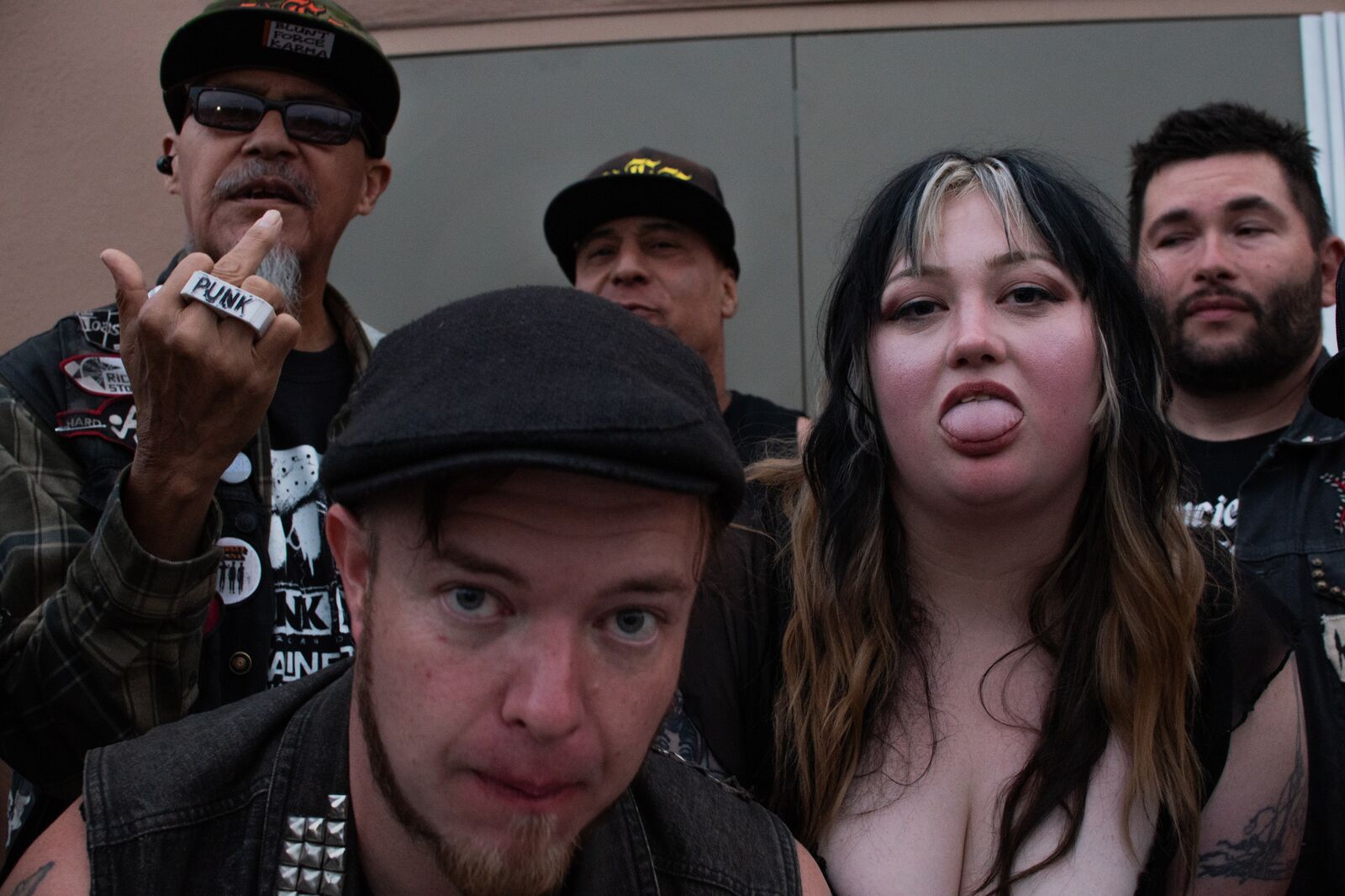 The East Bay punk scene veteran who goes by “Grinch,” left, flipping off the camera, poses along with Breanna Ellis of Sissyfit and others outside 924 Gilman. Credit: Ximena Natera for Berkeleyside
West Berkeley and Gilman Street back then seemed like the ideal place for a punk club, a neglected industrial corridor where people were less likely to raise a fuss about loud concerts or teens in the streets. Today, Gilman’s neighbors include outposts of Whole Foods and Philz Coffee, plus craft breweries and natural wineries.
Despite those changes, Widess has kept rent increases modest — the $5,300 the venue paid in monthly rent last year was cheaper, once you adjust for inflation, than the $2,000 per month it paid in 1986.
But Widess is 81. And while he insists Gilman devotees don’t need to be concerned about the venue losing its home, the building is its most glaring vulnerability.
The organization doesn’t have much in the way of payroll expenses — only security staff are paid, while everyone else, including elected leaders such as Alexander, do those jobs out of their own dedication to the DIY ethos. Most other music venues, Alexander says by way of understatement, are “more structured.”
“They have paid employees they have to pay, they have bars, they have back-of-house, front-of-house staff,” they said. “We have, ‘Hey this person wandered in one day and wanted to do this, and now they’re here.’”
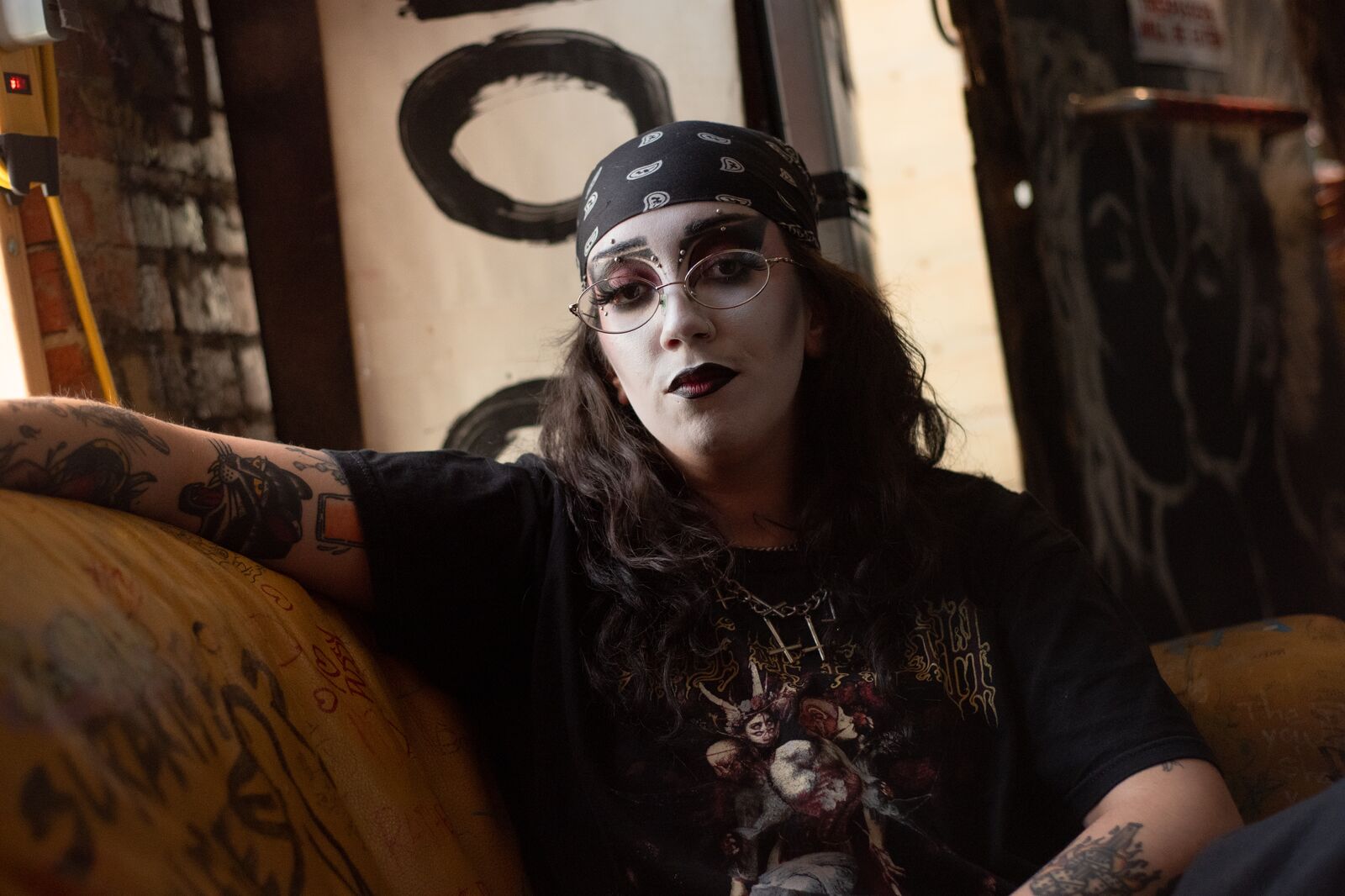 924 Gilman Executive Director Kian Alexander poses for a portrait inside the club’s office. 924 Gilman is run almost entirely by volunteers — only security staff are paid, while club officials such as Alexander do those jobs out of their own dedication. Credit: Ximena Natera for Berkeleyside
Gilman has run a surplus in each of the past three years, and ended 2025 with enough money in the bank to cover a year of rent, its second-largest expense after payments to artists. The vast majority of its revenue comes from ticket sales, most of which goes right back out the door to bands, though the club has made some money in recent years from merchandise, a Patreon page and arts grants.
The Gilman collective voted earlier this year to reintroduce the club’s $5 annual membership cards, bringing back a fixture of its early days that every attendee must present to attend a show — think of it like “DIY Costco,” volunteers say. The cards represent a contract, with attendees signing their names to affirm they will abide by Gilman’s rules as well as prohibitions on drinking and vandalism around the club (“angry neighbors & angry city councils close all ages clubs everywhere,” the contract warns). They’re also a source of revenue and have helped bolster the venue’s finances, Alexander said.
This early stage of the campaign to buy the building has been low-key, and Gilman has not yet begun to tap its roster of illustrious alumni for donations, Alexander said. The goal is to raise money to buy the building over the next 18 months to two years, and let Widess keep his shop there as long as he likes, rent-free. Gilman boosters launched a similar effort a decade ago, but didn’t wind up making an offer to buy the space.
Widess said he has discussed the latest campaign with the collective and supports it, though he declined to say how much he thinks the building is worth or what terms he would seek in an agreement. Widess is also negotiating with Gilman over a new lease that he said would give the club a number of renewal options that could keep it in place well into the future.
“I very much would like to see the club stay here and be protected,” he said.
What Gilman is now: The story didn’t end with ‘Dookie’
Jesus Galinda used to avoid the mosh pit, where people sprint and stomp in rowdy circles or slamdance, planting their feet and swinging their fists wildly. Some hold their arms up in front of their faces to avoid getting hit; others catch a blow and need to grab one of the free ice packs Gilman volunteers stock at a mutual aid table near the front door.
But when the Los Angeles hardcore band Desmadre took the stage for the headline set at the show last May, the 16-year-old Galinda dove into the swirl.
“It’s like a rush, when you’re in there letting it all out,” he said. Galinda described the feeling of connection in the pit as “chaos without no fear, because they’ll help you back up.”
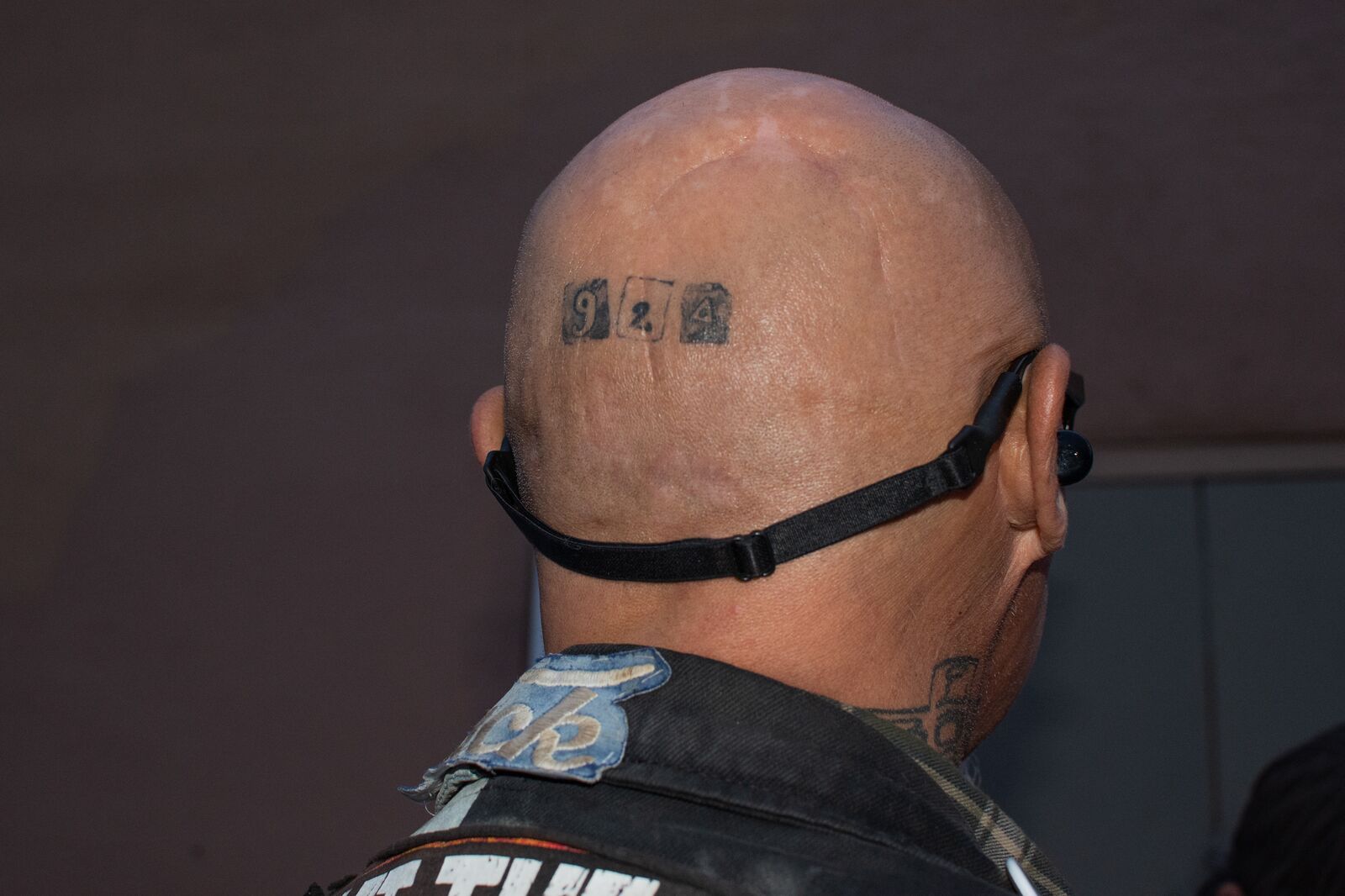 “Grinch” shows off a “924” tattoo on the back of his head. Credit: Ximena Natera for Berkeleyside
Desmadre’s show was part of what volunteers and fans describe as a thrilling hardcore scene that helps define this Gilman era, often driven by Latino bands and audiences. Performing at a table draped with the Mexican flag, the band’s DJ spun cumbias, old-school hip-hop and even the beeping earworm “El Sonidito” between songs; the crowd moshed through just about all of it. The concert was a benefit for ICE detainees and bail funds for those arrested in protests against federal immigration enforcement.
Ricardo Sanchez, a 32-year-old from Richmond, said he appreciates Gilman’s inclusivity and noticed how different the audience looked from the ones he found going to emo concerts growing up.
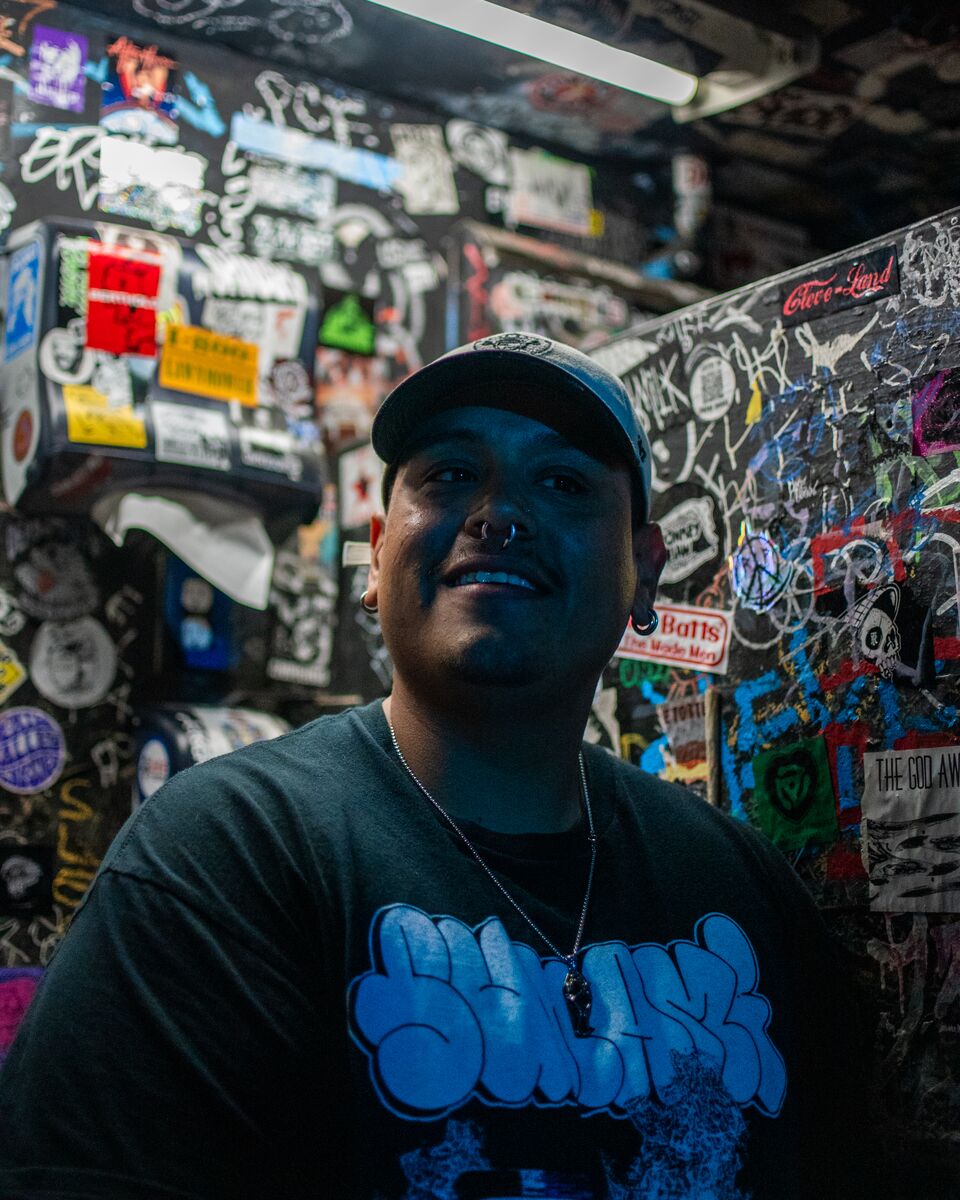 Hardcore fan Ricardo Sanchez, 32, poses for a portrait inside 924 Gilman. Credit: Ximena Natera for Berkeleyside
“A lot of the [shows] were mostly white crowds, white singers, white musicians,” said Sanchez, wearing a shirt from the San Jose band Sunami, another hardcore act he saw at his first Gilman show three years ago. “It’s a very, very diverse scene right here — it makes me feel more welcome.”
Those popular stories about Gilman leave out nights like this, because they rarely make it past “Dookie.” The breakthrough 1994 album Green Day recorded after signing with an imprint of Warner Records would go on to sell over 20 million copies, herald the arrival of a pop punk wave that shaped rock music for the next decade and famously cost the band its home at Gilman. Seeing Green Day as sell-outs, the scene shunned its members and the collective instituted a new prohibition: no major-label bands.
Sissyfit frontwoman Breanna Ennis worries the club’s first decade is so lauded it means people spend too much time talking about “what Gilman was.”
“It doesn’t get enough credit for what it is now,” she said. “This is the heart of the bay when it comes to punk music, hardcore music [and] alternative.”
Alexander said they don’t mind that so many people focus on the club’s 1980s and ’90s history.
“It still gets people talking about this place,” Alexander said. But, they added, “I always try to turn the conversation around to what’s currently going on, and the bands that play here now.”
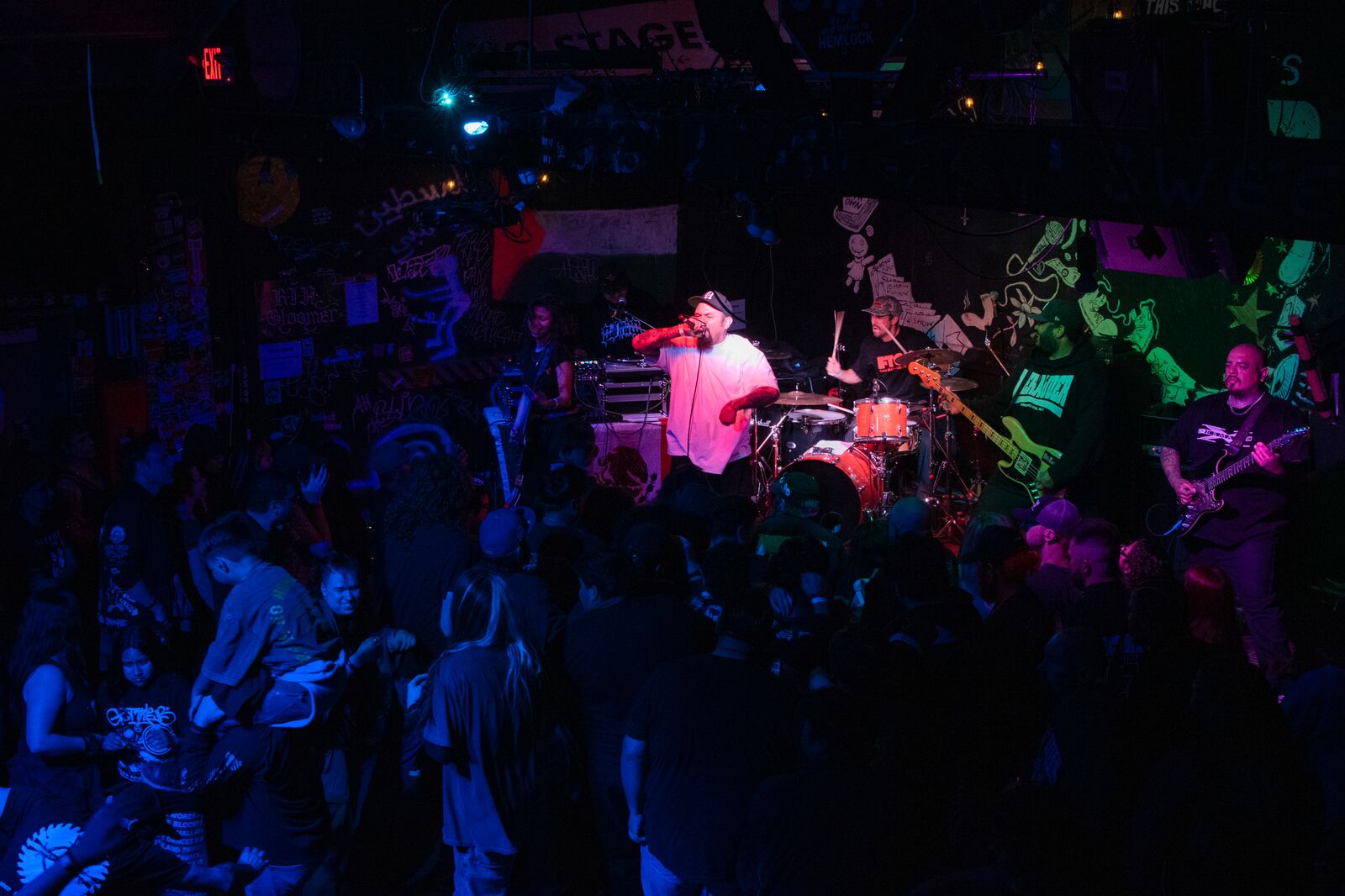 The Los Angeles hardcore band Desmadre play at 924 Gilman. Credit: Ximena Natera for Berkeleyside
The club remains a haven for punk and hardcore shows, but it also resists being pigeonholed. You’ll find emo, ska and bluegrass bands on the stage, along with drag shows, open mics and the occasional “goth night,” where black-clad teens are invited to dress up and dance. Yoga classes, narcotics anonymous meetings and a group of gourd aficionados organized through Widess’ shop use the space some days.
Even turn-of-the-millenium pop punk, with its fraught history at Gilman, has found a home there: A show this month included a local band that covered the 1999 alt rock radio mainstay “My Own Worst Enemy,” while the bassist for another act on tour from New Jersey sported a Sum 41 T-shirt.
“There’s a lot of venues where you’re strictly going to find one thing,” said Alyx Feied, who sings and plays guitar in the East Bay band Mugslug, after a show in April. “Gilman is everything.”
“We’ve seen a country band here,” drummer Kazuma Minton chimed in.
“Yeah,” Feied said, “they’ll let anyone play, as long as they’re not signed to a big label.”
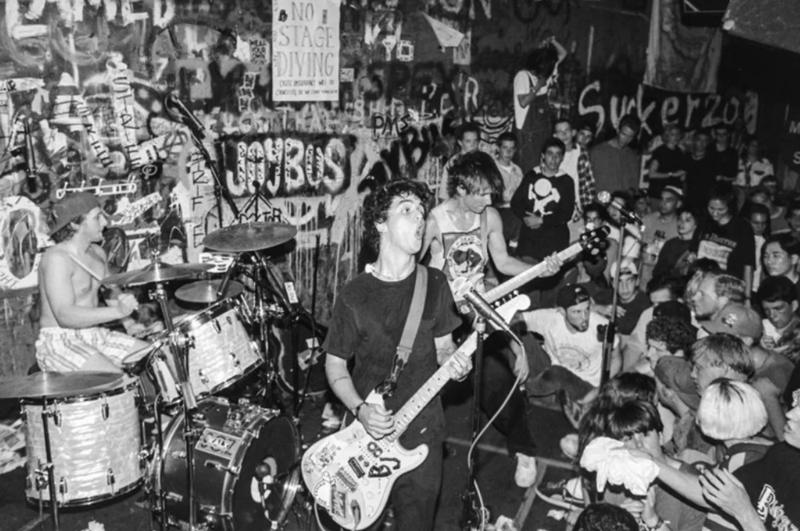 Green Day perform at 924 Gilman in 1992. The band was banned from the venue after it signed with an imprint of Warner Records and released its era-defining album “Dookie” in 1994, but returned for a benefit concert in 2015. Credit: Murray Bowles
Ah, right, the ban on major labels that “Dookie” prompted — which applies to bands as well as industry scouts — is still in effect. So does that mean Green Day is banned from Gilman?
No. Well, not really. But kind of?
You won’t find photos of Billie Joe Armstrong, Mike Dirnt or Tre Cool on the back of the door to the club’s office, the wall with pictures of those who have been “86’d” for bad behavior. Relations between Green Day and Gilman thawed in the 2010s, when the band made its triumphant return to the venue’s stage — or, rather, played on a new stage it bought for the venue — and put on a benefit show to support the club. Not everyone was thrilled; after the band bought Gilman a new sound system ahead of its concert, the person who had installed its old sound board took it back, incensed the venue had accepted anything from Green Day. The band has also filmed a music video inside the club and visited it with a CBS News crew.
But Alexander said Green Day could not, if it so desired, simply fill out the booking form on the Gilman website like any other band. If Green Day wanted to play, that request would have to be approved by the Gilman collective at one of the meetings where most decisions about how the club is run are made by a vote of volunteers. (Representatives for Warner Records did not respond to Berkeleyside’s request to interview members of Green Day.)
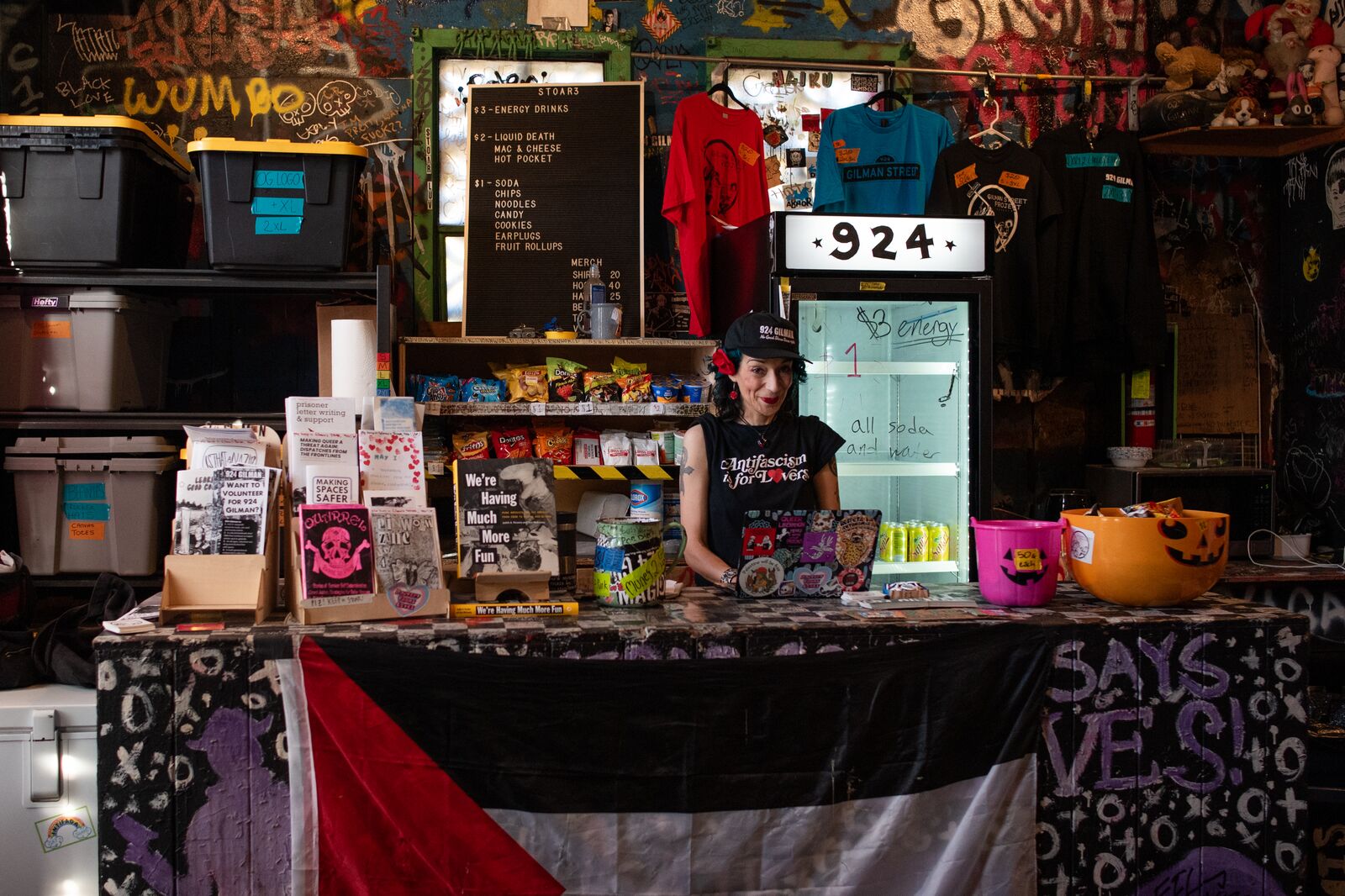 Gilman volunteer Pati Zapatita stands at the venue’s concession stand, known as “Stoar.” Credit: Ximena Natera for Berkeleyside
There would probably be debate over the idea of Green Day playing Gilman again, because volunteers debate everything at the collective meetings — a recent one included extended discussions of the fine details of a merchandise order, and whether to place a $15 ad in a community newspaper. But what about a Green Day benefit concert to help with the push to buy the building? Gilman hasn’t asked the band, but Alexander would be OK with it.
“Seeing as this is really to preserve the history and preserve the space and make sure it’s here for many generations after us,” they said, “I don’t see how it would be the end of the world.”
The 40-year relay that keeps Gilman alive
Less than two years after Yohannon opened Gilman, he shut it down.
“There was a lot of burnout, he was kind of over it, and he closed the club,” board member and longtime volunteer Phil Ramey said, recounting the history from a couch in the Gilman office, where the walls are covered in fliers for bygone shows from Fugazi to The Linda Lindas.
For all the work to make the venue un-shut-down-able there was never any guarantee that Gilman would survive, and by the fall of 1988, it looked like it wouldn’t.
But then a bunch of Gilman kids, who Yohannon had given jobs running the club and steeped in DIY punk values, put them into action. They organized collective meetings up the street at another stalwart Berkeley music venue, Ashkenaz, and eventually reopened the club without its founding father. Ramey distilled their message: “You taught us how to do this, so we don’t fuckin’ need you.”
In so doing, those punks created the template for how Gilman would sustain itself for generations to come.
“It’s never been about any particular person,” Ramey said, “not even Tim Yo.”
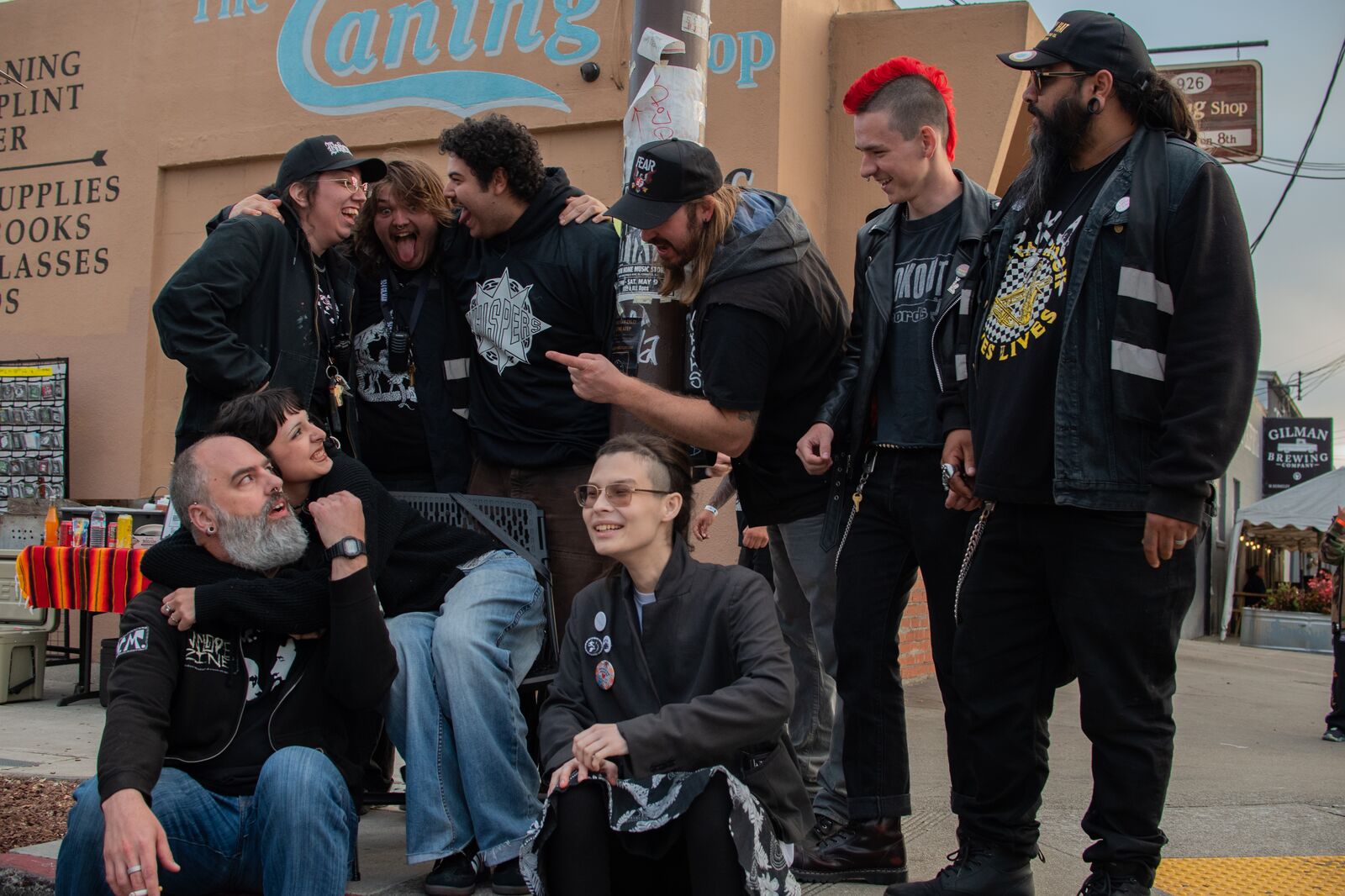 A crew of 924 Gilman volunteers and security staff outside a May 2026 concert. Credit: Ximena Natera for Berkeleyside
When Bottom of the Hill’s three co-owners announced their plans to close, they told Coyote Media a range of challenges factored into the decision, but the main driver was an understandable desire to move on after decades of tireless work running the venue.
Gilman, however, operates on a self-perpetuating cycle where people discover the place, fall in love with it and are immediately enlisted in keeping it afloat.
The typical Gilman kid might go the first time for a band — maybe their friends’ group, or someone they found on social media or a streamlining platform. When they walk through the door, they find something they’ve been looking for.
They go back for another band, an opener they liked from that first show or one from a flier on the wall that caught their eye. That show will beget more shows, until they’re volunteering to work the side door or sweep up at the end of the night so they can get in for free.
They keep coming back until, at some point, they don’t go to Gilman for bands anymore. They go because it’s where their friends are. Where they can dance or dress the way they like.
“Here, I can be who I am,” said 16-year-old Leila Dacascos, who worked the front door of the Desmadre show.
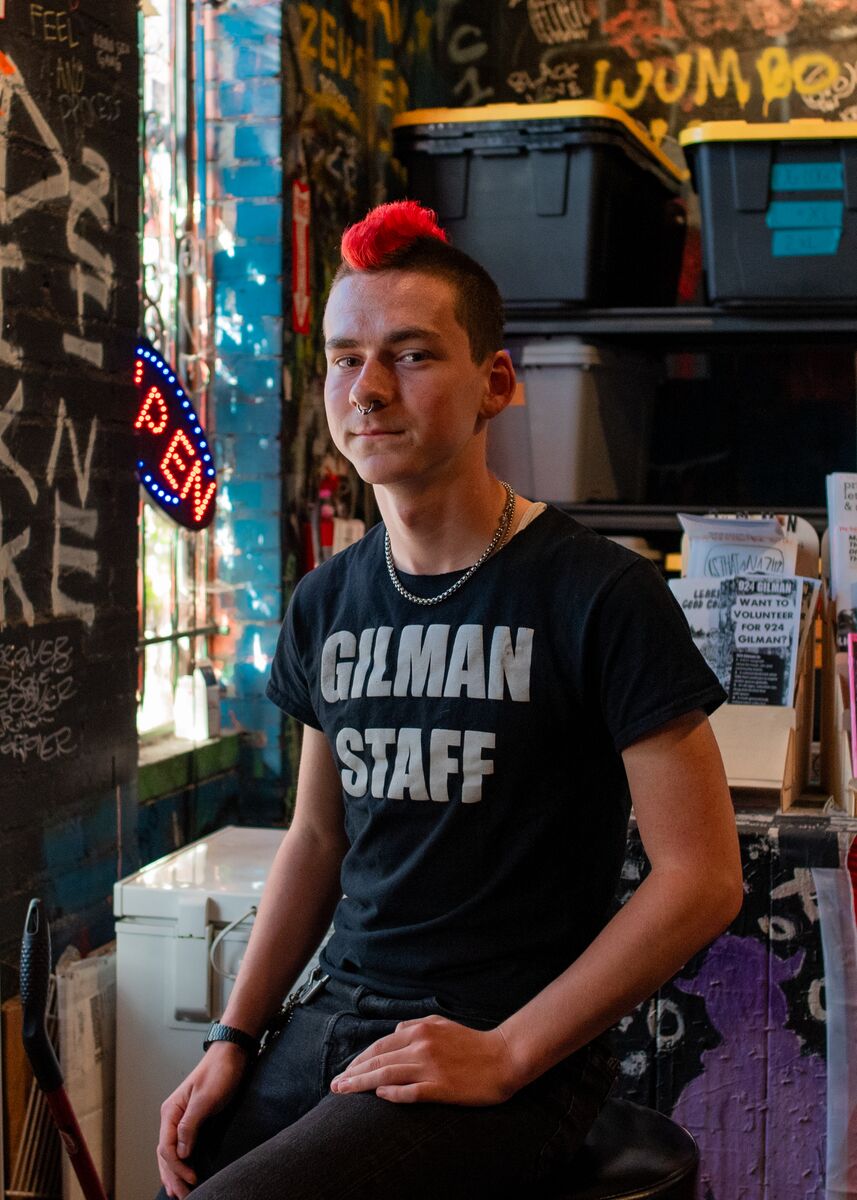 Gilman volunteer Viktor Maese, 15. Credit: Ximena Natera for Berkeleyside
They start showing up for collective meetings, and eventually take on some job that needs doing.
“I can try my hardest to help keep this place alive,” said Viktor Maese, 15.
Gilman’s lead coordinator, who goes by Strychnine Valentine, grew up in Arizona obsessed with Green Day. She made what amounted to a pilgrimage to Gilman shortly after she moved to the Bay Area, Valentine said, then “never stopped going.” Within a couple of weeks she was an elected Gilman volunteer with keys to the venue. Some old punks might scoff — Valentine fell in love with Green Day’s 2009 album “21st Century Breakdown,” when the band wasn’t just commercial, it was pop — but she’s the one volunteering 40-plus hours a week to put on shows.
Alexander knew nothing about Gilman’s history when they came to work security at a show in 2022; three years later they were running the club.
“There’s nothing more special than feeling like you don’t have your place in the world and then arriving somewhere, and being given agency,” said Corbett Redford, a former Gilman board member who directed the 2017 documentary “Turn It Around: The Story of East Bay Punk.”
No, it’s not always easy to wrangle teenage volunteers. Yes, the burnout rate for the club’s leaders is high — people rarely just leave Gilman, says former executive director Alex Botkin, they only move, die or have a falling out with the collective.
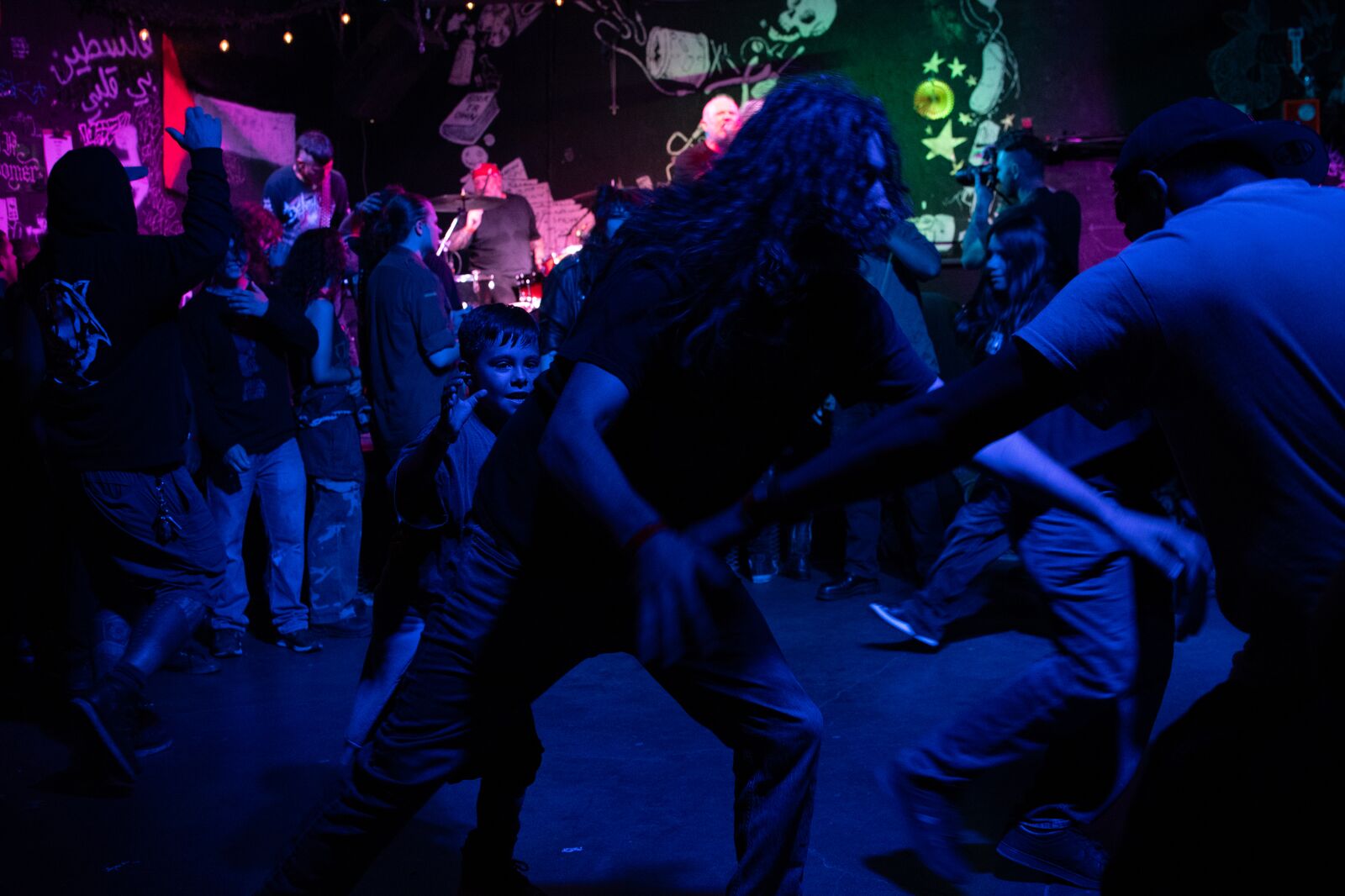 Hardcore fans of all ages in the mosh pit. Credit: Ximena Natera for Berkeleyside
But the volunteers pour their lives into the place because they see young people bored of being on their phones and desperate for somewhere to hang out. They do it to make sure Gilman is there for the next person who is about to walk through the doors for the first time.
“Those kids need a place where they can come and feel like they’re a part of something,” Valentine said. “It’s worth it when I see the kids having a space where they can have fun and make community.”
Gilman has carved out what Alexander describes as a “perfect, odd middle ground” between ephemeral creative spaces that get red-tagged or evicted and venues farther up the brutal music industry food chain that are struggling. The club is established enough to be lauded by city officials and draw on the support of former regulars whose days in the mosh pit are behind them — Redford envisions alumni coming together “like Voltron” if the venue was truly at risk of closing. But the DIY punk spirit still animates Gilman, which means it’s constantly reinventing itself and enlisting new generations of bands, fans and volunteers to carry the torch.
Those rules on the wall foster an environment where people can find themselves and feel valued for whoever that is. It was the draw 40 years ago, when neo-Nazis were lurking outside, and it’s the same draw today, when white supremacists are marching in the streets and lurking on the devices we carry in our pockets.
The people and the sounds can change — the musicians can be legends in the making or teenagers who will never record an album — but what Gilman offers will always be in demand.
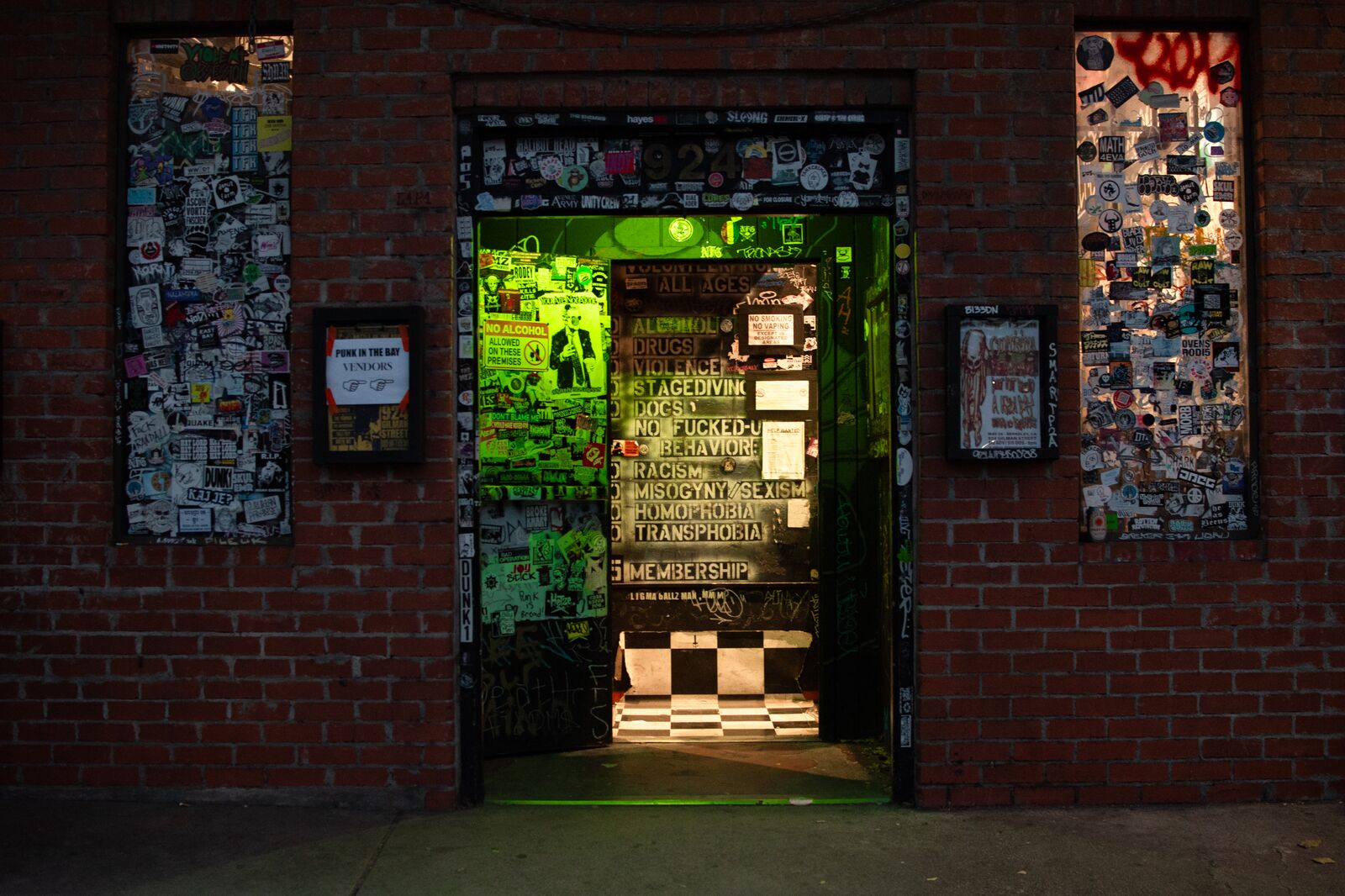 The entryway to 924 Gilman includes the legendary wall spelling out the venue’s rules prohibiting racism, sexism, homophobia, transphobia and violence. Credit: Ximena Natera for Berkeleyside
Related stories
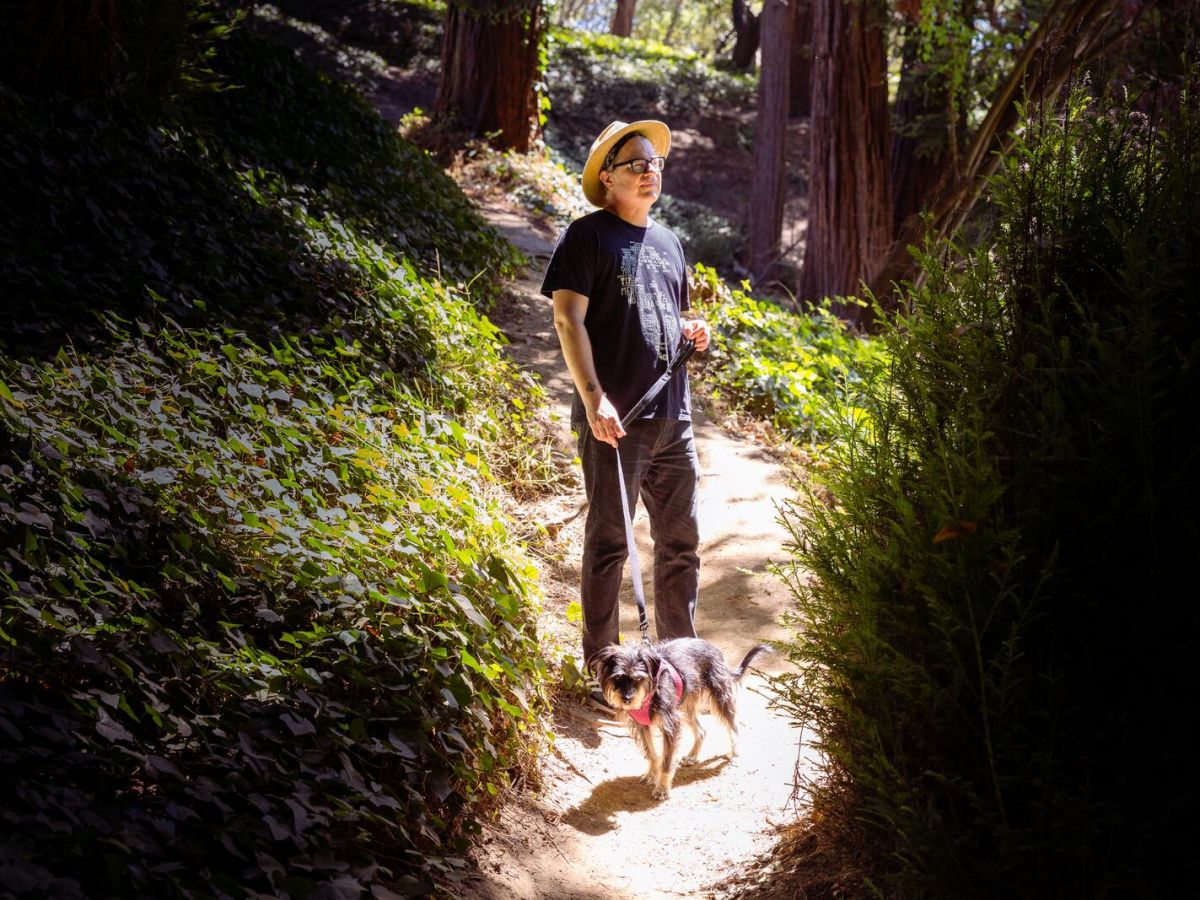
Green Day guitarist is obsessed with the hidden pathways of the Berkeley Hills
August 18, 2026Aug. 19, 2026, 3:41 p.m.
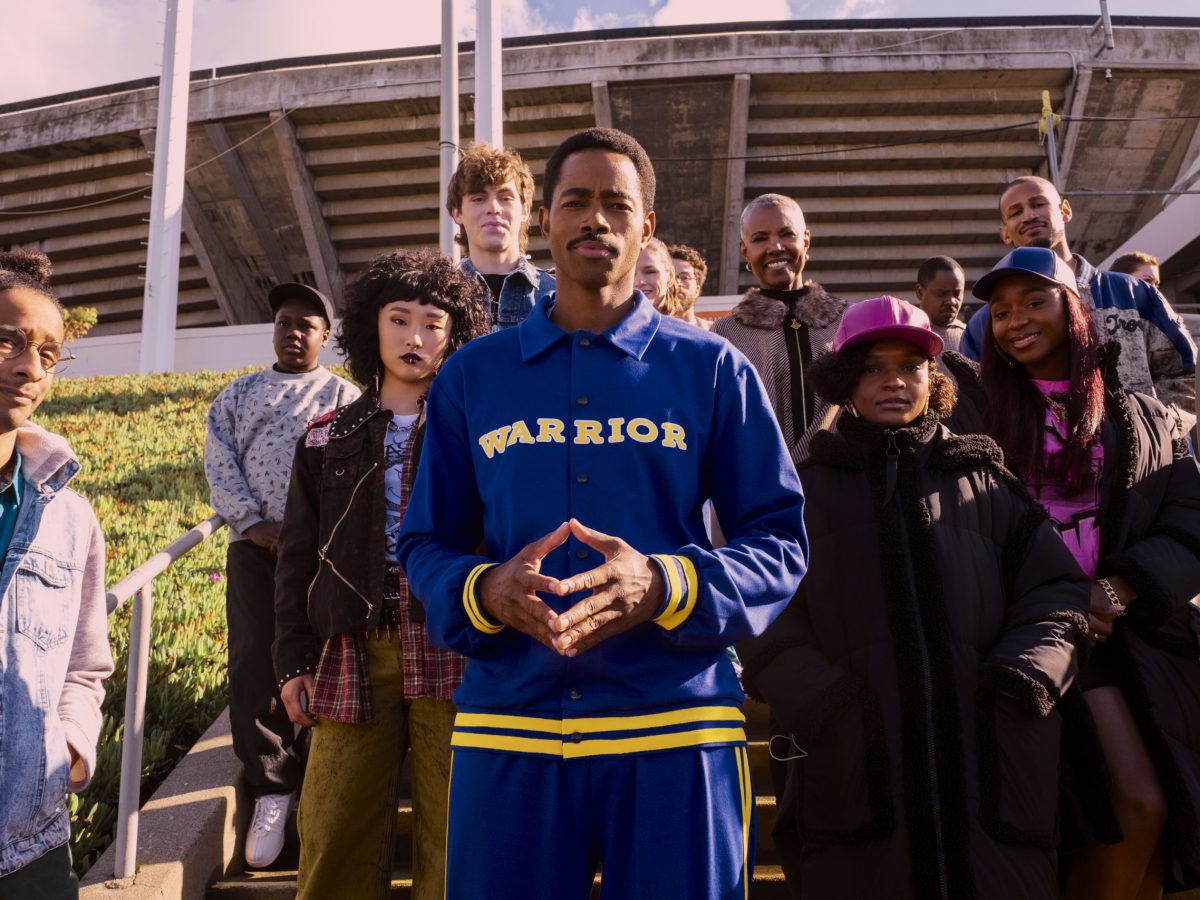
Filmed in Berkeley and Oakland, ‘Freaky Tales’ is a love letter to East Bay’s punk scene in the ’80s
April 3, 2025April 3, 2025, 10:01 a.m.
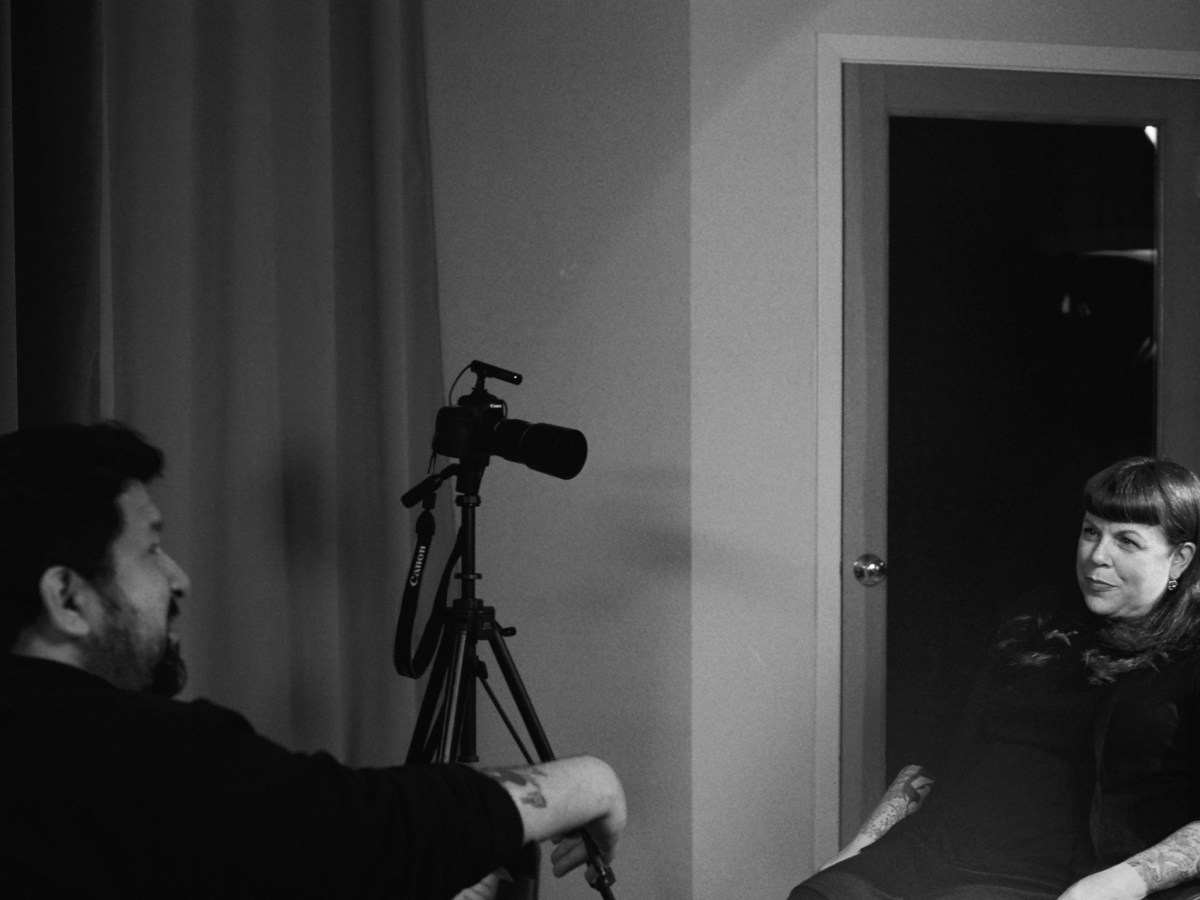
A conversation with Corbett Redford, director of ‘Turn It Around: The Story of East Bay Punk’
May 30, 2017Aug. 4, 2022, 2:30 p.m.
“*” indicates required fields