
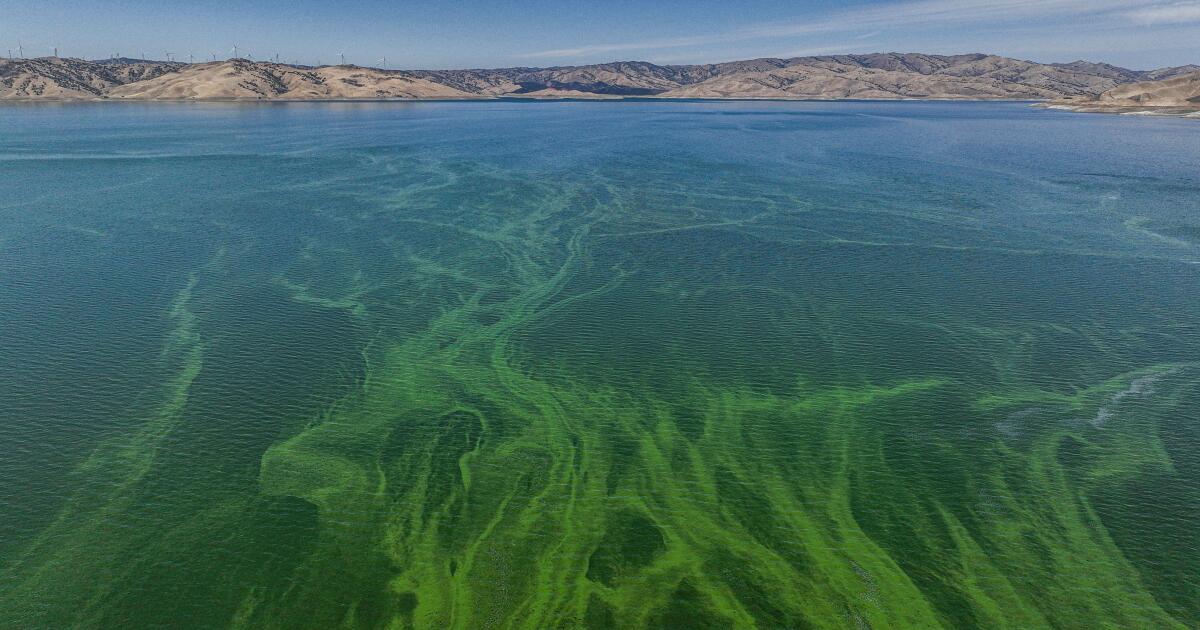
California air regulators will start tracking estimates of the gases that bubble up from the state’s artificial reservoirs and contribute to climate change.
The California Air Resources Board says it will begin reporting how much of the planet-warming gases methane and carbon dioxide are released from dams and reservoirs.
The Air Resources Board adopted the new policy last week in response to a petition by environmental groups. It turned down the groups’ request that it require reports on emissions from managers of dams and reservoirs but said it will start collecting estimated data using methods recommended by the U.N. Intergovernmental Panel on Climate Change.
Steven Cliff, CARB’s executive officer, said in a 29-page response to the environmental groups that the agency is committed to “further study of emissions from dams and reservoirs.”
He noted that research shows reservoirs, when first constructed and filled, release some carbon dioxide as plants decompose underwater. But the gas that’s released in larger quantities is methane, which forms underwater as plants and algae break down and then bubbles to the surface.
Researchers have estimated that the waters held behind the world’s dams emit between 10 million and 22 million metric tons of methane per year — roughly equivalent to 3% to 7% of all the methane from human activities.
Cliff said in an email that the air board “recognizes the importance of evaluating climate emissions from major sources and investing in advancements in scientific understanding — particularly at a time when the federal government has turned its back on basic public health protections.”
Last year, the Trump administration stopped reporting such data detailing various sources of climate pollution to the United Nations.
Cliff said California air regulators plan to “consider how best to incorporate this new information into our ongoing work.”
The board is in charge of regulating pollutants that cause global warming. California has set a goal of reducing methane emissions to 40% below 2013 levels by 2030.
“It’s a really big step forward,” said Gary Wockner, director of the nonprofit Tell the Dam Truth, which submitted the petition with a coalition of groups.
He said California is the first state in the country to start tracking greenhouse gases from reservoirs based on the latest science.
Keiko Mertz, policy director for the group Friends of the River, said it’s good news that California will “take up the slack in climate reporting that the Trump administration has so mistakenly dropped.”
Data on methane from reservoirs has been a “blind spot” as California works toward its climate goals, she said, and bringing the potent greenhouse gas into the state’s accounting is vital.
She said it’s also positive for rivers because there is “mounting evidence that some dams and reservoirs and water infrastructure do more harm than good.”
The clothing company Patagonia joined the environmental groups in their petition. Ryan Gellert, the company’s chief executive, said the state’s plan to assess the planet-warming gases coming from dams and reservoirs is “a critical step forward in California’s transition to cleaner energy and water infrastructure.”