
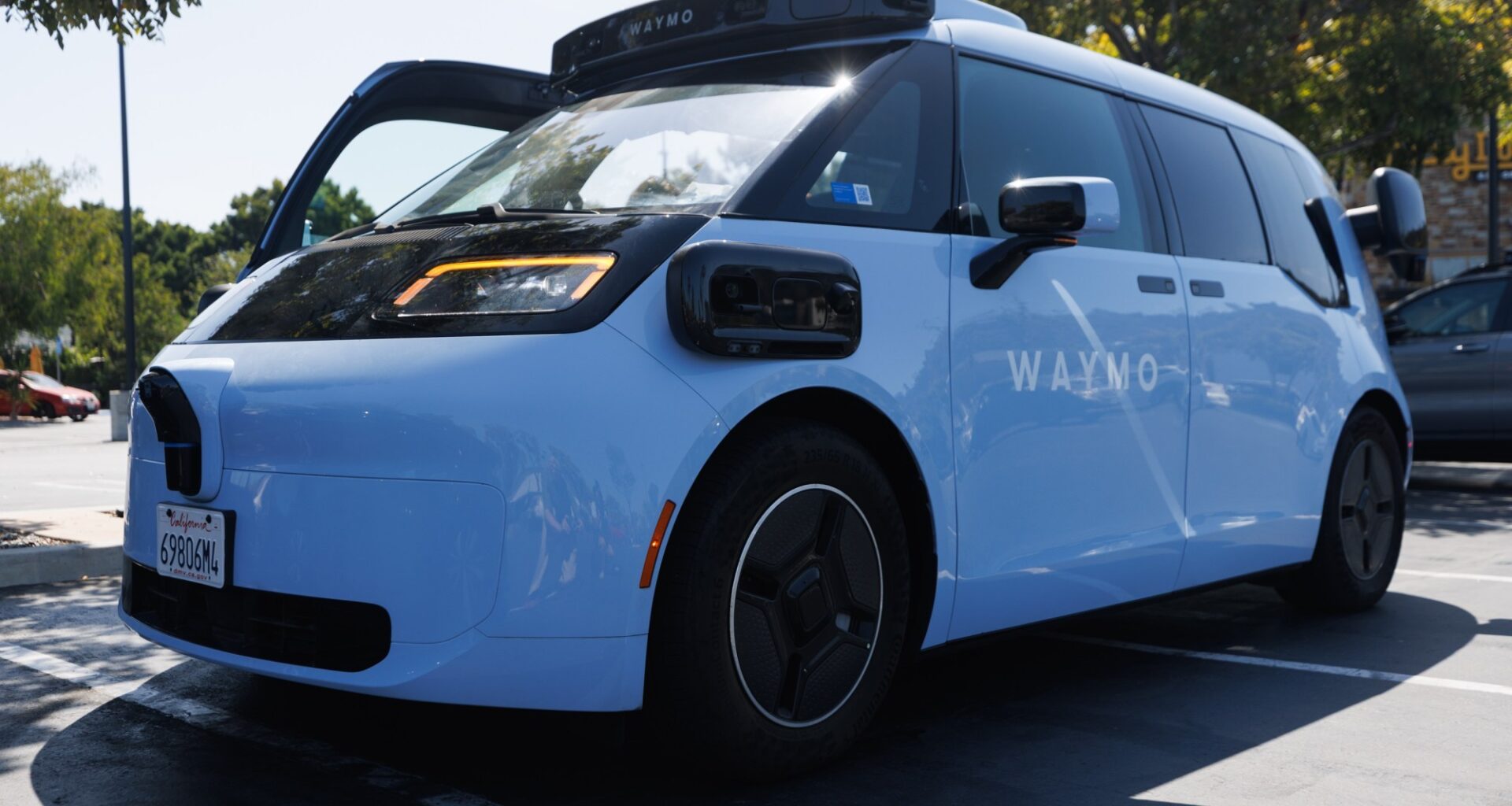
Robotaxis are preparing to pick up passengers in San Diego.
Waymo received the green light from the state — officially permitted by both the California Department of Motor Vehicles and the California Public Utilities Commission — to start service later this year.
Studies have shown that these robotaxis tend to be safer than human drivers — no road rage, allegedly no plans for world domination. But if your only frame of reference is “Terminator” or the latest viral clip of a Waymo doing something stupid, a little skepticism is fair.
So the Union-Tribune climbed into the car and road along — or technically alone — to get real answers on how these things actually work.
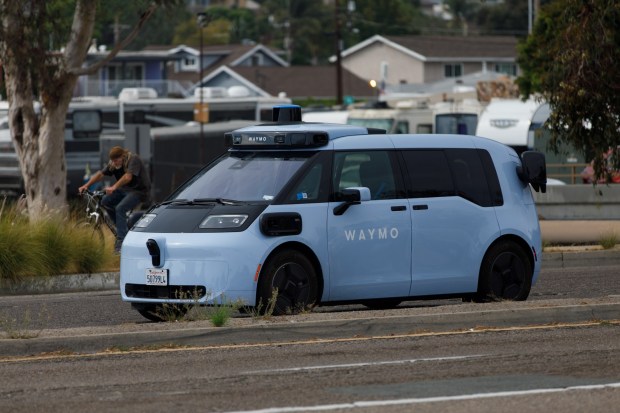 A Waymo Ojai drives along Tecolote Road in San Diego. (Kristian Carreon / The San Diego Union-Tribune)
What it feels like inside a Waymo
The shock and awe of the self-driving steering wheel fades pretty fast, and then, it just feels like being in a minivan.
The greatest appeal, though, is the ability to customize your ride. Users can unlock the doors, change the music, the temperature and the destination, all through the app or the tablet inside the car.
And though the blue Ojai EV is spacious, it can only fit four guests. Any more people in your party and riders risk getting their account suspended.
Where Waymo will (and won’t) go
In the next few months, Waymo will start by operating in 40 square miles, stretching from Pacific Beach south to Sunset Cliffs, southeast to Barrio Logan, and northeast to Normal Heights. The company is not yet serving the San Diego International Airport, as they are awaiting a permit from the city.
Residents in Orange County, Oceanside and Carlsbad will have to wait to ride in a Waymo. The company has started training its cars in these areas north of San Diego, but it has yet to announce an official timeline for servicing riders.
For now, the company encourages San Diegans to download its app for a chance to be among the first riders here.
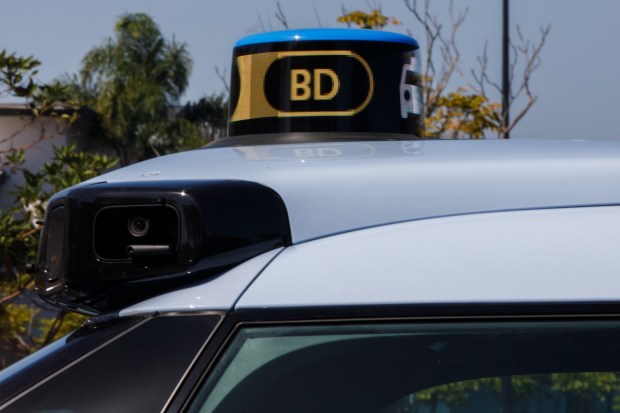 The rider’s initials are displayed on what the company calls a “central perception dome” to let users know it’s their car. (Kristian Carreon / The San Diego Union-Tribune)
Calling for help when robotaxis go rogue
If you’ve been online, you probably know that these self-driving cars screw up. In these instances, the company encourages riders to call on Riders Support, where users can talk to a real human. This service is available 24/7 through the tablets in the car or the app, and a response is guaranteed within 60 seconds, according to the company.
Rider Support agents can see through the cameras, hear through the speakers and control the car remotely.
For a more immediate traffic issue, riders can press the “pull over” button on the tablet or the “door” button on the door, and the vehicle will stop when it’s safe.
If a rider needs help after they’ve left their Waymo —for example, if a rider left behind their purse or other item — they can contact customer support via email or in-app chat.
The lost-and-found is located at Waymo’s Element depot, available for pickup the next day. Each city will have its own lost-and-found; the San Diego depot is in Morena. Riders will be given the exact location, but the company doesn’t publicize the location of our offices or depots, said Waymo spokeswoman Sandra Karp.
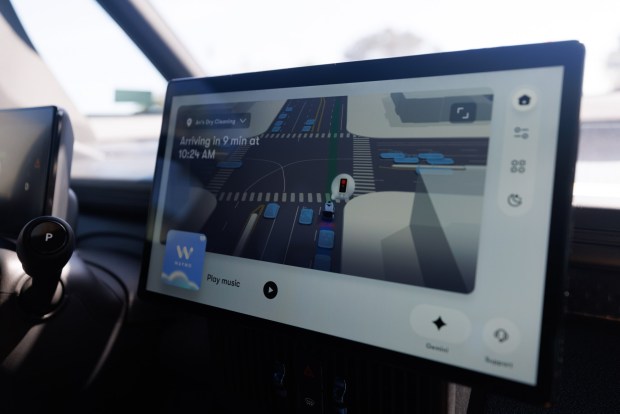 Riders can interact with the tablets inside the Waymo to change the music, temperature and address. (Kristian Carreon / The San Diego Union-Tribune)
Who’s allowed in the car
You — if you’re over 18 — and up to three friends are eligible riders.
Waymo can check who’s in the car by accessing the cameras. The company says that it doesn’t use facial recognition, so it assumes the rider to be the person registered with their app.
Kids can tag along, but only if they are accompanied by an adult. If a minor is spotted riding alone, the account it was ordered from could get suspended.
“If we notice that there are riders that are below the age limit, we might call in and just check on things and make sure things are up to our terms of service,” said Karp.
Pets also aren’t allowed, unless they are a service animal. (Technically, Waymo cannot verify whether an animal is a service animal or not, said Karp, but violating the rules may result in an account suspension or ban.)
If someone else takes the Waymo you ordered, the company said they would cover the cost and help you order a new one. Karp says “that’s unlikely” to happen because the user will know it’s their car by checking the initials that are illuminated on top of the car and by unlocking the doors from the app when they are ready to ride.
Fine print (and fines)
Waymo likes to emphasize the idea of a “shared fleet.” It’s not your Waymo or my Waymo, it’s our Waymo, and the company wants you to treat it as such, explained Karp.
Try not to eat in the fleet, but if you do “be sure to leave no crumbs,” she said.
For those who self-report a mess during their ride, the fee is $50. For messes that go unreported, Waymo charges riders $100 for a first violation. For subsequent violations, the fee goes up to the cost of cleaning.
Alcohol, drugs, smoking and vaping also aren’t allowed, and riders caught inside the car will be charged a $100 fee for a first violation.
Packing more than four friends or putting children in the car without an adult may result in an account suspension.
What else
Kissing is allowed, but removing your seatbelt — or clothing — is not. “We are happy to help riders get to a place where they might be able to continue that part of their night,” Karp said, adding that engaging in sexual activity is grounds for immediate removal from the vehicle.
Waymo has a list of rules that users consent to when ordering a car. A few other key rules: No one is permitted to sit in the driver’s seat, and riders may not bring a weapon into the vehicle.
A more in-depth list of rules is available online. (You can also appeal a ban or charges by contacting the Waymo support team.)
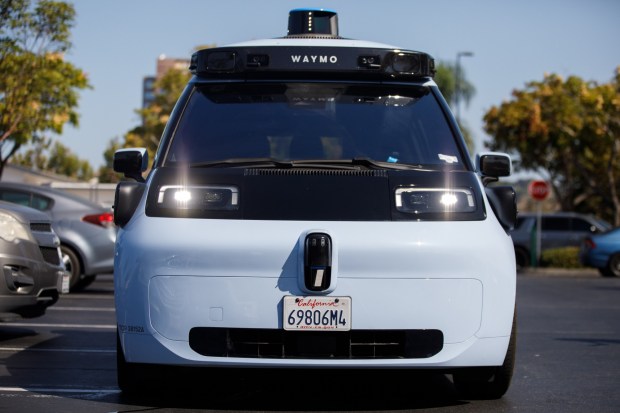 In San Diego, Waymo will start by operating in 40 square miles, stretching from Pacific Beach south to Sunset Cliffs, southeast to Barrio Logan, and northeast to Normal Heights.(Kristian Carreon / The San Diego Union-Tribune)
Smile, you’re on camera
There are 13 high-resolution cameras outside of the vehicle that can see up to 547 yards in the day and night. There are also three cameras inside the cabin that can see the inside, outside and trunk.
Waymo records all of its trips. Inside the cabin, both audio and video are recorded during trips.
Waymo retains the audio and video of the trips for improving its service and addressing safety concerns. The company said it would comply with law enforcement if footage is requested during an investigation.
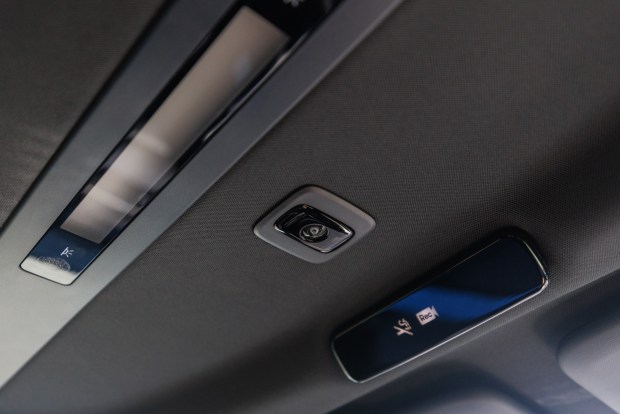 The Waymo records audio and video during rides. (Kristian Carreon / The San Diego Union-Tribune)
Who taught the car to drive
To understand how the cars drive, it’s important to understand how Waymo cars think.
During the ride-along, Union-Tribune reporters watched the Waymo make a traffic decision in real time. Two trucks had stopped in the middle of the street and blocked its path. Rather than swerve around them into oncoming traffic, the Waymo waited until the vehicle ahead of it cleared the way.
A Waymo vehicle makes decisions based on both physical data and the semantics it’s learned from hours of training and programming.
Waymo’s physical sensors — cameras, radar and lidar — work a lot like your garage door’s safety sensor: if something breaks the trip line, the system stops.
But driving requires more complex reasoning than just stop and start. That’s where the system’s “vision language model,” or VLM, comes in. The VLM was trained using Google’s Gemini model to better understand rare, novel and complex scenarios on the road.
So for example, if Waymo’s cameras process a fire in front of them, the car will stop at a safe distance — even though the hazardous area is technically passable — because it was trained to recognize the scenario from data.
The biggest criticism is the cars’ inability to problem-solve during unexpected traffic incidents, like the grid issue in San Francisco. In December, Waymos were left idling in heavy traffic. While they were stuck, some cars completely drained their electric batteries and stalled out in the middle of streets and intersections, worsening the traffic jam.
As Waymo rolls out in San Diego, the Union-Tribune asked how the cars would react during fires or floods.
The company didn’t respond specifically to issues regarding natural disasters, but said as Waymo expands it will learn how to better handle these kind of driving scenarios.
When Waymo breaks the rules
Waymos have been cited for illegal parking and had to pay a fine. They’ve also been caught in a few fender benders and had to file for insurance claims. “The rules of the road apply to us, just as they do everyone else,” said Karp. “The Waymos are designed to adhere to the speed limit… and we’re designed to also always come to a full stop.”
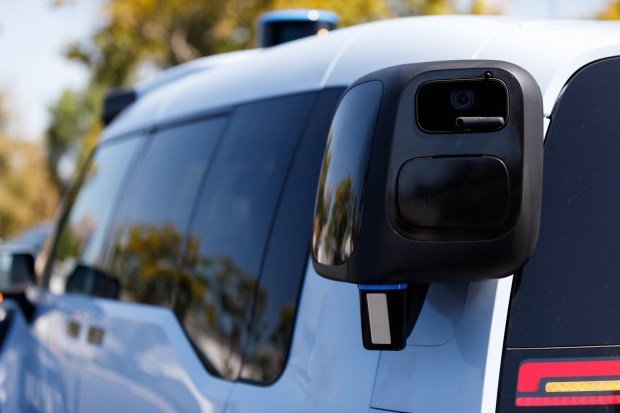 Sensors equipped with a camera, radar and LiDAR are attached to the rear of the Waymo Ojai. (Kristian Carreon / The San Diego Union-Tribune)
Fare game: What it actually costs
There’s no straightforward answer to what a ride actually costs.
But what the company will say is that its pricing is dynamic. ‘It’s based on distance and time. So it really depends on the time of day. So if it is busy, prices might be a little higher,” said Karp. Unlike human-operated ride-hailing services, you don’t have to tip.
While there hasn’t been an official study, anecdotal evidence and reports across the internet consistently say that Waymo is more expensive than Uber in cities where driverless cars have been deployed.
Waymo chalks it up to simple economics. Because their fleet size lags the market demand, prices surge. Though the company wouldn’t share exact numbers, Waymo is starting with “a few dozen cars in San Diego … and will gradually scale over time,” said Karp.
In total, Waymo has over 4,000 cars in 15 cities, up from only 700 last year, according to the company.