
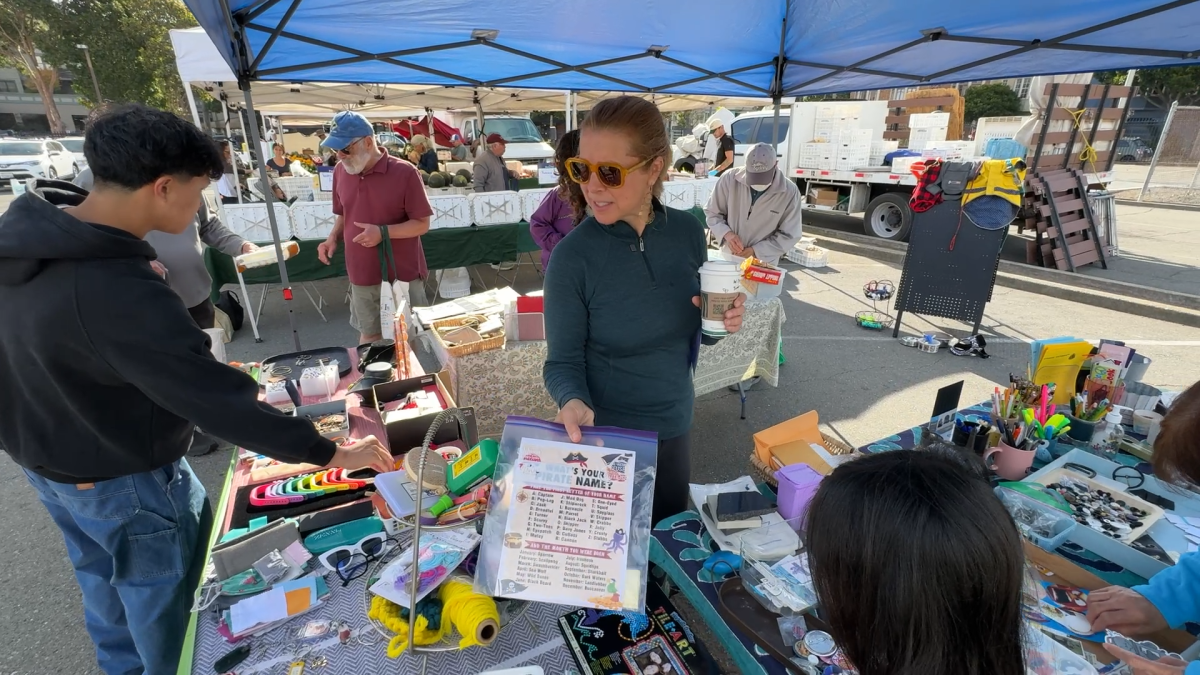
It’s Tuesday morning, and Lela Means is in her San Francisco garage, unpacking, weighing, and sorting thousands of small items: sunglasses, pieces of fabric, and picture hanging wire to name just a few.
It’s the kind of stuff a person typically keeps in a junk drawer. To Means, however, it’s not “junk;” they are small, useful items simply in need of a new home.
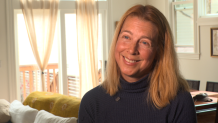
To understand why Means is doing all this, you have to go back several years and several thousand miles away to a different garage in Pennsylvania.
After her mother died, Means was sorting through the belongings at her home. The larger items went to Goodwill. Trash went into the garbage. But many possessions didn’t fit neatly into either category.
“I’d say they were too good for the landfill and maybe too small for Goodwill,” Means said. “Things like sunglass cases, broken jewelry, partially used craft supplies and pieces of fabric.”
Rather than throw those items away, Means boxed them up and brought them back to San Francisco. There, she and a friend came up with an idea.
What if they set up a table at a local farmers market and offered those small but useful items to anyone who wanted them? What if they invited others to do the same?
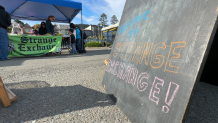
The result was a community swap table they called Strange Exchange.
“A lot of people go, ‘Why are you doing this?'” Means said. “And we usually answer, ‘Because it’s fun.’ We enjoy knowing that this stuff is finding a new home.”

Means doesn’t describe the concept as recycling. Instead, she calls it “reshuffling;” helping items move from one person who no longer needs them to someone who does.
When Strange Exchange launched, she had no idea how people would respond.
Three years later, she has her answer. The high number of regular customers lets her know the people love it. So does she.
“We just love interacting with other people in our community and meeting people who might have ideas about new stuff we can collect.”
Most Sunday mornings, Strange Exchange can be found at the Divisadero Farmers Market, set up in the parking lot next to the local DMV. Visitors browse through an ever-changing assortment of items and often leave behind things they no longer need.
At first, Means thought that if the project proved successful, she might expand it to multiple farmers markets. Over time, however, she realized she was happiest focusing on a single location and making it the best it could be.
She’s not trying to change the world. She simply wants to improve her corner of it. She hopes others are inspired to do the same.
“That’s what’s so great about Strange Exchange,” Means said. “Anyone can do this. You can do it at a school, at an office, anywhere. You don’t need to buy everything new.”
For Means, that’s the real value of the project: creating a simple, community-driven way to reduce waste, share resources and make sure useful items find their next home.