
A former high-ranking leader of St. Peter Chaldean Catholic Cathedral in El Cajon, who is facing criminal charges of embezzlement and money laundering, directed his secretary to start providing rent payments from a church tenant in cash directly to him, which was a departure from the church’s usual money-handling procedures, according to testimony delivered Thursday.
Bishop Emmanuel Shaleta, 69, is accused of taking around $272,000 from the church by collecting monthly rent payments in cash from a tenant of the church’s social hall, payments which typically would have been deposited via check into a bank account dedicated to church operations.
Shaleta, who remains out of custody and has since resigned from his post, appeared in court this week for a hearing to determine if he will go to trial on 16 embezzlement and money laundering charges he faces. The hearing is expected to conclude on Friday.
Shaleta faces up to 15 years in state prison if convicted of all charges.
St. Peter’s Chaldean Church staff testify
The banquet hall at St. Peter’s Chaldean Church in El Cajon is operated by Rayadh Gaboola. He’s a faithful parishioner who hosts weddings, meetings and other events in the building that sits on the church complex.
Gaboola was the first witness called to testify against Bishop Emanuel Shaleta in a preliminary hearing at the El Cajon Courthouse.
Gaboola testified his rent in 2024 was $33,990. He paid with a check until one day in March when the diocese office manager told him Bishop Emanuel Shaleta would prefer he paid in cash. He agreed to do so, saying it was more convenient for him.
Shaleta’s secretary, Christine Dawisha, testified that Shaleta instructed her to tell the church social hall’s tenant to begin paying his rent — which exceeded $30,000 per month — in cash rather than by check.
When she asked him why, he told her, “We need the cash for the needy in Iraq,” she testified. She also said she gave Shaleta those cash payments at his direction.
Rent payments would usually be deposited into the church’s “renovation account,” but instead Shaleta wrote checks for the exact rent amounts from a separate bank account intended to help the needy and deposited the funds into the renovation account as a reimbursement, Dawisha testified.
Dawisha testified she didn’t question Bishop Shaleta’s request.
“Mr. Shaleta is my boss,” she told the court. “Whatever he asks, I follow.”
Garvin Garmo, who is a member of the committee, testified that the church’s policy is to have two church leaders sign off on checks of this type.
However, each of the “reimbursement” checks Shaleta wrote were signed only by himself, according to Garmo. Dawisha testified that Shaleta told her one signature was sufficient because of the special nature of the “needy account,” but Garmo testified that no church bank account was exempt from the two-signature policy.
Dawisha testified that Shaleta later asked her to move money from various church and diocese accounts to cover the missing rent payments. She testified that Shaleta directed her to write checks from the diocese needy account and use that money to reimburse the church renovation account which normally receives rent payments.
After a few months of this, she said she notified members of the church’s financial committee.
When confronted about this, Shaleta told Garmo it was “an internal matter,” but did not elaborate further, Garmo testified.
At Shaleta’s arraignment earlier this year, Deputy District Attorney Joel Madero alleged that the cash provided to Shaleta “vanished” and that the movement of money from different bank accounts was intended to conceal embezzlement.
When a financial adviser for the church flagged discrepancies in the church’s bank accounts, Shaleta “provided completely unreasonable tales of where that money was going,” such as giving the cash away to the needy, Madero said.
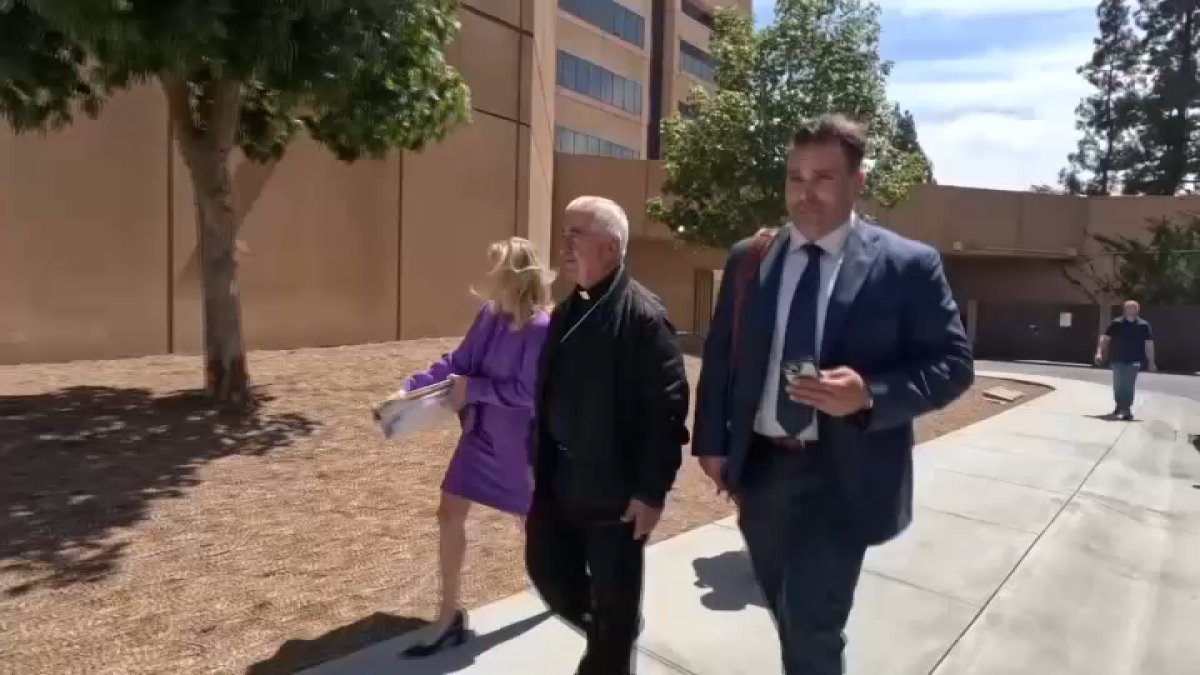
Shaleta sat quietly during the first day of testimony in his preliminary hearing. He still wears a clerical collar and a cross around his neck, even though the Vatican accepted his resignation from the diocese.
Testimony in the preliminary hearing is expected to last two days. The judge will then decide if there’s enough evidence against Shaleta to take the case to trial.
Shaleta was arrested in March at San Diego International Airport. The prosecutor alleged he was preparing to board a plane headed out of the county and had more than $9,000 in cash on him at the time. Prosecutors have not said where that cash came from.