
In March 2026, I wrote a San Diego Union-Tribune opinion essay, “San Diego’s key role in the ‘forever war’ with Iran,” warning that when the U.S. attacked Iran on Feb. 28, it had only intensified a forever war that began during the first Trump administration.
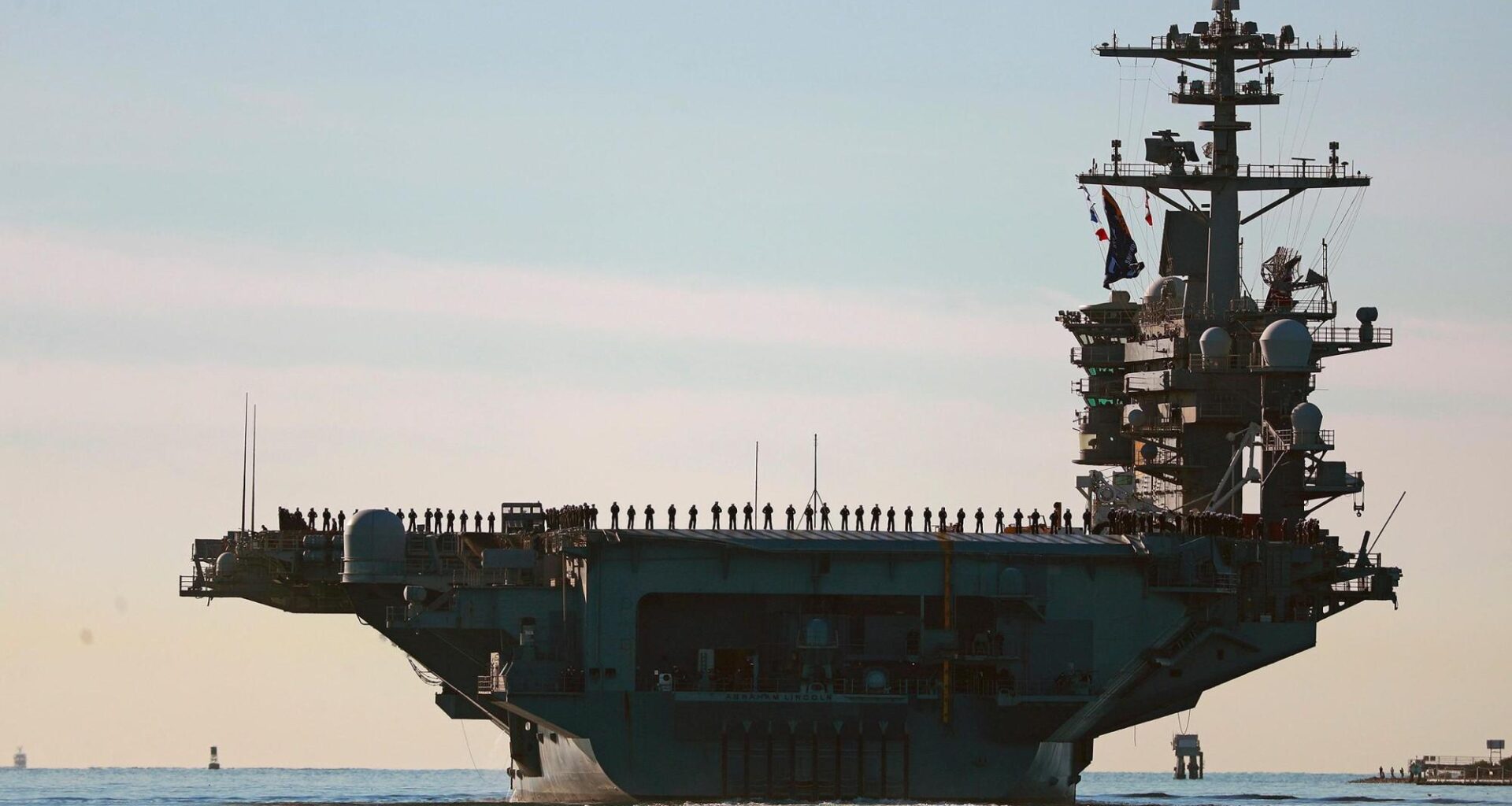
Now, the carrier group led by the USS Abraham Lincoln (CVN-72), known as the “Abe,” has generated international attention, from the British Financial Times to The New York Times, with one headline stating, “Weary Aircraft Carrier Comes Home From the Middle East,” about the crew’s deteriorating mental health, water contamination, plumbing issues and disrupted care packages. It is not surprising, as it has been deployed for more than eight months, a characteristic of a war taking on Trojan war-like proportions.
For Veterans’ Day, Nov. 11, 2024, I also warned that the Abe’s continuous deployment since the Middle East wars after Oct. 7, 2023 had “the potential to serve as the third forever war of the 21st century.”
The Abe deployments became a barometer of this long war with Iran, raising the question of how San Diego County found itself caught in another war.
Never once did the U.S. declare a “forever war.” Yet a good number began in the same stretch of territory. Iraq, Iran and Afghanistan form a contiguous geographical zone that was once referred to as the “northern tier” during the Cold War, a barrier to contain Soviet influence in the Middle East. In fact, the U.S. tried to form pacts to unite all these countries. The Baghdad Pact, later known as the Central Treaty Organization (CENTO), was modeled explicitly on NATO and established in 1955. It unraveled three years later.
In 1958, the pro-Western monarchy in Baghdad was overthrown in a military coup, which established a republic, and a cascade of other coups that brought Saddam Hussein to power 10 years later as vice president.
In 1979, Iran’s pro-Western monarchy was overthrown, and the Islamic Republic was formed, marking the formal end of the Baghdad Pact. In that same year, the Soviets invaded Afghanistan. The northern tier became an anti-American tier.
Since the end of the Cold War, the U.S. has waged wars against Iraq in 1991 and 2003. The latter war did not end when George W. Bush declared “mission accomplished” on the Abe off San Diego’s coast in May of that year. The last American forces in Iraq are scheduled to withdraw on Sept. 30.
The Afghanistan War began in 2001 and ended in 2021 with an American withdrawal from Kabul. The Taliban are back in power.
San Diego and Iran have had a tragic, violent history. In 1988, the USS Vincennes, a guided missile cruiser homeported in San Diego, deployed to the Gulf to keep oil flowing through the Strait of Hormuz.
On July 3 of that year, it downed an Iranian airliner after misidentifying it as an Iranian F-14 fighter, killing all 290 on board. Then Iran was fighting an eight-year war with Iraq, the longest conventional war in the 20th century. The downing of the airliner forced Iran’s supreme leader, Ayatollah Khomeini, to accept a ceasefire.
In June 2025, Iran fought a 12-day war with Israel, one of the shortest, and it was also U.S. intervention that forced Iran’s second supreme leader, Ayatollah Khamenei, to accept a ceasefire. But acceptance of ceasefires communicated Iranian weakness, lulling Trump into a trap a year later.
Yet there was nothing inevitable about this Iran war. In 2015, Iran entered a nuclear deal with the Obama administration that offered the greatest chance of peace between the two nations since 1979. Seeking to repudiate the signature foreign policy achievement of his predecessor, Trump withdrew from that deal in May 2018, and in May 2019 ordered the Abe deployed to the Gulf to pressure Iran into a new deal on his terms. He is still waiting.
The 1991 Gulf War lasted six weeks. The 2003 Iraq War ended in less than a month. Trump promised that the 2026 Iran War would last “four weeks.” Rather, America’s third Gulf War has lasted much longer, leaving the Abe to return to San Diego on a journey of Odyssey-like proportions.
Al-Marashi is an associate history professor at California State University San Marcos and a visiting lecturer in European Studies at San Diego State University. He lives in Encinitas.