
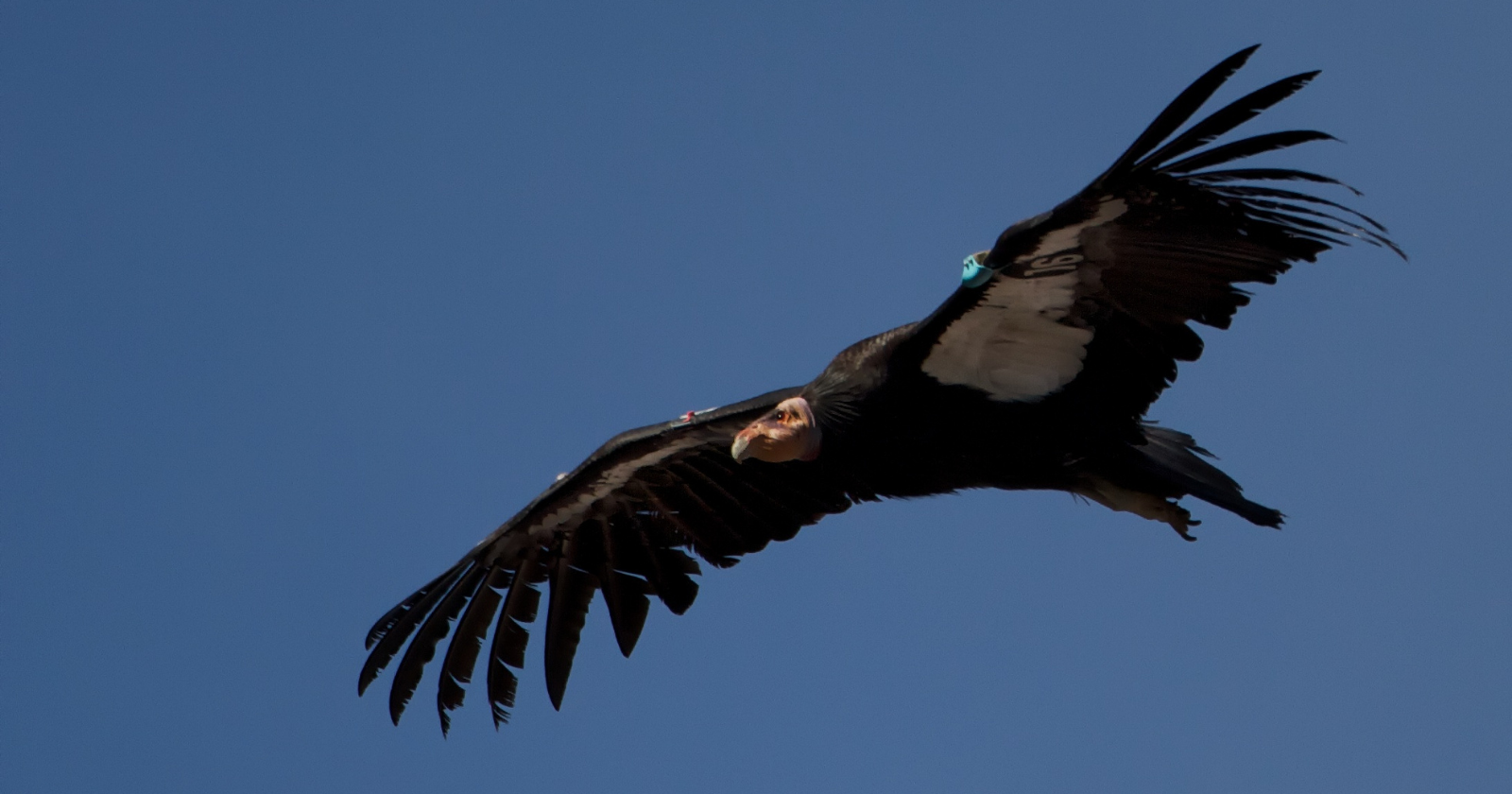
The paperwork sounds like a scandal. In 2021, the U.S. Fish and Wildlife Service issued the first permit of its kind in American history: legal authorization for a wind farm to kill California condors, the most painstakingly rescued bird on the continent, a species once down to its last 22 or so individuals. The Manzana Wind Power project, 126 turbines in the Tehachapi foothills of Kern County, received permission for the accidental death of up to two free-flying condors, plus two dependent eggs or chicks, over 30 years of operation.
The reality behind the paperwork is stranger and much better: an elaborate machine built so the permit never gets used, and a bill the wind company paid in baby condors, up front, for deaths that have not happened.
A collision course made of success
The problem exists because both sides of it are conservation victories. The condor, extinct in the wild by 1987 when the last birds were captured for captive breeding, has been rebuilt to more than 500 individuals, most flying free, and the recovering population is expanding back across its old range in southern California. That range includes the Tehachapis, which happen to hold some of the best wind resource in the state, forested ridges now lined with turbines that were built while the condors were still absent.
A condor is close to the worst-case bird for a wind farm. It is enormous, a nine-and-a-half-foot wingspan, it travels a hundred miles or more in a day riding the same ridge winds the turbines harvest, it matures late and breeds one chick every year or two, meaning a population that cannot absorb adult deaths, and it is protected by the full weight of the Endangered Species Act. As tagged birds began appearing near Tehachapi wind projects in the 2010s, the industry faced the fact that the first turbine-struck condor would be a legal and public-relations catastrophe with no defined process attached. The take permit, counterintuitively, is that process: in exchange for legal cover for a worst case, the operator binds itself to a federally supervised plan for preventing it.
The geofence
The prevention machine runs on an accident of condor history: because every living condor descends from a monitored captive flock, the Fish and Wildlife Service has outfitted most free-flying condors with GPS transmitters. The recovering species is probably the most individually tracked wild animal population on Earth, and Manzana’s operator, Avangrid, built its defense on that fact. In 2018 the company established a geofence, a virtual perimeter around the project, monitored around the clock by third-party contractors watching the tag data from an operations center miles away. When a tagged condor crosses the line, the alert goes to the wind farm’s control room and turbines in the bird’s vicinity are curtailed, feathered to a stop, until the condor moves on. A trained observer covers the gap the technology leaves, watching for the minority of birds without working tags, and a carcass-management program patrols the ground because a dead sheep near a turbine is condor bait; in one recent year the system’s most consequential detection was a single dead sheep, promptly removed. Maintaining the geofence over the permit’s 30 years is costed at $8.5 million.
Then comes the part that inverts the usual mitigation logic. Rather than compensating for deaths after they occur, Avangrid paid in advance, in birds: funding a full-time condor keeper at the Oregon Zoo’s breeding center, obliged to rear six condors for release, a number set by population modeling to more than offset the permitted loss of two adults, and owed regardless of whether any condor is ever harmed. By the time the company completed its commitment in 2024, the funded position had contributed to rearing a dozen chicks, double the obligation. The ledger currently reads: condors killed by Manzana, zero; condors added to the world by Manzana’s permit, twelve.
The scoreboard nobody expected
The larger number is the national one. Despite years of tagged condors soaring through wind country, no California condor has yet been recorded killed by a turbine anywhere in the United States. Lead poisoning from scavenged carcasses remains the species’ actual killer, dwarfing every other threat, while the collision everyone braced for keeps not happening. The model has spread on its own success: in 2023 the Fish and Wildlife Service issued a similar permit to the Los Angeles Department of Water and Power’s Pine Tree wind farm, which took over funding the Oregon Zoo keeper, and another covering a coalition of two dozen wind companies, each built around the same architecture of tags, geofences and pre-paid chicks.
None of it is cheap, and none of it would work on an ordinary species; the whole system leans on a bird population so intensively managed that each individual broadcasts its position. But that is what makes the arrangement worth noticing. The conflict between the condor and the turbine was supposed to be a tragedy of two goods colliding. Instead it became a scheduling problem. The bird announces itself by radio, the machine yields the right of way, and the deadliest interaction in American wildlife-energy politics is, so far, a series of brief, polite pauses, twelve condors to the good.