
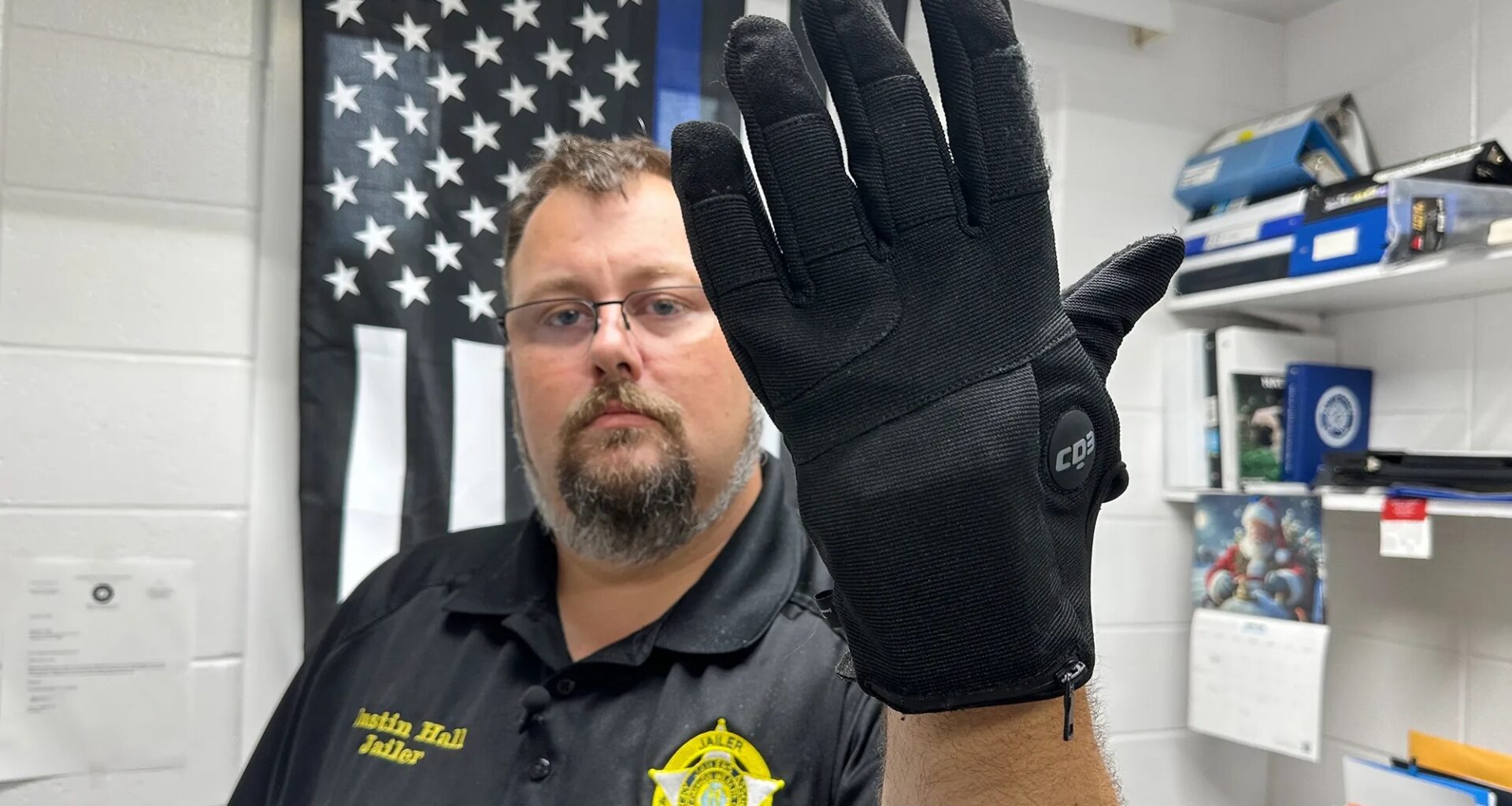
Democrats are pushing a last-minute bill to ban federal agents from using electric shock gloves following reports that Immigration and Customs Enforcement is making moves to buy and use them.
Nadia Lathan, CalMatters
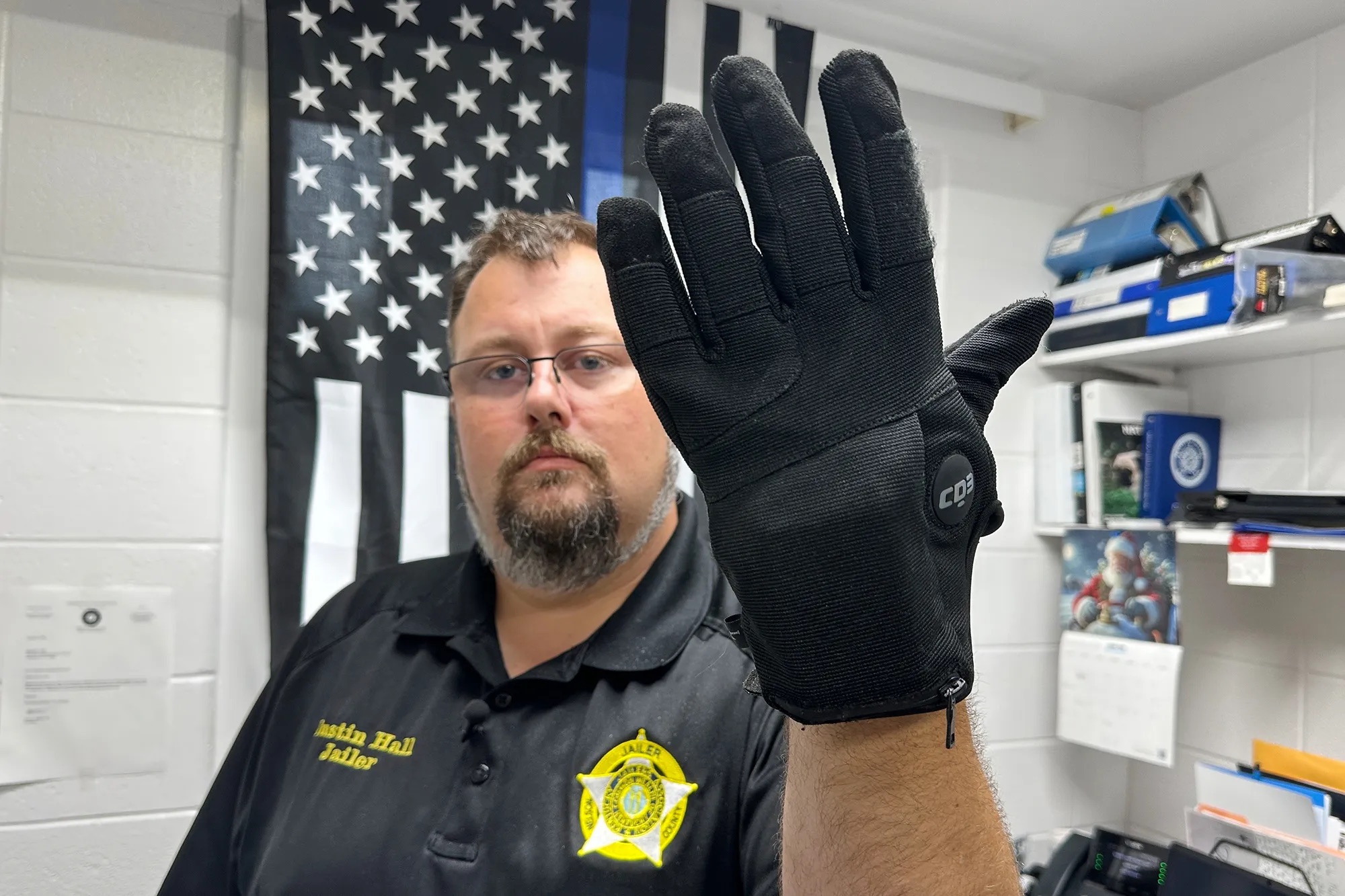
Jailer Justin Hall shows an electric shock glove that is used at his facility in Bardstown, Kentucky on Aug. 13, 2026. ICE announced on Thursday it was awarding the Kentucky company a $16.7 million contract for 6,000 pairs of gloves.
(Dylan Lovan/AP Photo)
San Diego Assemblymember LaShae Sharp-Collins, a Democrat, introduced the bill only last week, with days remaining in the legislative session, in a process known as a “gut and amend,” in which an unrelated bill is rewritten and fast–tracked.
The eleventh-hour move follows a notice published earlier this month by the Department of Homeland Security that said ICE is seeking to spend up to $20 million to buy thousands of taser-like gloves from Compliant Technologies, a Kentucky-based company.
The product, called G.L.O.V.E. for Generated Low Output Voltage Emitter, is marketed as a non-lethal, de-escalation device on the company’s website. The Associated Press first reported about the notice.
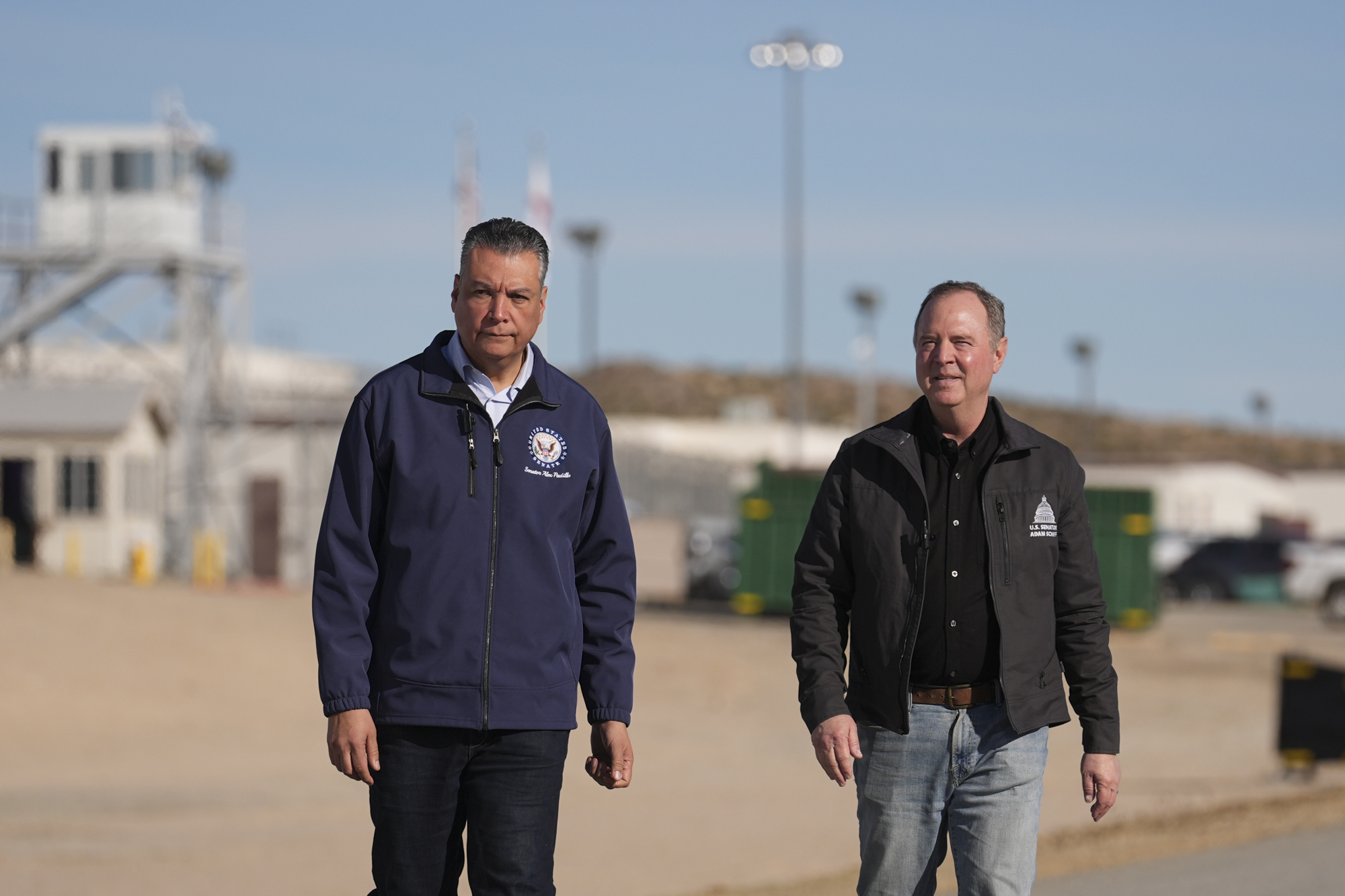 Sen. Adam Schiff, right, walks with Sen. Alex Padilla, during a visit to an immigration detention center on Jan. 20, 2026, in California City, California. (Marcio Jose Sanchez/AP Photo)
ICE announced on Thursday it was awarding the Kentucky company a $16.7 million contract for 6,000 pairs of gloves.
“While the gloves are not currently being used in California, waiting for a tragedy to act, in my personal opinion, and so many others, would be something that California could not handle,” Sharp-Collins said at a hearing on Wednesday.
She said the gloves pose a public safety risk and cited the case of a Kentucky man who died after allegedly being shocked 27 times with the gloves and 13 times with a Taser while in jail last year.
On Thursday, U.S. Sen Alex Padilla and other congressional Democrats wrote a letter to DHS Secretary Markwayne Mullin urging the department to cancel its contract with the company providing the gloves, calling them “hand-worn tasers disguised as restraint equipment.”
Civil rights groups strongly support the bill and argue that electric shock gloves are inhumane and an excessive use of force.
“Electroshock gloves by any law enforcement agency makes Californians less safe,” Anallely Martin, of the California Immigrant Policy Center, said at the hearing.
The California State Sheriffs’ Association and numerous other law enforcement groups oppose the bill, arguing it would unnecessarily limit officers’ ability to de-escalate a situation.
“This is a bad policy from a California law enforcement perspective, and it’s really only gonna be a message to the feds that’s going to fail to land,” California State Sheriffs’ Association lobbyist Cory Salzillo said at the hearing.
It’s the latest move by California lawmakers to clamp down on ICE agents in response to President Donald Trump’s sweeping immigration raids. Just this week, Democrats passed a bill that would ban federal agents from working for state or local police agencies and another to make it easier for people to sue agents for civil rights violations.
In April, a federal court struck down a 2025 law forcing masked immigration agents to identify themselves. Judges ruled the state had stepped out of bounds when it tried to enforce rules against federal officers.
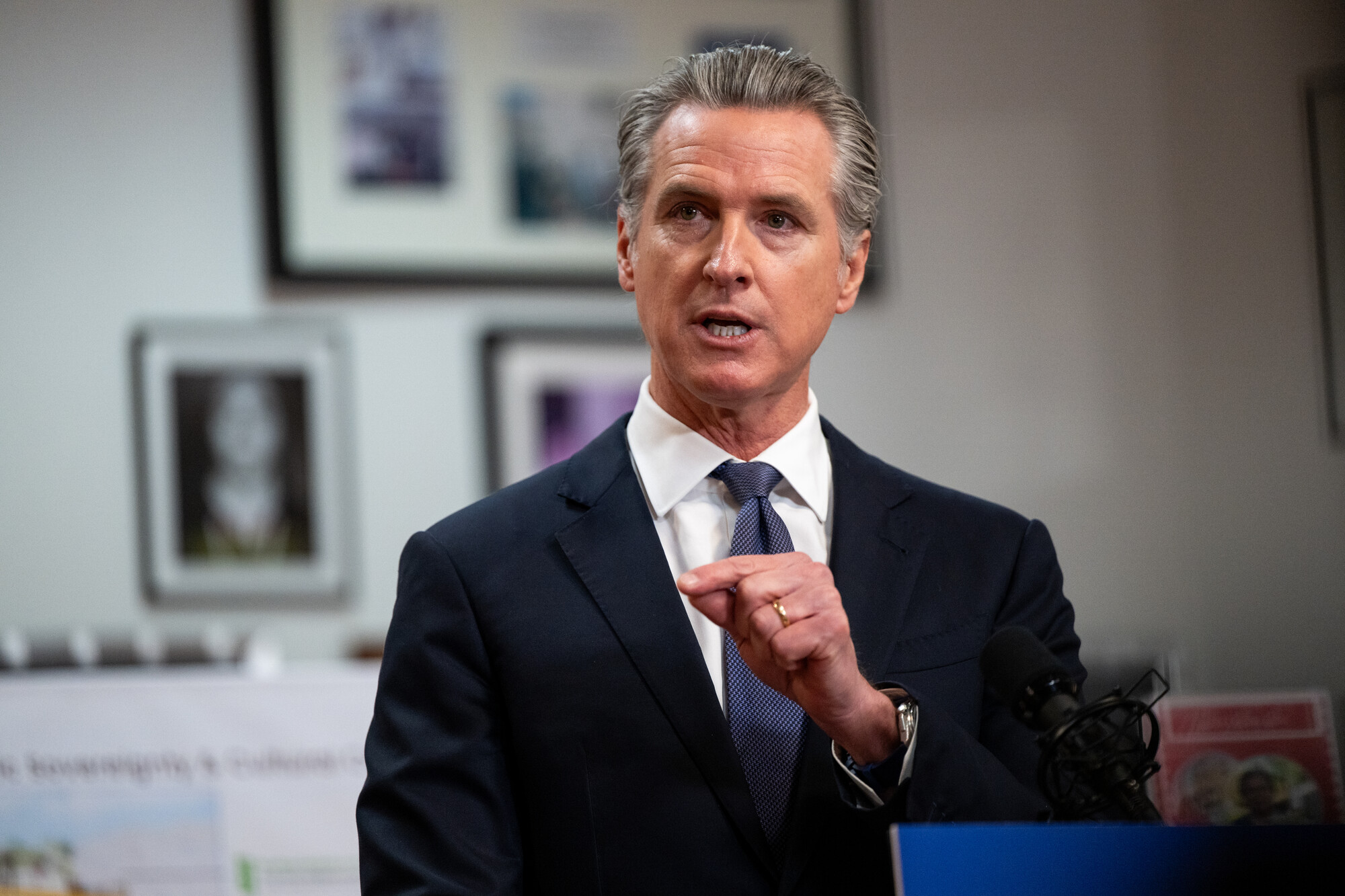 Gov. Gavin Newsom speaks during a press conference at the Friendship House Association of American Indians in San Francisco on Jan. 16, 2026. (Beth LaBerge/KQED)
Similar to that law, if Democratic Gov. Gavin Newsom signs the new bills, they’re expected to face nearly identical legal challenges.
“States simply can’t regulate how federal officers do their jobs, even if we don’t like how they do their jobs. That’s up to the federal government,” UC Davis law professor Vikram Amar said.
Without a clear argument on how the gloves violate people’s constitutional rights, the legislation would likely hold little weight in court, Amar said.
“It makes a lot of bills like this kind of more performative than real,” Amar said.
This article was originally published on CalMatters and was republished under the Creative Commons Attribution-NonCommercial-NoDerivatives license.