
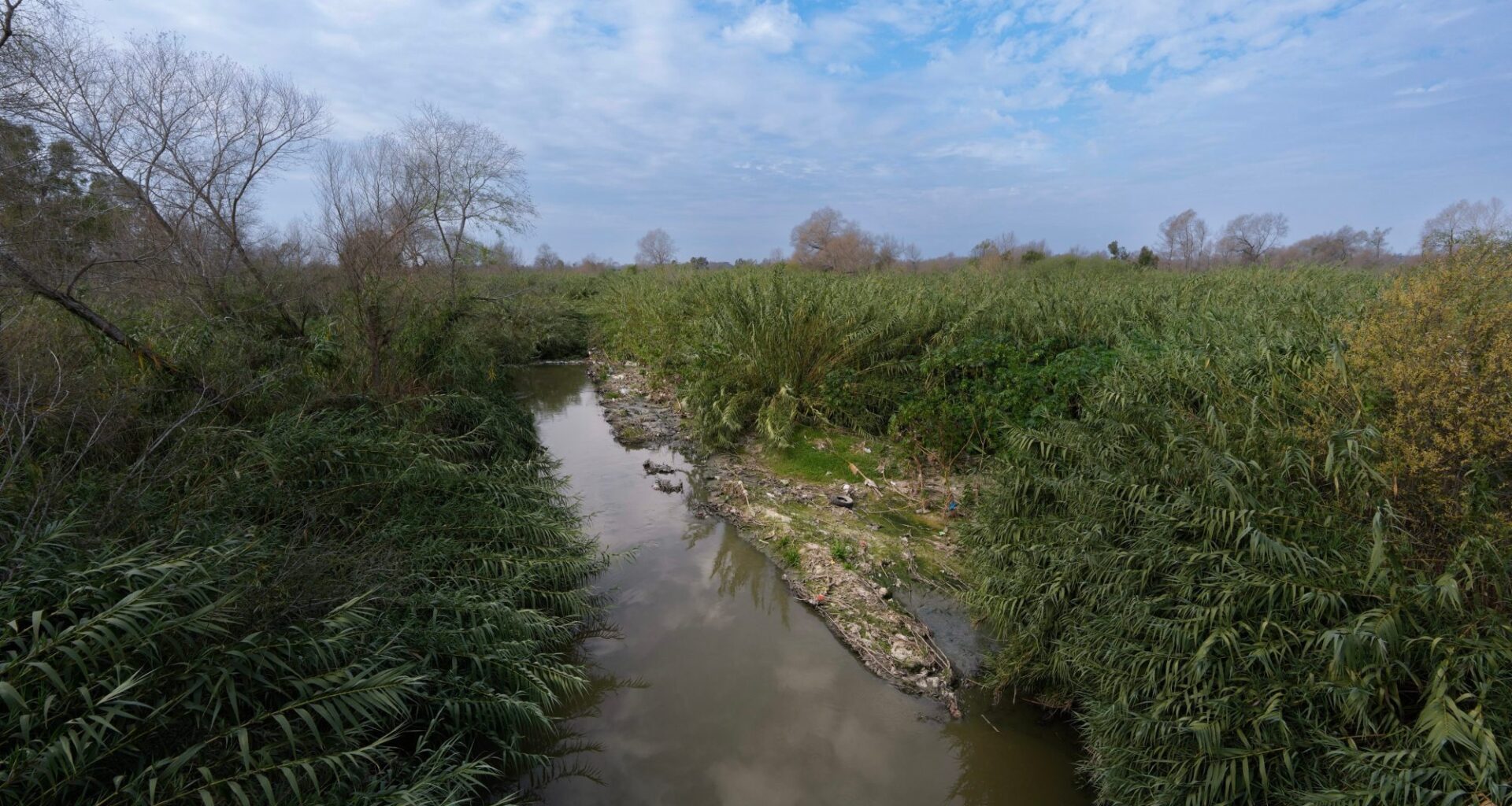
The Chula Vista City Council voted unanimously this week to hire a Washington, D.C., lobbying firm for federal advocacy, but stripped out a companion partnership with the city of Imperial Beach targeting the Tijuana River Valley sewage crisis after a council member raised concerns about duplicating other agencies’ efforts.
The council approved a scope of work with Thorn Run Partners LLC for Chula Vista-specific federal lobbying under an initial 10-month agreement worth $89,167. The contract allows four one-year extensions for a total not-to-exceed amount of $539,140, according to a staff report presented to the council.
But the council removed a second component of the item — a joint scope of work with Imperial Beach focused on the Tijuana River Valley cross-border pollution crisis — along with a related memorandum of understanding between the two cities, after Councilmember Jose Preciado moved to amend the proposal.
“Before we add another voice, I would like our staff to map out the current advocacy efforts, engage with the elected officials and the organizations that are already leading and working on this fight, and determine where Chula Vista can add the most value,” Preciado said.
Preciado’s motion directed staff to coordinate with other regional agencies, including Coronado and San Diego County, that already have federal lobbying representation on the sewage crisis, and to return the Imperial Beach partnership to the council at a later date.
Deputy Mayor Cesar Fernandez ultimately made the motion to remove the Imperial Beach component. Councilmember Michael Inzunza seconded it. The amended item, approving only the Chula Vista-specific advocacy scope, carried unanimously.
Chula Vista issued a request for proposals for state and federal legislative advocacy services in February and received five bids, according to the staff report. A selection committee that included representatives from Imperial Beach evaluated the proposals and recommended Thorn Run Partners, whose $104,000 annual bid was the second-highest of the five, behind Acorn’s $156,000. Cris Com bid the lowest, at $69,000.
Adrianna Relph, the city’s special projects and legislative manager, told the council the removed scope of work was meant to formalize an existing goal: extending Chula Vista’s advocacy into federal lobbying on the sewage crisis affecting the South Bay region, in partnership with Imperial Beach, which does not have its own federal lobbyist.
Imperial Beach Mayor Mitch McKay attended the meeting and asked the council to approve the partnership, which his own council had already approved a week earlier.
“We are here before you again this week to offer another opportunity for collaboration,” McKay said. “The city of Imperial Beach is looking for equal cost sharing on the portion of this contract that’s specific to the Tijuana River Valley and the ongoing sewage crisis.”
Under the now-removed MOU, Imperial Beach would have paid Chula Vista $1,000 per month during the first year, up to $10,000 through June 2027, with its total contribution over five years estimated at $65,100, according to Imperial Beach’s Aug. 19 staff report. The Imperial Beach City Council adopted Resolution 2026-083 approving the MOU that day.
Greg Burns, a representative of Thorn Run Partners, answered council questions by phone. Asked why the firm should be selected, Burns cited its “very large local government practice” and experience in the region.
Fernandez asked about Thorn Run’s record securing U.S. Department of Transportation funding, citing his interest in a grade separation project at the Palomar Trolley Station, saying the project is “dear to my heart (and) I will continue to advocate for.”
Burns told Fernandez his firm has “collectively secured more than five billion” dollars in federal funding for clients, including transportation projects, and cited experience with railroad crossing elimination projects tied to the bipartisan infrastructure law.
Several council members said they wanted the region’s advocacy on the sewage crisis expanded beyond the two cities.
Inzunza compared the crisis to “the Flint, Michigan of the West Coast” — referring to the Michigan city’s 2014 water contamination crisis, in which residents were exposed to lead-tainted drinking water after officials switched the city’s water source, prompting a public health emergency — and said he wanted “a collaborative effort, one source from all South Bay cities” rather than multiple firms lobbying separately in Washington.
Mayor John McCann said he was disappointed the Imperial Beach partnership was not approved Tuesday, noting the city had already worked with Imperial Beach, Coronado, National City and San Diego on the issue.
“I am sort of disappointed that we would not move forward with this Scope B because I do think we need to,” McCann said.
City Manager Tiffany Allen told the council she could not commit to a specific timeline for bringing the Imperial Beach item back because it requires coordination with outside agencies.
“I hear the urgency loud and clear,” Allen said. “I am a little bit hindered by the need to coordinate with those outside agencies.”