
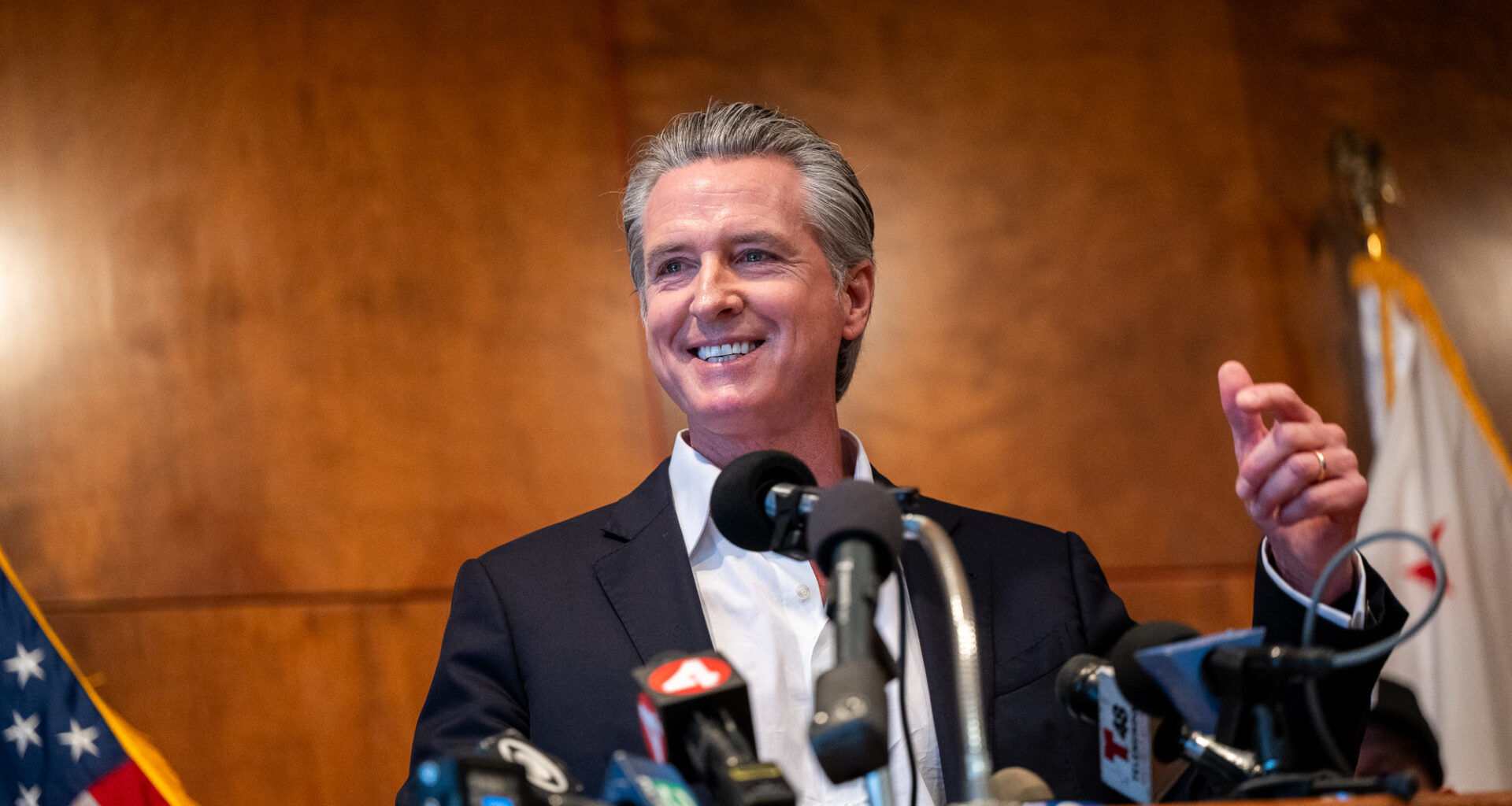
Seeking to lower California’s soaring electricity rates and improve payouts to wildfire survivors, Gov. Gavin Newsom and legislative leaders late Friday reached an eleventh-hour deal on changes to rules around wildfire liability.
At the heart of the deal is the question of who pays when utility-owned equipment sparks a damaging wildfire — costs that have ballooned into the tens of billions of dollars in recent fire disasters. The plan, which comes after months of largely closed-door negotiations, seeks to protect ratepayers by stopping hedge funds from extracting massive payouts from utilities in the wake of wildfires, while also restricting utility executives from receiving bonuses when their equipment causes a fire.
“This is one of the most consequential pieces of legislation for victims and survivors of wildfires that we’ve ever done,” state Sen. Josh Becker, D–Menlo Park, told KQED on Saturday. “Getting them paid fairly and quickly, limiting the role of Wall Street in profiting off of these fires [and] holding utilities accountable.”
The legislation authored by Becker, Senate Bill 492, would also create a program to speed up the payment of claims for wildfire survivors.
But the agreement fell short of Newsom’s original aim: to prevent insurance companies from suing utilities to recover the damages that insurers pay out to fire victims. That process, known as subrogation, has helped drive up the cost of electricity bills by adding massive liability costs to power companies.
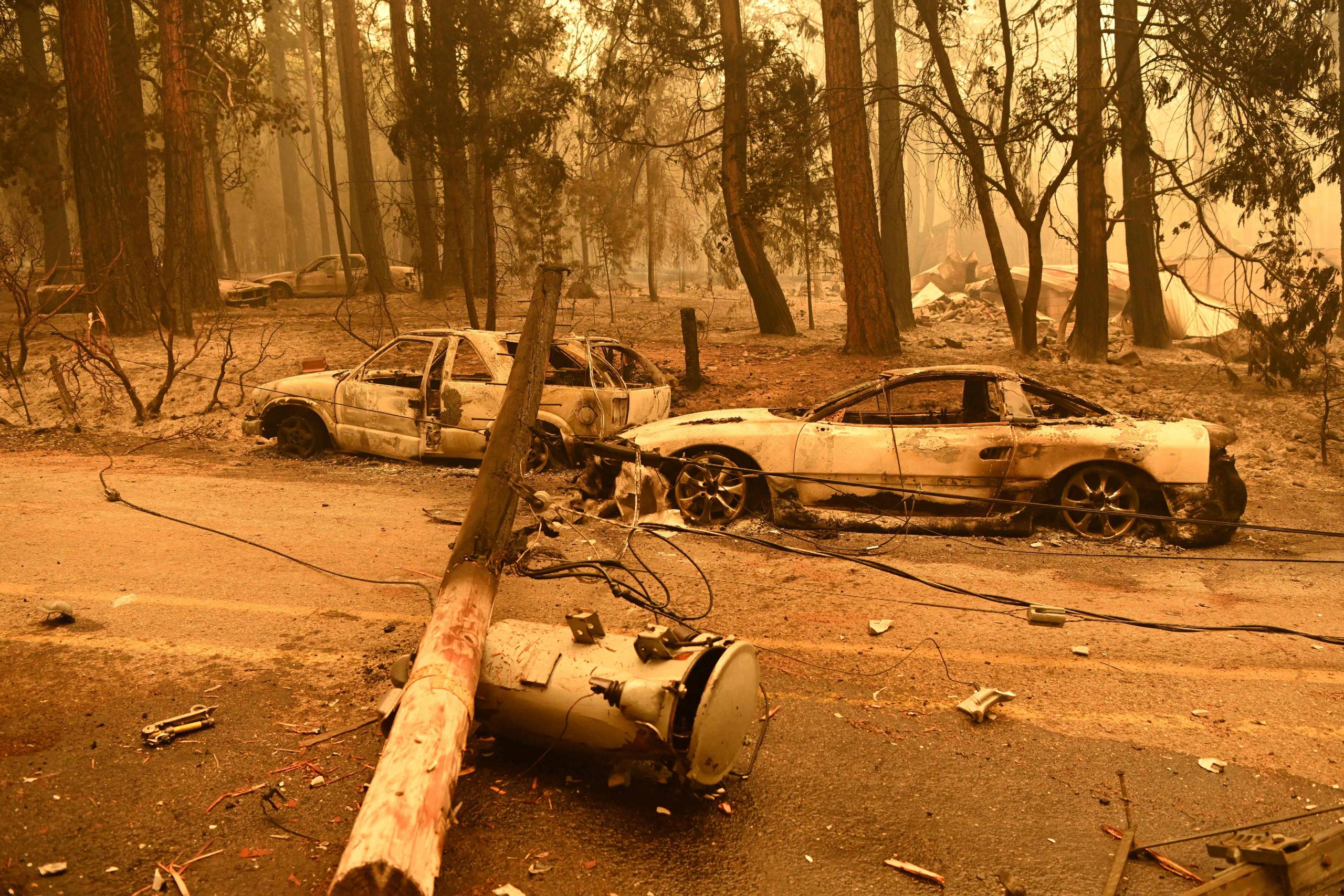 Power lines lay on the smoldering remains of vehicles during the Dixie Fire in an unincorporated area of Plumas County on July 25, 2021. (Josh Edelson/AFP via Getty Images)
Instead, lawmakers are hoping to restrict insurance companies from selling their right to sue to private equity firms, which under the current system can purchase claims at a discount and drive up payout costs through pricey litigation.
“This is all real progress for future fire survivors,” Newsom said in a statement Saturday. “Nonetheless, this system needs full structural reform — not a partial one.”
The agreement will require a two-thirds vote in the Assembly and Senate as soon as Tuesday under an urgency clause that allows it to be voted on after Monday night’s scheduled close of California’s legislative session. For Newsom, it will bookend a tenure as governor that began in crisis in the wake of the deadliest, most destructive wildfire in the state’s modern history.
California law holds power companies, such as PG&E and Southern California Edison, responsible for the damage caused by their equipment — even without any finding of negligence, unlike other states. Liability from the 2018 Camp Fire pushed PG&E to declare bankruptcy the following January, just weeks after Newsom took office. Damages from the 2025 Eaton Fire in Altadena, which was started by a SoCal Edison transmission line, could reach $45 billion.
In the last decade, investor-owned utilities have spent billions to both shoulder wildfire liability and protect power lines from sparking future blazes. That spending has been passed along to California’s utility customers, who pay the second-highest electricity rates in the nation.
Wildfire-related charges now add roughly $41 a month to the average PG&E bill and $27 a month for SoCal Edison customers, according to a state report released this spring that served as a jumping-off point for the utility negotiations.
Still, the spending by power companies will not completely eliminate the risk of utility-sparked wildfires, said Meredith Fowlie, faculty director at UC Berkeley’s Energy Institute at Haas.
“That means there’s fire risk for people living in high-risk areas, close to power system infrastructure that they are not seeing in their insurance premiums,” Fowlie said. “We’re seeing them on our electricity bills.”
While many California power customers, especially those in hotter inland areas, have few options in the face of escalating rates, Fowlie said, homeowners can receive insurance discounts if they fire-proof their homes and increase the defensible space around their property.
“Shifting more of the risk onto homeowners and property owners in higher-risk areas does dial up the financial incentives to do more mitigation to reduce premiums via discounts,” she added.
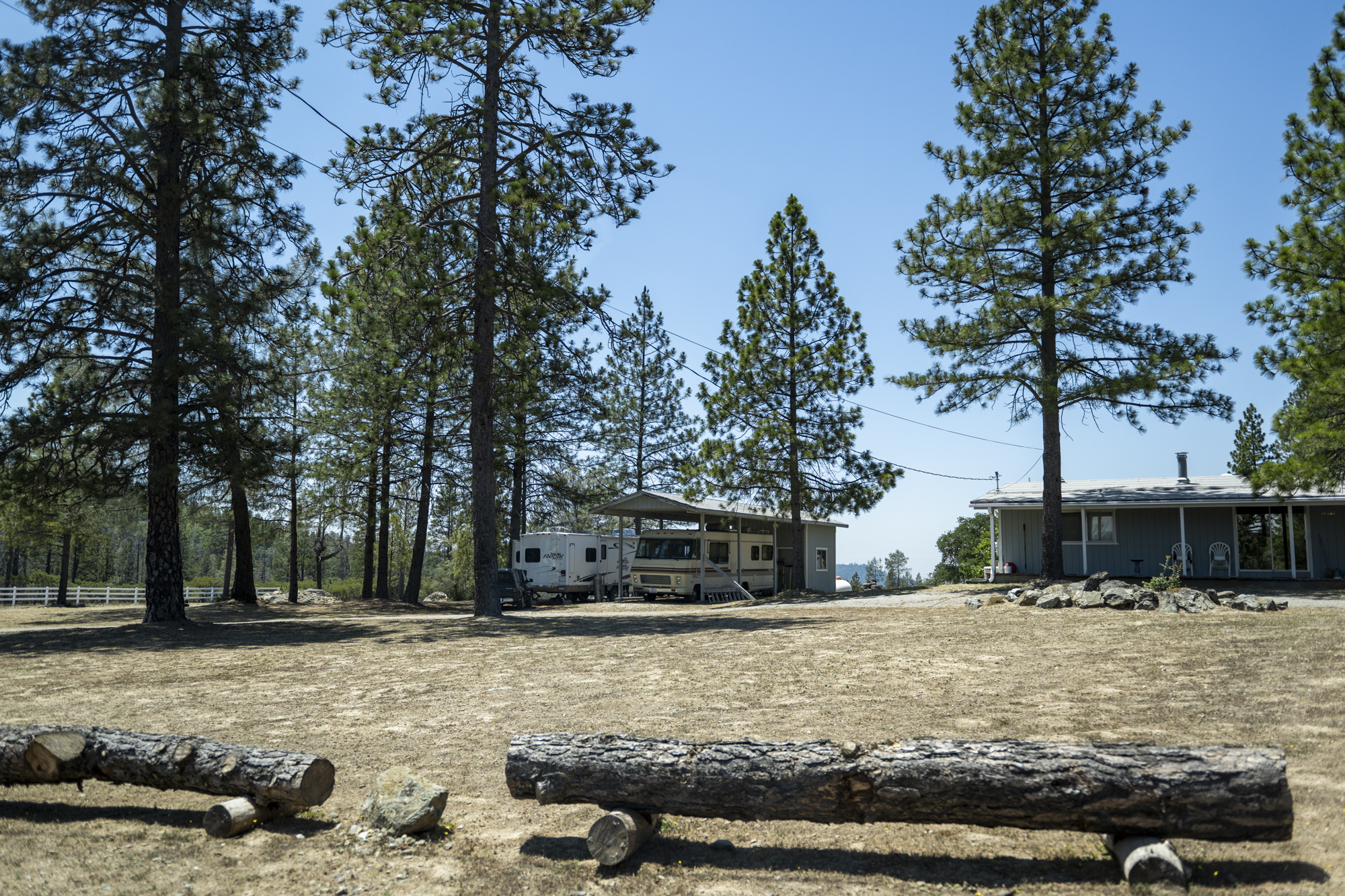 A home in Nevada County that has created defensible space to help protect against damage due to wildfires on June 26, 2023. (Beth LaBerge/KQED)
But California’s insurance industry is in the midst of its own interwoven crisis. Wildfire losses have led many insurers to either stop renewing policies or leave the state — pushing residents in fire-prone areas onto the FAIR Plan, the state’s insurer of last resort.
Newsom’s original plan, meanwhile, was also criticized by wildfire survivor groups and trial attorneys — the latter group holding particular influence among Democrats in the Legislature who were wary of signing on to a deal that could be perceived as a utility bailout. Wildfire survivor groups took aim at elements of Newsom’s original proposal that would have limited some claims of noneconomic damages.
“Survivors from across California came to Sacramento and asked our elected representatives to stand with the people whose homes, communities and lives have been devastated,” Joy Chen, executive director of Every Fire Survivor’s Network, said in a statement on Saturday. “They listened. And in the face of extraordinary pressure from some of the most powerful interests in our state, they centered survivors and California families.”
The deal Newsom reached with legislative leaders will prevent law firms from making unsolicited communications to survivors for 30 days after the disaster and cap attorney fees in insurance subrogation cases to 10% of the final settlement.
“The opponents [were] quite a strange grouping of bedfellows,” said Dave Jones, a former California insurance commissioner and director of the Climate Risk Initiative at the UC Berkeley School of Law’s Center for Law, Energy & the Environment.
Jones said that if utilities remain forced to shoulder the financial liabilities for wildfires, they will be incentivized to invest in grid safety and vegetation management. Shifting more of the burden to insurers, he said, will put more stress on fire survivors, local taxpayers and insurance policyholders.
Legislative rules prevent changes from being made to bills for 72 hours before a final vote.
Sen. Roger Niello, R–Fair Oaks, the Republican leader-elect, questioned whether three days was enough time for lawmakers to digest complex changes to wildfire rules. For the second consecutive year, lawmakers will be voting on consequential energy legislation in the waning moments of the session.
“I’ve raised concerns before about major policy being pushed through at the last minute without public input,” Niello said in a statement. “I am committed to working with the next administration to craft financially sound solutions and double down on wildfire mitigation and prevention efforts.”
Why did Newsom choose to close the final legislative session of his career with a complicated battle involving utilities, insurance companies and trial attorneys — all political heavyweights at the Capitol?
The Legislature replenished it with an additional $18 billion last summer, but another catastrophic fire could again threaten the solvency of the fund, providing the governor practical motivations for pursuing this deal. While the legislative session will end on Monday, Newsom’s final term runs through the fall months that constitute the heart of California’s modern wildfire season.
That means another disaster could leave Newsom with a utility hurtling toward bankruptcy just as he leaves office — and prepares for an expected run for president.
“He’s concerned about, ‘Hey, one big fire could take that [fund] out,’” Becker said. “Then what happens?”