
Los Angeles-based artist Aryana Polat grew up in the San Fernando Valley. The young creative was invested in developing performance art inspired by Persian mythology, which she filmed in the mountains surrounding her home. It was a family member who suggested she venture higher up the slopes to see a Nike missile site. Polat was taken aback to discover an abandoned missile launch site when she got there.
“This had existed here the whole time and I knew nothing about it,” Polat said.
LA-88 Nike missile site is a former anti-ballistic missile base. It was once a part of Los Angeles’s Nike missile program, a now-defunct ring of nuclear missile sites established during the Cold War. The installation of the sites was part of the U.S. military’s “sustained readiness” against the USSR, but also a constant reminder of potential nuclear threat.
“Initially, when they first started the Nike missile program, a lot of the sites were highly visible and placed within normal, civilian infrastructure,” Polat said.
The program was dismantled in the 1970s and the sites were abandoned or, in some cases, paved over, but concrete parts of the Chatsworth missile launch site remain intact.
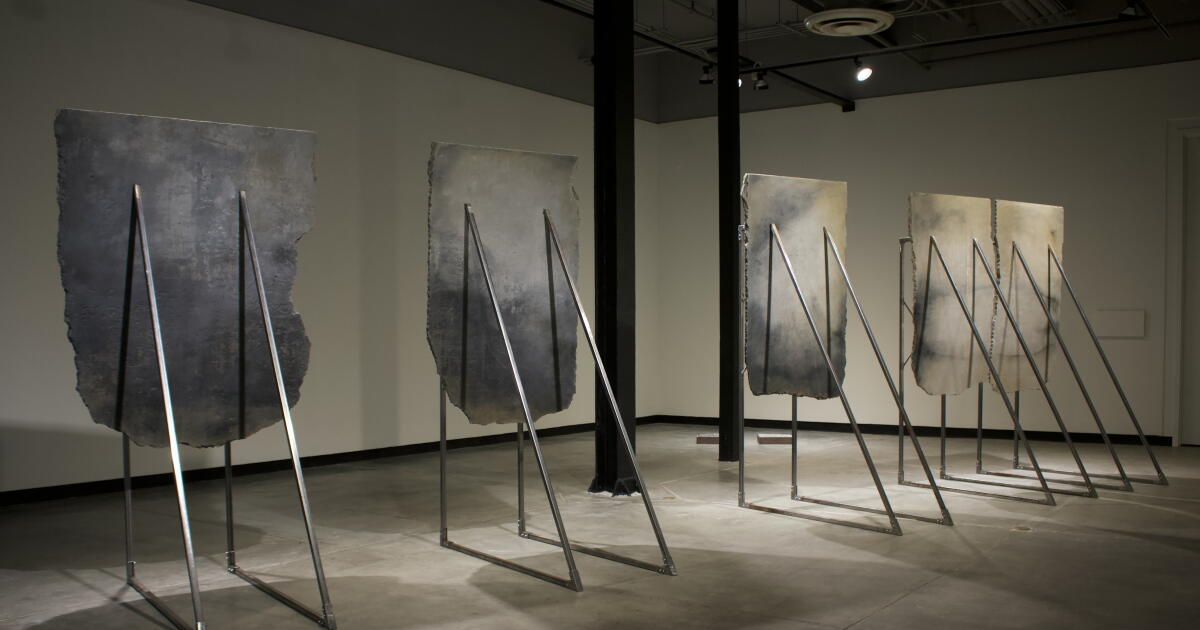
Polat recently competed her MFA at UCLA, where her deep research on Cold War infrastructure served as her thesis. The sculptures inspired by her studies are at the center of Grand Central Art Center’s main gallery exhibition, “A Boundary Meant to Separate” in Santa Ana.
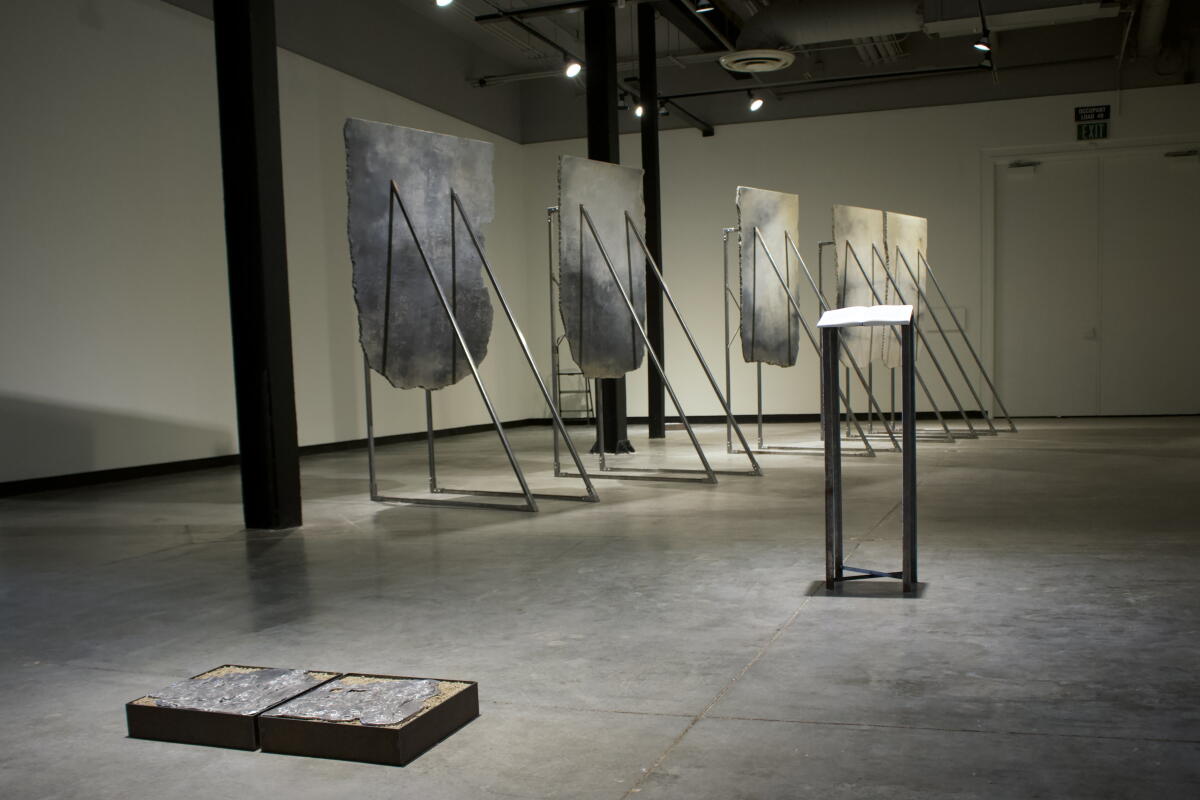
Grand Central Art Center’s main gallery exhibition, “A Boundary Meant to Separate” in Santa Ana.
(Bella Marinos)
On view now through Oct. 11 and curated by Bella Marinos, Grand Central Art Center curatorial associate, “A Boundary Meant to Separate” features cast concrete walls, eroded by customized material processes. They are a contemporary ruin that is at once strong and unmovable, but also delicate and distressed, rusting and cracking under their own weight.
“As a young curator, I really like to focus on underserved histories and mythologies, artist of color and queer artists, who are trying to share a story that people wouldn’t typically see,” Marinos said. “I thought this Cold War project really exposed something that people drive over every day, live on top of, or have seen from a distance.”
For “Sustaining Readiness (Apotropaia), 2026,” Polat fashioned concrete slabs from one large piece that she methodically separated. Each one has unique imperfections, hairline cracks, signs of wear and even hidden figures, on its surface.
“Ruins are interesting to me, because here in L.A. County, Orange County, we don’t have ruins,” the artist said. “Ruins have a particular role in teaching lessons and serving as reminders.”
The Nike missile site in Chatsworth was also among the first to use sentry German shepherds for security. Polat references them in “Sentries I, 2026” and “Sentries II, 2026,” which depict relief images of the dogs and their handlers in aluminum waste salvaged from the former missile site.
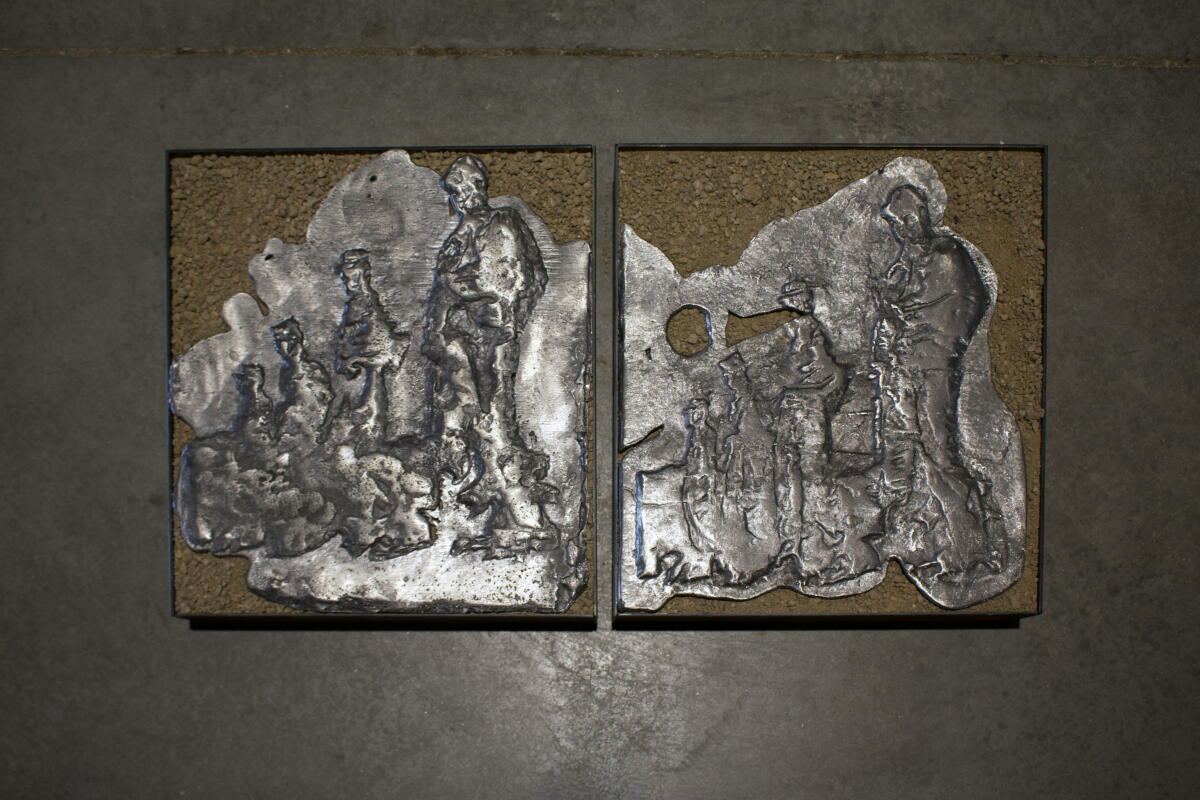
Relief images of sentry dogs and their handlers in aluminum waste salvaged from a former missile site are part of “A Boundary Meant to Separate” in Santa Ana.
(Bella Marinos)
Polat also connects the work back to her interest in Persian mythology, to one story specifically that she describes as the Persian version of Romeo and Juliet. The story of Leyli and Majnun centers around the two lovers, forbidden from marrying.
“Because their marriage is denied, the story follows Majnun’s spiral into madness and isolation in the wilderness,” Polat said. ”The wilderness functions as the outer periphery of normative society and a place where he is able to escape patriarchal structures, but Leyli is still confined to it.”
Polat said the story felt like a parallel narrative for her, creating this work that came from her own wandering in the wilderness.
“Going deeper into these mountain ranges that I grew up in, that encircle the peripheries of county, but I am still confronted with these military patriarchal structures. Where can my escape necessarily be?”
While the connection may not be immediately apparent, the myth is explained in a bound book on a pedestal at the end of the exhibition, which offers an in-depth look at the research that inspired it.
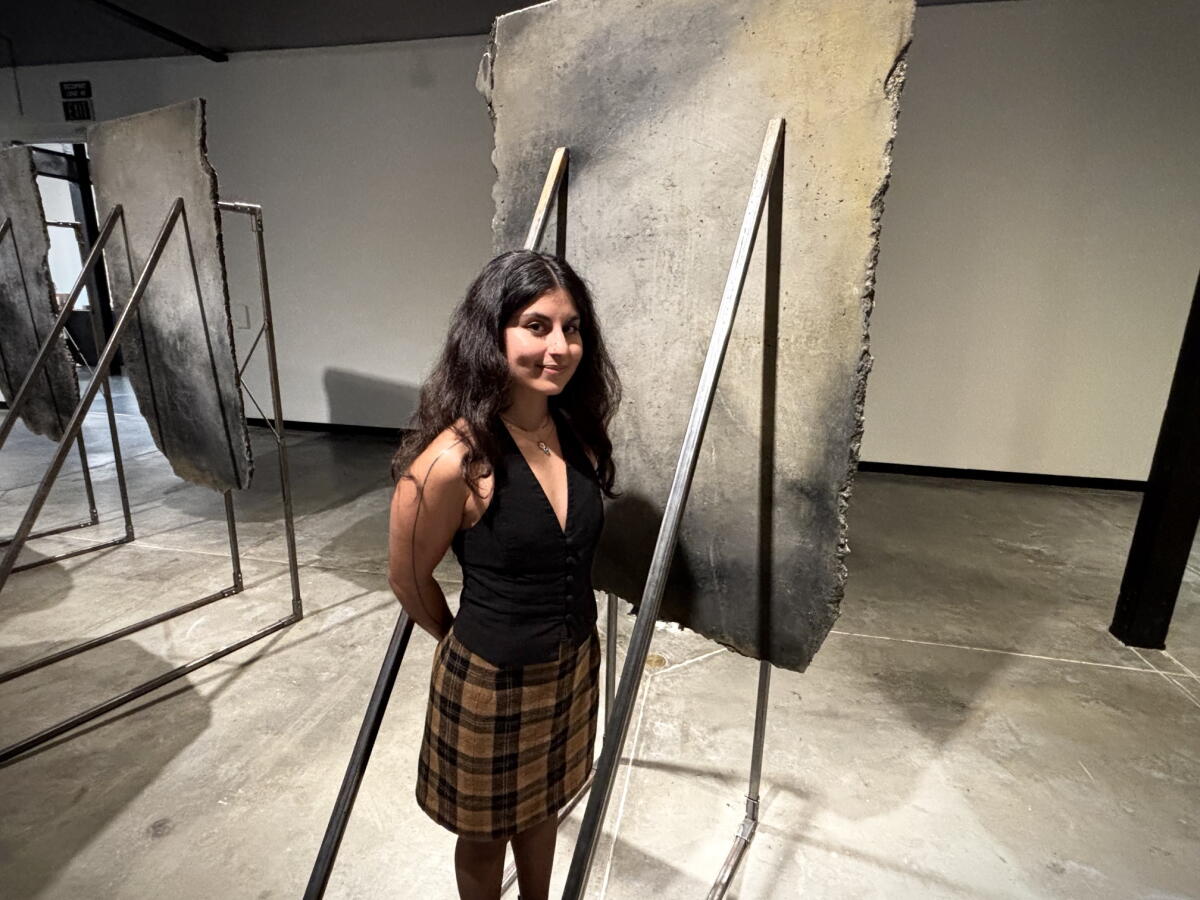
Artist Aryana Polat stands with her installation, “A Boundary Meant to Separate” in Santa Ana.
(Sarah Mosqueda)
“When you get to the book at the end, you are given this information and you can piece together what is happening conceptually, which I really like,” Marinos said of the exhibit.
Polat said she hopes the show sparks an interest in the surrounding environment and remnants of the past.
“I hope it makes people more curious and opens up an avenue of thought to look into the world around us,” Polat said.
“A Boundary Meant to Separate” is on view now through Oct. 11 at Grand Central Art Center, 125 N. Broadway, Santa Ana.