
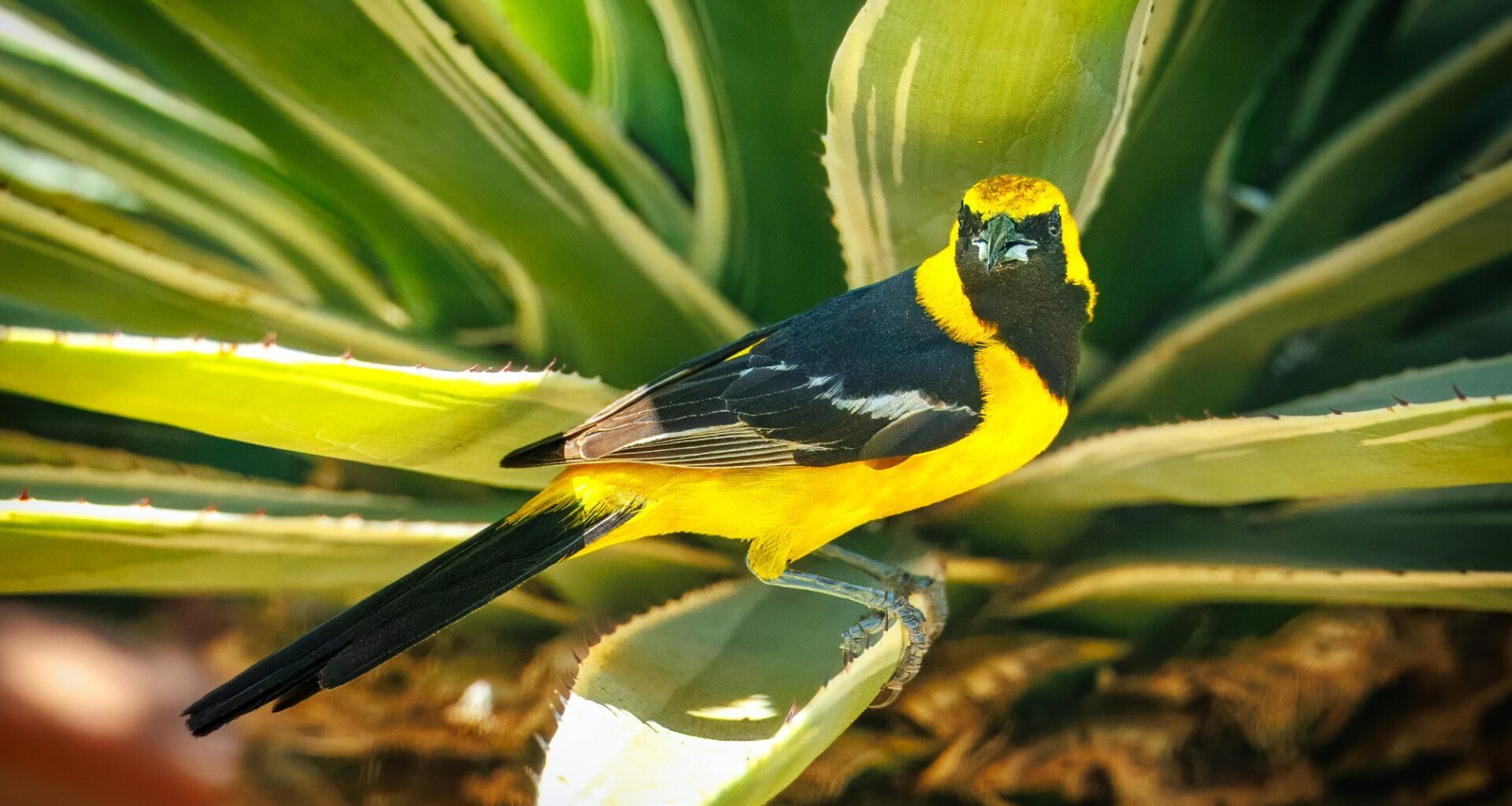
They’re gone!
Without fanfare, like the wind changing direction, those elegantly colored hooded orioles have departed for the warmer luxury of their winter digs in Mexico.
I should have known it was time.
The other morning, as I slipped open the patio door, I felt the seasons change.
There was something different about the gentle breeze. It was crisp and bright like the first notes of a favorite tune that trigger fond memories.
Fall was in the air, at least for a few minutes until the day woke up and remembered it’s still summer.
But then there were the notes from readers asking why the animated hooded orioles were suddenly gone from their nectar or jelly feeders.
Many had newly discovered the joy of these comical and beautiful birds and had put out feeders to attract them, not realizing they were only visiting.
They arrived in early March as the harbingers of spring and have now departed as the heralds of winter.
While here, there was great joy in backyard patios and from garden view windows as adoring bird lovers watched the orioles bickering, and their comical antics at feeders.
They came, built nests and hatched chicks, putting extra demand on keeping nectar and jelly feeders filled when scrawny youngsters fledged and began competing with adult birds to bulk up for their coming journey to the south.
The only group unhappy with this arrangement are the hummingbirds. All winter they have nectar feeders to themselves, then the loud, large and flamboyant orioles show up, and they must wait their turn to sip.
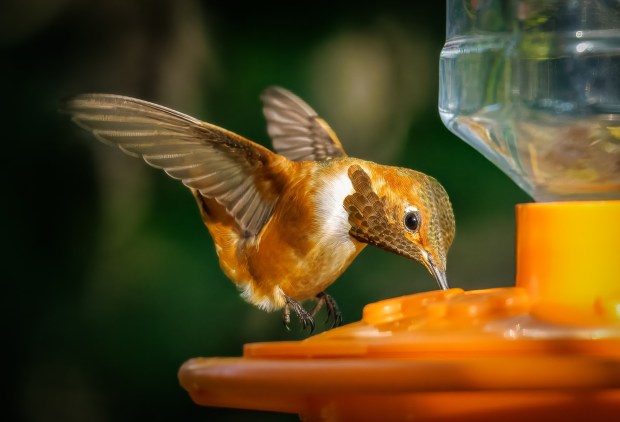 A hummingbird has a feeder all to itself. (Ernie Cowan / For The San Diego Union-Tribune)
But for those who love to feed our feathered visitors, the birds of summer bring delight as hummingbirds and orioles compete for the sugary offerings they devour by the gallon.
Several years ago, I replaced my hummingbird feeders with oriole feeders. They are the same style nectar feeders, but the oriole feeders have larger holes to accommodate the larger beaks of the orioles.
Both species will happily use the oriole feeders.
You may see an oriole straggler or two now, but by early September, they will have all migrated south.
I always find this a little sad.
Sure, it’s an eternal cycle of nature as birds follow the food and the seasons, but for me, it marks another page of the calendar being removed and I will miss my friends until they return in the spring.
The good news is I will be saving money on the 10-pound bags of sugar I was buying at least weekly to keep the sugar junkies happy.
For now, I will enjoy the fascination of watching the hummingbirds, nature’s amazing little helicopters, at the nectar feeders and probing the yellow petunias in the hanging basket just outside my window.
Soon, the white-crowned sparrows and yellow-rumped warblers will be winging their way here from the far north.
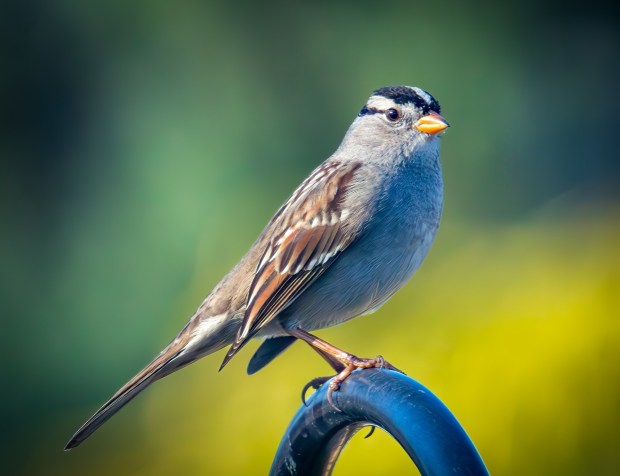 A white-crowned sparrow. (Ernie Cowan / For The San Diego Union-Tribune)
The sparrows are known for their promptness, typically arriving during the third week in September and becoming one of the most abundant species in the region over the winter.
Instead of nectar feeders, you can attract the white-crowned sparrows to backyard gardens with a water fountain and a tray of wild birdseed.
The yellow-rumped warblers, affectionally known as butter-butts because of the bright yellow patch at the base of their tail, are insect eaters, so a healthy landscape will provide caterpillars, spiders, insects and native berries for them to eat.
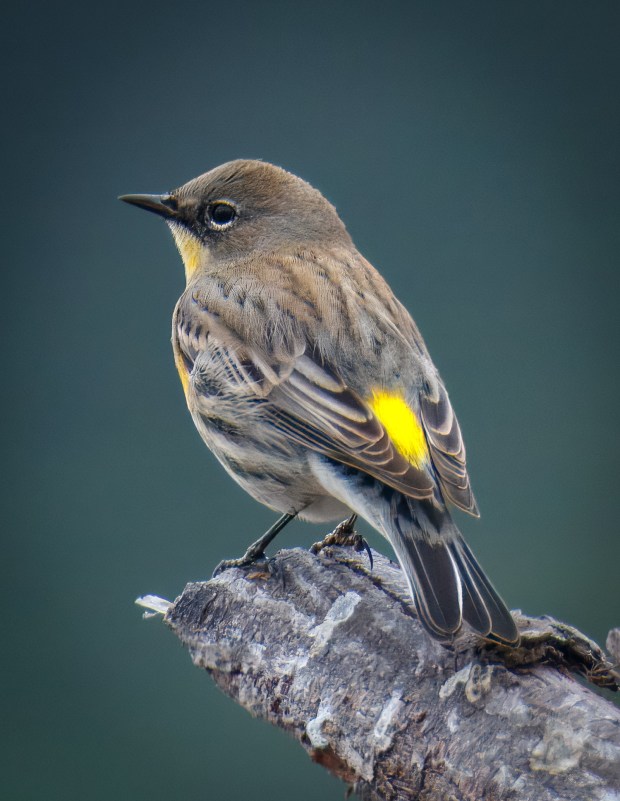 A yellow-rumped warbler. (Ernie Cowan / For The San Diego Union-Tribune)
You will often find yellow-rumps joyfully splashing around in a garden fountain first thing in the morning, even on a chilly December day.
While our hooded oriole friends have gone for the winter, there will be other species to brighten winter gardens.
Cedar waxwings, those elegant, crested birds, will arrive at local parks and gardens starting in September to pluck berries from ornamental plants.
The energetic ruby-crowned kinglet is another winter migrant arriving in September and is active in oak woodlands and riparian areas where they can often be seen hover-gleaning for tiny insects.
Their namesake red crown is not a very large spot but offers confirmation of the species when spotted since they are quite similar to the resident Hutton’s vireo.
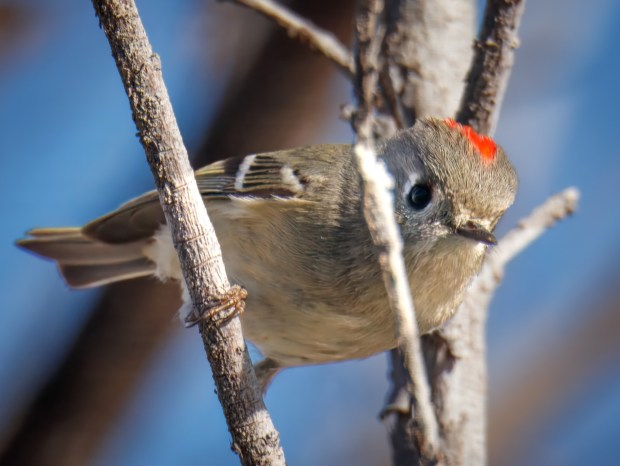 A ruby-crowned kinglet. (Ernie Cowan / For The San Diego Union-Tribune)
The seasons are changing and that brings a new cast of wildlife characters for us to get to know and enjoy until the birds of summer return next year.
Outdoor update
Depending on how you feel about big spiders, this could be a call to action, or a warning.
September and October is typically the most active time for tarantulas — those large, black or brown spiders common throughout San Diego County from our coastal areas into the eastern deserts.
This is mating season when the males leave their burrows in search of a female. Late afternoons or early morning is often the time when you may see the males wandering about in grassy meadows, chaparral thickets or arid desert sands. I’ve hiked Escondido’s Daley Ranch just before dark and spotted nearly a dozen tarantulas out and about.
Tarantulas may look imposing, but they are harmless to humans, so leave them be as they continue their romantic rambling, which is dangerous enough, since females will sometimes try to kill the males once mating has occurred.
Cowan is a freelance columnist. Email ernie@packtrain.com or visit erniecowan.substack.com.