
Oaklanders keep their foot on the pedal in call for data center ban.
Aug 30, 2026
Updated 4:13 pm PT
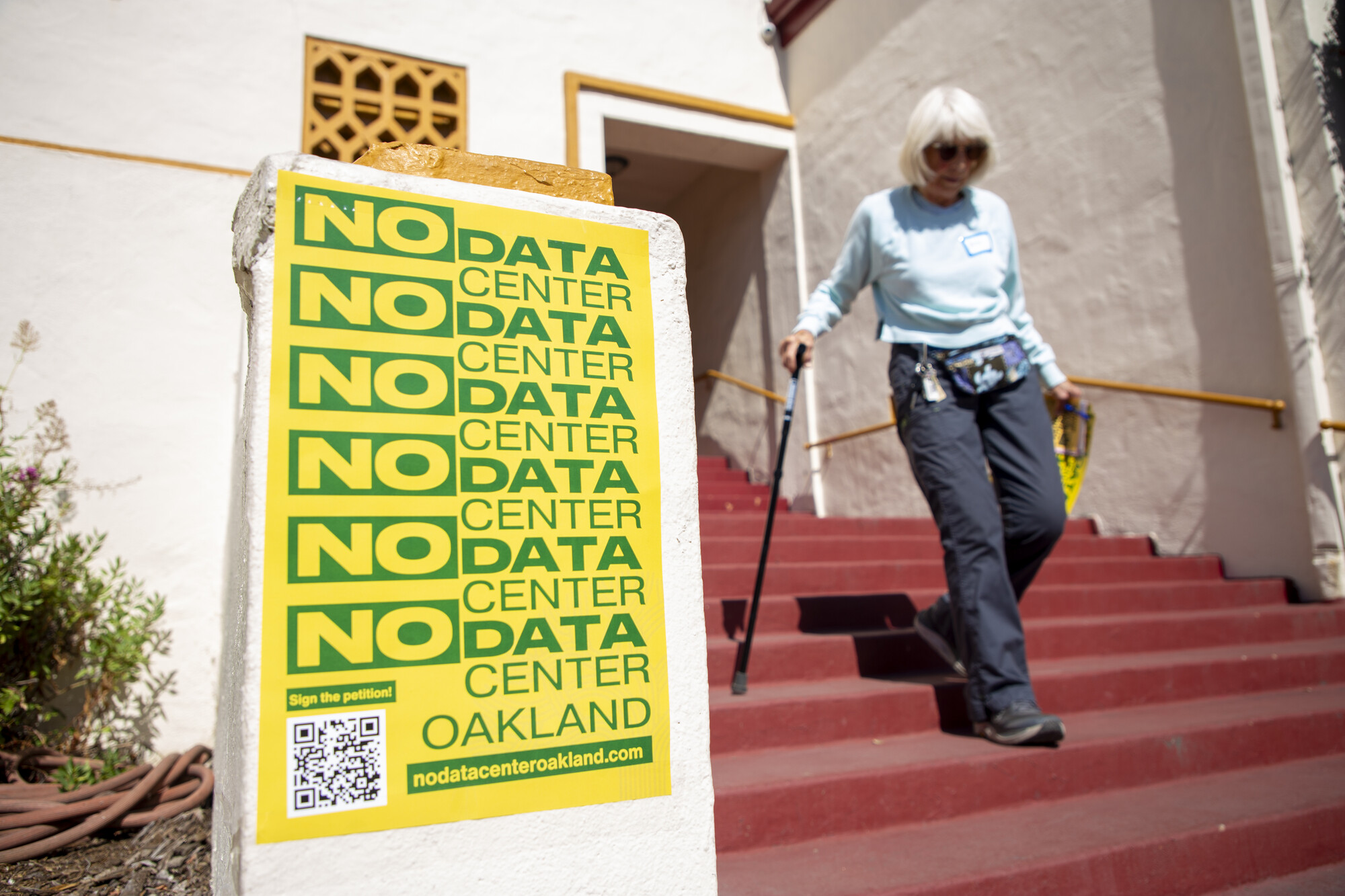
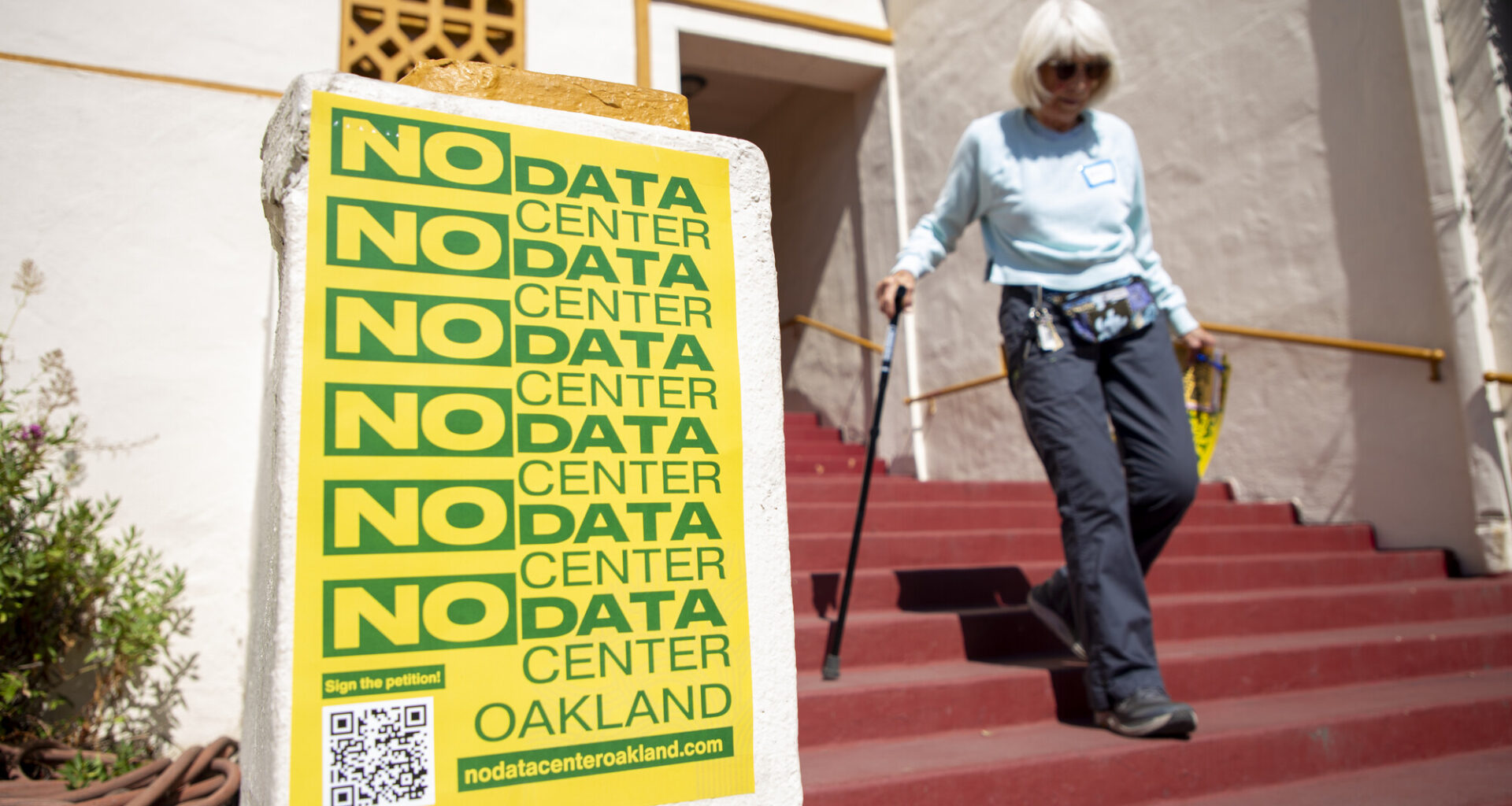
A flyer that reads, “No Data Center” is posted at the Church of All Faiths in Oakland on Aug. 29, 2026. Oaklanders are continuing to call for a ban on data centers in the city. (Tâm Vũ/KQED)
The Rev. Jeffrey Parker spoke almost sermon-like in front of more than a hundred people in his Oakland church this weekend, but it wasn’t the typical service the place was used to hearing.
He had something else in mind: data centers.
Parker joined organizers from the Party for Socialism and Liberation on Saturday to call for city leaders to stop the possibility of data centers in the city.
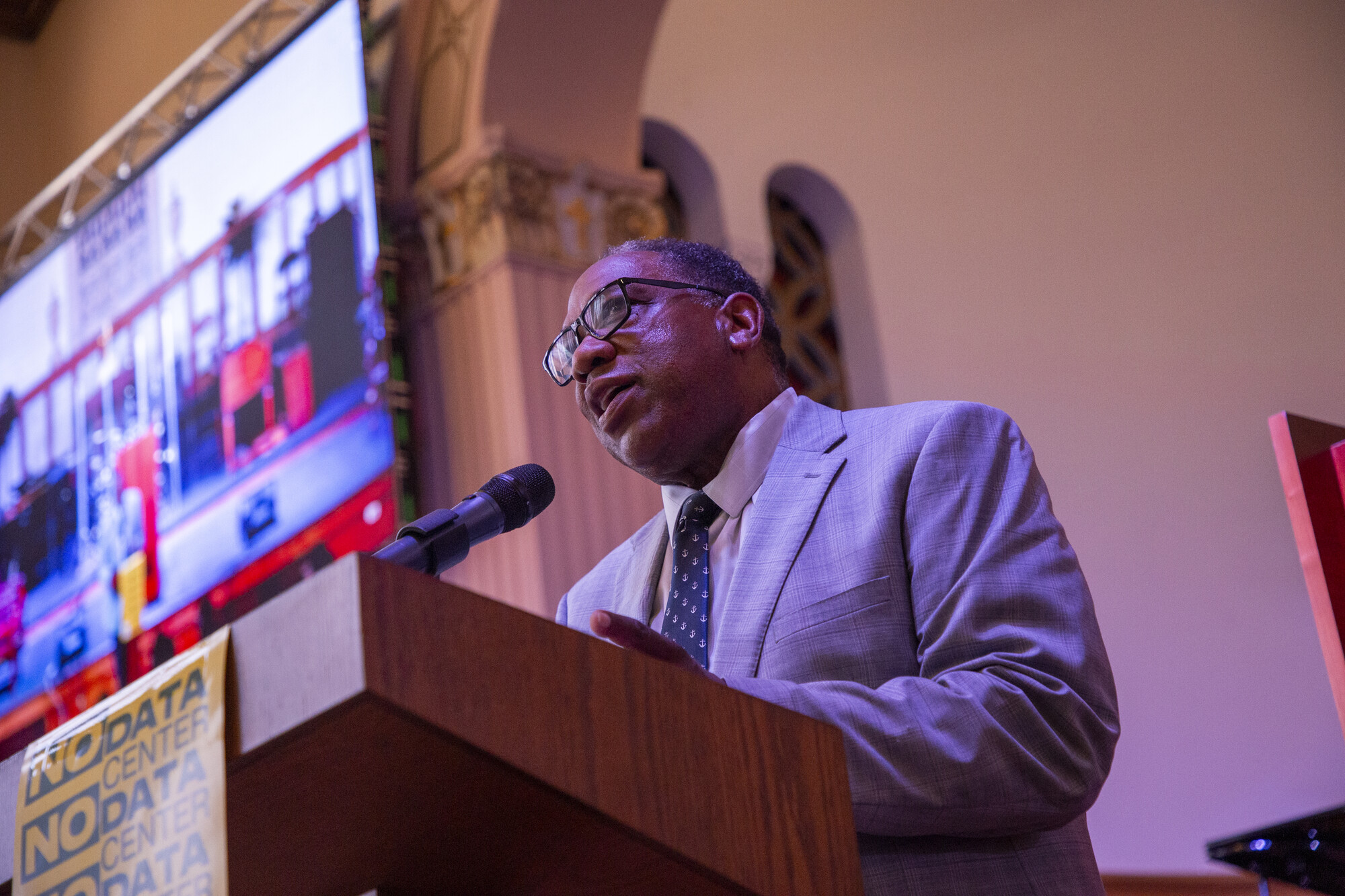 Rev. Jeffrey Parker speaks at an anti-data center meeting hosted by Party for Socialism and Liberation at the Church of All Faiths in Oakland on Aug. 29, 2026. (Tâm Vũ/KQED)
PSL and around 7,000 petition signers have urged a citywide ban on the facilities after a proposal by Behring Companies to bring a 20,000 square foot data center to downtown drew backlash.
Ire among opponents has recently grown.
Tesla and Prometheus, an AI startup cofounded by Jeff Bezos, signed leases at another site in the city, according to the San Francisco Business Times. It’s not yet known what Tesla and Prometheus have planned for the projects or if they’ll end up being data centers.
“I am against Oakland becoming a place where powerful technology companies can come into our community, consume enormous amounts of resources, and potentially leave Oakland residents to deal with the consequences,” Parker said.
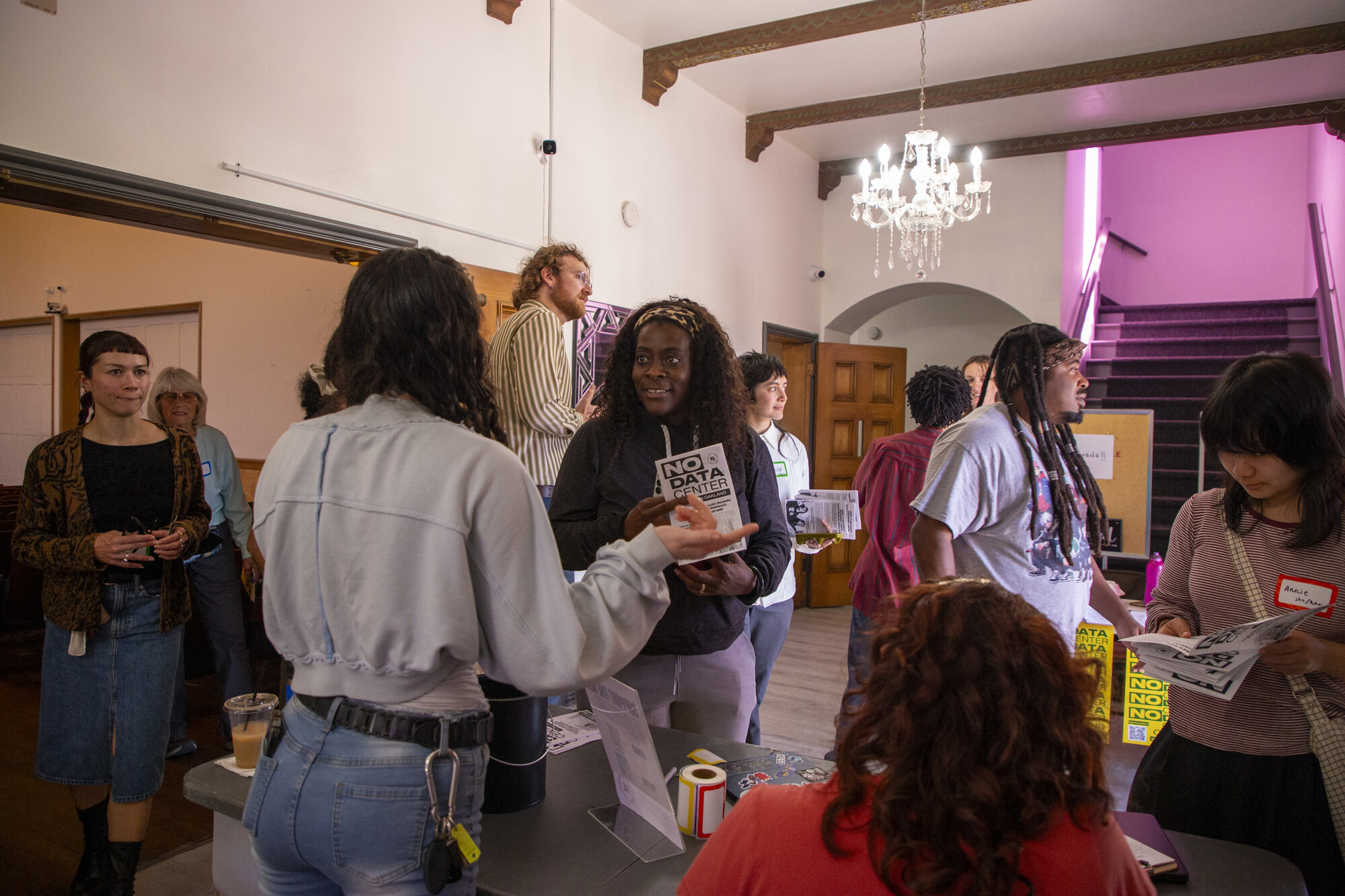 Oakland residents attend an anti-data center meeting hosted by Party for Socialism and Liberation at the Church of All Faiths in Oakland on Aug. 29, 2026.
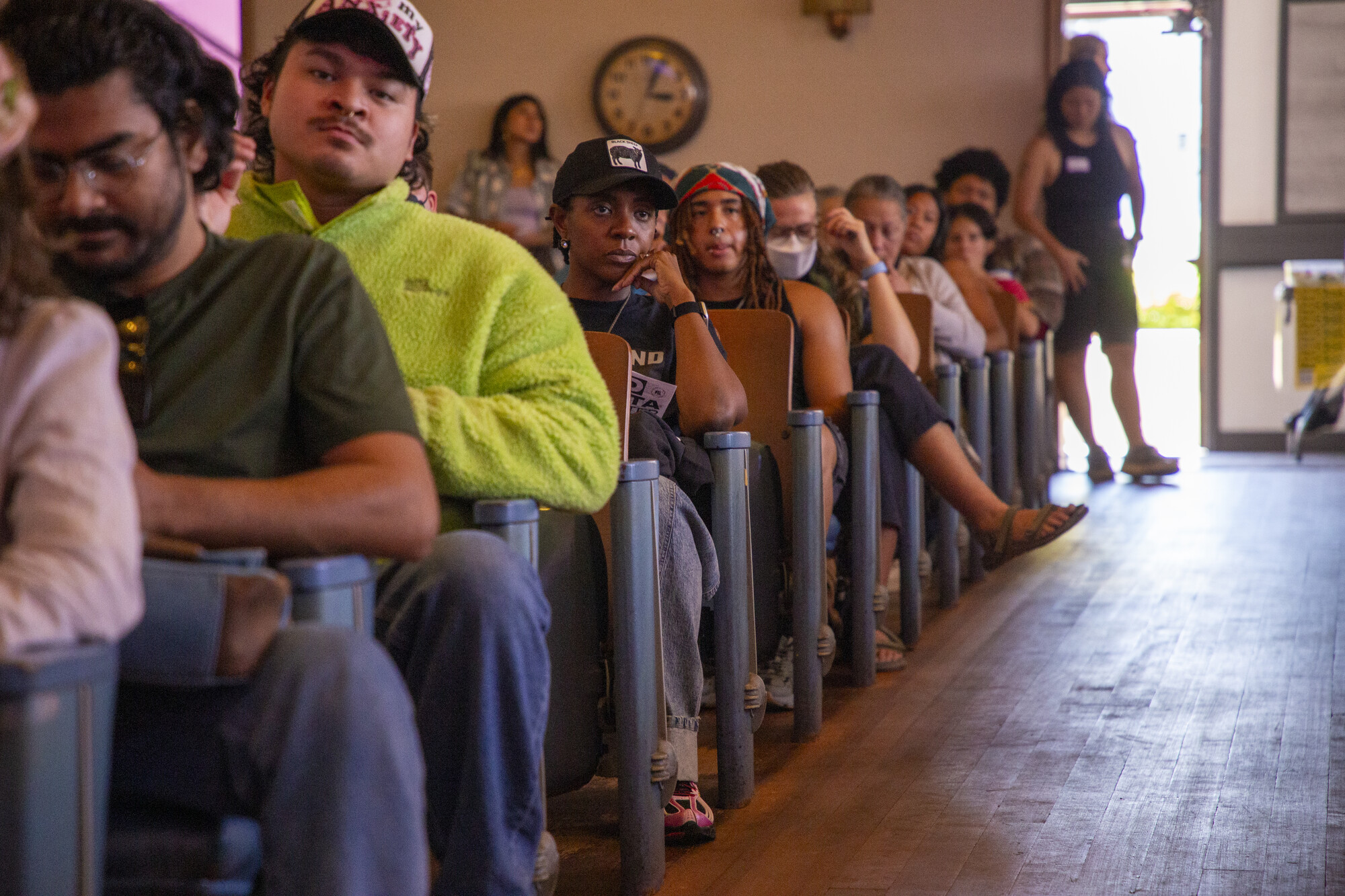 Oakland residents attend an anti-data center meeting hosted by Party for Socialism and Liberation at the Church of All Faiths in Oakland on Aug. 29, 2026.
The AI industry as a whole has come under fire for concerns over environmental impacts — water and energy usage, along with noise pollution — that residents worry will disproportionately hurt lower-income or Black and Brown communities.
Xavier Buck, executive director of the Huey P. Newton Foundation and founding director of the Black Panther Party Museum in Oakland, said he thinks cities like Oakland are intentionally targeted to be “sacrifice zones for the AI boom.”
“The power structure is not choosing these cities by accident; it is choosing them because these are cities where we built the most powerful organizing models,” Buck said. “[It’s] the most efficient way to destroy both the communities and the blueprint simultaneously,”
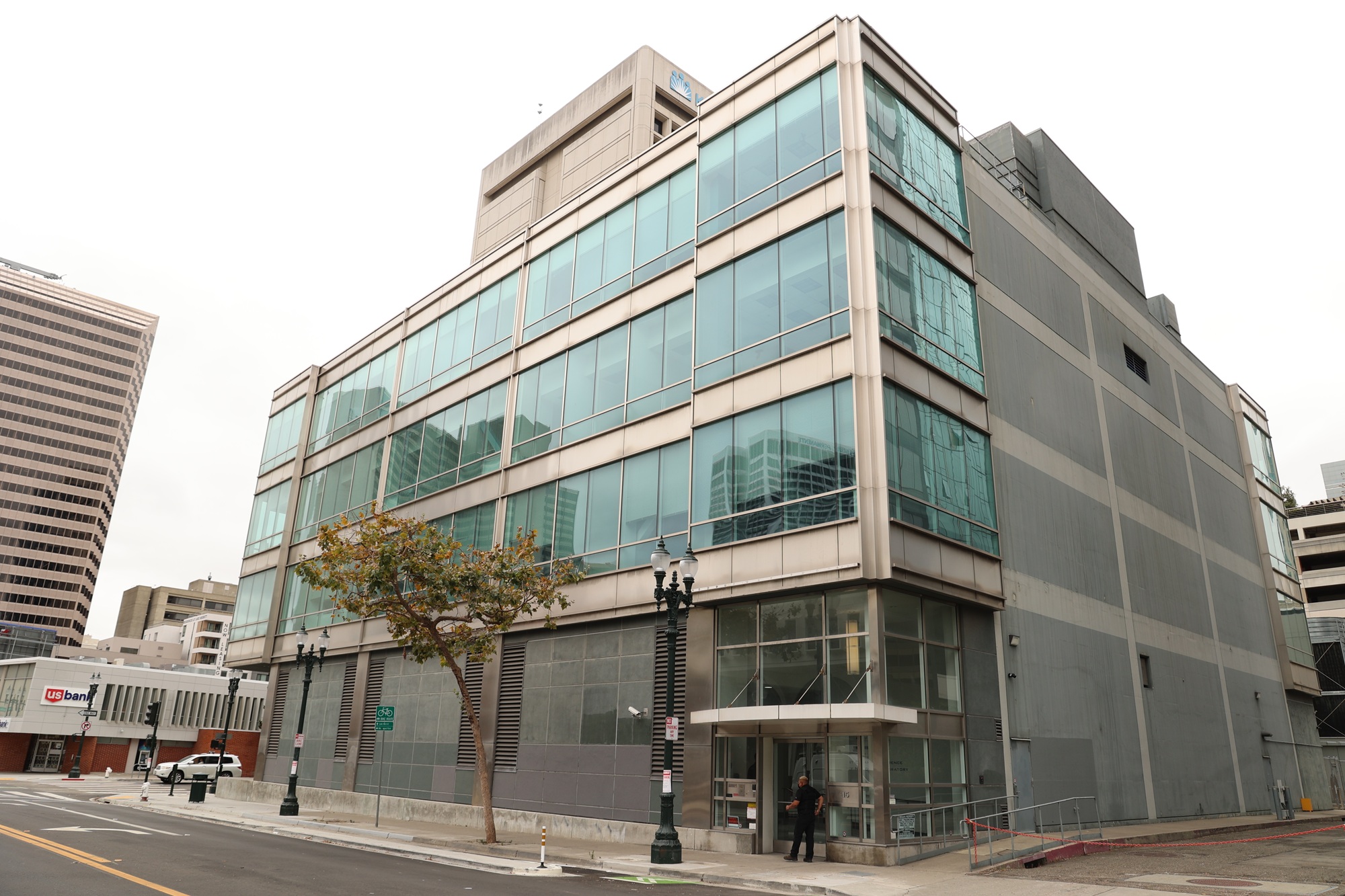 The location of Behring’s proposed data center at 415 20th St. in Oakland on Aug. 14, 2026. (Juan Carlos Lara/KQED)
“It just goes to show how united the community is and how ready they are to organize and fight back,” Varshneya said.
Opponents in Oakland have said they’re not opposed to technology.
“AI is not a technological advancement,” Buck said. “If it is damaging humans, the places we live and the ecosystem we survive on, what’s advanced about that?”
Organizers plan to show up at the next Oakland City Council meeting to continue calls for a data center ban.