
I was driving down Interstate 5 when I got the email.
“Congratulations, and welcome to the University of California, Berkeley!”
Pulled over just past the Miramar Road exit, I looked at my 3-year-old in the rearview mirror and cried with relief, excitement and hope for our future. My daughter had already moved nine times, not including each motel we stayed at using county hotel vouchers. This was our way out of poverty and into both financial and housing stability.
Then, the part of me that learned not to get too excited began asking practical questions. How would I even make it there? I was nearly homeless with a 3-year-old, and UC Berkeley had admitted me for spring, not fall.
I turned to Andrea in her car seat. “Irvine or Berkeley?” I asked. She knew our options well.
“Berk-e-ley!” she said, emphasizing each syllable as she would “broccoli.”
UC Berkeley’s reputation mattered, of course, but it was not the first thing I considered. Before anything, I was a student-parent and, as such, I had to make sure whichever campus I chose could support both of us.
When I received my tentative apartment offer and discovered I had six days to pay $2,370, I assumed I would lose my opportunity for housing and be forced to withdraw my acceptance to the school. I met several times and exchanged countless emails with the Student Parent Center’s director, Tomie Lenear, before driving up from San Diego. Through these conversations, I learned that I could defer this payment so that with only $500, I could move in sooner and pay the rest once financial aid was disbursed.
It was not a grand intervention. It was information I did not know existed, delivered by someone who understood that a student-parent does not experience housing as separate from school. When you are moving with a child, housing determines whether you can enroll, attend class and remain enrolled at all. Without that guidance, I might have surrendered the housing that made UC Berkeley even possible.
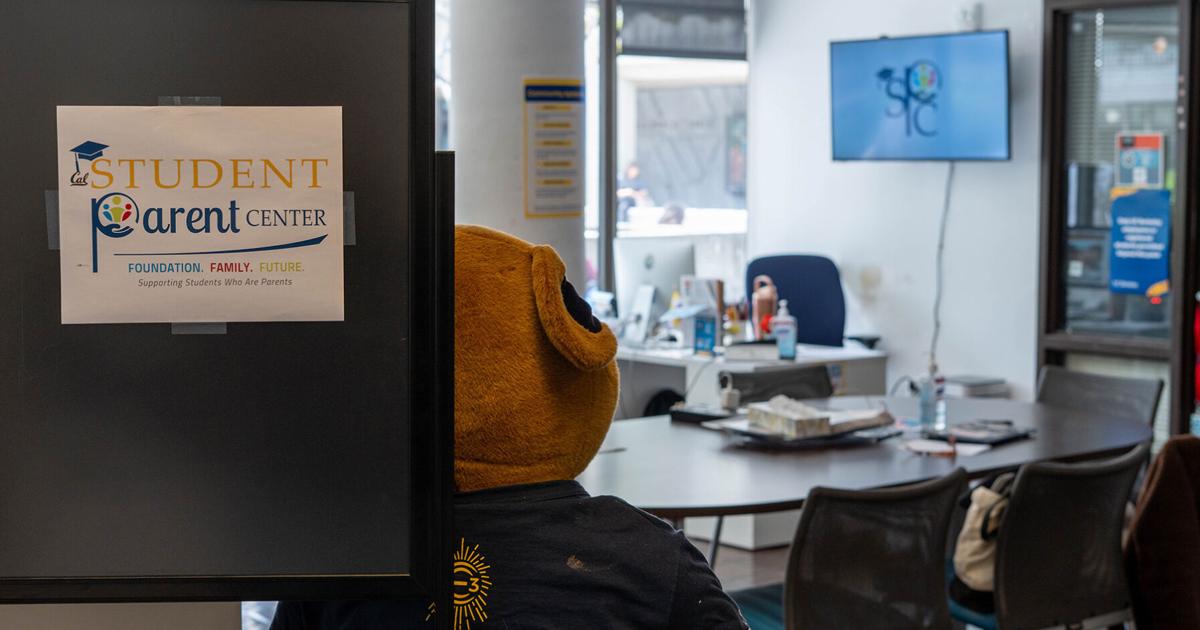
Aug. 28 was Lenear’s last day as SPC director and SPC’s final day with a professional staff member.
That advising role did not appear by accident. UC Berkeley’s student-parent support model was built through decades of organizing by student-parents. In 1997, a student-parent workgroup developed recommendations for students with dependents. By 1998, UC Berkeley was changing policies and working with the Student Parent Center to address their needs. Student-parents also organized through the Student Parent Association for Recruitment and Retention as a vehicle for collective action. By 2014, the center’s director was helping parents navigate family housing, subsidized child care, counseling and course loads. UC Berkeley itself describes its model as the result of “sustained efforts” over decades. Dedicated support was something student-parents fought to build. Its disappearance should not be treated as administrative housekeeping or “restructuring.”
Now that Lenear’s role as SPC director and SPC’s only professional staff member has ended, it is difficult to accept the changes to SPC at face value. When the transition was announced, student-parents were sent an email with vague assurance that the space, student staff and services will remain while student staff were told to keep working before basic questions had been answered. Where should we direct parents when we cannot help them? Who would handle programming and the daily work that keeps the center functioning? In writing, the Centers for Educational Equity and Excellence, or CE3, acknowledged that it did not yet have those answers and that coordinating the “many moving pieces” would take time.
Student-parents are being asked to trust a transition that puts our questions on hold. But, we cannot put our children, classes, jobs, rent, car payments or weekend soccer on hold!
As a sociology scholar, I study how institutions create conditions they later describe as individual shortcomings. Claims of decreased resource use are a perfect example. Campus cannot reduce the capacity to publicize support, answer questions, follow up, make referrals and build trust, then treat the predictable result as evidence that student-parents did not need help.
The email sent out to student-parents noted that the end of Lenear’s role at the SPC was part of a systemic reform that hopes to invest money into other campus resources. However, resources require us to know they exist, understand whether we qualify, find time to contact them and survive being sent from one office to another. Child care, basic needs, mental health and academic success do not fall into neat categories simply because campus organizes itself that way.
If a student-parent is not using a resource, were they ever told it existed? Could they access it around work and childcare? Was anyone responsible for ensuring the connection happened? Or is UC Berkeley measuring need only after stripping away its capacity to see it? Student-parents may be exempted from Golden Bear Orientation, where new students learn about available resources. Without that orientation and now without a Student Parent Center adviser, how are we supposed to discover the resources we urgently need but supposedly underuse?
CE3 should commit to permanent, full-time leadership for the Student Parent Center beyond this transition year. It should identify who will be responsible for outreach, referrals, advocacy, partnerships and evaluation. Student-parents deserve more than a chance to share our stories after decisions have been made. UC Berkeley also needs a paid Student Parent Action and Advisory Group with real influence over the center’s future.
Most importantly, UC Berkeley must understand that although we student-parents will survive whatever curveball comes our way, we still deserve support.
The Student Parent Center was not merely part of what made me choose UC Berkeley. It was the reason I could consider this campus at all. UC Berkeley should not confuse keeping the door open with keeping that promise.