
A new survey found that nearly one-third of respondents reported being seriously injured in San Francisco jails.
Aug 31, 2026
Updated 5:13 pm PT
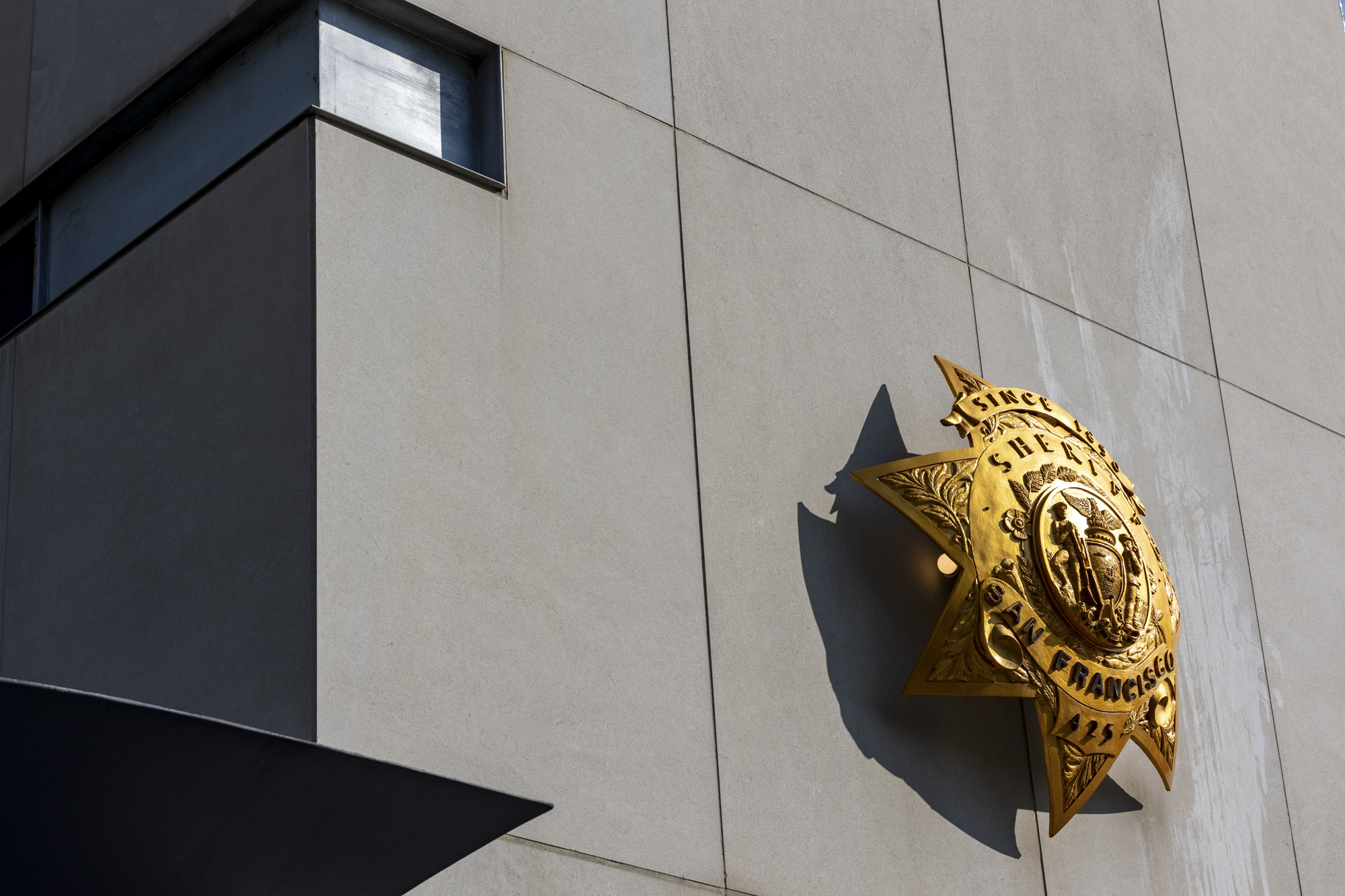
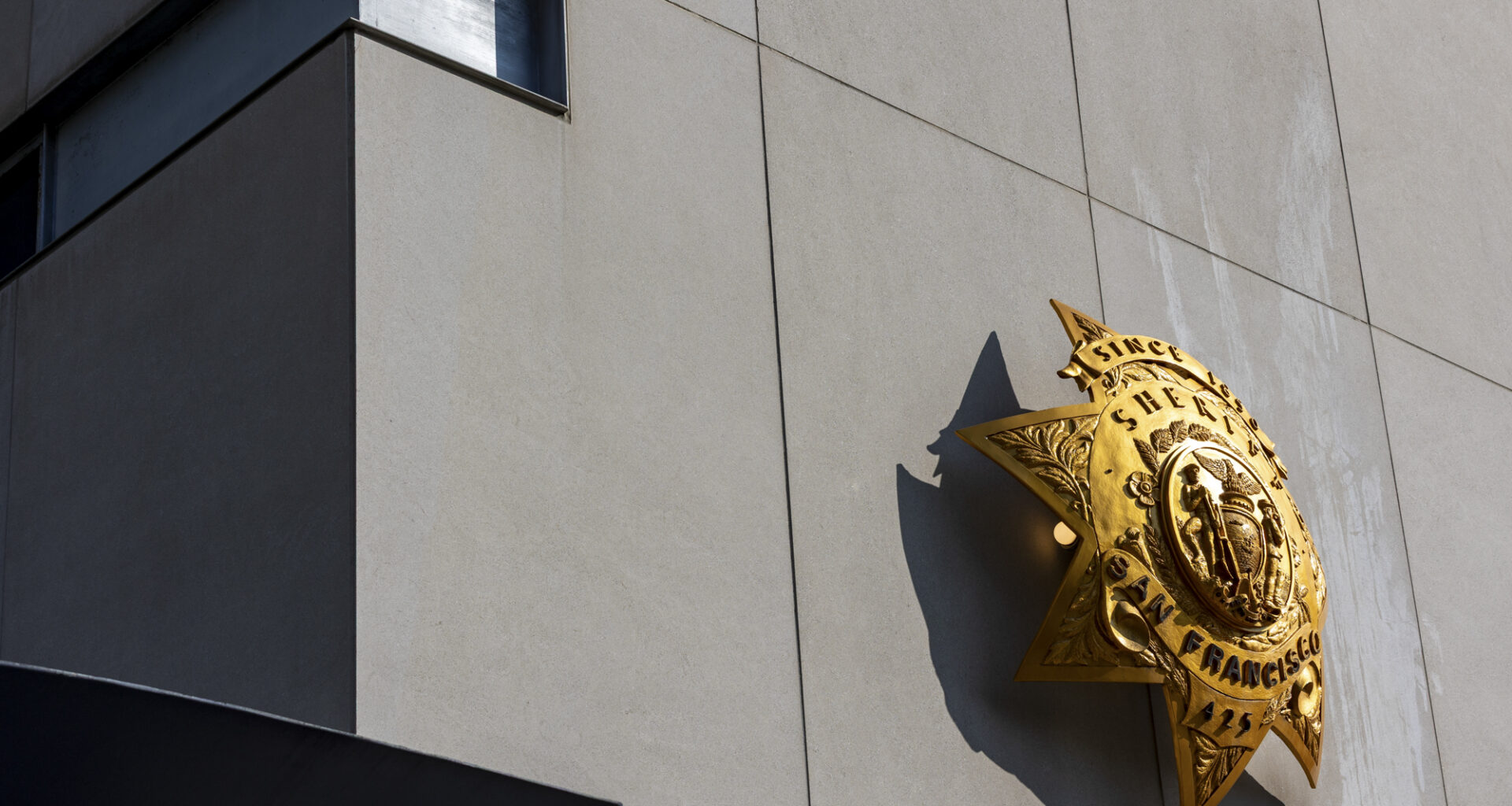
The emblem of the San Francisco Sheriff’s Department is seen on the exterior of the San Francisco County Jail on Nov. 24, 2025. A new San Francisco jail survey reveals concerns over safety, nutrition, healthcare and attorney access. (Gustavo Hernandez/KQED)
Over the past 10 years, Joanna Hernandez has learned that even a small thing can become a challenge when a loved one is behind bars.
Her son has been held in San Francisco County Jail since July 2016 and is set for trial in September. A tooth ached without dental care. Lunch trays served cold. Deputies ridiculed him, he told his mother.
And for her 9-year-old grandson, seeing his father has meant months of emails to command staff and visits canceled without warning.
“They’re still human beings,” Hernandez said. “They deserve compassionate medical care and mental health support. And I mean, dignity for crying out loud.”
A new San Francisco report suggests Hernandez’s son’s experience is far from isolated.
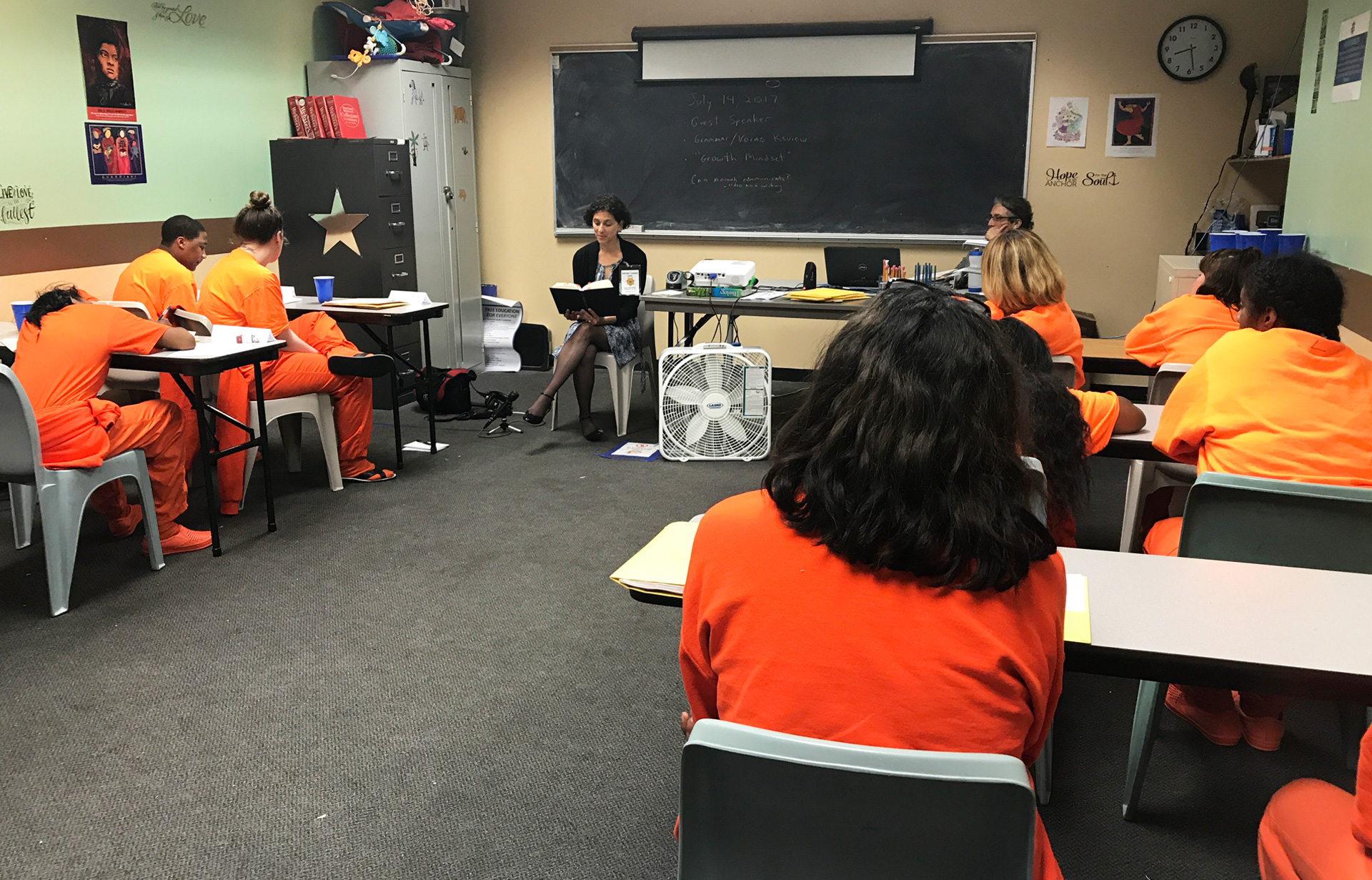 Dr. Carolyn Sufrin reads to female inmates at San Francisco County Jail from her book, ‘Jailcare.’ (Marisa Lagos/KQED)
The survey of the city’s jail population, conducted by the San Francisco Department of Police Accountability, reported poor conditions across nearly every aspect of daily life, including nutrition, safety, access to sunlight, family visitation, medical care and contact with attorneys.
Nearly one-third reported being seriously injured while held in custody.
The survey was offered on jail tablets from March 18 to April 24. Nearly 500 people completed the survey of the roughly 1,200 people incarcerated at the time. DPA designed the 78-question survey in collaboration with the Sheriff’s Office and other city departments.
“I hope that this sheds light and provides an avenue for a lot of other neighboring counties and states to review and look at what’s happening inside of their county jails,” said Paul Briley, who spent about two months in a San Francisco county jail and now leads nonprofit Legal Services for Prisoners with Children. “So that the conditions of confinement are not depriving people of their basic humanity.”
More than half of women surveyed said they felt unprotected. This followed calls from advocates earlier this year to investigate reports that more than a dozen women incarcerated at a San Francisco jail were strip-searched in front of male deputies and recorded on body-worn cameras.
Briley said he became an advocate after seeing the conditions in county jails: 4 a.m. cold showers, wearing other people’s dirty clothing and an intake unit where meals are cold and no one goes outside.
 Sheriff Paul Miyamoto speaks during a news conference in Civic Center in San Francisco on June 8, 2023. (Beth LaBerge/KQED)
“It sparked a fire inside of me to have to address this from the outside,” he said.
Food was the lowest-rated section in the survey. Nearly two-thirds said meals do not meet their nutritional needs at all.
Angela Chan, assistant chief attorney at the Public Defender’s Office, said she watched a client receive a lunch of two small pieces of bread, a ball of unidentifiable meat and a few dried baby carrots.
“That’s supposed to keep that adult individual full and healthy for half a day,” Chan said.
She said clients have left custody with high blood pressure and other conditions they did not arrive with.
Miyamoto said the menu is vetted against state standards and reviewed by a nutritionist.
“It may not seem tasty or healthy at some times, but we definitely have guardrails,” he said.
Roughly one in three said they could not reach their attorney by phone, video or in person, and 40% said lockdowns interfered with legal visits. Chan said her staff sometimes wait hours to see a client and are told no one is available to bring them.
“It’s a matter of priority,” she said, adding that lockdowns are not a lawful basis to deny a legal visit.
Miyamoto said delays happen but denied intentionally “preventing people from seeing their attorneys.” He cited the difficulty of moving people between San Bruno and downtown courts and the mismatch between jail phone hours and public defenders’ court calendars.
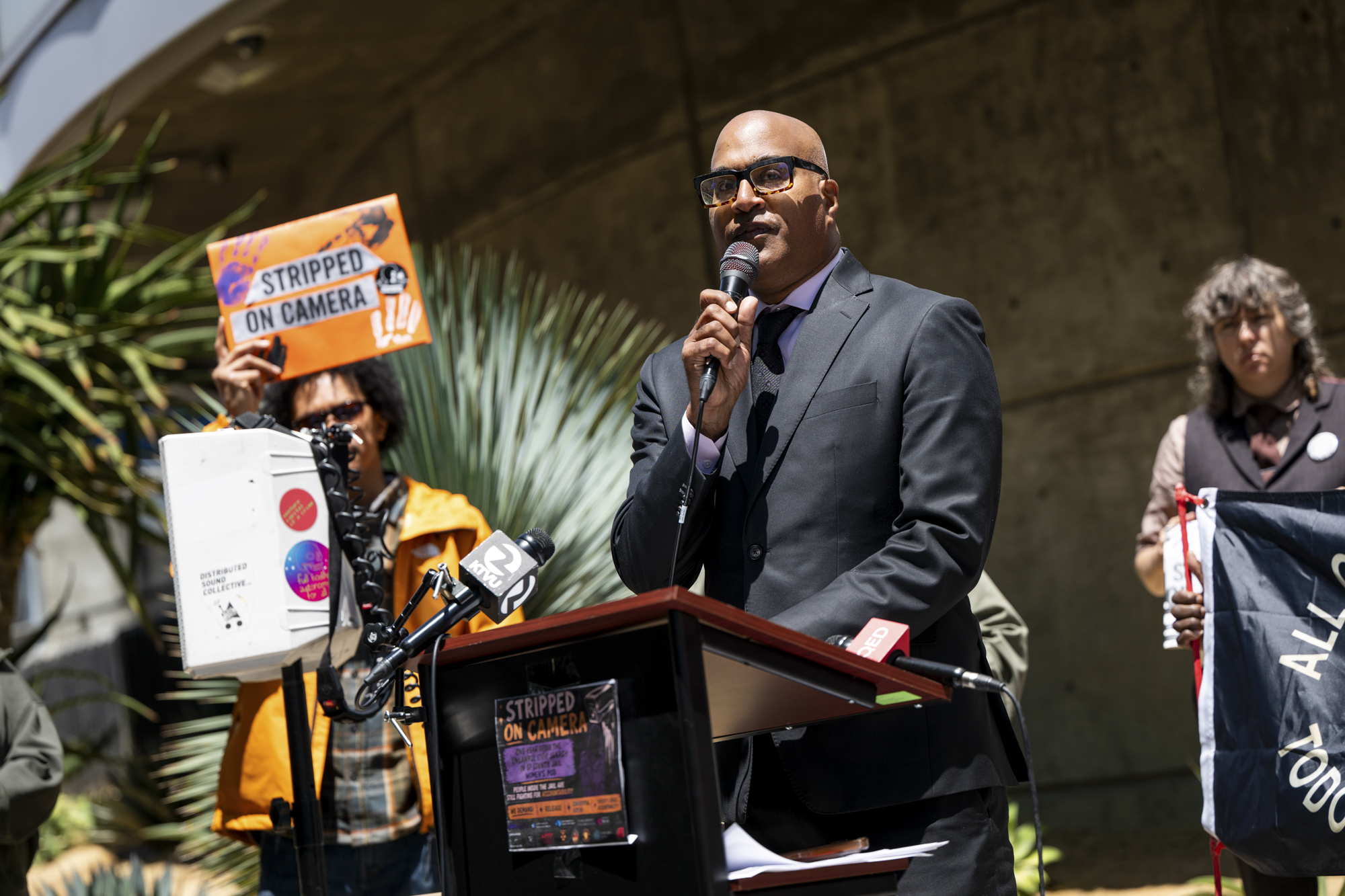 San Francisco Public Defender Mano Raju speaks during a rally outside of San Francisco County Jail 2 on May 22, 2026, one year after women incarcerated at the jail alleged they were subjected to illegal strip searches by sheriff’s deputies in a women’s housing unit. (Beth LaBerge/KQED)
Briley said he was most surprised by how long some people have been inside. The survey found 39 respondents had spent five to 10 years in the jails and 15 for more than a decade.
“In a county jail,” he said. “This is not a prison.”
As a next step, the Sheriff’s Office has asked the Jail Justice Coalition for recommendations.
“I don’t think this is just a list of complaints,” said Anne Stuhldreher, senior adviser in the city’s office of the Treasurer, which helped develop the survey. “It’s really a list that lays out, OK, these are the challenges that we really need to work on — to fix.”
Asked what she would change right now, Hernandez said she wants to be able to hold her son. There should be a rule, she said, that anyone held longer than a year gets at least one hug a month from their mother.
“The human touch between a loved one and an incarcerated loved one can do so much,” she said. “Imagine what that can do to his mental health.”
KQED’s Juan Carlos Lara contributed to this report.