

The Anaheim Ducks Stanley Cup Checklist is here. The Athletic’s Dom Luszczyszyn built the original framework around a simple idea for looking at a team’s dos and don’ts, and it has proven to be one of the more useful tools for measuring how far a rebuilding team has to go. Every recent champion has filled the same basic set of roles. That runs from a true franchise forward down to depth pieces who simply do not hurt the team. Harman Dayal and Murat Ates picked up the model this spring and tightened it. They based the current thresholds on only the last decade of champions, not the last 15. That change came after the Florida Panthers repeated as champions two seasons ago. Applied to the Anaheim Ducks, the checklist tells a clear story. There is one elite piece, one defenceman playing above his draft slot, and a lot of open chairs still waiting to be filled. This is Part 1 of a two-part look at that gap. Today is about where the Ducks actually stand. Part 2 will get into who the organization is betting on to close the distance.
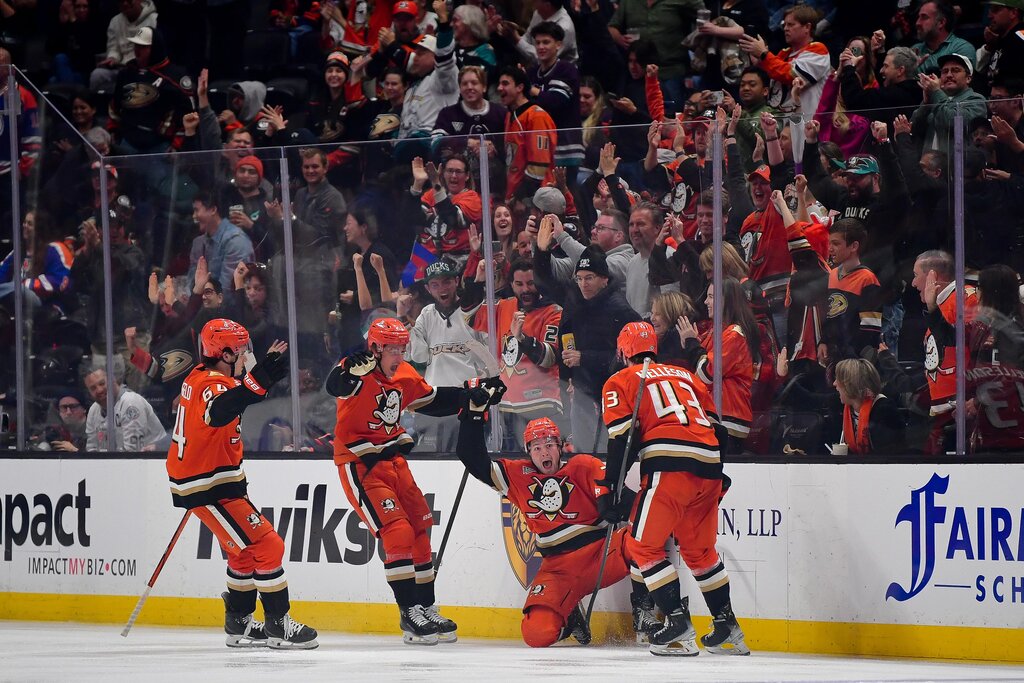 Apr 7, 2025; Anaheim, California, USA; Anaheim Ducks centre Mason McTavish (23) celebrates his goal scored against the Edmonton Oilers during the third period at Honda Center. Mandatory Credit: Gary A. Vasquez-Imagn Images

Stanley Cup Checklist rubric. Credit: The Athletic
What the Stanley Cup Checklist Actually Measures
The framework grades every roster spot using Net Rating. That figure blends offensive and defensive value, measured against what recent champions carried in that specific role. 13 roles span three tiers. Elite Core covers a franchise forward, star forward, franchise defenceman, shutdown forward, and star goalie. Every true contender needs at least one of these. Meanwhile, Support Core covers scoring forward, scoring defenceman, shutdown defenceman, and support forward, the connective tissue around the stars. Depth core covers offensive forward, defensive defenceman, depth Forward, and defensive forward. These are the bottom-of-the-lineup pieces that simply cannot be net negatives. Every role also carries a five-tier grade, ranked worst to best: Exception, passable, solid, ideal, and luxury. Those tiers are percentile bands, built from every player who actually filled that specific role on the last decade of Cup-winning rosters. Exception covers the bottom 10th percentile of that group, Passable runs from the 10th to 30th, Ideal from the 70th to 90th, and Luxury covers the top-10 percent. Importantly, a player graded Exception is not automatically bad, and the label can read that way at first glance. Instead, he is simply below the bar recent Cup winners have cleared at that role, and that bar sits higher than it sounds. Net Rating itself comes from a mix of public and premium sources; this piece pulls the Ducks-specific figures directly from the Athletic’s own player cards and from HockeyStatCards, which tracks the same offensive and defensive splits publicly.
Elite Core with One Building Block, Two Bets Still Developing
Jackson LaCombe is the closest thing Anaheim has to a fit anywhere on this chart. His 9.13 offensive rating lands in solid territory for a franchise defenceman. Meanwhile, his -0.23 defensive mark sits in passable range. That combination gives Anaheim something to build a top pairing around, even if LaCombe is not fully there yet. Lukas Dostal, meanwhile, might be the more encouraging story on the roster. His 10.6 net rating sits just below the ideal cutoff of 10.7 for a star goalie. As a result, he grades as the best relative to his role’s bar on the entire team. Leo Carlsson and Cutter Gauthier both land in exception territory, as a franchise forward and star forward respectively. Carlsson sits at 8.37 against a 13.4 threshold, and Gauthier at 7.89 against 8.9. However, neither number should be read as a verdict on their ceiling. Both are still early in their prime years. Carlsson, in particular, just signed a five-year, $90 million contract that bets heavily on him closing that gap. Troy Terry, on the other hand, does not fit the Shutdown Forward role his depth chart spot currently asks of him. He grades Solid offensively but Exception on the defensive side.
Support and Depth Core with A Lot of Empty Chairs
Chris Kreider and Mikael Granlund are the only two players who clear a support core threshold. Even then, the picture stays modest. Still, Kreider’s 4.65 net rating is passable as a scoring forward. Granlund’s 3.78 lands solid as a support forward. In fact, neither is a scoring defenceman or shutdown defenceman by any reasonable reading of the numbers, and nobody else on the roster clears those bars either. As a result, both support core defensive roles sit completely empty. Depth core is thinner still. Alex Killorn’s -2.14 net rating is passable as a depth forward, the only occupied slot in the entire tier. Offensive forward, defensive defenceman, and defensive forward all sit empty. Meanwhile, candidates like Nikita Nesterenko, Ryan Poehling, and Jansen Harkins grade well into exception territory. Frank Vatrano’s -9.42 net rating is the low point of the whole roster. In fact, it sits worse than every other regular by a wide margin.
The Blueline Is the Problem
Anaheim’s rebuilt defence corps is where the checklist gets uncomfortable. LaCombe is the only defenceman on the roster who clears any tier at any role. Everyone behind him grades deep in Exception territory: Pavel Mintyukov at -3.92, Ian Moore at -4.4, Drew Helleson at -6.09. That gap matters more this offseason than most. The Ducks lost several defencemen who carried actual value by this same system. John Carlson graded 11.32 net, comfortably Solid-to-Ideal as a franchise defenceman, before he departed. Additionally, Jacob Trouba and Radko Gudas were both closer to replacement level but still logged structured NHL minutes. Olen Zellweger’s 0.33 net rating, while modest, still cleared several depth core thresholds. So far, none of that value has been replaced by a player with a comparable grade. Still, it is worth noting the checklist can only measure players who logged NHL games last season. It has nothing to say yet about whoever the Ducks are hoping fills those roles going forward. That is exactly the territory Part 2 will cover.
Where the Ducks Actually Stand
Anaheim Ducks Stanley Cup Checklist (based on 2025-26 season):
Role
Player
Net Rating
Tier
Franchise Forward
Leo Carlsson
8.37
Exception
Star Forward
Cutter Gauthier
7.89
Exception
Franchise Defenceman
Jackson LaCombe
Off 9.13 / Def -0.23
Solid / Passable
Shutdown Forward
Troy Terry
Off 7.83 / Def -1.05
Solid / Exception
Star Goalie
Lukas Dostal
10.6
Just below Ideal
Scoring Forward
Chris Kreider
4.65
Passable
Support Forward
Mikael Granlund
3.78
Solid
Scoring Defenceman
N/A
N/A
Empty
Shutdown Defenceman
N/A
N/A
Empty
Depth Forward
Alex Killorn
-2.14
Passable
Offensive Forward
N/A
N/A
Empty
Defensive Defenceman
N/A
N/A
Empty
Defensive Forward
N/A
N/A
Empty
Five of 13 roles have an occupant who clears the bar at all. Still, only Dostal and LaCombe sit within realistic range of the upper tiers. That is not a roster built to win now. Instead, it is a roster still waiting on its best young players to grow into the grades their draft position promised.
What Still Needs to Get Filled
Strip away the individual grades and the picture simplifies fast. Anaheim needs its two young forwards to keep closing the gap toward franchise and star territory. Importantly, both are already trending that way given their breakout seasons. It also needs a second defenceman to emerge behind LaCombe. The position group falls off a cliff after him right now. Furthermore, it needs a proper shutdown defenceman, a role nobody on the current roster is graded for. Additionally, the bottom six has to stop bleeding value. Notably, four of the five empty roles sit in support or depth core, exactly the spots contenders fill with players who simply do not lose games for their team. None of that is a surprise for a franchise still climbing out of a rebuild. However, what the analysis provides is a shopping list. It turns a general sense that Anaheim is not there yet into a specific list of which seats are open.
The Last Word
The Ducks have pieces worth building around. Dostal already grades like a difference-maker in net. Additionally, LaCombe is not far off being a legitimate top-pairing defenceman by this same measure. Meanwhile, Carlsson and Gauthier are exactly the kind of exception-tier young players a rebuilding team should want stuck in that grade. Both are trending the right direction, with heavy usage and contract commitments behind them. The concern is everything beneath that top tier. Anaheim’s blue line lost more value this offseason than it replaced. The bottom of the lineup remains mostly unaccounted for by a system built specifically to measure Cup-winning rosters. Where the Ducks actually stand, then, is closer to the start of the checklist than the finish. Part 2 will dig into who the organization is counting on to fill those remaining chairs, and how likely that bet actually looks to pay off.
More NHL Articles:
Beckett Sennecke Point Projection
Main Photo Credit: James Guillory-Imagn Images