
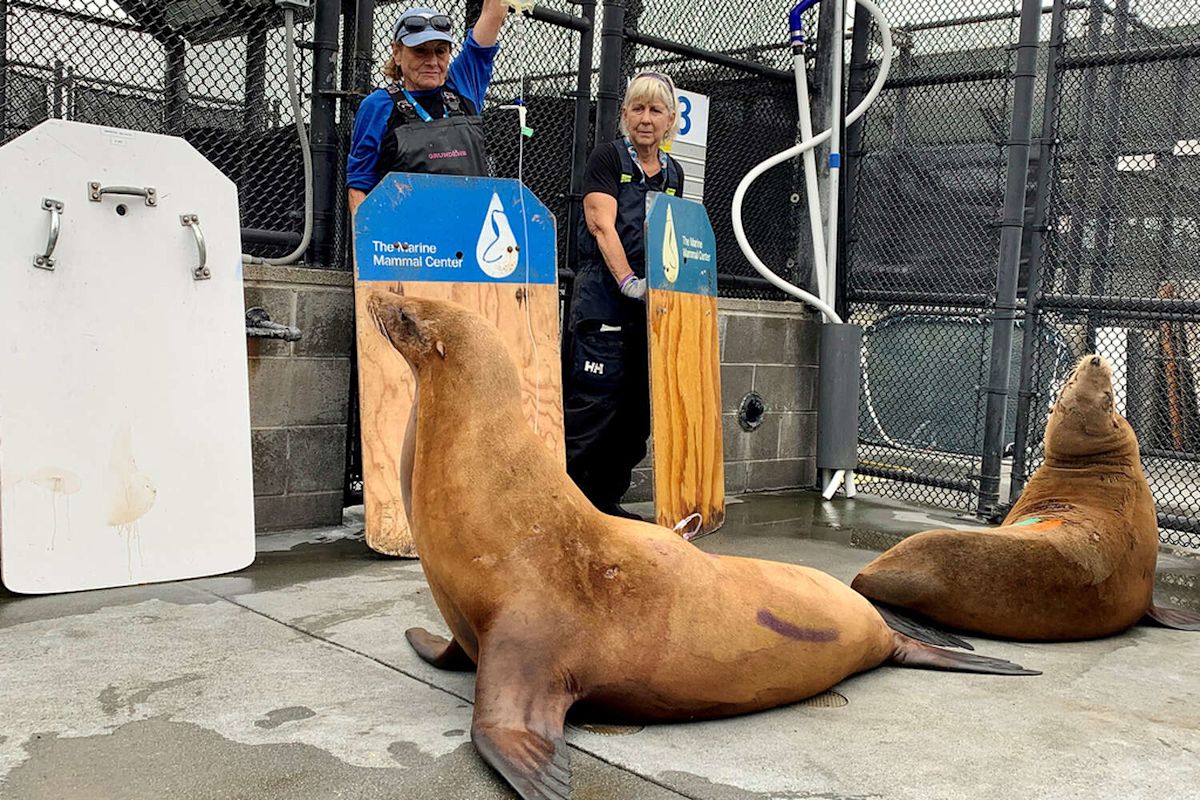
A toxic algal bloom is causing a surge of poisonings along the California coast, severely sickening sea lions and other marine mammals and leaving some dead on the shore.
Dozens of sea lions have been sickened by domoic acid poisoning, a toxin produced by algae that can cause seizures and heart failure, according to a news release from the Marine Mammal Center, a nonprofit wildlife rescue organization.
The “flare-up” in cases began increasing in early summer, but they became especially severe over the past week in Monterey and Santa Cruz counties, Giancarlo Rulli, a spokesperson for the Marine Mammal Center, told SFGATE. The organization typically sees 70 to 90 domoic acid poisoning cases a year, but more than 100 have already been reported along the state’s coastline in 2026, Rulli said.
“The fact that we are about to turn the page on August into September and just the unknowns right now of how these flare-ups have kind of popped up, surged, dissipated, and then popped back up again is a real concern,” Rulli said.
Sea lions ingest the neurotoxin by eating contaminated sardines, anchovies and other small fish. Repeated exposure can cause more severe, lasting effects, including permanent brain damage, according to the center.
“Sea lions don’t drink water like we do for hydration,” Rulli said. “They get all the hydration from the food that they eat. They’re basically receiving large doses of this neurotoxin with no way to flush the toxin out of their system.”
Infected sea lions often exhibit abnormal neurological behavior, such as lethargy, disorientation and twitching. They can also develop tremors and seizures.
“It hurts the heart to see such vibrant animals not be in control of themselves,” Rulli said.
What’s most concerning about the poisonings, Rulli said, is that the illness has evolved and become more unpredictable since it was first discovered in 1998. Domoic acid poisoning would usually only show up in the summertime, but now it is showing up “year-round,” he said.
Compared with past outbreaks, experts say this season might be especially worse because of the warmer ocean temperatures tied to this year’s El Niño.
Michael Milstein, a spokesperson for the National Oceanic and Atmospheric Administration, told SFGATE that wind-driven upwelling brings nutrients to the surface, helping harmful algae grow. Warmer temperatures then cause the algal blooms to multiply, he said. However, the neurotoxins can still form in cold water and work their way up through the food chain if eaten by sea lions, according to Rulli.
“It is a very insidious and brutal disease that occurs both during cold water years due to strong upwelling in offshore wind here along the California coast, as well as during warmer water years,” he said.
Although the hot spot for the neurotoxin is along the Monterey Peninsula, that could shift as the year goes on because the poisonings are “unpredictable,” Rulli added.
The Marine Mammal Center and NOAA are urging beachgoers to contact authorities if they notice signs of domoic acid poisoning, such as sea lions bobbing their heads or displaying “erratic behavior.”
According to Milstein, sea lions that are sickened can be “dangerous” and “unpredictable,” and beachgoers should remain at least 100 yards away. Stranded sea lions along the West Coast can be reported to NOAA’s hotline at 866-767-6114 or the Marine Mammal Center’s hotline at 415-289-7325 for sea lions spotted along the state’s coast in Mendocino County through San Luis Obispo County.
It’s also important for beachgoers to avoid crowding sea lions that may be infected, Rulli added.
“Whether you’re in a hot zone along the Monterey Peninsula, or you’re heading out to the beaches this weekend and approaching Labor Day weekend here in the Bay Area, keep a safe distance,” he said. “… These animals are already under an incredible amount of stress.”
Members of the public can also help by volunteering with the center, he said, as crews are being stretched thin. Most of the affected sea lions are adults, weighing 150 to 300 pounds. It takes four to six volunteers and a 100-pound metal crate to carry one off the beach and transport it to veterinarians.
Rulli said the operations are physically demanding and “emotionally draining,” even for bystanders.
“For the person visiting a California beach that has never seen an animal basically not in control of its own body, and displaying seizure-like behavior, that is very very difficult,” he said.
This isn’t the first time sea lions are washing up sick or dead on California beaches. In 2023, an outbreak of a bacterial infection known as leptospirosis killed sea lions across the coast and a strain of the deadly avian flu caused an outbreak among marine mammals earlier this year.
More News
– Calif. man accused of killing mother, brother pleads insanity
– Flight attendant’s sudden death leaves family searching for answers
– Ex-child actor claims she was repeatedly raped during Disney filming
– Bay Area radio legends’ daughter pleads guilty to pregnancy fraud
Sign up for SFGATE’s breaking news email
This article originally published at Sick, disoriented sea lions are washing up on California beaches.