
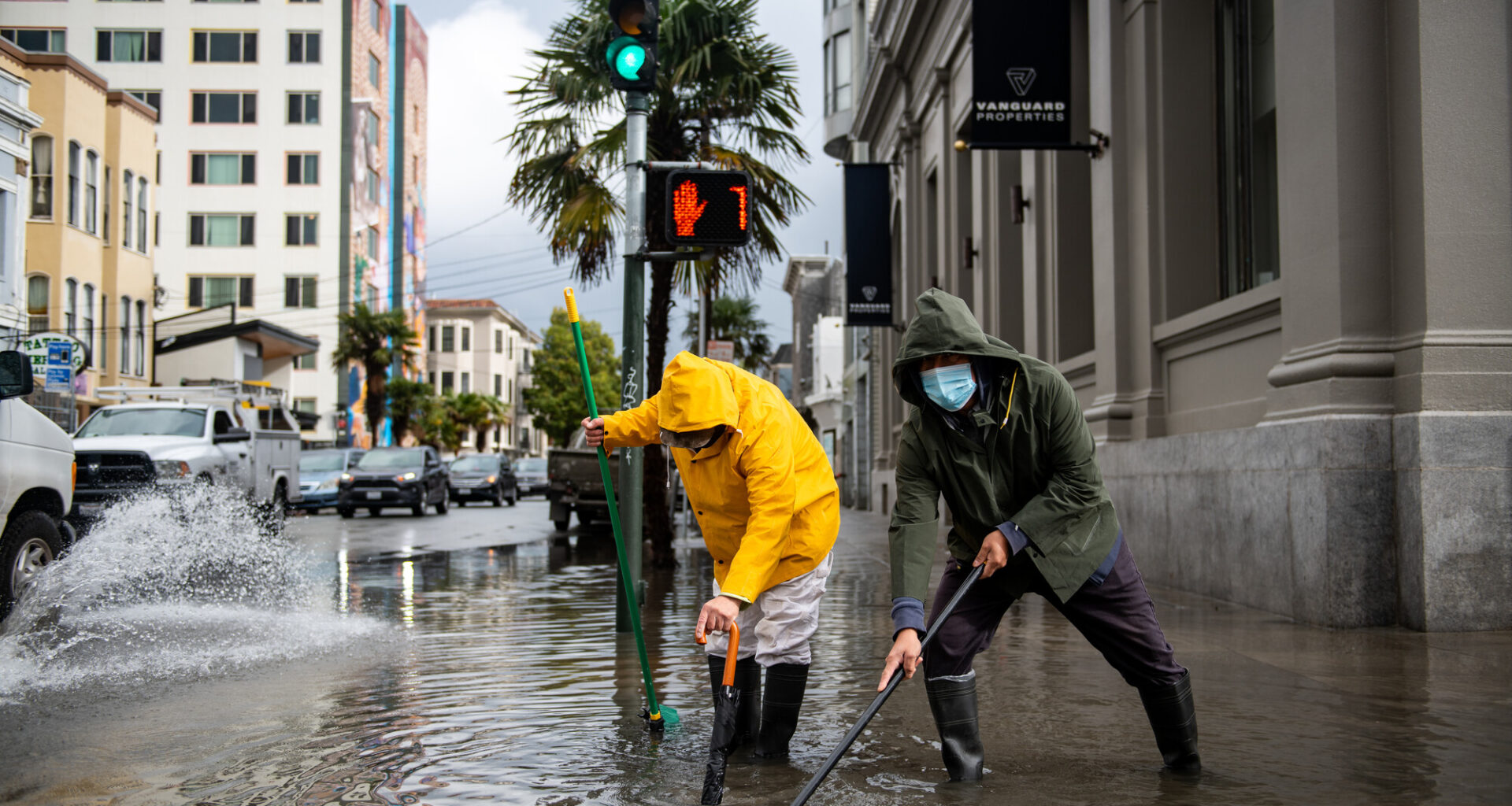
Higher seas. Back-to-back storms. Mudslides. Flooded homes and highways.
The mere mention of El Niño — and the headlines you’re seeing — can be anxiety-provoking. But how real should your worry be? And what can you do to protect your home, business, or property in advance?
First, the outlook: Federal forecasters report there’s a 90% chance of a “very strong” El Niño this fall and winter, and a nearly 70% chance that the strength of El Niño could exceed the strength of any similar event seen since 1950.
Bay Area cities and counties prone to flooding from the sky and the bay, like San Francisco and Marin, are already taking the El Niño threat seriously and preparing for the worst: deluges that could combine with high tides and temporarily elevated sea levels to potentially swamp whole neighborhoods and roadways, including Highway 101.
“We’ve had situations in the past where we’ve had to evacuate blocks,” said Mary Ellen Carroll, executive director of San Francisco’s Department of Emergency Management. “We’re having much more severe weather situations, and we’re seeing things that we haven’t seen in the past.”
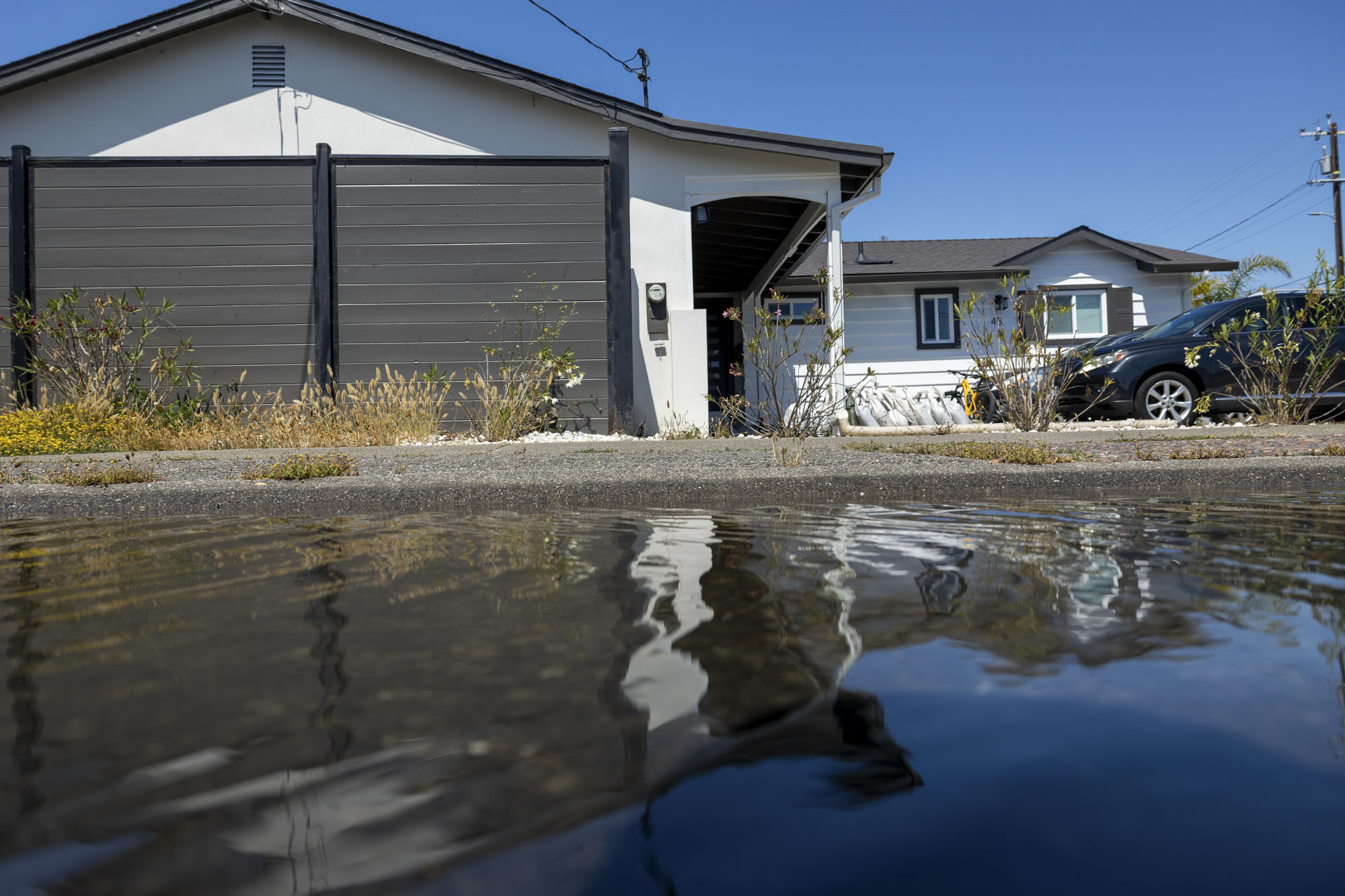 A puddle left behind by receding king tides reflects homes along Golden Hind Passage in Corte Madera on June 15, 2026. (Gustavo Hernandez/KQED)
Marin County officials are paying close attention to the confluence of El Niño-driven elevated sea levels, seasonal king tides, and the potential for frequent storms that could hammer the region.
“We don’t know if it’s going to rain, but we are going to plan for it to rain a significant amount,” said Steven Torrence, director of emergency management for Marin County. “Water has to go somewhere, and if it can’t go to the bay, we want to be able to push it to locations where it actually will not impact our residents or people’s infrastructure.”
Counties and cities are preparing by investing in temporary pumps, cleaning storm drains, working with partner agencies to ensure people aren’t on Bay Area roads during flooding and sending emergency alerts out swiftly when danger arises.
“If you want to know about significant traffic incidents, upcoming floods or significant storms, we will send out notifications once thresholds are hit,” Torrence said.
Here’s what to know about how El Niño could affect your home and your safety this winter — not to panic you, but so you’re prepared for what might happen in a few months.
First off, what is El Niño — and what kind of weather could it bring exactly?
El Niño forms when tropical trade winds weaken or reverse, allowing warm ocean water near Asia to slosh toward the Pacific Coast. That warming can reshape the jet stream and bring stormier weather across California while disrupting the ocean’s nutrient-rich upwelling, heating coastal waters, raising sea levels and stressing marine life.
Exactly what the weather will look like this fall and winter is — quite literally — still up in the air. But similar events in past El Niño years have brought torrential downpours, coastal flooding, mudslides, power outages and giant waves.
The Climate Prediction Center suggests that much of California will experience above-normal temperatures this fall and precipitation this winter. Earlier in the fall, forecasters expect warm and wet weather in Southern California, the Central Coast, and in the South and East Bays.
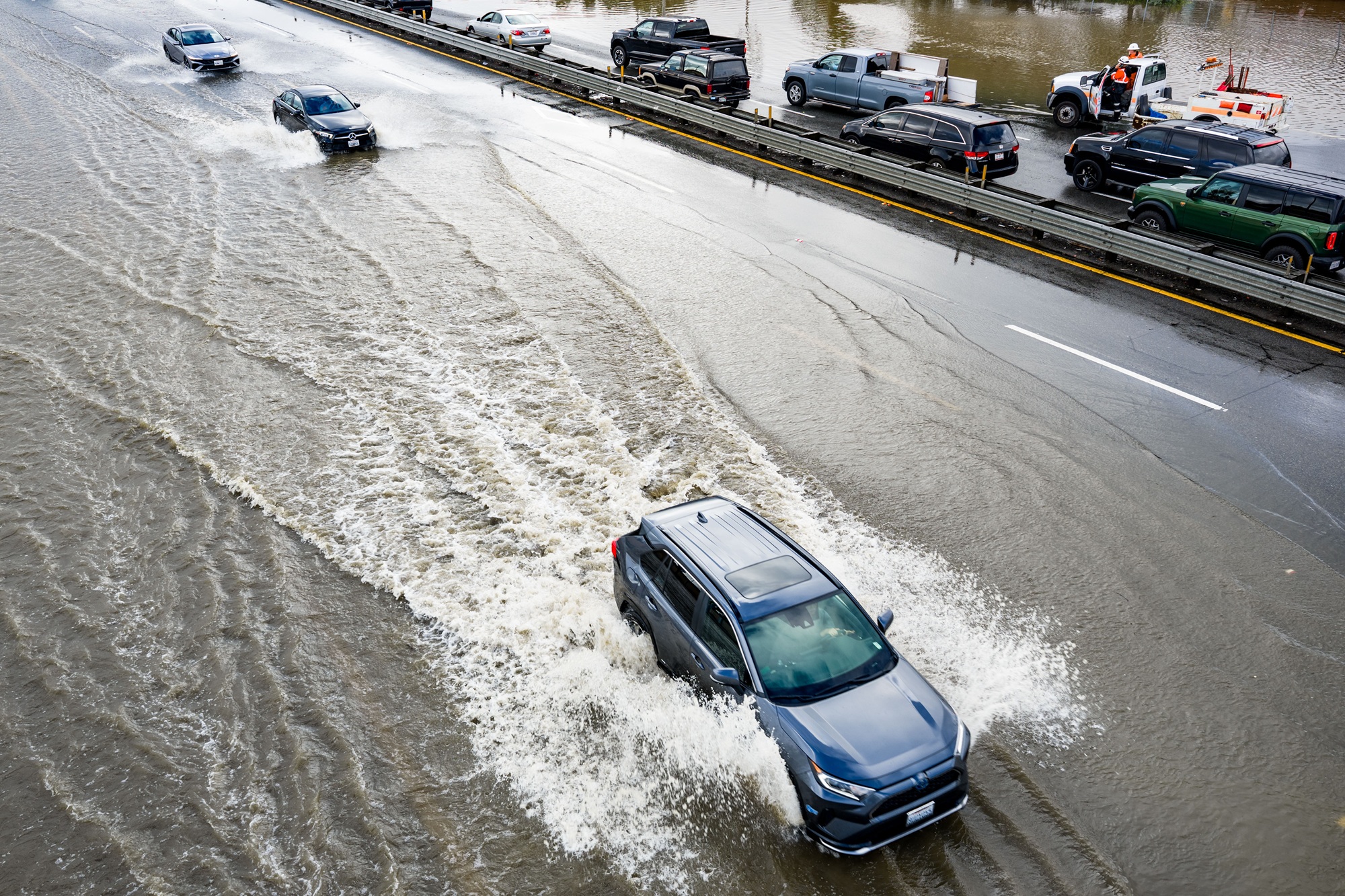 Cars drive on Highway 101 flooded by the “King Tides” on Saturday, Jan. 3, 2026, near Corte Madera in Marin County, California. (Ethan Swope/AP Photo)
And come December, there’s potential for above-normal precipitation throughout Northern California.
Rachel Kennedy, a meteorologist with the National Weather Service’s Bay Area office, said the Bay Area sits in this interesting transition zone with “drier conditions to the north and wetter conditions to the south.” As a result, the Bay Area could “go either way.”
Kennedy said, “It is getting more likely that we will see a rainy winter, but we will need to keep an eye on it. Exactly how much it’s going to be above normal, we don’t really know.”
“But the fact that the CPC has started indicating leaning above normal for precipitation is a good sign that we are trending towards a wetter winter,” she said
Could where I live be at risk of flooding from El Niño?
The effects of El Niño — severe rainstorms that flood homes and roadways, strong winds toppling trees, temporarily higher seas and giant waves eroding bluffs — have the potential to directly affect Bay Area homes from Pacifica to San Francisco to San Rafael.
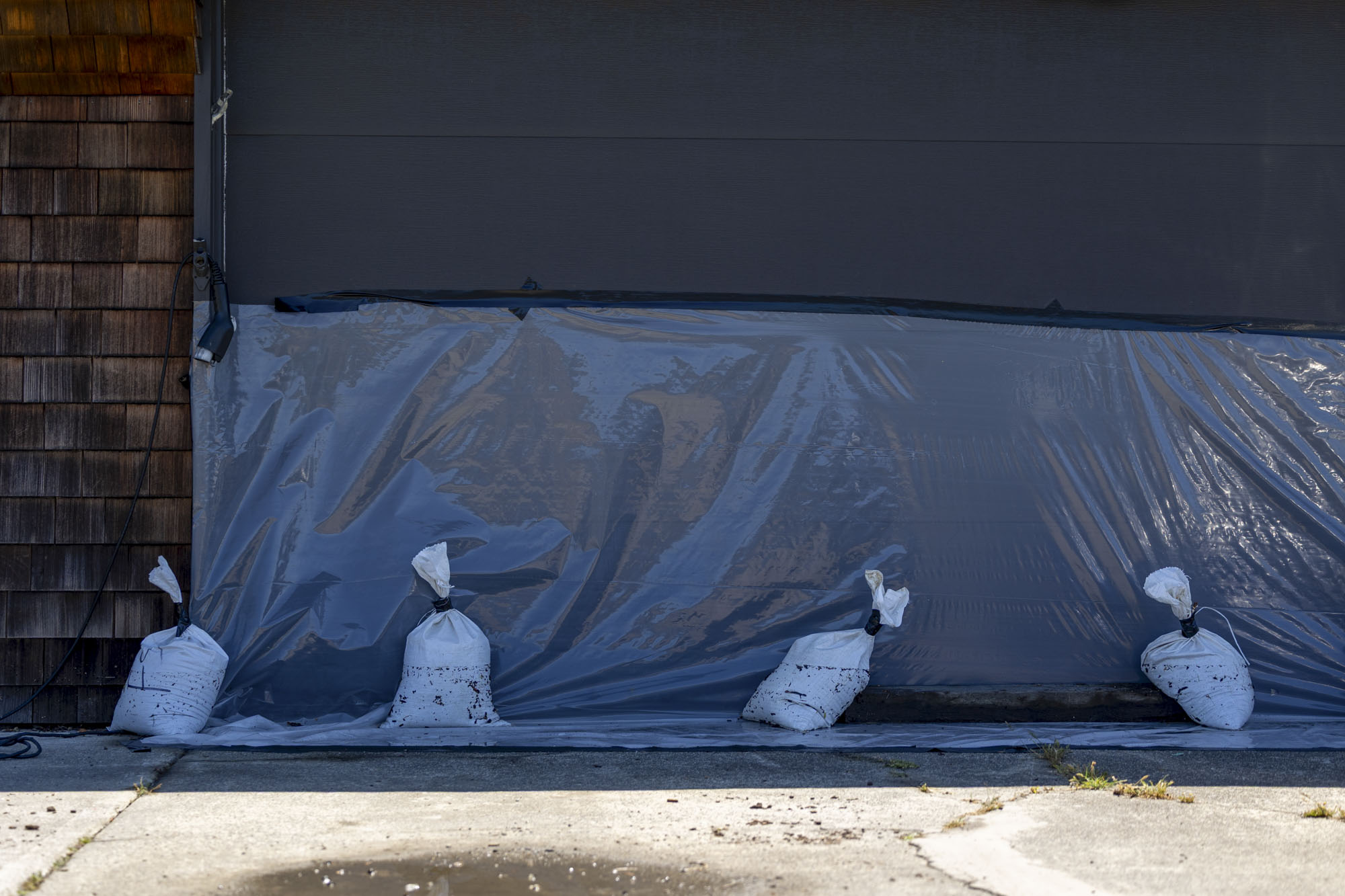 Plastic sheeting and sandbags are placed outside a home along Golden Hind Passage, as residents prepare for potential king tide flooding, in Corte Madera, on June 15, 2026. (Gustavo Hernandez/KQED)
Torrence said homeowners in areas that can or routinely flood should also invest in sandbags or flood barriers to protect their assets. Your county may be making these tools available: The County of Marin has 32 sites already offering sandbags, and the San Francisco Department of Public Works offers 10 free sandbags per household.
Carroll, in San Francisco, also said residents should be ready for power outages by purchasing backup batteries, flashlights, and nonperishable food. It’s also important to develop a plan — “on a good day,” she stressed — with your family and neighbors in case disaster strikes. As part of this, you should make sure all your important documentation — passports, birth certificates, etc. — is in a safe place, ideally even in a container you can easily grab when evacuating.
“Anyone who gets evacuated will tell you they have no idea why they grabbed the things they did,” Carroll said. “I have a list on my refrigerator to remind me of what to take if I had to get out quickly.”
When it comes to your neighborhood, residents should also make sure storm drains are clear of debris to reduce the risk of a water backup that could flood your street.
San Francisco has an Adopt-A-Drain program where people can name their drain and are responsible for helping the city clear leaves, trash, and other debris from it. Around KQED’s offices, for example, named drains include ‘Drain Me Baby One More Time,’ Singin’ in the Drain and ‘No Pain No Drain’.
Since storms can occur during holidays, Torrence said it is important to build relationships with neighbors who can check on your home or alert you if damage occurs.
I’m a renter. Do I have any responsibility for El Niño preparations — or liability if the worst happens?
Carroll said yes, renters should follow a similar plan to prepare for the potential consequences of downpours, power outages, flooding, and falling trees (see above).
But, she said, landlords are usually responsible for the upkeep of their property. And renters should ask questions like: Should we be worried about this area that ponds water? What if the power goes out? Or it flooded last year in my apartment or the basement; has that been mitigated?
Torrence, with the County of Marin, said renters should review their lease agreement to understand their burden here versus their landlord’s, because not all leases are the same.
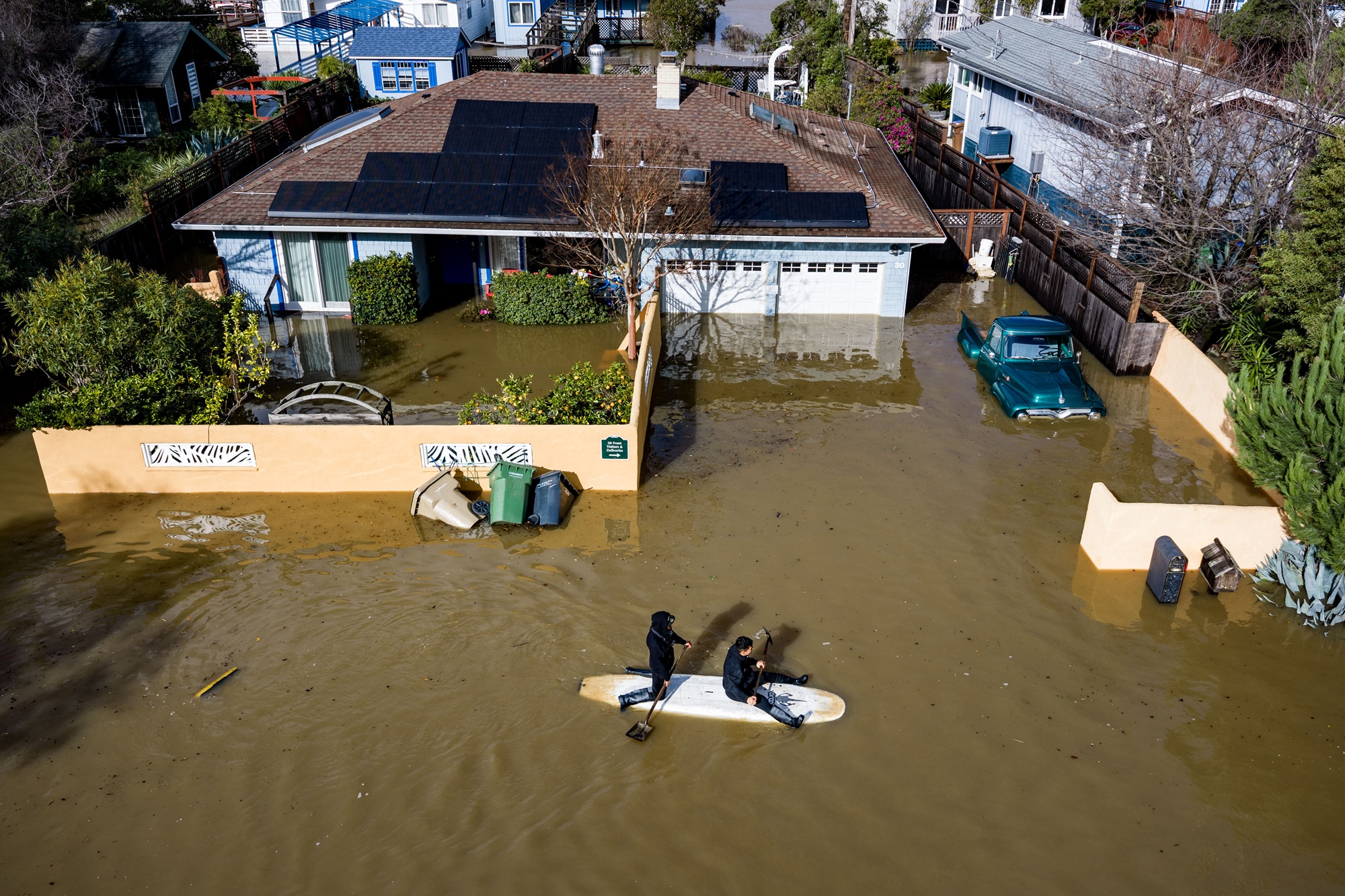 People paddle through a street flooded by the “King Tides,” occurring when the sun, moon and Earth align, causing a stronger gravitational pull on Saturday, Jan. 3, 2026, near Corte Madera in Marin County, California. (Ethan Swope/AP Photo)
“If there are things that are on the property owner, please let them know, things like looking at trees and landscaping,” Torrence said. “We definitely encourage people to have those conversations with property owners early.”
Bringing up issues with landlords before the storm season starts is important, Torrence said, because property owners often travel for the winter or are on holiday during the period with the greatest impacts.
“Make sure you bring issues up to your property owners’ attention by saying what’s happened when it’s windy and rainy,” Torrence said. “That way they can advance those mitigation measures.”
Torrence also said it’s important to check what is covered in your renters insurance. If you live in a flood-prone area, purchasing a plan could prove beneficial if the worst happens.
“Double-check what [your] renters insurance policy is and have a conversation with your property owner to figure out what they cover?” Torrence said. “Because when we have these incidents, that is too late to be looking at your insurance policy.”
How could El Niño affect my travel plans this winter?
Two other areas to pay attention to when the skies darken and the sea rises: travel on highways and flights from local airports.
“If you are traveling either on the road or flying during a storm, the roadways are going to be wet, and you’re likely going to encounter difficulties in visibility, particularly if you experience moderate to heavy rainfall,” Kennedy said.
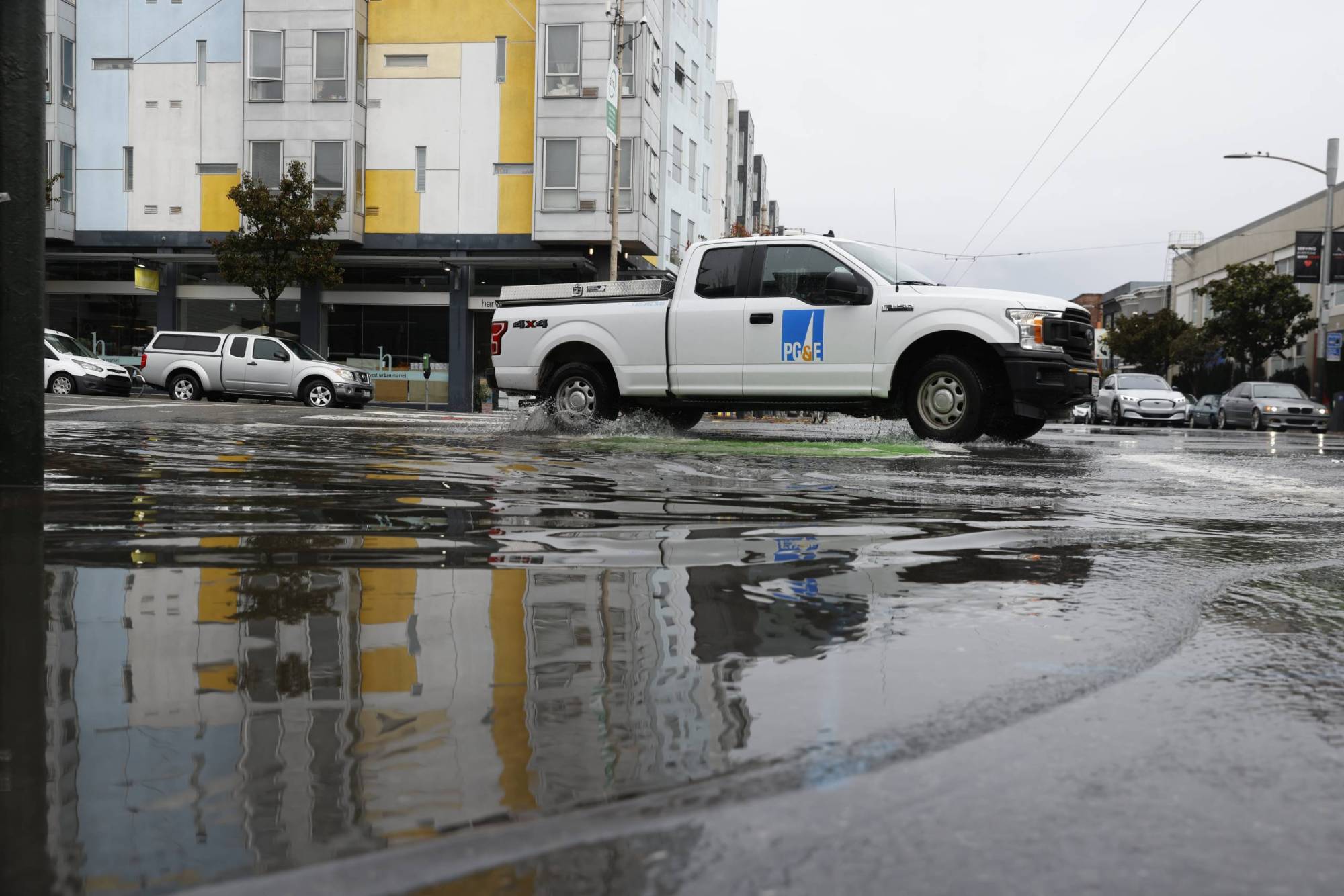 Heavy rains cause flooding in the streets of San Francisco, California, on Dec. 22, 2025, as a storm system pummels Northern California. (Jessica Christian/San Francisco Chronicle via Getty Images)
She also said to expect flooded roadways at times and gusty winds.
“If you feel unsafe while driving, make sure to pull off the road, or if you feel safe enough to continue, make sure you are driving slowly and leaving extra time to reach your destination,” Kennedy said. Read our guide to driving during very wet weather.
And if you’re on a flight during a storm, be prepared for travel delays due to turbulence, she said.
How can I make sure I’m aware of El Niño-related emergencies and extreme weather in my area?
The first stop experts suggest Bay Area residents should check for information during a flood event or storm is the National Weather Service. Check out the service’s website to find out where and when the storm will hit your area. Forecasters regularly update the site with warnings and provide a detailed daily forecast discussion.
Secondly, Bay Area residents can sign up for emergency alerts from their city or county. Marin County runs a public emergency portal 24/7, as does San Francisco. Often, city, county, or fire department Facebook or X (formerly Twitter) pages post evacuation orders, flood updates, or virtual town halls.
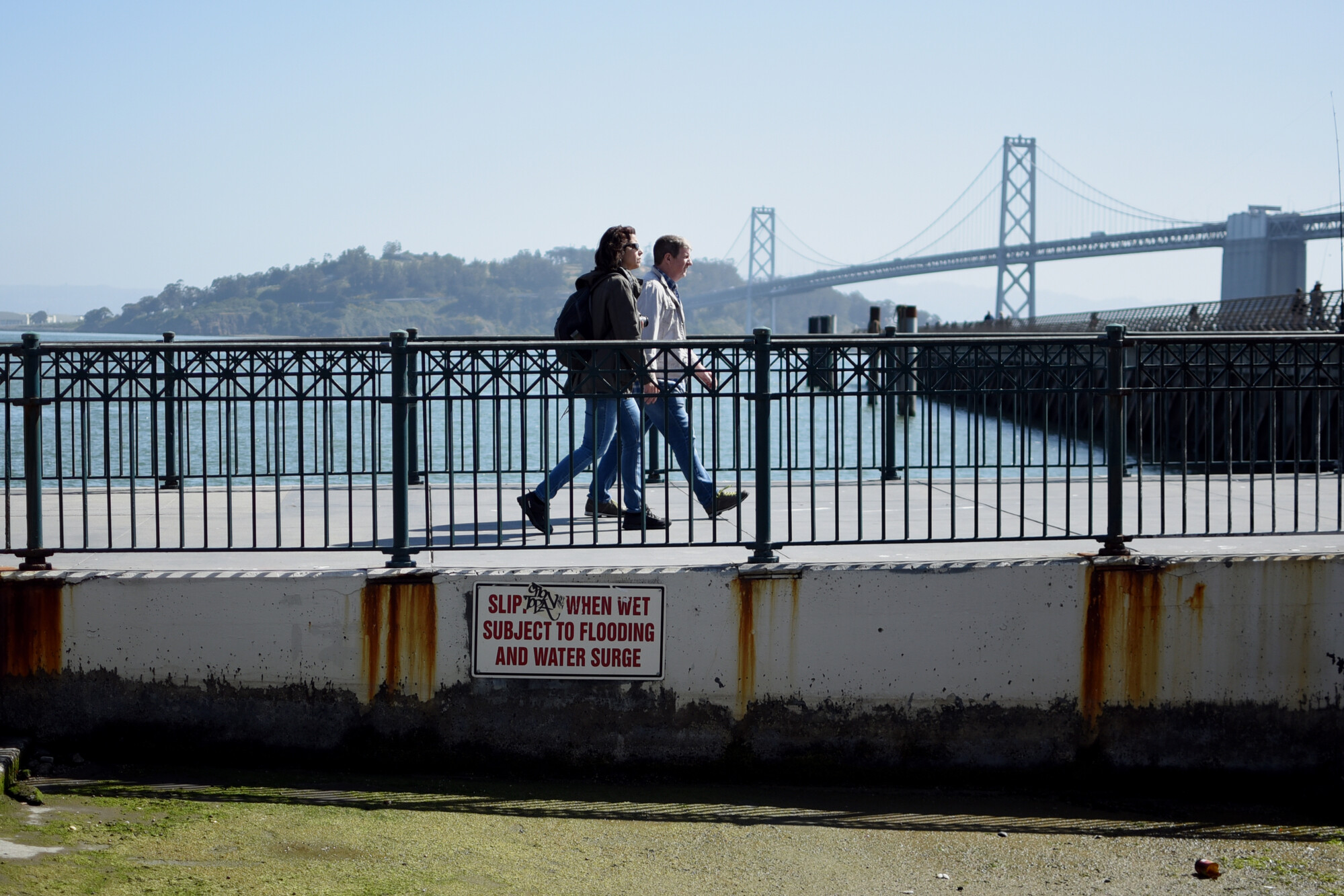 A sign stating “slippery when wet subject to flooding and water surge” at the Embarcadero’s seawall between the bustling city and water in San Francisco, California, on May 1, 2018. (Lauren Hanussak/KQED)
Don’t necessarily expect your phone’s maps app to have the latest information during extreme weather. “We encourage people to look at that website, especially during major flooding incidents because oftentimes we have the information before it shows up on Google Maps or Apple Maps,” Torrence said.
Marin County residents can also sign up for emergency alerts through Alert Marin. The county will send out alerts once two inches of rain fall in an hour or three inches in 24 hours.
Where to sign up for Bay Area emergency alerts to be ready for El Niño
Bay Area county alerts
 A train approaches the San Leandro BART station on March 13, 2024. (Martin do Nascimento/KQED)
Bay Area transit alerts