
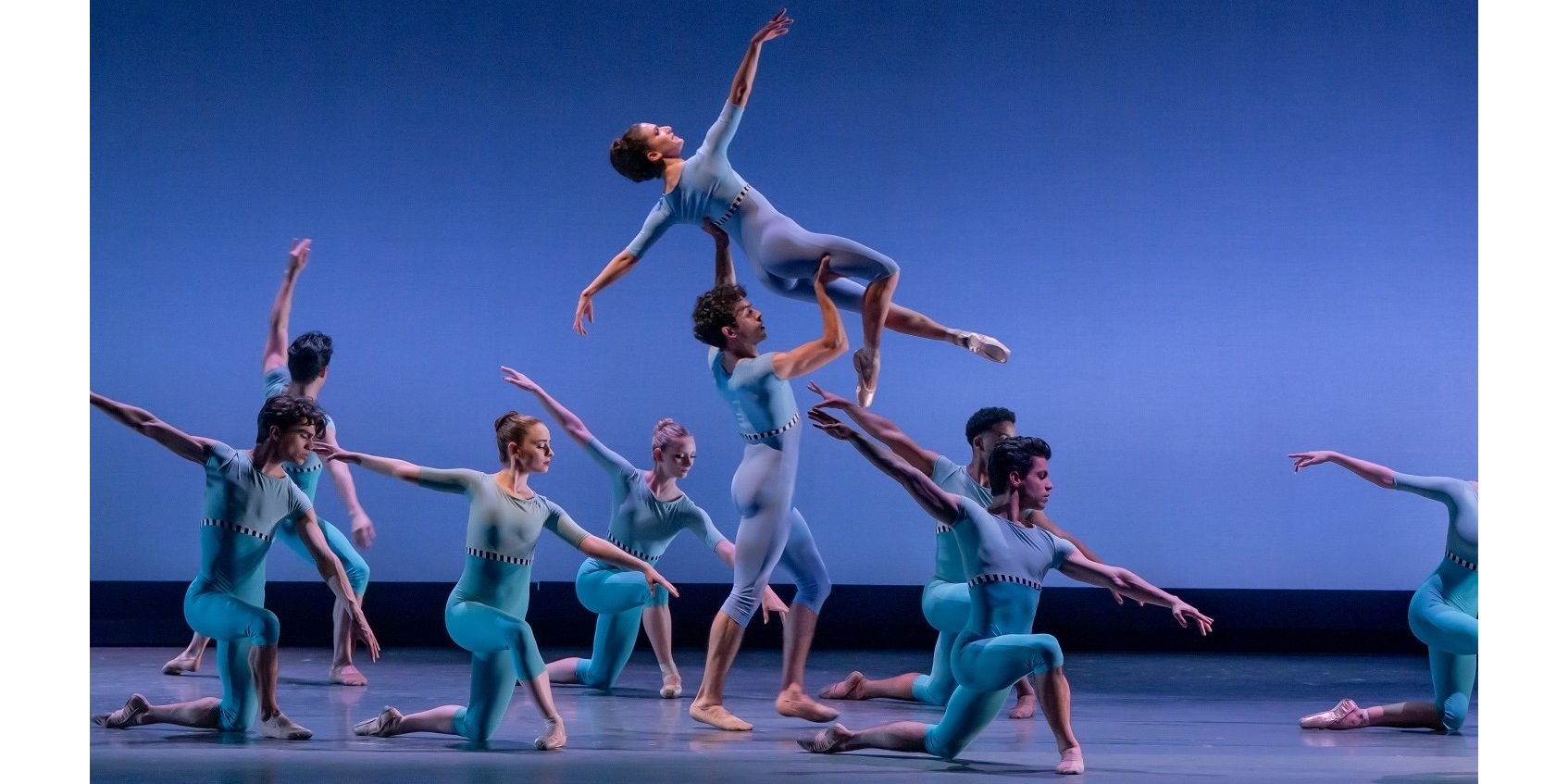
With a choreography commission from the LA Phil and choreographer George Balanchine’s jazzy ballet tribute to Hollywood and the Gershwin songbook, Los Angeles Ballet makes its Hollywood Bowl debut with the LA Phil on Tuesday, September 8, 2026 at 8 pm. With the Bowl’s giant video screens, even the farthest seats can see the dancing as well as the LA Phil playing three other works conducted by Carlos Miguel Prieto.
In 2021, the LA Phil music director Gustavo Dudamel commissioned and premiered composer Gabriela Ortiz’s Kauyumari. (The title has been translated as “blue deer” and refers to a god or spiritual guide in Mexico’s indigenous Huichol folklore.) The composer reportedly expressed the desire to see her exuberant 7-½ minutes of music made into a dance, and earlier this year, the LA Phil commissioned Los Angeles Ballet’s artistic director Melissa Barak to do just that.
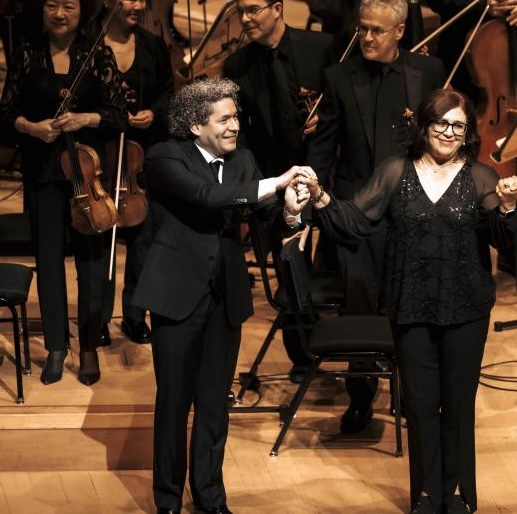
Gustavo Dudamel, Gabriela Ortiz, and the LA Phil. Photo courtesy of the artists.
Recently, Barak took time from rehearsals to speak with dance writer Ann Haskins about Los Angeles Ballet’s debut at the Hollywood Bowl and also about the company’s upcoming performances at Santa Monica’s BroadStage September 25 to 27. The interview has been edited for length and clarity.
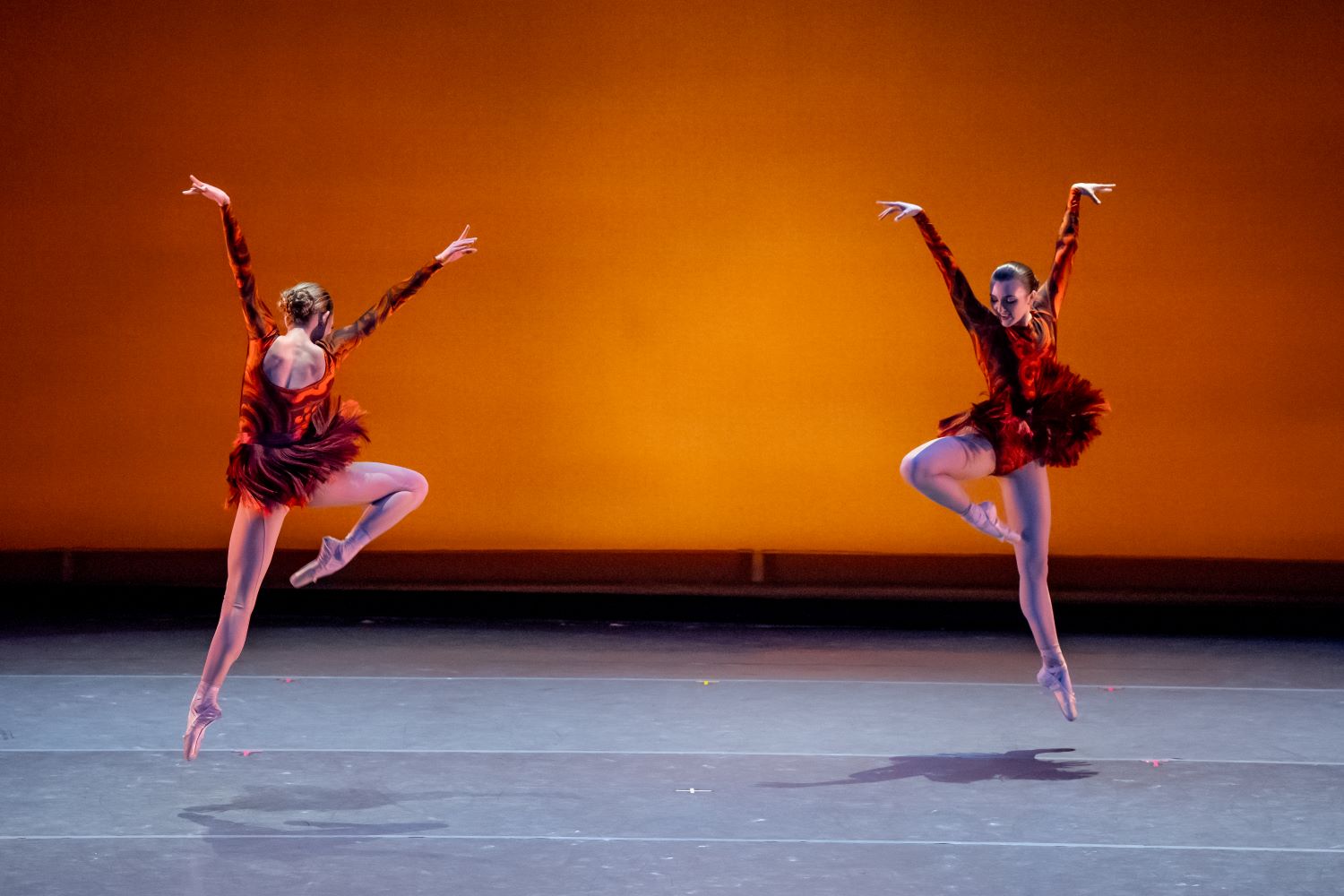
Los Angeles Ballet in “Wavelength”. Photo by Cheryl Mann Production.
Haskins: How did the commission and the Bowl performance happen?
Barak: We were talking to the LA Phil since the start of 2026 about collaborating on performing with the LA Phil on this night. We kept having back and forth about what would work and what was doable in addition to Kauyumari. They had to consider the music programmatically–what they were looking for, what was going to work out on their end, and where a program for September 8 fit in with what else was being performed during the summer.
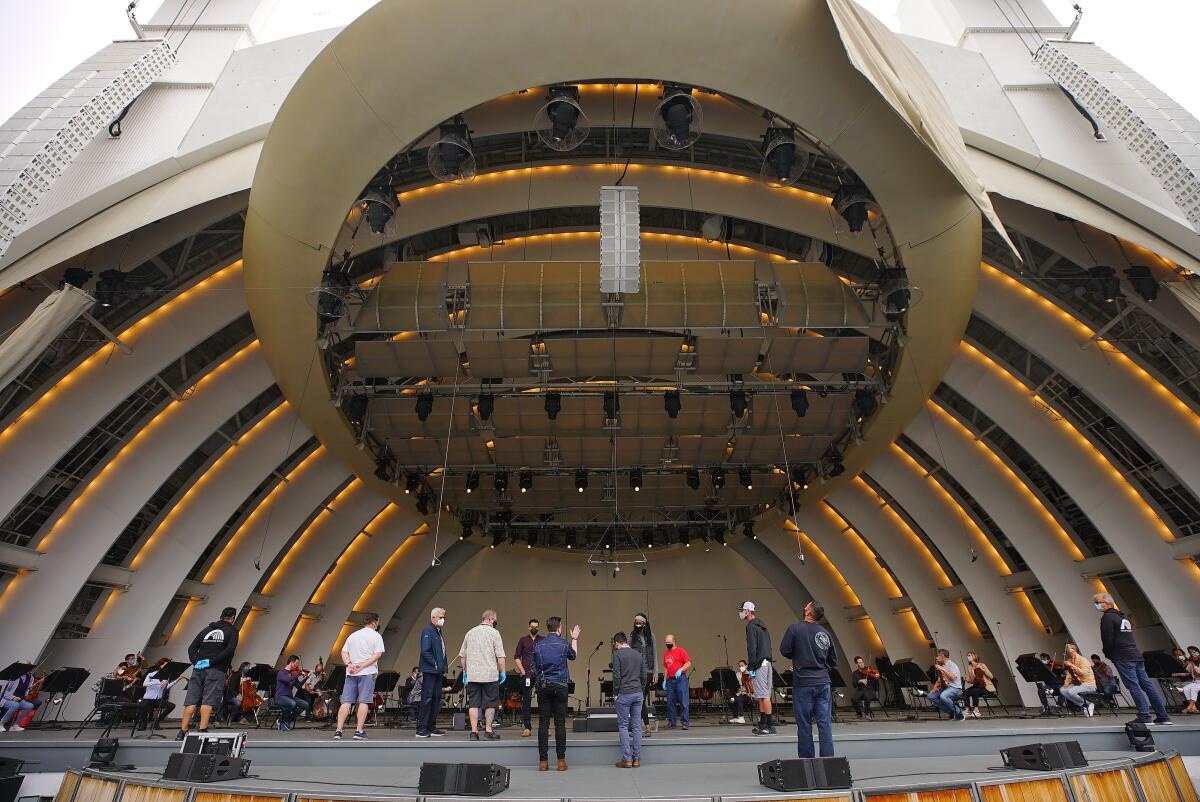
Hollywood Bowl. Photo courtesy of the LA Phil.
Haskins: The Bowl stage is very wide and not very deep with the orchestra onstage behind the dancers, also there are no wings. How did those stage challenges come into play when you were choreographing Kauyumari?
Barak: Choreographing something new with Kauyumari allowed me to create something that utilized the width of the stage and accommodated the lack of depth. We have more than enough dancers to fill the space. In my new ballet, there are six women, six men. The music is 7 minutes and 20 seconds. It’s not very long, but it packs a punch. It’s very charged, very energized music. With the dancers onstage with the orchestra right behind them playing this music, it’s going to feel like a real party. It’s going to be a very powerful moment.
Haskins: Was there a starting point?
Barak: Just by listening to it. The piece has so much style and character. It’s so rhythmic and it builds. I knew it would be a larger group to allow it to build from a few dancers, building with the music into more dancers. I loved the style and just the way it makes you want to move your body. Most of it really came alive in the studio once I was with the dancers. I started playing with movement and finding that Mexican style, gaining inspiration from Mexican dance with the skirts. I incorporated that inspiration, but then also infused my creative interpretation of how that music made me want to move and what it made me want to express.
Haskins: After the Hollywood Bowl, are you contemplating keeping the piece, but adapting it for a more traditional proscenium theater?
Barak: I’m proud of the piece. I’m excited to present it. So yes, it’s certainly a piece that I would like to possibly program or do in another capacity for a future rep program or maybe a special event.
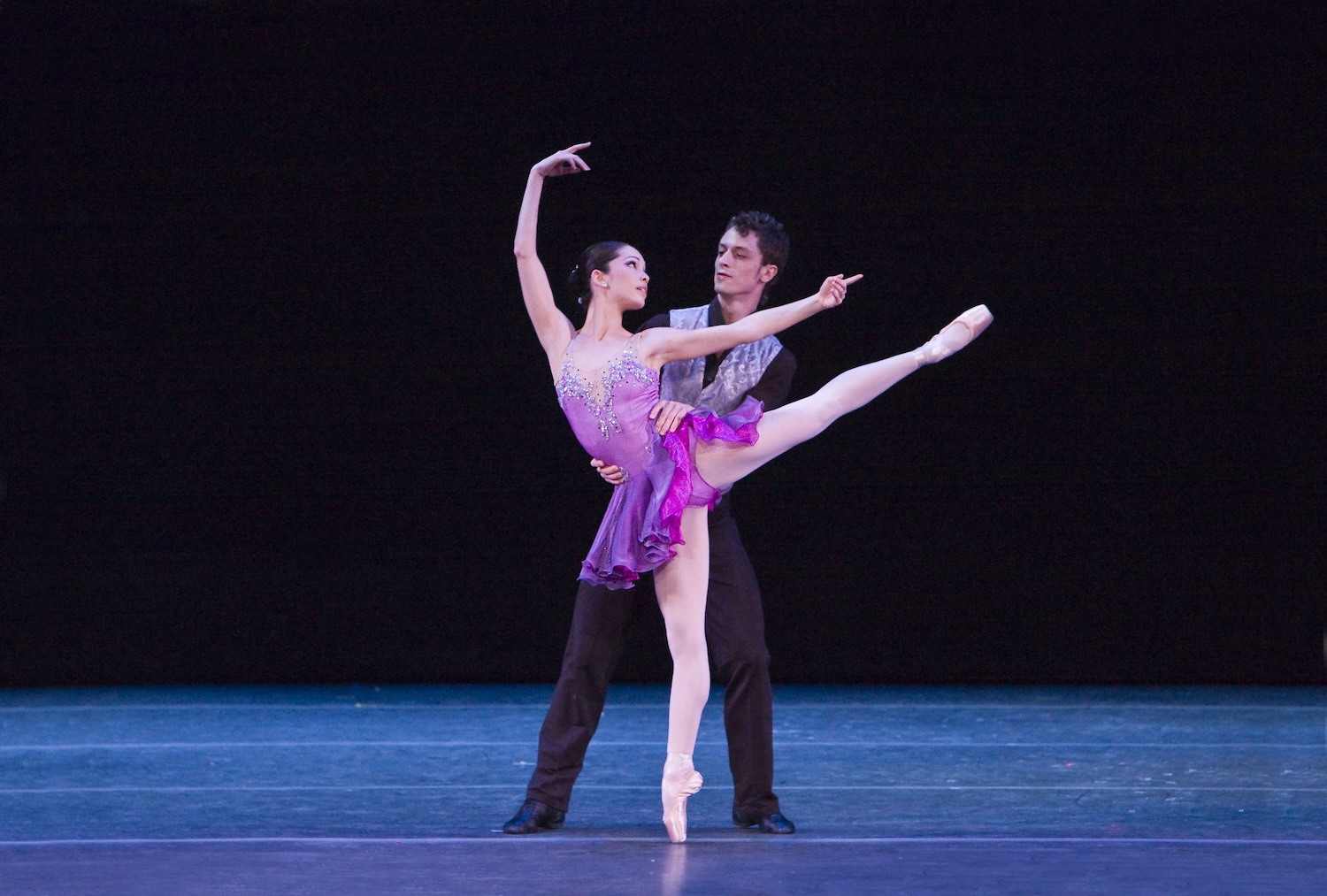
Los Angeles Ballet in Jerome Robbins’ “Who Care?” (2008) – Photo courtesy of LAB.
Haskins: The second work LAB is dancing at the Bowl is George Balanchine’s Who Cares? How did Who Cares? become part of the program?
Barak: We discussed several ballets by Balanchine, and I suggested a couple of other works that would fit, given the parameters of the stage, so wide, not deep, so really limited options. There were a lot of ballets that we could have done and would have loved to have done, just they would be hard on that stage. It’s a challenge. Who Cares? met those challenges.
Haskins: There are several different versions of Who Cares?. Which version will be at the Hollywood Bowl?
Barak: Nilas Martins came and staged Who Cares? on us. It’s the one known as the Concert Version with no corps de ballet because the stage is too narrow for ten corps dancers, so it’s from the song The Man I Love. In this version, we have three men and three women, who dance the principal duets and solos in addition to the finale.
Haskins: Who are your dancers? is that set yet?
Barak: The three women are Kate Inoue, Sarah-Ashley Chicola, and Chloe Oronoz, and then our three men are John Dekle, Marcos Ramirez, and Evan Gorbell.
Haskins: Without the corps, there isn’t much rest time between the solos and duets.
Barak: Yes, and Who Cares? is a very difficult ballet. It’s very challenging technically. All three solos that the women do are really long and very hard. And you have to perform it with so much energy and pizzazz and sass. It’s a very showy piece, but then you also have to be very feminine and romantic and dreamy. I’ve been working with the dancers to sort of capture the jazzy fun but also the romantic dreamlike quality that is required. Our dancers have shown the technical skill and ability to perform under pressure. The dancers who will be performing have done main roles for us in the past, so they’re the ones that we have who are best prepared to take on this ballet.
Haskins: Did you dance Who Cares? at New York City Ballet?
Barak: I never did it at City Ballet, the company is so big. I did dance one of the leads when I was a dancer with Los Angeles Ballet. I did the one called “the jumper girl” in the “I’ll Build a Stairway to Paradise” solo and the pas de deux to the ballet’s namesake “Who Cares?” I loved doing that when I was a dancer at LAB. That was a blast.
Haskins: If you had been given a choice, would you have chosen a different one?
Barak: I think the one I did was the one that was most appropriate for me. I do love Fascinating Rhythm. It’s such a great solo. It’s very hard. It’s super tiring. I remember I learned it at School of American Ballet, and I was like, ‘Oh my God, how does anybody get through this?’ It’s just so long, and then you’ve got these like this double menage, (turning while making a circular path around the stage, twice) and you’re just exhausted. But then, all the solos are hard. None of them are easy by any stretch of the imagination.
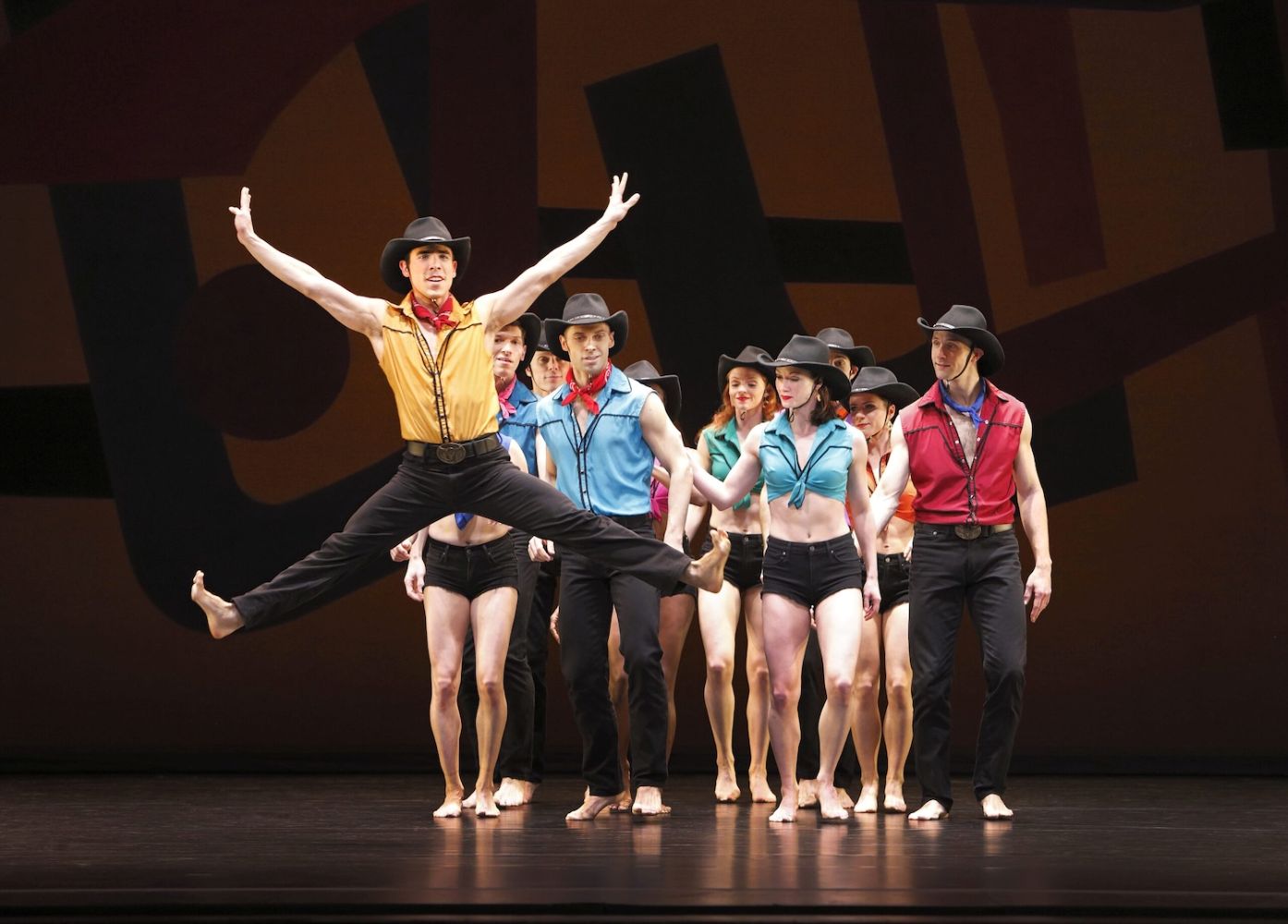
Paul Taylor Dance Company in “Dilly Dilly”. Photo by Paul B. Goode.
Haskins: LAB also has a different program at the end of September at the BroadStage. Please tell me about it.
Barak: I’m super excited for this. For America’s 250th, we’re celebrating American choreographers and composers. We’ll be showing The Cage by Jerome Robbins and Dilly Dilly by Paul Taylor, two iconic American choreographers who are legends with two pieces that have never been performed before in L.A. I’m really excited to share those dances with the audience. The third work is the return of my piece Wavelength, a collaboration with American composer David Lawrence. It premiered last year and was a big hit. A lot of people said it made them really happy and found it very uplifting. I think it will be a good ballet to round out the program. Dilly Dilly is such a fun piece, very theatrical. The music is Burl Ives’ songs. It is filled with vignettes that are funny and fun, with characters like a story, but not really a story. I think it is a really good time.
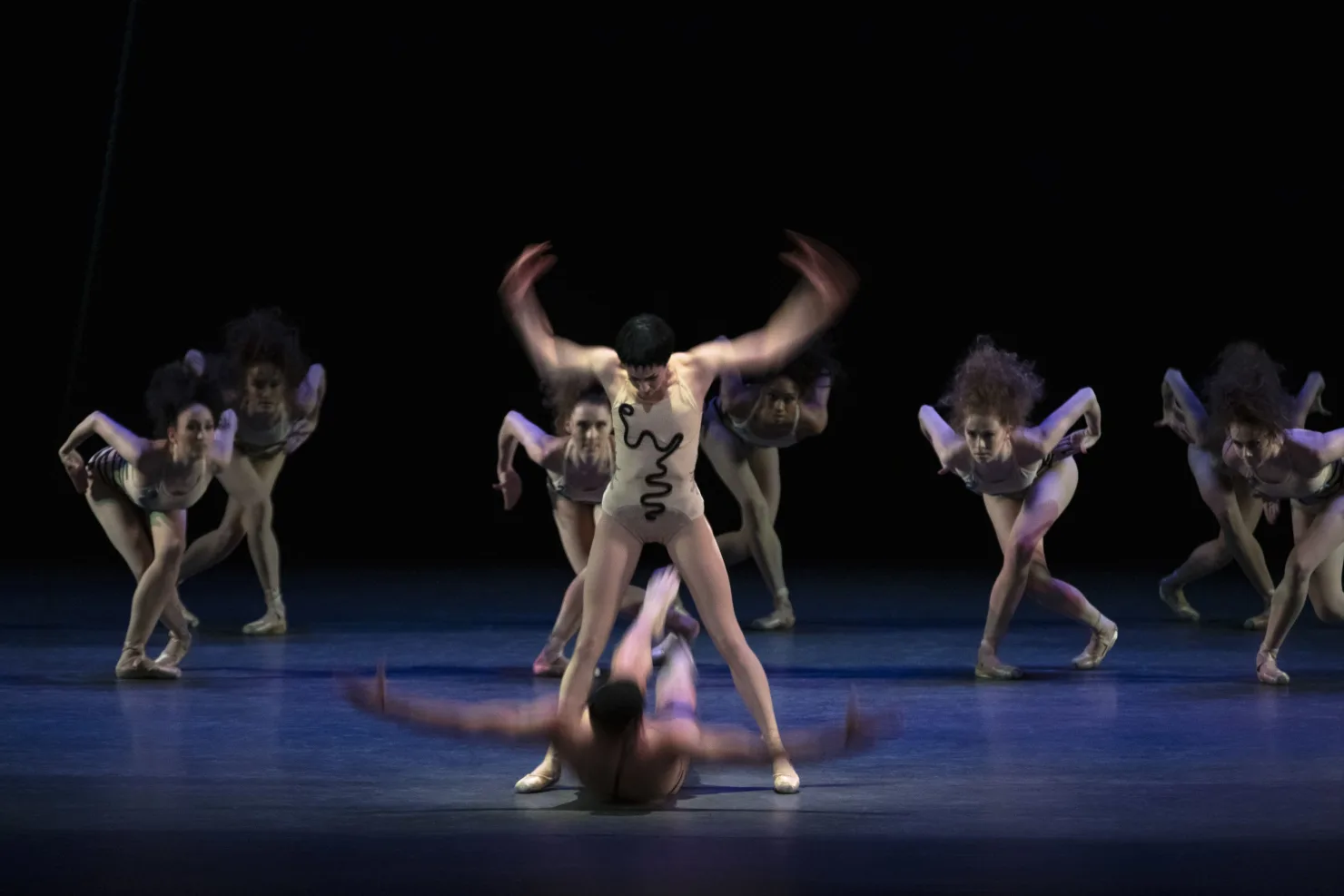
New York City Ballet in Jerome Robbins’ “The Cage”. Photo courtesy of the artists.
Haskins: I’ve seen The Cage described as Jerome Robbins’ different, revengeful take on the ballet Giselle, as if Giselle didn’t forgive Albrecht and save him, but instead in The Cage, The Novice carries out the order of The Queen to dance him to death.
Barak: The dancers are like the Wilies in Giselle, women that are relentless in their willingness to kill the men that come into their domain. It is a bit like the Wilis, but also like inside an insect’s cave. The movement and the shapes that the dancers need to make are really captivating. It’s super cool. I first saw that piece as a student at the School of American Ballet. I saw Wendy Whalen do The Novice numerous times. Just to watch that ballet with Wendy in her prime was unlike any ballet that I had ever seen in my life. It’s a piece that really stands out. Even if it was made today, it would be groundbreaking. It’s amazing that Jerry made it in 1951. The Cage is one of my favorite all-time ballets.
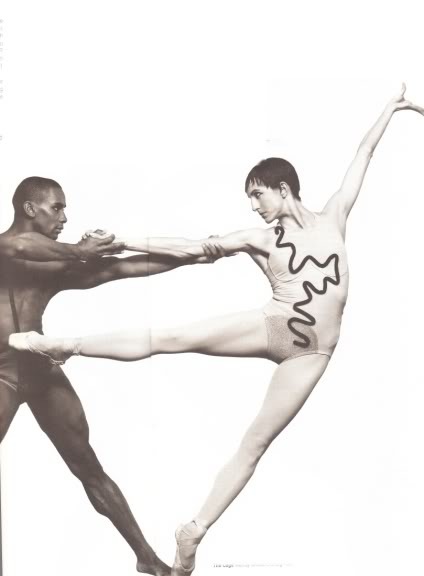
Craig Hall & Wendy Whelan in Jerome Robbins’ “The Cage”. Photo by Paul Kolnik.
Haskins: Before you went to School of American Ballet and New York City Ballet, you trained at Westside Ballet with Yvonne Mounsey who was a principal dancer with New York City Ballet at its beginning. Wasn’t she in The Cage when it premiered?
Barak: Yes, she was the queen, the original Queen.
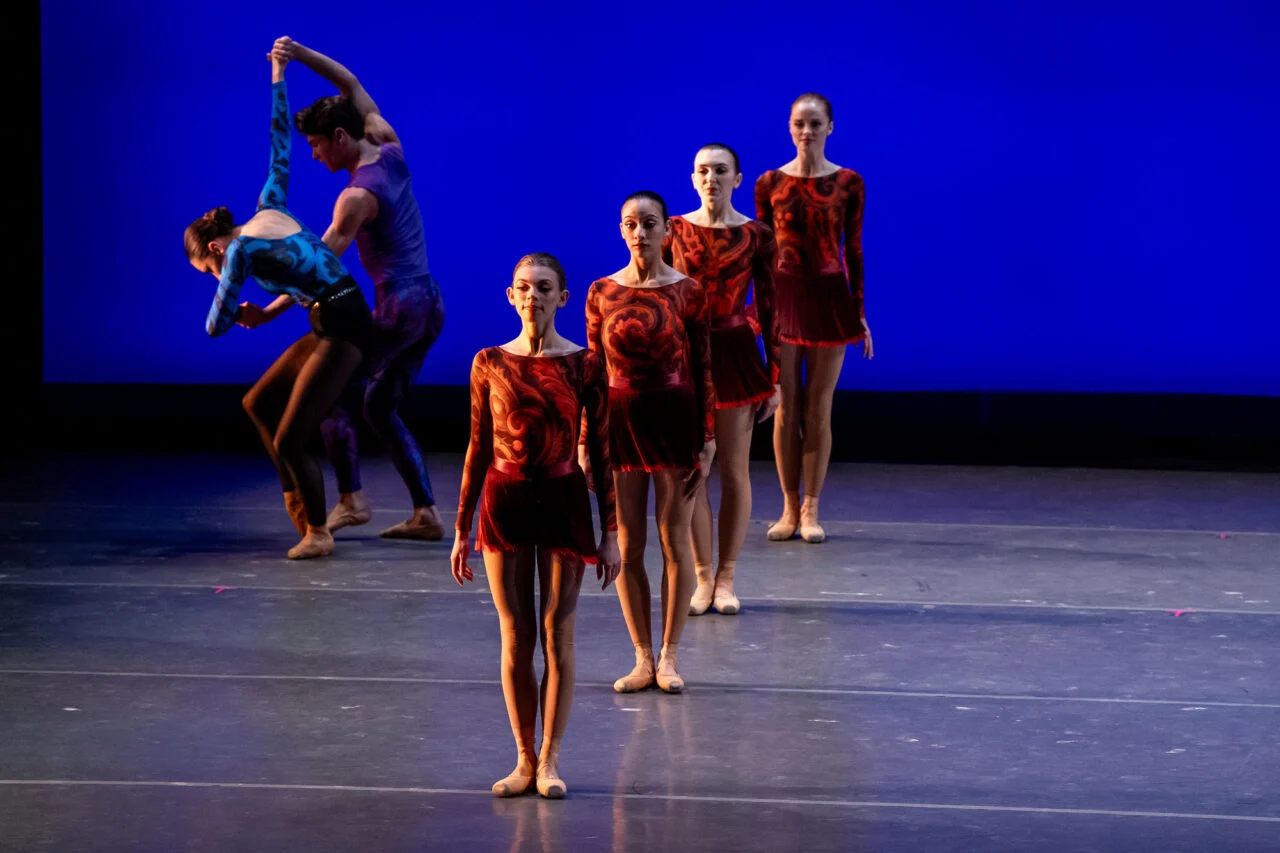
Los Angeles Ballet in “Wavelength”. Photo by Cheryl Mann Productions.
Haskins: It sounds like Dilly Dilly, and Wavelength are very positive and light, something of a counterbalance to The Cage.
Barak: Yes, The Cage is in the middle. It’s the dark center of the program which will begin and end on a much lighter note.
Haskins: Well, it sounds like a good way to sort of edge into October and Halloween. Anything else you’d like people to know as you go into the performance at the Hollywood Bowl and at the Broad later in September?

Melissa Barak. Photo courtesy of the artist.
Barak: Come support us. It’s the support when people really attend the ballet numerous times a year, come to every one of our programs, and feel part of what we do. The dancers are blossoming. LAB is growing, becoming a staple of LA’s performing arts organizations. It’s time to change the culture of what ballet-going is in LA.
Los Angeles Ballet dances Kuauyumari and Who Cares?. The LA Phil program also includes three orchestral works without dancing. Full program details at website. The Hollywood Bowl, 2301 Highland Ave., Hollywood; Tues., Sept. 8, 8 pm, $12-$178. Los Angeles Ballet
Los Angeles Ballet dances Dilly Dilly, The Cage, and Wavelengthat the BroadStage, 1310 11th St., Santa Monica; Thurs.-Sat., Sept. 24-26, 7:30 pm, Sun., Sept. 27, 2 pm, $64.50-$115 (+ fees). Los Angeles Ballet.
Written by Ann Haskins for LA Dance Chronicle.
Featured image: Los Angeles Ballet in “Wavelength”. Photo by Cheryl Mann Productions.