
A new study from the Center for Western Weather and Water Extremes (CW3E) at Scripps Institution of Oceanography at UC San Diego finds that improved weather and water forecasts could help California gain more value from existing reservoirs and help meet a new water supply target.
The study, led by Scripps economist Tom Corringham and staff researcher Denali Pinto, estimates that a reservoir operation system co-led by Scripps, state, federal and local water authorities could save the state between $100 million and $200 million per year in the form of added water available to meet agricultural, urban and household needs. Corringham said that ripple effects ranging from recreation enhancements to recreation, power generation, enriched fishery stocks, and improved flood risk management make that a conservative estimate.
“California’s water challenge will require many different solutions,” said Corringham. “Our research shows that smarter operation of existing reservoirs could make a meaningful contribution.”
The water savings that comes from more precise management of reservoirs could save an extra 100-160 billion gallons a year, enough for more than a million households. That benefit, however, only gets the state part way to a new supply goal announced this summer.
California has the most variable climate in the United States with its entire annual supply of water sometimes coming from two or three major winter storms. In anticipation of potentially greater vulnerability in the future, the California Department of Water Resources set a planning target for the first time in state history. In anticipation of potentially greater vulnerability in the future, the California State Legislature has directed the California Department of Water Resources to modernize the California Water Plan and set a water supply planning target for the first time ever. California will seek to identify nine million acre-feet (2.9 trillion gallons) of additional water supply by 2040.
The study appears Aug. 24, 2026 in the journal Environmental Research: Water.
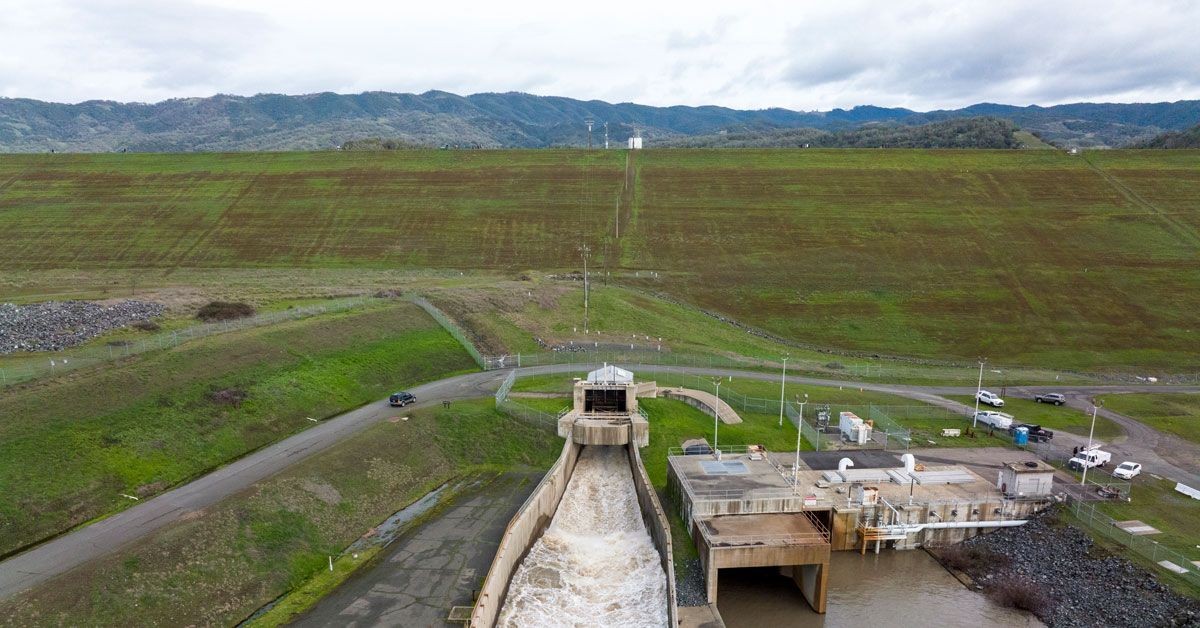
The 12-year-old Forecast Informed Reservoir Operations (FIRO) program is led by CW3E in collaboration with the U.S. Army Corps of Engineers (USACE), California Department of Water Resources, and local water agencies. FIRO uses improved observations and forecasts of atmospheric rivers, precipitation and reservoir inflows to give reservoir operators greater flexibility in storing and releasing water.
When forecasts show that a major storm is approaching, operators can release water in advance to create space for the expected inflow. When forecasts indicate low flood risk, they may be able to retain more water than would be permitted under traditional fixed, calendar-based operating rules. The goal of the FIRO program is to improve water availability and water-supply reliability without increasing flood risk.
The researchers estimate that FIRO could increase water storage by approximately 315,000 acre-feet, or over 100 billion gallons, per year across 20 of California’s largest reservoirs. Estimated gains increase to nearly 500,000 acre-feet (162 billion gallons) in wet years, enough for over a million households.
“The challenges facing California water management will require embracing many new innovative solutions,” said Mike Anderson, State Climatologist for the California Department of Water Resources. “Making sure that the state’s existing reservoirs are operated efficiently using the latest forecasting technology will be a key tool for water managers to manage extreme conditions in the future.”
The study evaluated 20 reservoirs accounting for more than 20 million acre-feet of existing storage, representing about 50% of the state’s surface water storage capacity. The analysis builds on FIRO pilot and implementation efforts at Lake Mendocino, Prado Dam, Lake Oroville and New Bullards Bar, along with expansion studies at other reservoirs in California and across the western United States.