
For years, San Francisco was the butt of every homelessness mismanagement joke nationwide. Costly solutions failed, if not making the problem worse. The latest solutions come with a rejection of court-ordered advice.
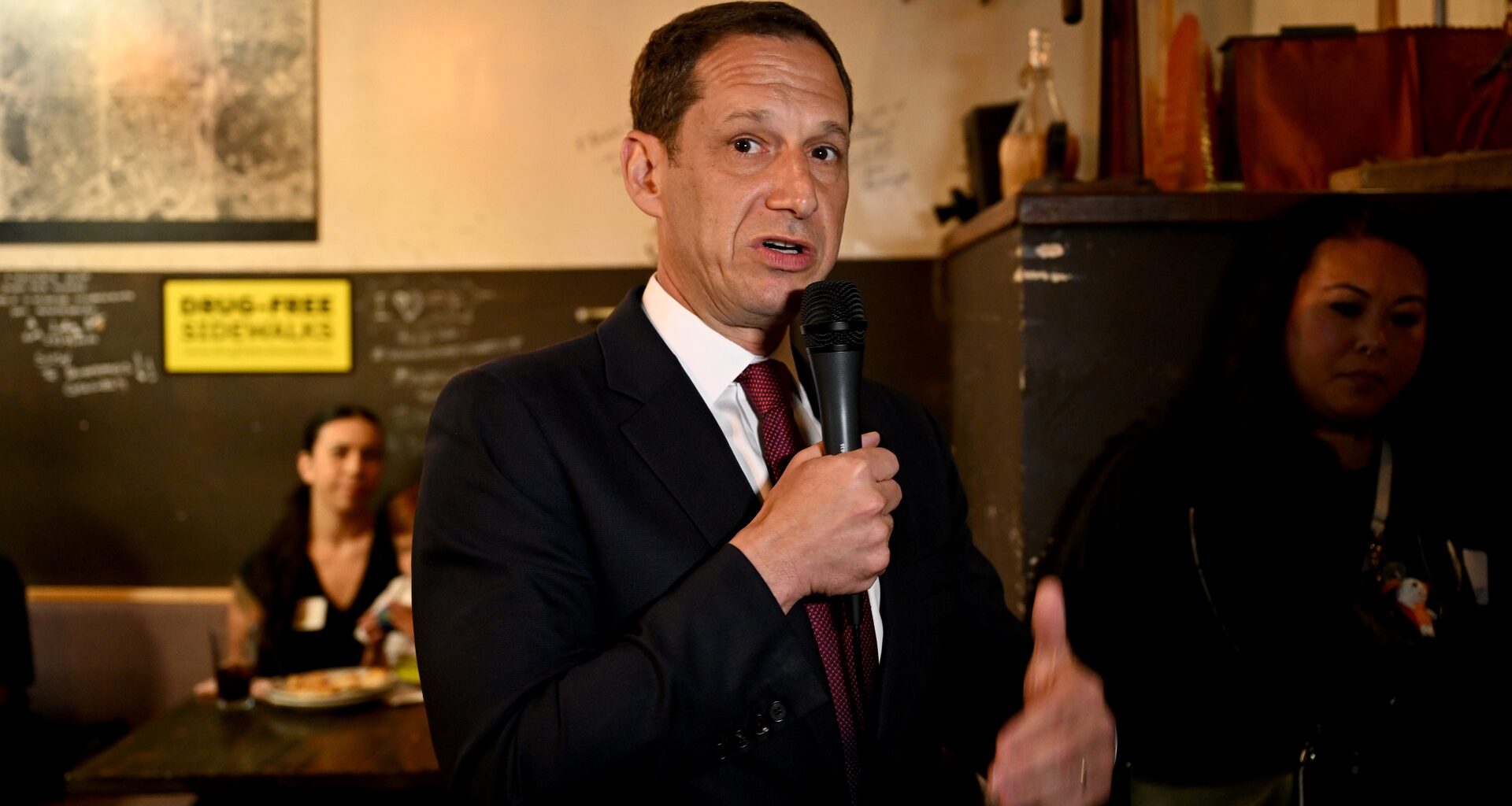
Mayor Daniel Lurie announced a new multi-year plan to reshape San Francisco’s response to homelessness, rejecting suggestions from a civil grand jury meant to expose his city’s shortfalls in tackling homelessness and drug use.
San Francisco is in the top ten when it comes to the most homeless people.

Download the Straight Arrow app today to get the stories that matter free from manipulation, bias or agenda.™
Point phone camera here
New homelessness plan
The centrist Democratic mayor’s plan is to essentially redo every city contract that deals with homeless services and housing.
“We are not going to continue spending $1 billion of taxpayer money on a failing system — we’re fixing the system so we can deliver the safe and clean streets every San Franciscan deserves,” Lurie said.
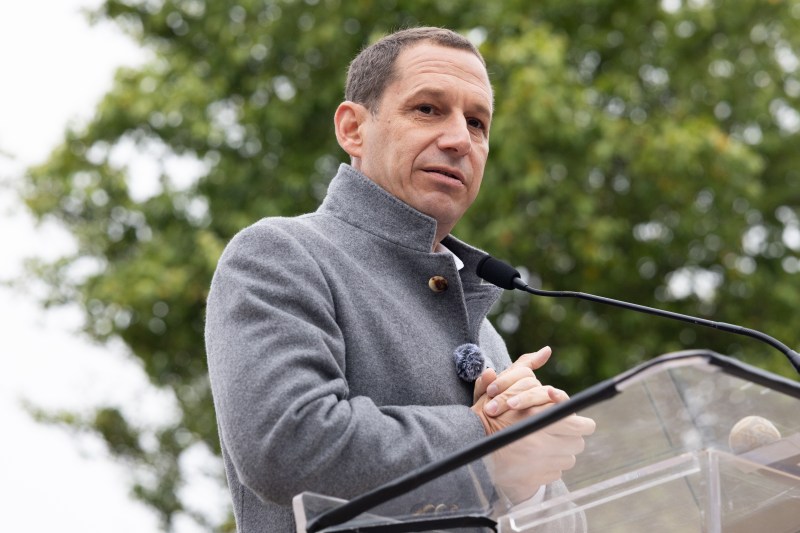 SAN FRANCISCO, CALIFORNIA – JULY 11: San Francisco Mayor Daniel Lurie speaks at a community service event on July 11, 2026 in San Francisco, California. Lurie attended and participated in several community service events around San Francisco as part of “One City Day,” a day dedicated to volunteer work. (Photo by Benjamin Fanjoy/Getty Images)
San Francisco spends some $745 million per year through its Department of Homelessness and Supportive Housing under the most recent city budget. That’s a significant number, representing about 5% of the entire budget.
The city says it wants to more effectively focus on outcome-based contracting to serve those experiencing homelessness and benefit everyone in the city. As part of this new strategy, the goal is to tie those major taxpayer dollars to performance and define what success means more clearly.
Leading the procurement of those contracts will be the San Francisco Department of Homelessness and Supportive Housing, or HSH.
“We will build contracts with a clear purpose, stronger measures of success, and the resources and flexibility providers need to do their best work to move our clients out of homelessness,” Mike Levine, executive director of HSH, said.
But accountability for spending will go both ways, with HSH under just as much scrutiny as those it pays. The city says it will redirect resources when a strategy isn’t working and invest more in programs and approaches that demonstrate greater impact.
As far as what those success measures will be, it remains unclear.
Civil grand jury
This new announcement comes after Lurie, and the city rejected several recommendations from a civil grand jury on this issue.
The 65-page report was highly critical of how the city handles the homelessness issue and of the oversight on those plans. Each year, the San Francisco Superior Court selects nearly two dozen residents to serve on the Civil Grand Jury. They undertook this report due to the amount of money being spent and what they saw as a lack of results.
The audit found that 26% of overdose deaths in San Francisco occurred at permanent supportive housing sites.
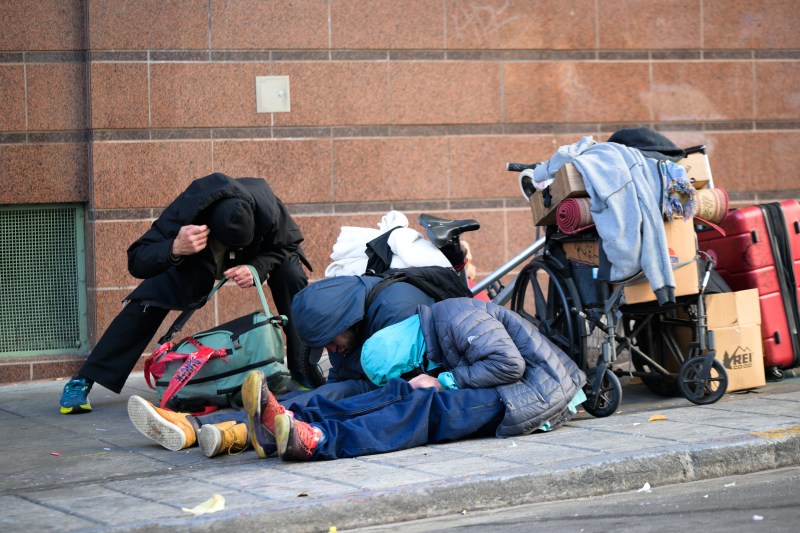 People experiencing homelessness are seen on a sidewalk in San Francisco, California, on Dec. 8, 2025. (Photo by Tayfun Coskun/Anadolu via Getty Images)
HSH told Straight Arrow they appreciated the report but did not agree with everything in it.
“HSH has already taken significant steps in many of the areas identified in the report,” the agency said in a statement to Straight Arrow. “The Department maintains an agency-wide dashboard of aggregated and anonymized critical incident data, publishes performance dashboards aligned with its Performance Measurement Plan, and uses safety and performance information to guide program oversight, provider engagement, training, and corrective action.”
That being said, Lurie declined to implement those recommendations.
“I find it a little bit odd that the mayor would reject recommendations from a public entity like that,” Maria Foscarinis, founder of the National Homelessness Law Center, told Straight Arrow.
Foscarinis leads a nonprofit that advocates for increased homelessness resources and has disclosed lobbying activity.
California law allows Lurie to do that. What he’s not allowed to do is ignore the report completely.
He sent his official response a few weeks later.
In that letter, Lurie said he agreed with the core intent of the Grand Jury’s findings, especially for more data and oversight. However, he argued HSH already has some of that data.
“The City does, however, have a different perspective on the best ways to achieve some of these shared goals,” the letter reads. “Where we differ with the Jury, the difference is generally one of mechanism rather than intent.”
The jury made five recommendations, including standardized safety thresholds in nonprofit contracts, regular unannounced shelter inspections and permanent supportive housing.
In his response, Lurie emphasized he agrees with much of the findings but wants to go a different way in fixing things, thus the new approach he announced on Monday.
Homeless issue
“Everybody needs to be on the same page,” Foscarinis said. “Not just the government, the mayor, and the key government bodies, but also the activist groups, which are key, and the nonprofit groups also important, and there has to be a public education effort so everybody’s on the same page.”
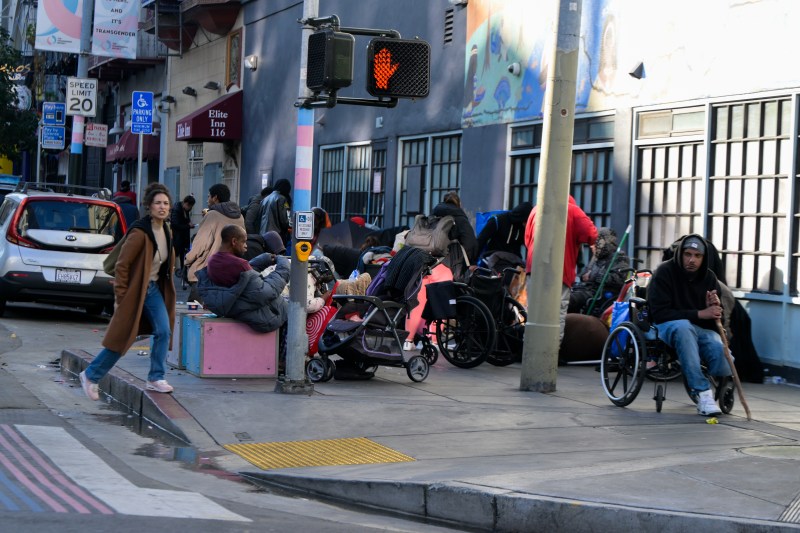 People experiencing homelessness are seen on a sidewalk in San Francisco, California, on Dec. 8, 2025. (Photo by Tayfun Coskun/Anadolu via Getty Images)
Experts believe solving the homelessness issue starts at the root of the problem.
“The key issue is the lack of affordable housing, and what is the city and the mayor specifically doing about that?” Foscarinis said.
When looking at the percentage of income required to afford a typical home, San Francisco is the most expensive city in the U.S.
But the cost of housing is not something mentioned in Lurie’s plan or the Grand Jury’s report.
“The next step has got to be focusing on increasing resources for housing and housing for extremely low-income people,” Foscarinis said. “Although certainly, low and moderate-income people are also in dire need of housing. There has to be a real focus on solving the housing crisis, and for homeless communities specifically.”
Getting people into housing is part of Lurie’s plan and the Grand Jury’s report. Lurie mentioned the Large Vehicle Program which he said moved 100 families from living in their cars to stable housing.
San Francisco is clearly spending money to try and solve this problem. This new plan is expected to fully materialize by May 2029 but only time will tell if the new approach makes a difference.
“Pairing housing with needed services for people who need the services is a proven solution that’s just grossly underfunded,” Foscarinis said. “So that’s I think where the mayor’s attention should be. Real solutions, and it’s got to be a big picture in bringing these solutions to scale.”
Round out your reading