
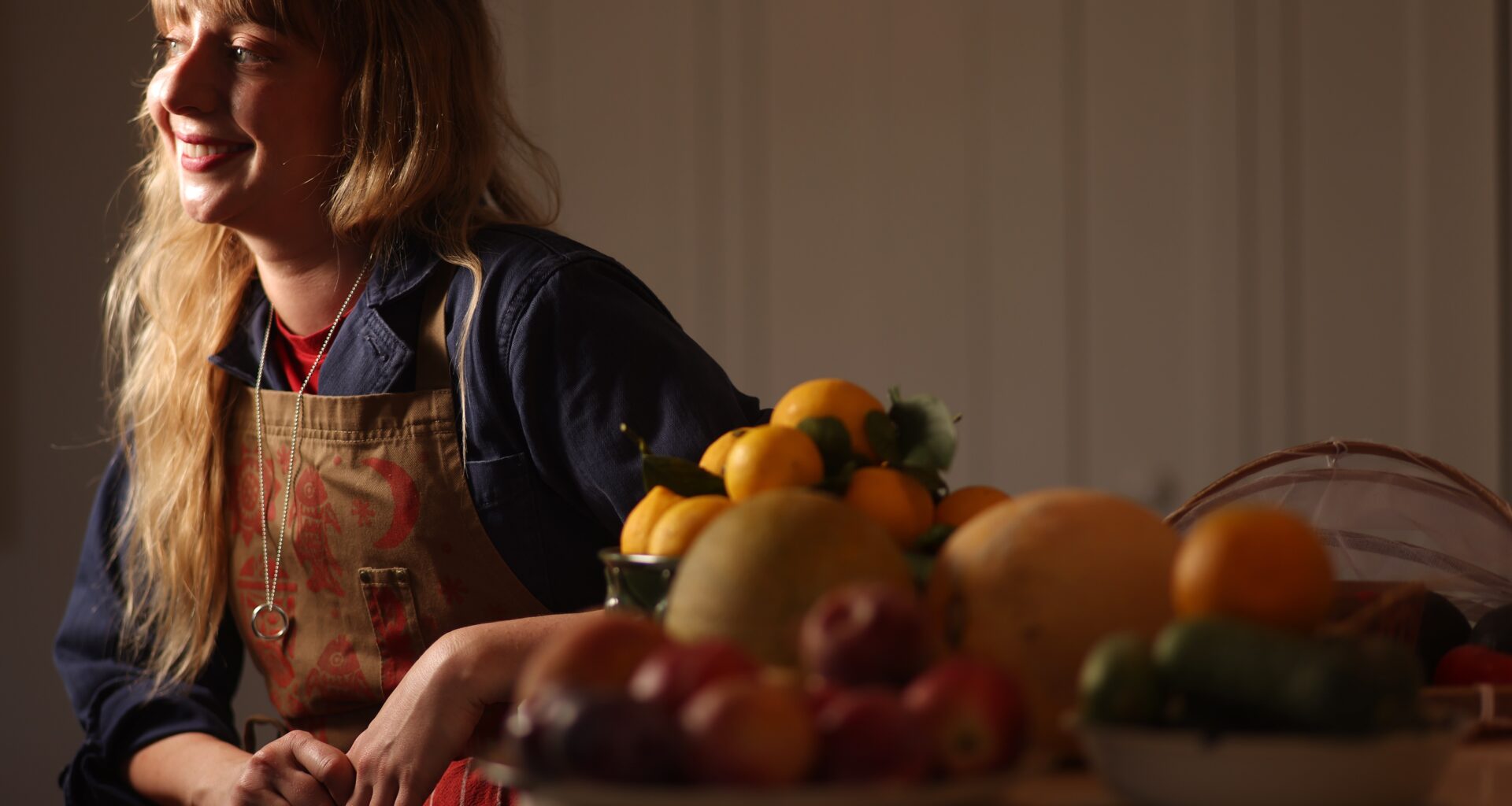
Just after completing her first cookbook, Ukrainian-born chef Anna Voloshyna teamed up with photographer Jason Perry to venture back to her war-torn country. Her mission? To capture, at a precarious moment in her homeland’s history, what defines Ukrainian cuisine.
The journey took her from where she lives now in Oakland across the world to kitchens deep in the Carpathian Mountains, a village in Bessarabia, the Black Sea and on the front lines of the war.
She navigated air raid alerts and Russia’s missile strikes in Kyiv to find a recipe for semolina carrot bread from a baker’s shack in the city outskirts, and visited a Hutsul church from the 1600s in a community at the heart of Europe, where she learned how to make white borshch, a regional dish featuring fermented white beets.
The resulting project, “Ukraïne: Recipes and Stories From Kyiv to the Black Sea” (Chronicle Books, $40), comes out Oct. 13.
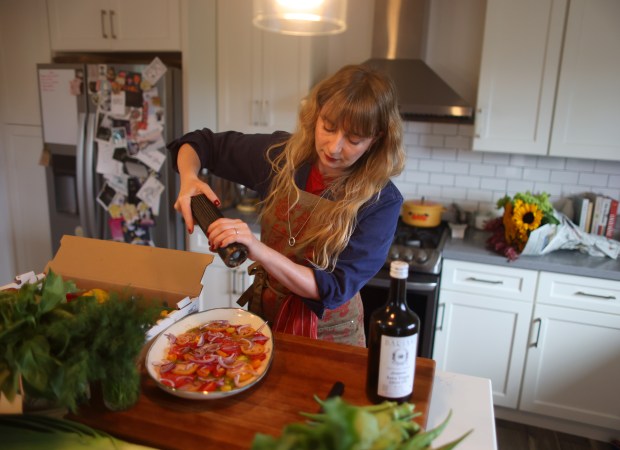 Ukrainian-born chef Anna Voloshyna, author of “Ukraïne: Recipes and Stories From Kyiv to the Black Sea,” prepares a summer tomato salad with sour cream dressing in her Oakland kitchen on Sunday, Aug. 30, 2026. (Aric Crabb/Bay Area News Group)
We recently caught up with the chef and activist to learn more. Responses have been edited for length and clarity.
Q: Tell me a little bit about you and what inspired this cookbook.
A: This is my second cookbook. I was born and raised in Ukraine. I came here 15 years ago with my husband. I came to Palo Alto, and then we moved to San Francisco and then Oakland. I was always into food, but I was never in the industry. I started taking photos and doing recipes. Slowly, I built a good following and resume and started working for different food-related startups.
One of the startups was hosting pop-up dinners, and nobody was doing Ukrainian food. So I started doing that, and it was so satisfying and amazing that it led me to a cookbook. The second cookbook happened because of the full-scale invasion of Ukraine. The war started in 2014, and the full-scale invasion started in 2022. I had my first book already done and written, which was more broadly about Eastern European food.
But after the invasion, my point of view changed, and I felt the need to do a strictly Ukrainian cookbook where I would show people what Ukrainian food is without this Soviet influence: just real, modern and traditional Ukrainian food. It felt like the time to show the world what Ukrainian food is and, through food, tell stories about Ukraine.
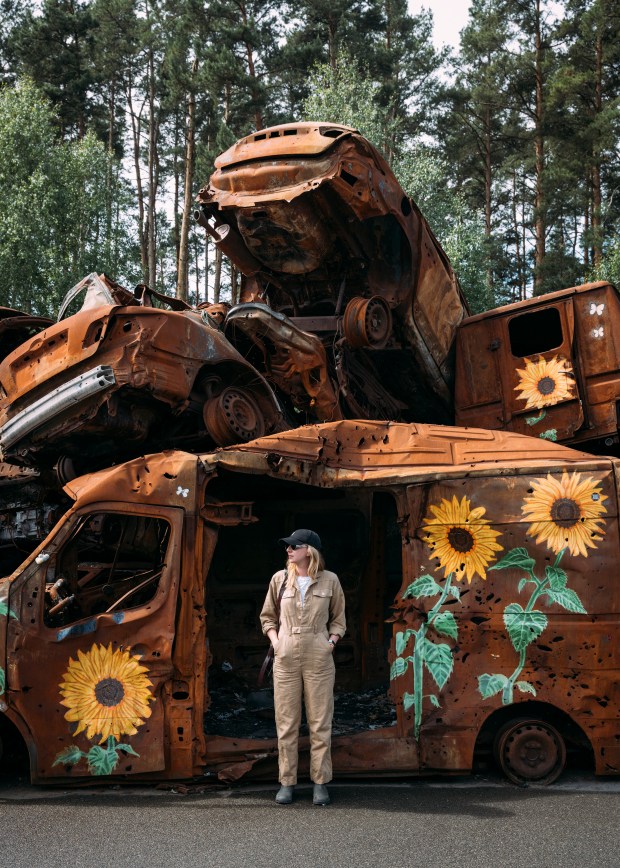 Anna Voloshyna, an Oakland-based chef from Ukraine, visited her home country at war on multiple trips to uncover recipes that highlight Ukrainian cuisine. Sunflowers arrived in Ukraine from North America in the late 18th or early 19th century and have since become “the king of nuttiness in Ukrainian cuisine,” according to Voloshyna. (Courtesy of Jason Perry)
Q: How did you go about trying to capture so much about Ukrainian culinary heritage? The book has a lot of depth — and you cover so much geographic territory.
A: I wanted to show that our cuisine is very regional. For people outside of Ukraine, and even for people in Ukraine, they don’t know all of the recipes that are in the book because you need to travel far. Previously, Ukraine was more divided into western and eastern Ukraine. The western part was considered more pro-European and whoever was closer to Russia was considered pro-Russian — and the cuisines were different.
But when the war started, it united Ukraine into this huge force of nature and united the food. I wanted to travel everywhere and showcase distinct Ukrainian dishes, and for this book to be a travelogue as much as a book you cook from. I wanted to show beautiful places and their terroir: the cheese they make, the produce they grow, the salt they mine and weave those stories into the dishes. And of course I wanted to show places that I love.
I visited some places I’d never been before, like Bessarabia, which is on the very southern outskirts of Ukraine, and you need to cross the border with Moldova for 20 minutes and then cross back over to get to that part of Ukraine. Every place had a recipe to share.
Q: How did the war shape this project for you?
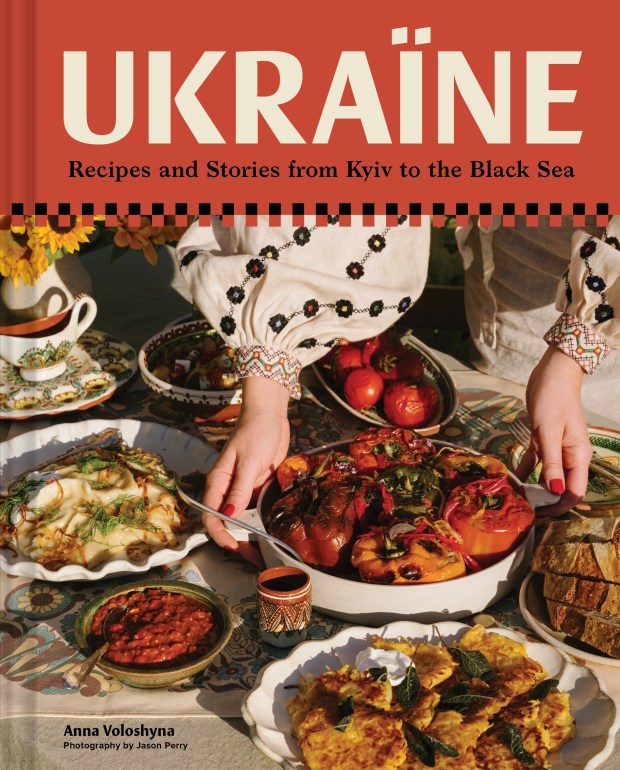 “Ukraïne: Recipes and Stories From Kyiv to the Black Sea” by Anna Voloshyna, a chef from Ukraïne who now lives in Oakland, is set to be published Oct. 13. (Courtesy of Chronicle Books)
A: I really wanted to dig deep and find recipes that are authentically Ukrainian. It was also exceptionally important for me to include Crimea as a part of Ukraine. I have quite a few Crimean Tatar dishes — Crimean Tatars are an Indigenous population of Crimea. They are a part of Ukraine and Ukrainian cuisine, although they have their own culture and customs. That was my number one priority: to make sure that Crimea is represented as a Ukrainian territory and culture. We are not giving up on that.
Ukraine is a young country; it’s 35 years old, and we lost some territories because of the war. Some of the places I visited during the first year of full-scale invasion I cannot go to now because they are either fully destroyed or occupied by Russian forces. The war is still going, and the situation in the world will change. In the book, I wanted to capture everything that was happening at that moment.
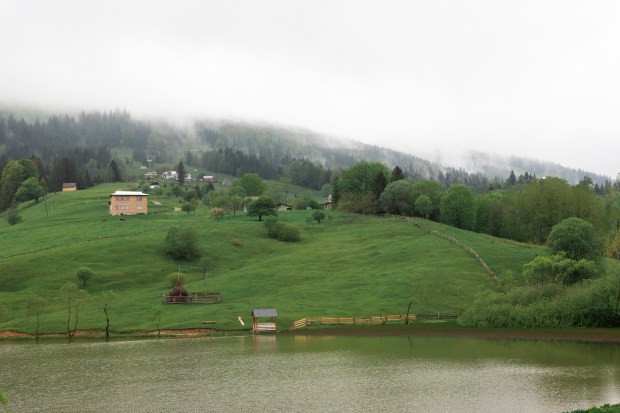 Cookbook author Anna Voloshyna and photographer Jason Perry visited the Carpathian Mountains in western Ukraine while researching and collecting recipes that highlight Ukrainian cuisine. (Courtesy of Jason Perry)
Q: This cookbook had more travel writing, stories and political and historical explanations than a traditional cookbook. How did food fit into this story for you?
A: Well, the subject is very political. If you travel through different parts of Ukraine, you will taste history, because Ukraine was divided between very different empires and cultures. All the empires were in Ukraine and left their trace in Ukraine for longer than we have existed as a modern country. We share a bunch of recipes with Hungary and Poland. But we still make the recipes our own, and we have different ingredients. Even pierogi and varenyky, which are very similar, have distinct fillings and differences in the way we prepare them. For instance, in most parts of Ukraine, we never fry dumplings the first day; we fry them to reheat them, while in Poland, they are fried first.
We are catching up with the world right now because our chefs could not travel, and our chefs could not open restaurants in Ukraine or outside of Ukraine until we gained our independence, and we didn’t have certain products. When the USSR collapsed and olive oil, for example, or different cheeses, started coming to Ukraine, we couldn’t even afford them because they were so expensive. It took us a good chunk of a decade to just catch up and be able to eat olive oil instead of sunflower oil. I wanted to show Ukraine beyond what’s in the news, and I wanted people to understand our complicated history.
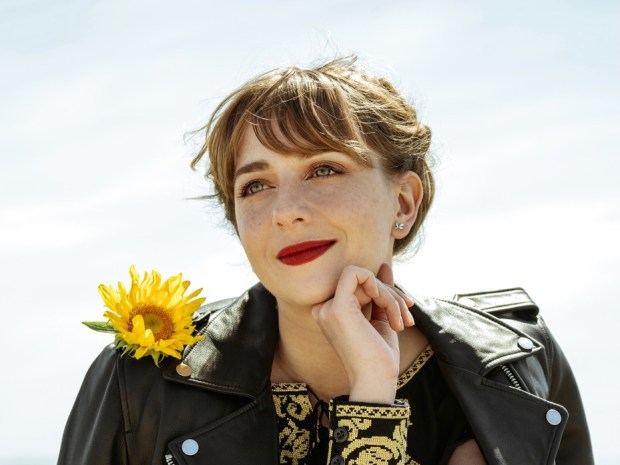 Anna Voloshyna, a chef and writer from Ukraine who now lives in Oakland, made three extensive visits throughout her home country to research recipes for her forthcoming cookbook, “Ukraïne: Recipes and Stories from Kyiv to the Black Sea” (Chronicle Books, $40), set to come out Oct. 13. (Courtesy of Anastasia Blackman)
Q: What were some of your discoveries from your travels through Ukraine?
A: The bryndza cheese I grew up eating is very springy, in a salty brine. It’s very fresh, young, beautiful and delicious — similar to feta. But in the Carpathian Mountains, their bryndza cheese is completely different. That was a big revelation. It’s deep, aged and smoked, then crumbled and packed into these barrels. The name is the same, but those two cheeses could not be more different. The flavor is so unique, and you have to go to (the) Carpathian Mountains because it’s such a small artisan production. The other is Ukrainian wine. I’m genuinely excited for the world to taste Ukrainian wine.
Q: How has your time in the Bay Area shaped your work?
A: When the full-scale invasion happened, I got so many messages. People were craving Ukrainian food. My first cookbook that was not even published yet became a vehicle for fundraisers, and I was able to start preselling and donating money to World Central Kitchen.
World Central Kitchen was the first large humanitarian organization that was feeding Ukrainians — on day two of the full-scale invasion, they were at the border. I connected with volunteers who went and supported them, and with people who were here fundraising. We had multiple fundraising dinners, and I was able to fundraise for an ambulance that we successfully drove from Amsterdam to Ukraine.
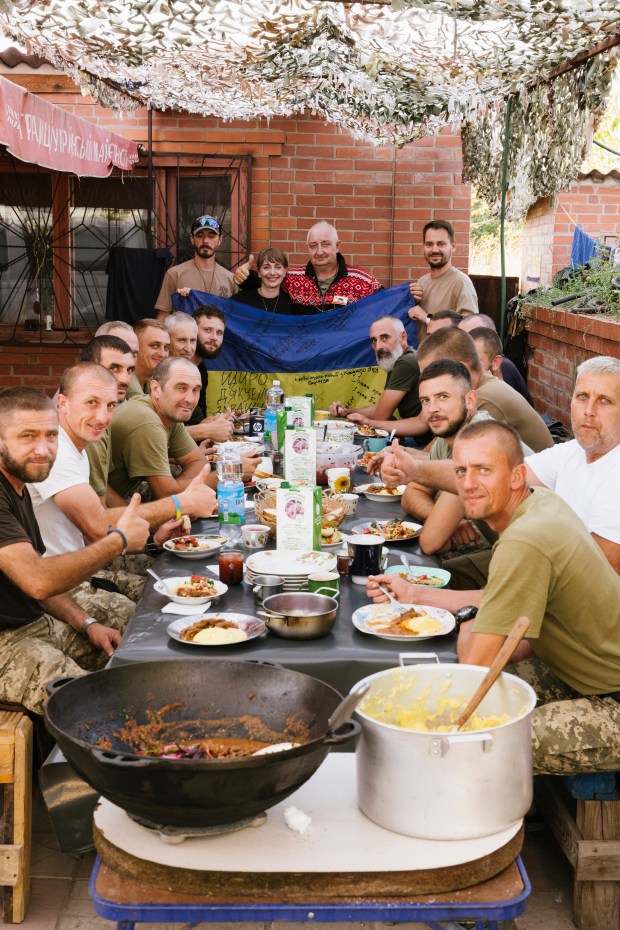 Oakland-based Ukrainian chef Anna Voloshyna, while on a research trip for her forthcoming cookbook, “Ukraïne,” prepared a meal showcasing recipes from around the country for Ukrainian soldiers in Druzhkivka, near the front line. (Courtesy of Jason Perry)
Ukraine needs to be supported because we are fighting for our existence. If Russia stops fighting, there will be no war; if Ukraine stops fighting, there will be no Ukraine. This April, we were able to do a fundraiser, and we wanted to fundraise $70,000 for a children’s Ukrainian hospital and fully equip an operating room. We were able to raise $100,000.
Q: This was a fundraiser in the Bay Area?
A: Yes. I got my culinary education at San Francisco Cooking School, and now it’s a part of Farming Hope, and they gave us their venue for the event.
Q: What’s your favorite recipe from the book?
A: It’s a very old Ukrainian dish called shpundra. It’s braised meat with beet kvas. Originally, it was made with pork, but I make it with beef short ribs, braised in beet kvas with beets and onions and a little bit of herbs until it’s fork-tender. It melts in your mouth, and it’s beautiful. It makes a lovely pairing with Ukrainian banosh — similar to polenta, but made with sour cream. I made this combo for my residency in Napa, and it was a hit. I tried to take it off the menu for lunch, but I could only survive two days without it, because people started coming and they were so upset that we had to make it.
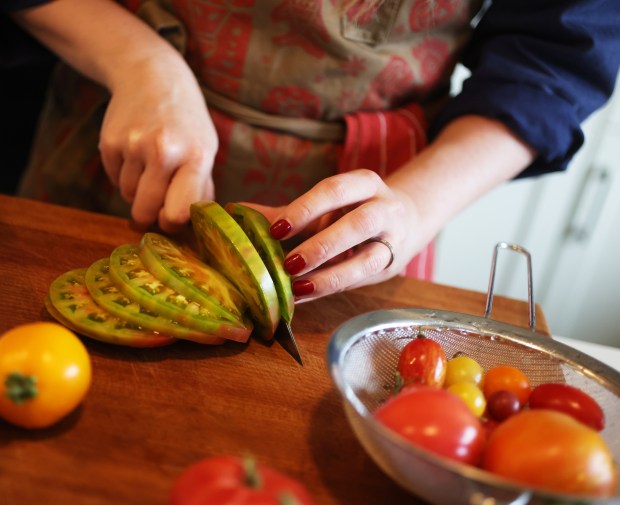 Ukrainian-born chef Anna Voloshyna, author of “Ukraïne: Recipes and Stories From Kyiv to the Black Sea,” slices summer tomatoes in her Oakland kitchen on Sunday, Aug. 30, 2026. (Aric Crabb/Bay Area News Group)
Q: You have notes throughout the book emphasizing the importance of spelling dishes the Ukrainian way, and why it’s important to you that people not call your country “the” Ukraine. What other takeaways do you hope people get from your book?
A: My biggest hope is people will understand that Ukraine is a sovereign, independent, and self-sufficient culture. We are nobody’s little brother; we are our own country. We are fighting for our freedom, our independence, and our existence. And we have cultures that are our own.
We don’t want to give our borshch to the country that wants to steal it. I think it’s time for people to know that borshch is not Russian, that varenyky is not Russian, and that chiberek is a Crimean Tatar dish. It’s very important to say the root of the dish, whether it’s Ukrainian or it belongs to another culture. Some dishes we cannot trace.
I really want people to understand what Ukraine is fighting for, and that we really want to develop and showcase our culture. We rejected the Soviet Union and rejected Russian ties, but what are we offering to the world? This is what we are offering. We’re opening to the world; we want to integrate; we want to work with other cultures. We don’t want to take anything from anyone. We have plenty.
For more food and drink coverage
follow us on Flipboard.