
Gov. Gavin Newsom criticized the deal he reached just days ago with legislative leaders, which utilities said did not go far enough to ease their financial risks.
Sep 1, 2026
Updated 4:14 pm PT
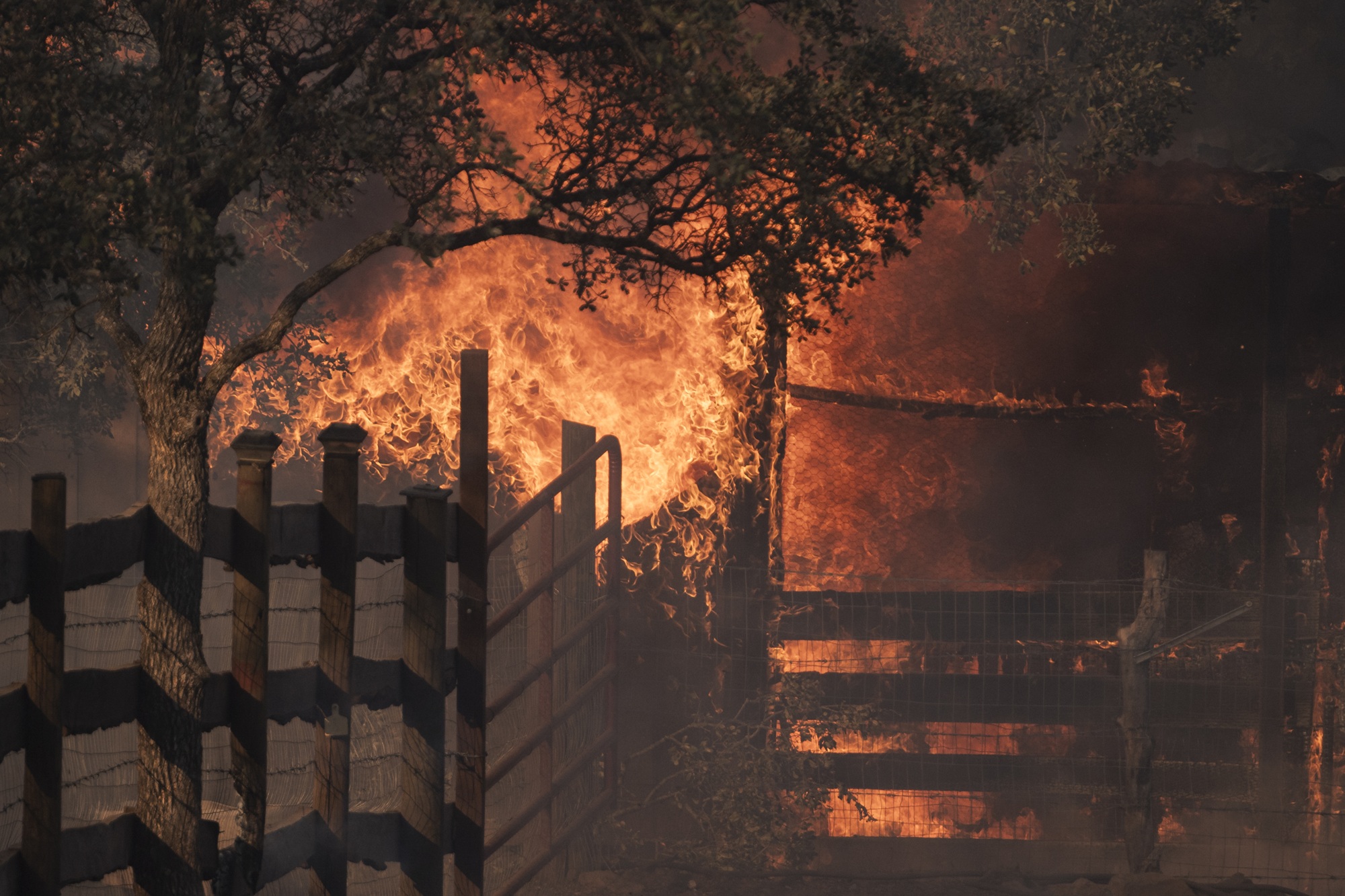
A structure is engulfed in flames during the Gann Fire near Angels Camp in Calaveras County, California, on Tuesday, Aug. 4, 2026. (Stephen Lam/San Francisco Chronicle via Getty Images)
A last-minute legislative deal to change California’s rules governing the fallout of damaging wildfires sparked by utility equipment fell apart Tuesday, after the state Assembly ended its regular session without a vote on the plan.
The agreement announced on Saturday between Gov. Gavin Newsom and legislative leaders would have aimed to speed up payments for fire victims, limited compensation for power company executives after utility-caused fires, and prevented insurance companies from selling their right to sue utilities to hedge funds.
After months of negotiations that pitted California utilities against insurance companies, supporters heralded the deal as a first step toward better aiding wildfire survivors and shielding utilities from expensive legal settlements that have contributed to rising electric bills.
But the leaders of PG&E and Edison International (the parent company of SoCal Edison) said the deal did not go far enough to ease the financial risks they face when their equipment starts a damaging blaze. Under California law, utilities are liable for damage caused by their equipment, regardless of whether they have been found to act negligently.
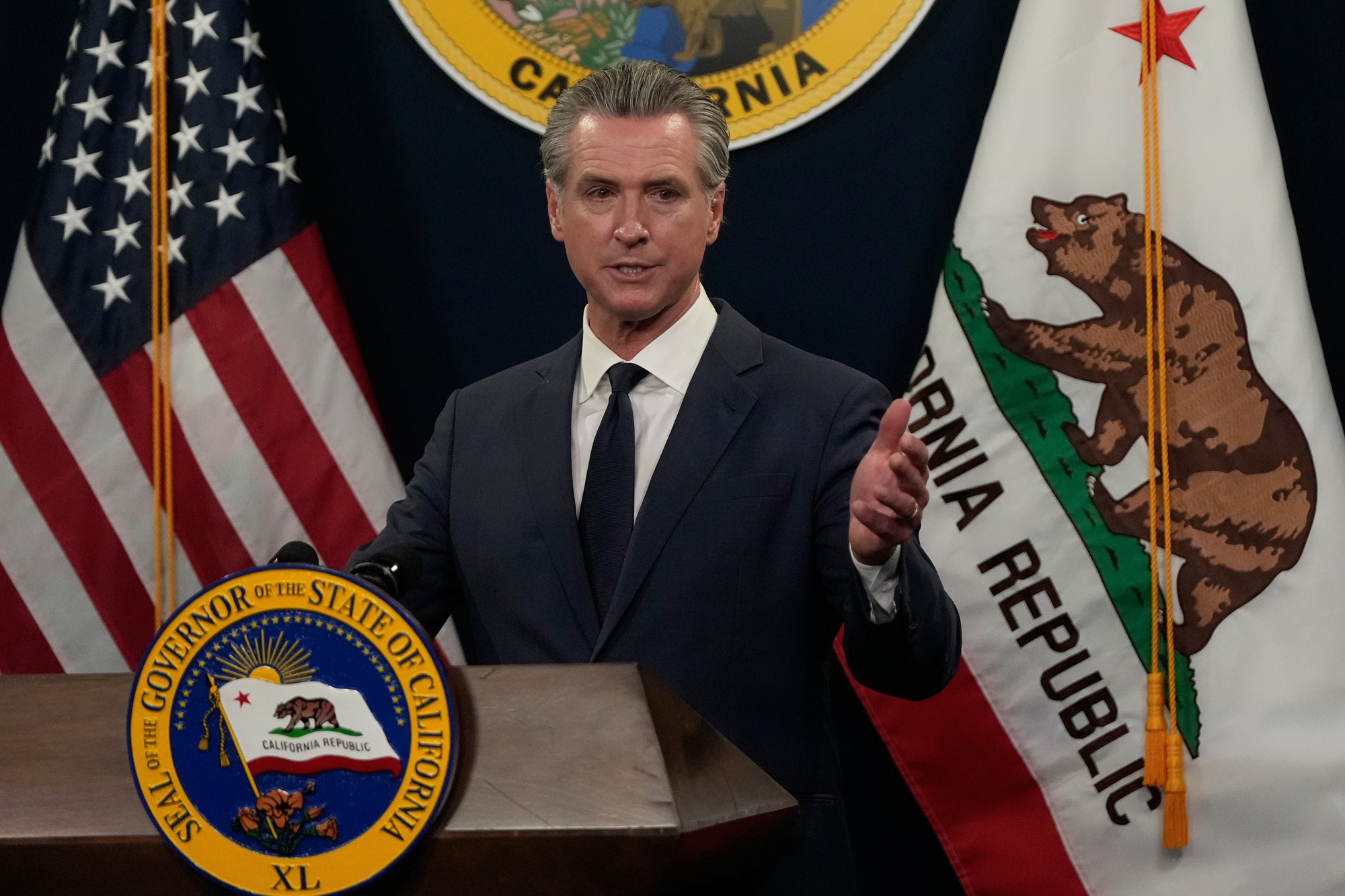 California Gov. Gavin Newsom speaks about his state budget proposal on May 14, 2026, in Sacramento, California. (Jeff Chiu/AP)
Stocks for the two companies tumbled after the compromise was announced over the weekend, and Newsom — who had initially pushed for shifting more liability away from utilities — publicly criticized the deal he had struck.
“The reforms in this bill, while important, did not address the underlying structural problems driving this crisis, as the initial market reaction this week demonstrates,” the governor said in a statement on Tuesday after the bill’s failure. “Simply put, this measure did not meet the gravity of this moment. The only solution is to return to fix the entire problem, not part of it.”
Newsom’s office did not respond to a question about whether the governor would call a special session to continue work on the issue this fall.
The Legislature convened on Tuesday morning, a day after the regular legislative session was scheduled to end, to cast a vote on a few remaining bills.
Wildfire liability costs now account for roughly 5% of Californians’ average monthly electricity bill, according to the California Public Utilities Commission, while wildfire mitigation — such as burying power lines and trimming trees — makes up about 15%.
Newsom proposed a major shift in wildfire risk from utilities to home insurers. His initial plan would have banned insurance companies from filing lawsuits against utilities, known as subrogation claims, to recover the payments they had made to wildfire victims. It would also have placed limits on claims of noneconomic damages and the amounts that local governments could recoup from utilities for destroyed infrastructure.
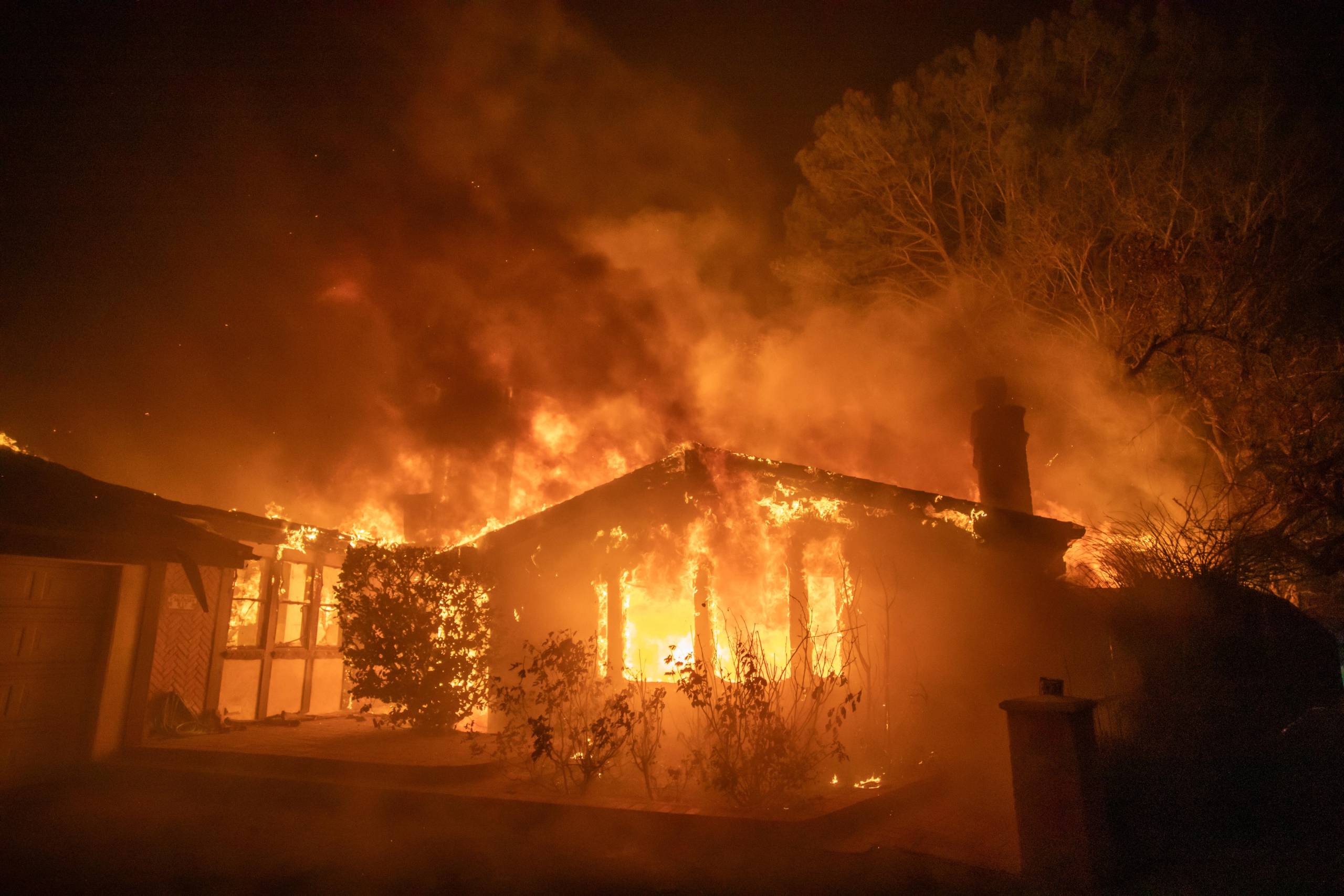 Flames from the Palisades Fire burn a home during a powerful windstorm on Jan. 8, 2025, in the Pacific Palisades neighborhood of Los Angeles, California. (Apu Gomes/Getty Images North America)
But those changes met resistance from a formidable coalition of insurance companies, attorneys and wildfire victim groups who criticized the governor’s push as a bailout of the utilities that would discourage the power giants from prioritizing fire safety.
The deal announced in SB 492 would have only restricted insurance companies from selling their right to file such claims to private equity firms. The bill would have also established a fast-pay system for fire victims, prevented utility executives from receiving bonuses after a utility-caused fire, authorized the creation of a statewide plan to reduce fire risk and capped the attorney fees in insurance subrogation cases to 10% of the final settlement.
The survivor advocacy group Every Fire Survivor’s Network took a neutral position on the legislation.
“This bill was a balanced and meaningful first step with the understanding that we would continue working on the larger structural issues next year,” said Sen. Josh Becker, D–Menlo Park, the bill’s author. “I am disappointed we could not deliver these reforms today, but I will not stop working on behalf of wildfire survivors.”
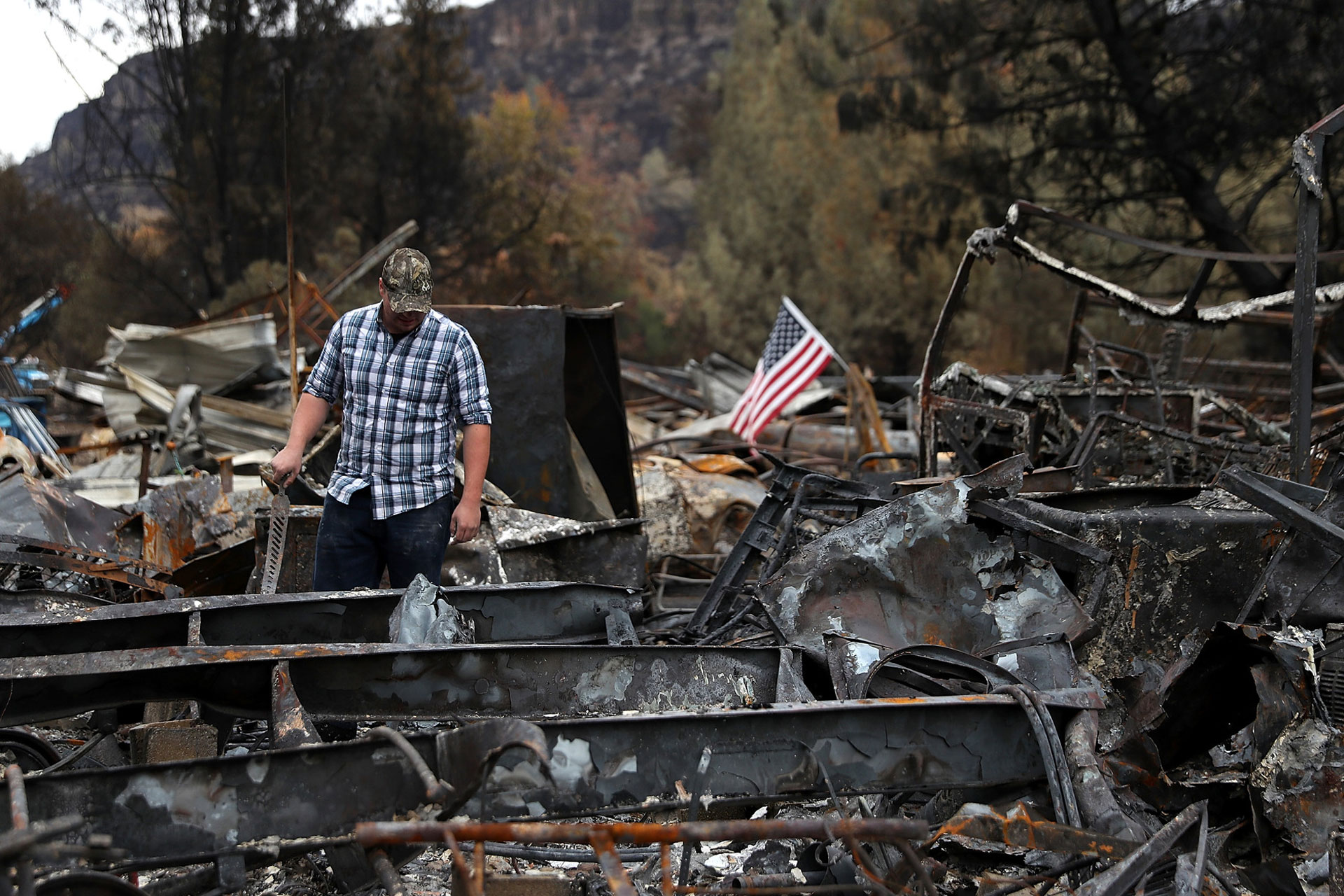 A man looks over his burned home, destroyed by the Camp Fire in Nov. 2018 in Paradise. The deadline for 70,000 survivors of numerous fires to vote on a multi-billion-dollar settlement deal with PG&E was May 15. (Justin Sullivan/Getty Images)
As Democrats in the Legislature rebuffed Newsom’s proposed changes to limit utilities’ liability, PG&E’s share price dropped from over $18 on Friday to just above $13 on Monday.
“A large segment of the entities that used to own California utilities — pension funds, kind of boring investors that need safe, reliable investments — were like, ‘We’re out of here, this is too much,’ and they sold their stock and the stock fell as a result,” said Michael Wara, director of the Climate and Energy Policy Program at Stanford University’s Woods Institute for the Environment.
“The people that buy stock in that context are bargain shoppers looking for ways to make a lot of money fast — that’s called a hedge fund,” Wara added. “The thing we should worry about as Californians … is that the shareholders of the companies, the new shareholders, are going to do things to California to try to make a lot of money after they bought the stock cheap yesterday.”
The conversation on where to place liability for destructive wildfires is not over, Wara said.
“Do we want to solve this problem ahead of time … or do we want to solve it in the context of the next utility bankruptcy?” Wara said. “That is not a better place to solve this problem — but it may be where we have to solve it because the politics are so hard.”