
A federal judge in San Francisco said the sentence reflected the “seriousness” of stealing the tech giant’s proprietary information related to training large AI models.
Sep 1, 2026
Updated 4:31 pm PT
A Google corporate logo hangs above the entrance of its St. John’s Terminal office building on Aug. 18, 2026, in New York City. Linwei Ding uploaded information from internal Google documents to a personal cloud account. (Gary Hershorn/Getty Images)
A former Google software engineer found guilty of stealing the tech giant’s trade secrets was sentenced to just under a year in prison Tuesday.
U.S. District Judge Vince Chhabria called Linwei Ding’s theft of proprietary information a “systematic, brazen effort to steal Google’s property,” during Tuesday’s sentencing in San Francisco.
“He knew very well what he was doing. He hurt people along the way,” Chhabria added.
In January, a San Francisco jury found Ding, 38, guilty of seven counts of theft of proprietary information related to Google’s artificial intelligence efforts and economic espionage, based on prosecutors’ allegations that he intended to use that information to benefit China.
 A sign is posted at Google headquarters on Feb. 4, 2026, in Mountain View, California. (Justin Sullivan/Getty Images)
Chhabria vacated the espionage conviction in August, finding that a reasonable jury would have had insufficient evidence to find him guilty. Ding came to the U.S. to pursue a master’s degree in 2010, and worked at multiple tech companies in the Silicon Valley before he was hired as a software engineer at Google in 2019.
He became a lawful permanent resident in 2021.
In his January trial, prosecutors said that over a course of a year, he uploaded more than 500 confidential files from Google’s network to a personal Google Cloud account.
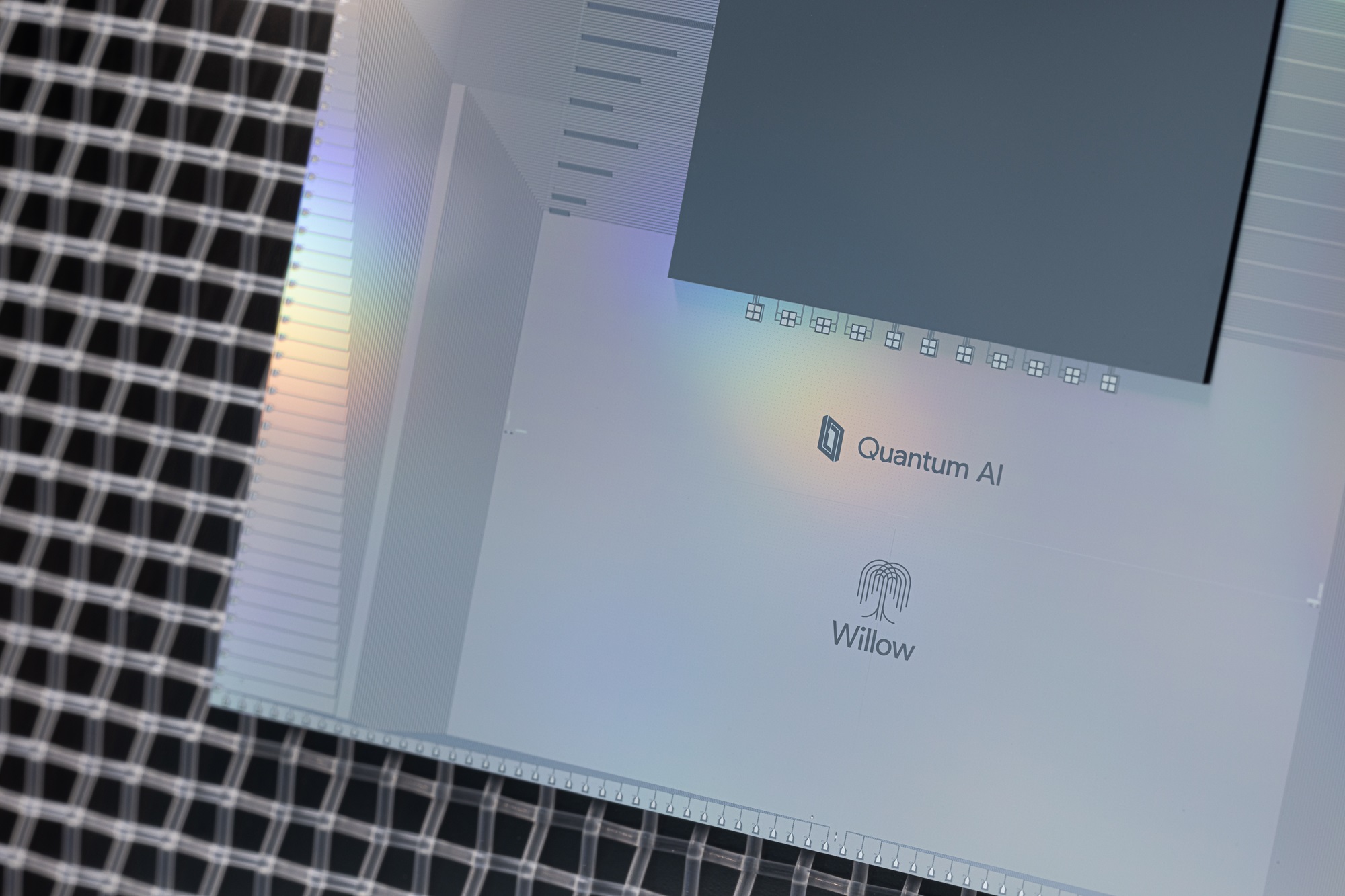 Google’s quantum computer chip, Willow. (Courtesy of Google Quantum AI)
Around the end of 2023, Ding also applied to a Chinese government “talent program” that aimed to attract technological talent to China with funding and investments, according to the court documents.
Ding never told Google about his affiliation with either company, prosecutors said, and he had an intern swipe his Google identification card multiple times when he was in China pitching Zhisuan, “to make it appear as though he was working from his office.”
While Ding was initially found guilty of both the trade secrets and espionage counts, Chhabria made the rare move to overturn the latter in August.
In his motion to partially acquit Ding, he wrote that “the evidence was insufficient for a rational jury to conclude beyond a reasonable doubt that Ding knew or intended” between the springs of 2022 and 2023 “ that his actions would benefit the Chinese government.”
Ding’s attorneys requested a more lenient sentence of three months in home confinement so that he could continue to be his eight-year-old son’s primary caregiver, and, they argued, because he had already been punished by the case and conviction.
“Mr. Ding will never again hold a position of trust at a technology company,”the sentencing memo reads. “His convictions and the publicity surrounding them have foreclosed the career he went to school for, enjoyed, and at which he thrived. Zhisuan is defunct, and Mr. Ding faces possible removal from the United States.”
 Close-up of Google Gemini logo branding on shared bike basket in San Francisco, California, on March 12, 2026. (Smith Collection/Gado via Getty Images)
Ding’s defense also argued that his circumstances — including widespread press coverage and professional, personal and financial “ruin” were also sufficient to deter others from taking similar actions.
But Chhabria said that a sentence between zero and six months didn’t capture the crime that Ding committed.
“If you think about it from the standpoint of the seriousness of his offense … whether you think about it from standpoint of general deterrence or specific deterrence — the idea of a noncustodial sentence is hard to swallow for me,” Chhabria said, before handing down the sentence.
Ding will also be subject to two years of supervised release following his prison term, and have to pay a restitution of more than $189,000, plus a $25,000 fine.
KQED’s Nastia Voynovskaya contributed to this report.