
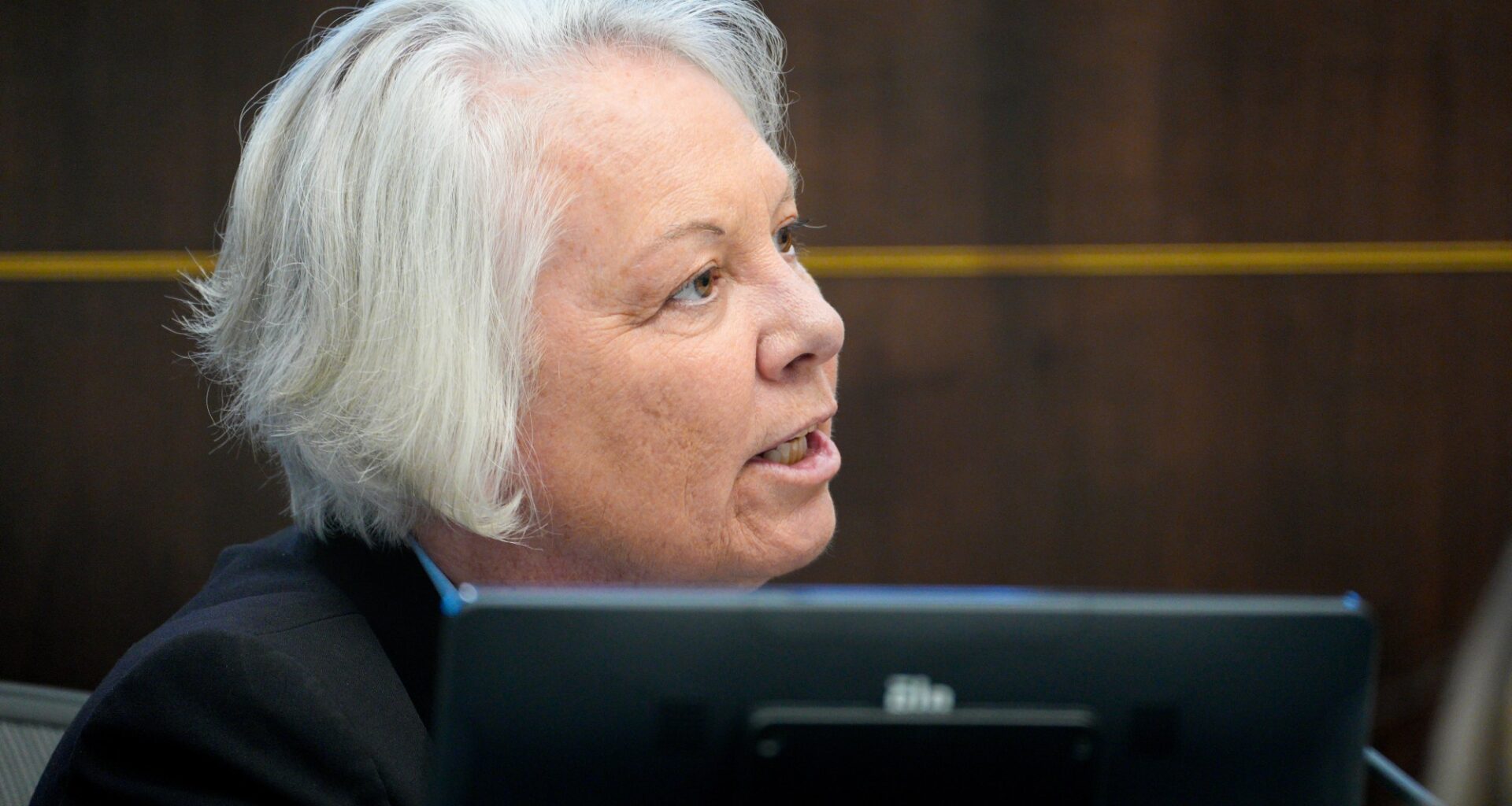
Sheriff Kelly Martinez appeared before the San Diego County Board of Supervisors on Tuesday to promote the reforms she has made in the jails she has overseen since she was sworn in three-plus years ago.
The presentation included a summary of new practices across the detention services bureau that helped reduce the number of people who died in custody, including improved healthcare and more thorough assessments at the time of booking.
The sheriff also previewed additional changes that remain to be implemented.
But despite sounding the alarm last year about needing up to $1 billion for a new jail in Vista and hundreds of millions of dollars in renovations and additional staffing, Martinez has yet to ask for more money to support her mandate.
Instead, the sheriff presented an update to supervisors on jail practices detailing reforms that she said have turned around a culture that was badly in need of overhaul — and touted even more changes on the horizon.
“We needed a modernization of our system,” Martinez told the board. “We know the trend is a direct result of the work we have been doing.”
Six people have died in San Diego County jails so far this year, well below the 19 who died in custody in 2022, the last full year before Martinez was sworn in as the 31st sheriff.
There were 10 in-custody deaths last year and nine in 2024. In Martinez’s first year running the San Diego County Sheriff’s Office, 13 people died in local jails.
The jails have been a critical problem for the Sheriff’s Office, not only for the grief they cause family members but also for the tens of millions of dollars the county has paid to settle lawsuits resulting from those deaths.
Earlier this year, San Diego County paid $3 million to the family of a man who died in the Central Jail in 2023 after his insulin pump ran dry — even though the alarm on the device had sounded for more than 24 hours.
Pressed on that Tuesday, sheriff’s officials said new practices have been instituted to make sure diabetics receive proper medical care while in custody.
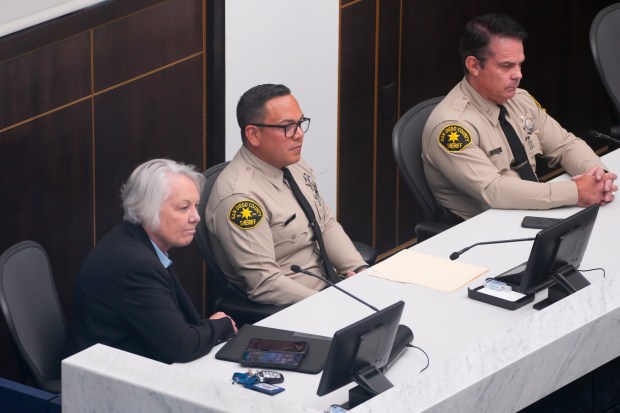 San Diego County Sheriff Kelly A. Martinez (left) listens to public comments after she made her presentation at the Board of Supervisors meeting on Tuesday, Sept. 1, 2026, in San Diego. (Nelvin C. Cepeda / The San Diego Union-Tribune)
But the death of Keith Bach was not the only expensive legal payout absorbed by San Diego County taxpayers as a result of deputy neglect or misconduct.
Last year the county paid the family of Hayden Schuck $16 million to settle one lawsuit and $4 million to the family of Lester Marroquin in another. In 2024, they paid the family of Elisa Serna $14 million and the family of Michael Wilson almost $5 million.
The county is still defending more than a dozen other wrongful-death lawsuits filed by relatives of others who died in sheriff’s custody. It also is still defending a class-action lawsuit challenging conditions inside county jails.
But on Tuesday, Martinez focused her presentation to the Board of Supervisors on the fixes she has imposed — some due to her own initiative and others that were mandated as part of prior legal settlements.
“We have changed our culture,” the sheriff said. “It comes from the top down.”
Specifically, Martinez said the department brought in physicians to participate in the booking process as a way to identify people who need medical help, drug or alcohol withdrawal protocols or other healthcare.
She expanded reentry services to reduce recidivism, improved drug-detection processes to help prevent overdoses, boosted medical and mental treatment services and issued computer tablets to certain detainees in a pilot program meant to streamline services.
The Sheriff’s Office also is on track to begin submitting MediCal reimbursements for eligible services it provides to people in custody, Martinez said. Department leaders are negotiating with a billing vendor and hope to begin collections next month.
“It’s completely our goal to get it online by October,” she said.
The sheriff also is seeking accreditation from the National Commission on Correctional Health Care for all of her jails and made the overdose-reversing drug naloxone available to help prevent deaths, she said.
“Everybody in all our facilities have access and the ability to deploy this lifesaving medication,” Martinez said.
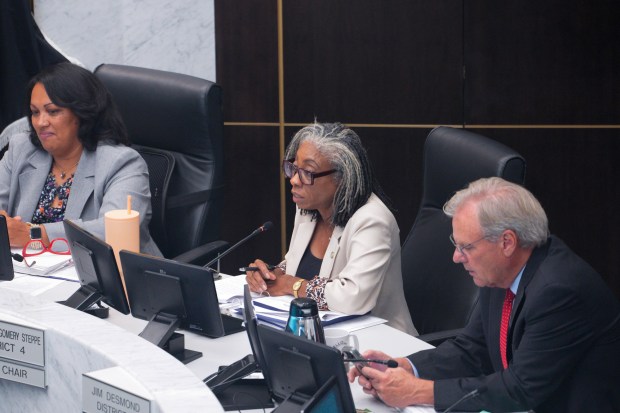 Supervisor Monica Montgomery Steppe had questions for San Diego Sheriff Kelly A. Martinez after she presented updates on commitments to jail improvements during the Board of Supervisors meeting on Tuesday, Sept. 1, 2026, in San Diego. (Nelvin C. Cepeda / The San Diego Union-Tribune)
Supervisors generally said they were grateful for the update and praised the progress made to date. Most of the elected officials urged Martinez to continue to adopt reforms across the agency.
“It’s quite stark, the difference,” Supervisor Paloma Aguirre said. “We are trending right and we want to make sure we continue trending, hopefully to zero (in-custody deaths). That should be our goal.”
Supervisor Monica Montgomery Steppe said she would appreciate more details in the sheriff’s next report to support the broader improvement claims.
She also told audience members that the Board of Supervisors has limited oversight of the Sheriff’s Office.
“We don’t manage operations. We don’t do any of that,” Montgomery Steppe said. “We do approve public funding, establish oversight, so there’s responsibility there, but certainly day to day we have nothing to do with it.”