
The parents of one of the teenagers who killed three men at a Clairemont mosque in May are suing the mental health treatment facility that he’d been staying at in the days before the shooting attack, alleging the facility did not act with urgency after the FBI flagged concerning dark web chats about school shootings and suicides.
The suit alleges that Caleb Vazquez, 18, went missing from Park Mental Health Treatment of San Diego in Normal Heights the night before the May 18 attack on the Islamic Center of San Diego and faults the facility for not protecting Vazquez “from his own self destructive actions, such as transferring him to a locked facility.”
The lawsuit, filed by parents Lilliana and Marco Vazquez on Monday in San Diego Superior Court, alleges the FBI reached out to Vazquez’s mother four days before the shooting to inform her that her son had been on the dark web, communicating with others about school shootings and suicides. The mother then passed that information on to staff at the treatment facility, according to the lawsuit.
Four days later, Vazquez’s parents searched in vain for their son after being told he was missing from the treatment center, according to the lawsuit. San Diego police were also, at the same time, searching for Vazquez’s friend, 17-year-old Cain Clark, who had been reported missing by his mother.
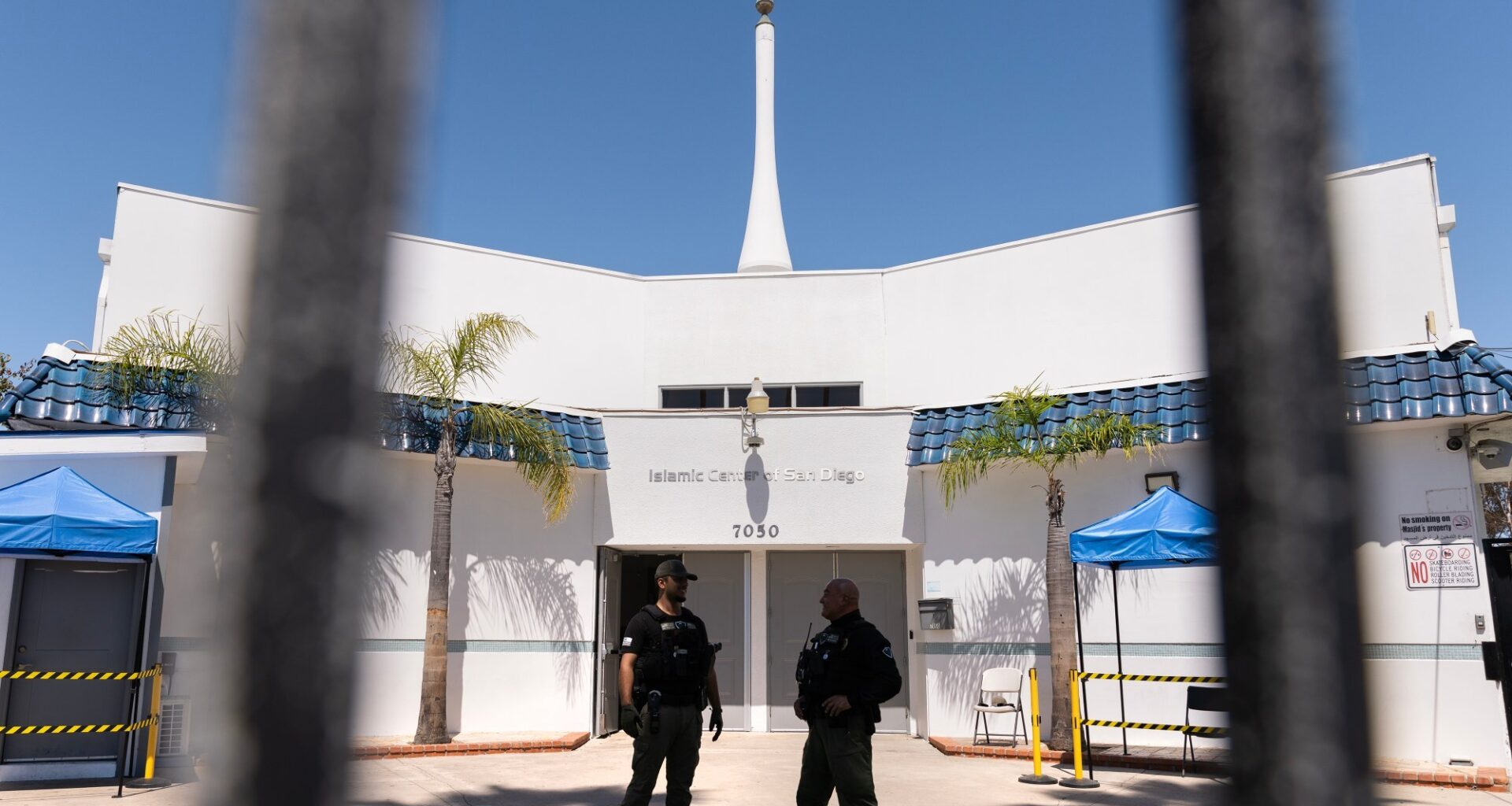
The teens attacked the Islamic Center of San Diego about 11:40 a.m., livestreaming video of the shooting. They fled in a car and stopped a short distance away, where Clark shot and killed Vazquez before killing himself, according to the lawsuit. Authorities have not confirmed whether their deaths were a double suicide or murder-suicide.
The lawsuit accuses Park of negligence, wrongful death, medical malpractice, and abuse or neglect of a dependent adult.
Attorney Chris Saldana, who is representing the treatment center, said in a statement Tuesday that his clients believe that “many of the allegations of the complaint are incorrect or counterfactual.”
“We also harbor grave concerns regarding the tenability of the claims made against Park and its employees,” Saldana said. “At the end of the day, Mr. Vazquez was involved in an infamous crime at the conclusion of which he was murdered by his criminal partner. Neither Park nor any of its employees had the ability or the power to stop these heinous acts and as members of this community, we continue to mourn Mr. Vazquez’s victims.”
Authorities said Vazquez, who grew up in Chula Vista, and Clark, who lived in Clairemont, met online where they were radicalized by hate. A 17-year-old North Carolina girl was charged in that state on Monday, accused of conspiring with the teen boys to disseminate the livestream and a manifesto they had authored.
The lawsuit alleges that Vazquez had been admitted to the treatment facility on April 28 — about three weeks before the shooting — with several diagnoses, including autism, obsessive-compulsive disorder, body dysmorphia, social anxiety and severe depression with psychotic episodes.
On May 14, the FBI contacted Vazquez’s mother. She reached out to her son’s therapist at the treatment center. The following evening, the suit alleges, the center director spoke with the mother about the FBI’s concerns.
On May 17, the night before the attack, video footage showed the young man pacing back and forth at the treatment facility while talking with someone on the phone, according to the suit. It alleges that he left the property at 8:24 p.m., making a left turn and disappearing from the camera view.
The next morning, the facility’s program director texted his mother: “Do you have any idea of where Caleb could be?” Lilliana Vazquez responded by asking: “Are you saying that he’s missing?” The reply: “Yes.”
According to the suit, Vazquez’s parents started looking for him about 9 a.m.
According to San Diego police, Clark’s mother called about 9:40 a.m. to report her son had left with a person named Caleb, and three guns were missing from the home. She called again an hour later and said she’d found troubling writings and a suicide note in Clark’s room.
Not long after, Vazquez’s parents — unable to find their son — headed to the treatment center in an unsuccessful bid to meet with the director, the suit says. They headed home about 11:50 a.m.
The shooting at the Islamic Center had started about 10 minutes earlier.
Killed in the attack were Nadir Awad, 57, a neighbor who ran to help after hearing gunshots; Mansour Kaziha, 78, a founder and caretaker at the mosque; and Amin Abdullah, 51, a security guard at the mosque who engaged the teens in a gun battle and warned the adjacent school to lock down.
The FBI did not immediately respond to a request late Tuesday about whether it had been looking into Vazquez before the shooting.
Vazquez’s troubling behavior had been flagged before.
In January 2025 during his senior year, officials at High Tech High in Chula Vista alerted police that he had warned a friend not to go to school the next day, according to court records. The officials also reported that the teen had a fascination with mass killings and had dressed like the fictional TV serial killer “Dexter.”
He was placed on a 72-hour involuntary hold for a mental health evaluation, feared to be a danger to himself or others. Police filed a gun restraining order against him and his father, who voluntarily stored the family’s 26 guns with a licensed gun dealer.