
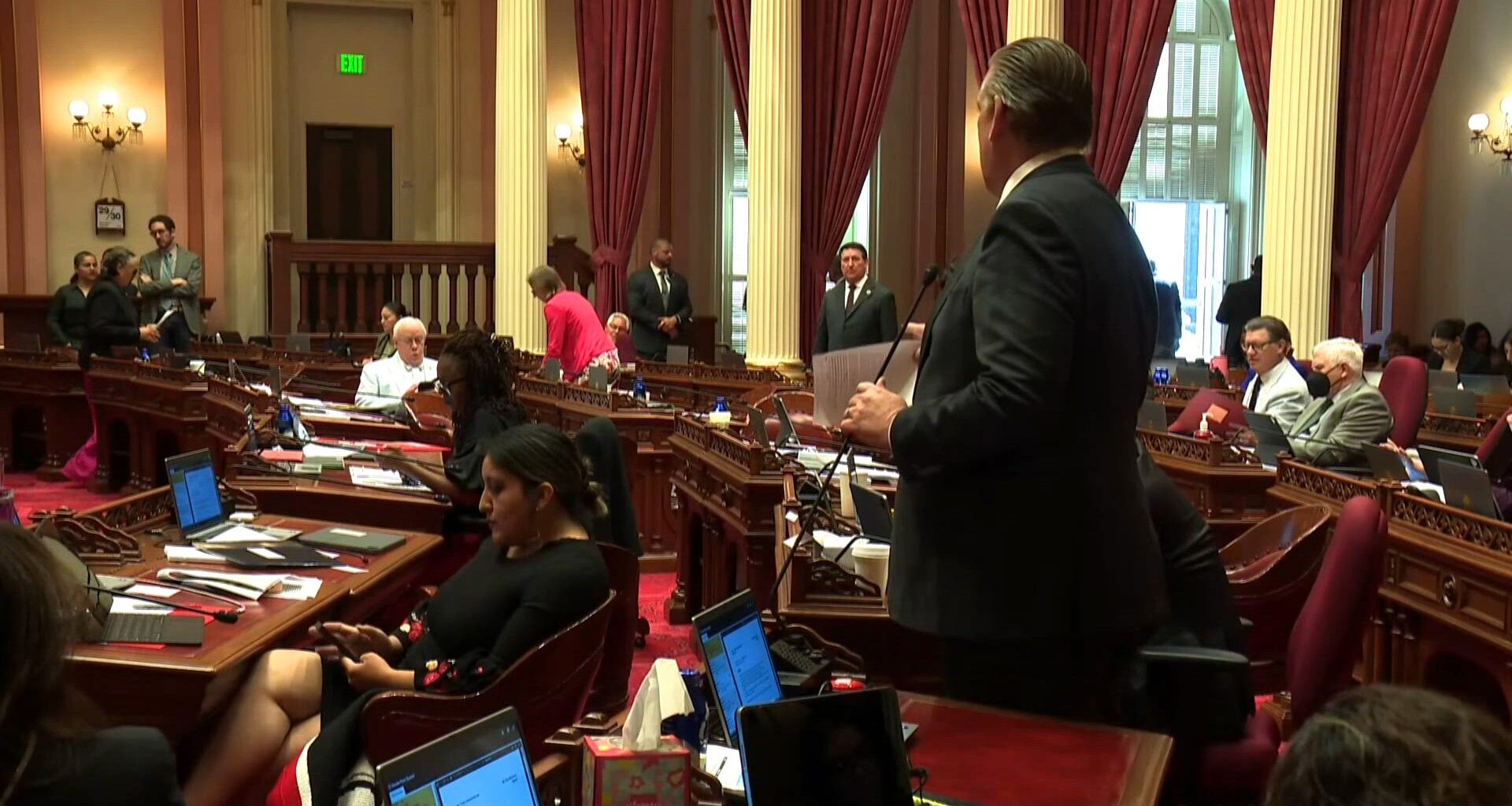
California legislators reject a wildfire reform bill that would change how utility-caused damage is recovered, citing the need for more relief and accountability.
SACRAMENTO, Calif. — The California Legislature rejected a proposal to reform how the state would approach wildfire recovery. Senate Bill 492 looked to address who should pay for damages in utility-caused wildfires.
The state’s current wildfire recovery fund was created by Newsom in 2019, when he took office. Assembly Bill 1054 was meant to help PG&E out of bankruptcy after the deadly Camp Fire. Legislators and Newsom feared bankruptcy would make it even harder for survivors to be compensated. So, they created this pot of money to help with payments. The state’s three investor-owned utilities and ratepayers paid equally into it.

This story continues below.
SB492 sought to amend how the fund is financed. It would have allowed for the borrowing of money and issuing of bonds to help keep it funded, amid concerns payouts for the Eaton Fire would dry up the fund. The thinking is large electrical corporations could support those bonds.
The bill did not include a provision backed by Gov. Gavin Newsom addressing subrogation, the process by which insurance companies seek reimbursement from a responsible third party after paying claims to wildfire survivors. In this case, the third parties would be utilities.
In a statement Tuesday, Newsom said California cannot settle for half measures.
“While important, the reforms in this bill did not address the underlying structural problems driving this crisis,” Newsom said. “Simply put, this measure did not meet the gravity of this moment. The only solution is to return to fix the entire problem, not part of it.”
Assembly Speaker Robert Rivas released the following statement after the bill failed to make it out of the legislature:
“We will continue to tackle the difficult but critically important issue of wildfire reform. Sacramento shouldn’t settle when wildfire survivors lost everything. Over the past several weeks, we have spent hundreds of hours at the table with Californians from every side of this fight, and the verdict is clear: The proposal before us does not yet deliver the relief, accountability or meaningful reform that Californians deserve. So, we are going back to work — and we will not stop until we have done everything in our power to deliver real results. I thank every Assemblymember and Senator who has engaged in good faith on the Governor’s proposal. Now, let’s make the hard decisions and finish the job.”
Lawmakers introduced the legislation over the weekend after they rejected an ambitious proposal by Newsom that would have limited electric companies’ financial liability for fires sparked by their equipment.
After deciding not to vote on the bill, Assembly Speaker Robert Rivas said lawmakers would revisit the issue this fall.
“The proposal before us does not yet deliver the relief, accountability or meaningful reform that Californians deserve,” the Democrat said in a statement. “So, we are going back to work — and we will not stop until we have done everything in our power to deliver real results.”
Newsom’s plan would have reduced the amount utilities had to pay some victims and barred insurance companies from suing electrical companies to get reimbursed for damages paid out to homeowners.
The governor said the last-minute compromise he made with lawmakers would have had some benefits for wildfire victims, such as getting paid faster, but that it failed to make necessary, sweeping reforms to tackle the question of who covers the cost of fires ignited by utility equipment.
Newsom acknowledged that the bill would have made some progress toward addressing the contentious, high-stakes issue.
“I could have easily walked away from it,” he told reporters Monday. “And that would have been a disservice to you and the people of this state.”
Who pays for wildfires is a contentious issue
Newsom’s failure to get his full plan passed by the end of the session marked a rare loss for the governor, who has often found support for his policy wishes in the Democratic-led Legislature. It comes as he wraps his final session before leaving office in January.
Fire victims heavily criticized his proposal, even protesting outside the governor’s mansion in Sacramento last week. They argued Newsom’s plan would have placed the needs of utilities over those of victims, while insurance companies said shifting more of the cost of damage onto them would have required them to raise rates for policyholders.
Joy Chen, executive director of Every Fire Survivor’s Network, a group of victims of the 2025 Los Angeles-area fires, said the deal was a win for them.
“Survivors from across California came to Sacramento and asked our elected representatives to stand with the people whose homes, communities and lives have been devastated,” she said in a statement. “They listened.”
Newsom hoped his plan would help stabilize the state’s notoriously high electricity rates by protecting utilities from the full financial impacts of wildfires. Utilities have raised rates to pay for wildfire prevention and recovery as climate change has made the blazes more intense and frequent. Under California law, utilities have to pay damages for fires ignited by their equipment, even if a judge doesn’t find them negligent.
The question of who should cover the cost of utility-sparked fires has persisted throughout Newsom’s tenure, which began after the most destructive wildfire in state history. He signed a law in 2019 — his first year in office — that created a $21 billion fund, paid for by utility shareholders and ratepayers, to help utilities pay for wildfire damages if they take certain safety measures. He and lawmakers agreed last year to supplement the pot of money with another $18 billion fund.
Newsom unveiled his latest proposal as Southern California Edison faces claims from the state’s second-most destructive blaze, a 2025 fire that killed 19 people outside of Los Angeles.
Compromise aims to pay victims faster
The bill lawmakers were slated to vote on would have created a program to ensure that fire victims get paid more quickly, banned hedge funds from profiting from wildfire claims and barred utility executives from receiving bonuses if their company’s equipment sparked a blaze that ends up damaging or destroying more than 500 buildings.
The California Catastrophe Response Council, which oversees the wildfire fund, would have appoint an administrator to create a process to resolve survivor claims more quickly.
Utilities and some lawmakers criticize the bill
Pacific Gas & Electric, which filed for bankruptcy in 2019 after it faced claims from a devastating Northern California blaze started by the utility’s equipment, and Edison International, Southern California Edison’s parent company, were disappointed with the deal. They said in a letter to lawmakers that the bill would fail to stabilize rates for Californians and wouldn’t provide “durable, long-term solutions” for compensating victims, sustaining the state’s wildfire fund, or managing utilities’ financial risk.
Assemblymember Rick Zbur, a Democrat, called it a “disaster” that lawmakers couldn’t agree on making more sweeping reforms.
“We’re nibbling around the edges, and we’re not dealing with the structural issues,” he said at a hearing on the bill.
Katelyn Roedner Sutter, of the Environmental Defense Fund, was also underwhelmed with the proposal, saying it wouldn’t go far enough to lower the risk of fires and stabilize electricity and insurance rates.
“The best I can say about this bill is it’s fine,” she said after the hearing.
The Legislature typically has until Aug. 31 to pass bills at the end of a two-year session, but lawmakers and Newsom couldn’t agree to a deal in time to vote Monday. They circumvented the end-of-session deadline by adding what’s known as an urgency clause to the bill. That means it would have needed the approval of two-thirds of the Legislature and would have taken effect immediately after it’s signed into law.
Legislature passes the nation’s first smoke contamination testing standards
Lawmakers also passed a bill Monday that would create the nation’s first standards for testing and cleaning up lead, asbestos and other toxic contaminants inside homes after a wildfire.
Assemblymember John Harabedian, a Democrat who wrote the bill, said it was borne out of the deadly 2025 Eaton Fire that swept through Altadena, which he represents. He said it’s important for lawmakers to “figure out very quickly how to protect wildfire survivors and rebuild communities,” and the bill is one way to do that.
Copyright 2025 Associated Press. All rights reserved. This material may not be published, broadcast, rewritten, or redistributed.