

The complex legal battle for ex-San Francisco 49ers star Dana Stubblefield — who six years ago was imprisoned after a rape conviction and later got it overturned on appeal — entered a new phase this summer after the state Supreme Court vacated the reversal and ordered that it be reevaluated under new case law.
Now the 6th District Court of Appeal, which overturned Stubblefield’s conviction in 2024, must assess whether racially prejudicial remarks a prosecutor made in his closing arguments during the 2020 trial was a “harmless error” or if it unfairly swayed a jury into finding the former NFL player guilty of raping a prospective babysitter at his Morgan Hill home more than a decade ago.
Before this year, such an analysis was not required for appellate cases that predated the 2021 enactment of the state’s landmark Racial Justice Act; a finding of a violation was enough to prompt a remedy, which for Stubblefield meant throwing out his conviction.
The state Attorney General’s Office — representing the Santa Clara County District Attorney’s Office in appellate court — challenged the reversal in March 2025, but the litigation had been on hold pending the California Supreme Court’s ruling on the so-called Bankston case, involving a death penalty conviction out of Los Angeles.
The Bankston ruling, handed down in June, refined the state courts’ application of the RJA, and meant a “harmless error” analysis was now necessary for Stubblefield. At the end of July, the state Supreme Court vacated his conviction reversal and ordered the 6th District court to take a fresh look at Stubblefield’s appeal in light of the new precedent.
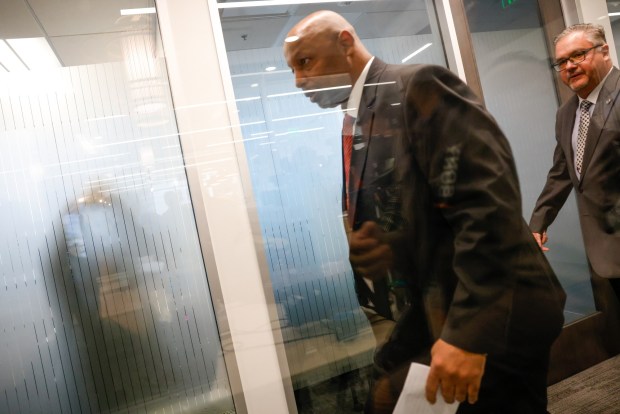 Former San Francisco 49ers star Dana Stubblefield leaves a press conference in downtown San Jose, Calif., on Wednesday, Feb. 12, 2025. (Shae Hammond/Bay Area News Group)
Stubblefield, 56, a former NFL Defensive Player of the Year with the 49ers, has been out of custody since his release from state prison in February 2025, and there is no immediate indication that will change. Prior to the December 2024 appellate ruling, Stubblefield was more than three years into a 15 years-to-life prison term.
In its original decision to overturn Stubblefield’s conviction, the 6th District court found that Deputy District Attorney Tim McInerney’s closing trial arguments contained RJA violations, in his explanations for why Morgan Hill police did not search Stubblefield’s home for a gun that he was accused of using to coerce his accuser into sex.
The court scrutinized the prosecutor’s July 2020 remarks about how a police search of Stubblefield’s home would have spurred a “storm of controversy” given his stature as a famous Black man. The written opinion noted that McInerney cited Stubblefield’s race multiple times and considered it an implicit reference to civil unrest across the country over the police killing of George Floyd in Minneapolis just two months earlier.
Presiding Justice Mary Greenwood wrote that the remarks implied to jurors that “the house might have been searched and a gun found had Stubblefield not been Black, and that Stubblefield gained an undeserved advantage at trial because he was a Black man.”
Joseph Doyle, Stubblefield’s appellate attorney, told this news organization that he expects the 6th District court, which could issue a new ruling by year’s end, to find in Stubblefield’s favor even under the new framework.
“Nothing in the Bankston opinion undermines the original Court of Appeal decision,” Doyle wrote in an email. “In fact, Bankston and its companion cases really underscore what the Court of Appeal did right in addressing the merits, which is consider the full context of the prosecutor’s argument (i.e., the George Floyd protests).”
He also emphasized that Stubblefield’s appeal had 12 other allegations of trial error that were not reviewed by the appellate court because the conviction reversal rendered them moot; Doyle said he would expect to prevail on one or more of them. Those complaints include two other RJA violation claims; accusations of improper exclusion of exonerating evidence that portray the encounter as an instance of paid consensual sex; and a contention that COVID-19 measures in court that isolated a masked Stubblefield behind Plexiglas prejudiced him to jurors with a “caged” appearance.
“Even if the Court of Appeal were to find the RJA violation here harmless, it would still need to address my two other RJA claims as well as the other issues,” Doyle said.
The Attorney General’s Office did not respond to multiple requests for comment for this story. Throughout the appellate process, the AG’s office has contended that even accepting that there may have been an RJA violation, the error was harmless and did not unduly influence the jury’s original verdict. The office has also argued that the 2024 appellate ruling did not equate to an exoneration that warranted completely vacating Stubblefield’s conviction and sentence.
Following a Sept. 16 defense briefing deadline, the appellate court will have 90 days to issue a ruling, though that timeline could extend into 2027. When the litigation might ultimately conclude is far from decided; regardless of how the court rules, there will be more appellate avenues available, and the district attorney’s office could refile charges if the conviction reversal is upheld.