
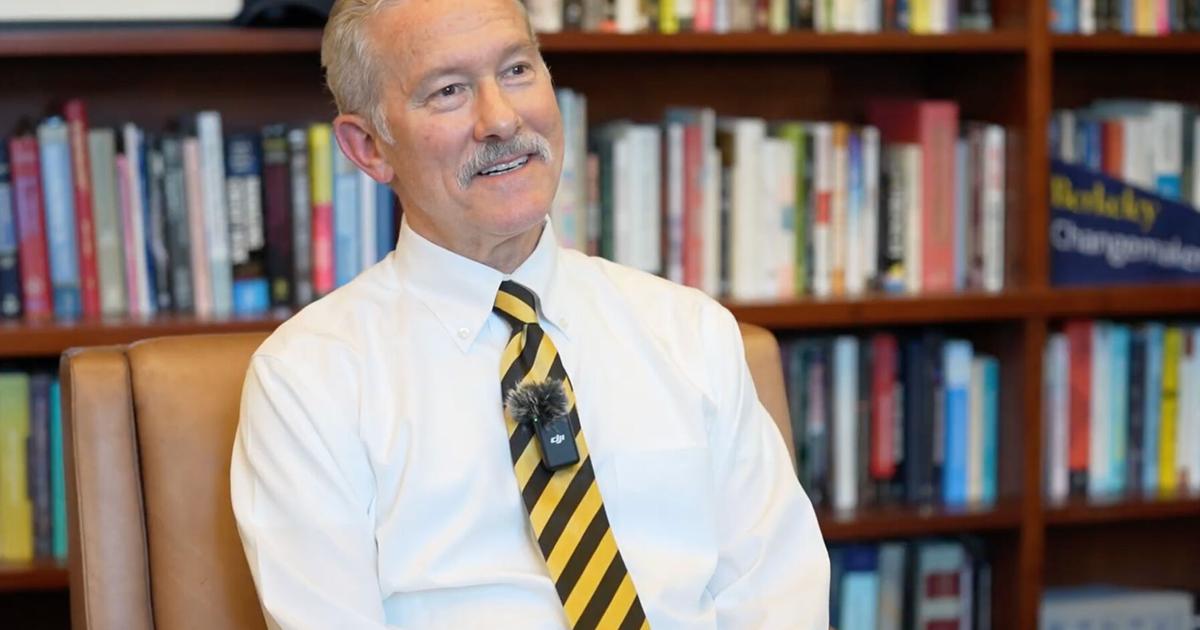
The Daily Californian sat down with UC Berkeley Chancellor Rich Lyons on Aug. 19, in an expansive interview to discuss the most pressing issues for UC Berkeley and its students. The first topic discussed was artificial intelligence — the technology that promises to fundamentally alter higher education in the United States.
Below is a partial transcript of our conversation with Lyons on AI, which has been edited for brevity and clarity.
What is the role of AI in higher education?
Lyons: Let me slice into it at a macro level and then at a micro level.
At a macro level, ultimately, the curriculum is the domain of the faculty. A chancellor doesn’t determine the curriculum. But if we said, could Berkeley make a promise that we are going to develop the strongest generation of critical thinkers that we have ever developed? … That’s an interesting thing to say, because almost everybody is thinking about this inevitable cognitive surrender scenario that we’re all going into, and I think we have a lot of tools countering that.
The micro point is there are lots of elements that we have to get more right. How do we make sure faculty are being as transparent as they need to be on their syllabus? Do we have more testing centers? The assessment has changed in the world of AI, and you have to do testing more and more in-person, and that requires a different set of facilities.
Right now, for current (undergraduate alumni), it’s especially difficult to get jobs. Many have attributed that to the rise of AI. How is UC Berkeley adapting to enable graduates to work in this new age of AI?
Lyons: Part of Berkeley’s magic is in its relatively decentralized approach. I think every class, every faculty member, every experience that we design, whether it’s curricular or co-curricular … is going to help prepare our students to be stronger in the job market. Whether that is critical thinking, asking better questions of themselves as thinkers — I think there’s also a piece of it, though, that’s connected to what I call agency.
We need our graduates to be stronger thinkers, and they will be. But we also need them to be doers.
What does that mean? Making people feel like they’re “doers.”
Lyons: There’s this concept in psychology; it’s taught in some of our courses: the distinction between an internal and external locus of control. Some people feel like ‘the world acts on me, and I’m buffeted a bit by it.’ (For) other people, it’s like ‘I act on the world’ … I think we want people, other things equal, to feel like they have some agency, some ability to shape the world, and that they have the tools they need. They have to keep learning and living.