
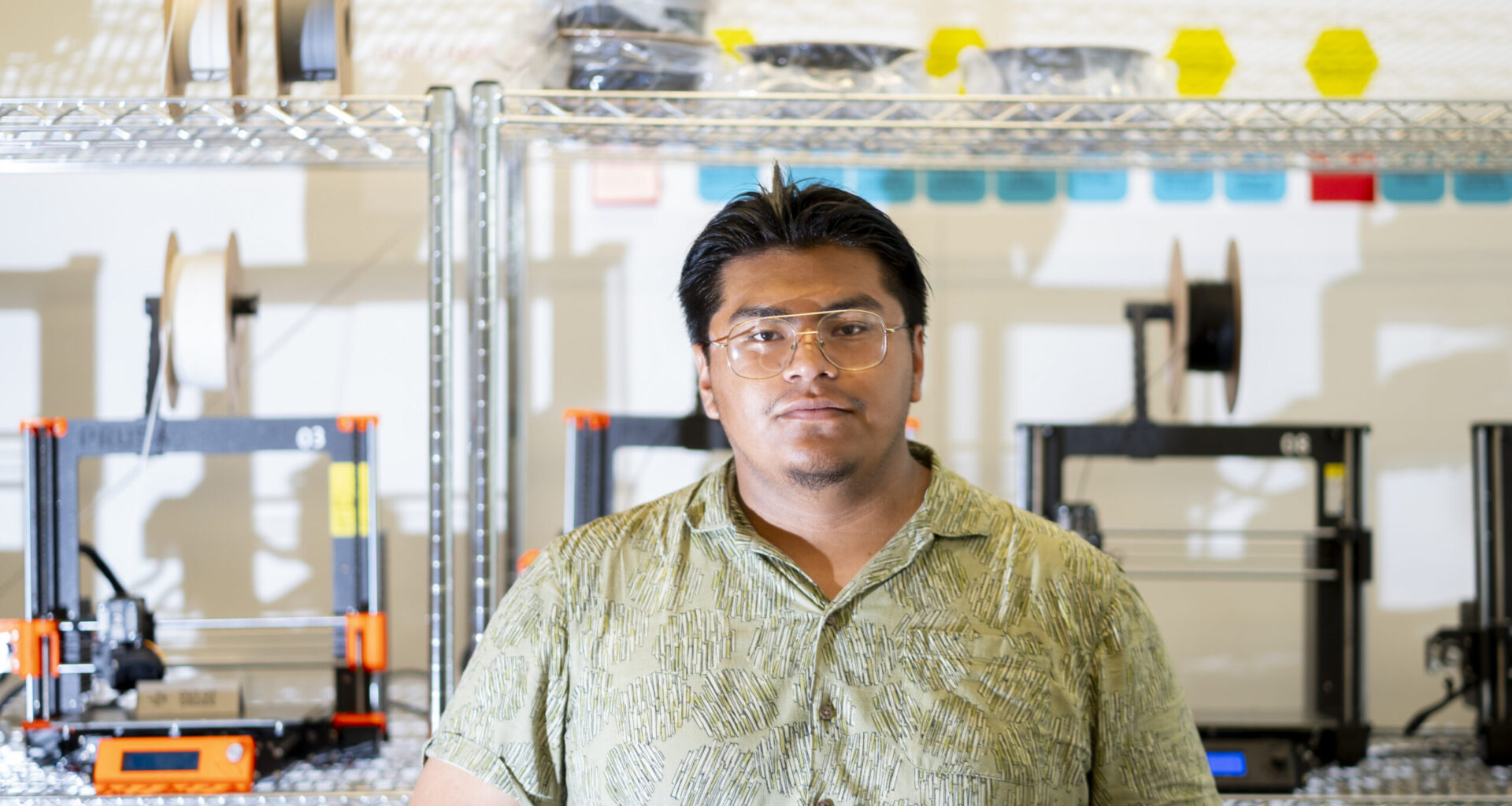
In this first-person narrative, incoming first-year student Israel Sanchez reflects on selling his first patent at 17, his excitement about embracing everything that Berkeley has to offer, and working to make a difference in his agricultural community back home.
I come from a rural California town called King City. It’s on the Central Coast, in an area commonly referred to as the “Salad Bowl of America.” That is where most of our lettuce comes from.
I started as a general laborer on a small family farm when I was 12. There’s seasons where there are night shifts, such as grape harvesting for wine. During nighttime you work, and then during the day you go to school. That makes getting an education challenging. It is really a cycle where we stick to one thing and we’re really scared to try new things, like something as big as going to college. There’s always that idea that you won’t make it, because not many do, and you’re just going to go into debt. So I was settled on just continuing my family’s agricultural trade.
I’ve always been decent at school, but I wasn’t really confident in my own skills until I got exposed to college materials that I could quickly grasp. They were mostly from worn out textbooks that were chucked out from the community college, 10-year-old books that were in the recycling. It was like, “You know what? This is interesting, and it’s coming easy to me. Maybe college isn’t that bad.”
The real responsibility on the farm kicked in when I became the assistant foreman when I was 14, then a foreman when I was 16. Typically, 24 is the average age for an assistant foreman, and then maybe mid-30s is foreman age. That is where you start managing people — maybe one crew of 25 people, up to three crews of 80 to 90 in total.
I soon realized that in fast-paced environments, there’s always quotas, there’s deadlines, and you begin to get upset about your conditions of work. I think that is very relatable across any industry — you have to find any means to boost productivity.
I wanted to pivot to being a mechanic. Where I come from, even just being a teacher or mechanic is a pretty big deal. So I told my management, “I’m willing to work for free. I want to learn how to fix tractors and stuff.”
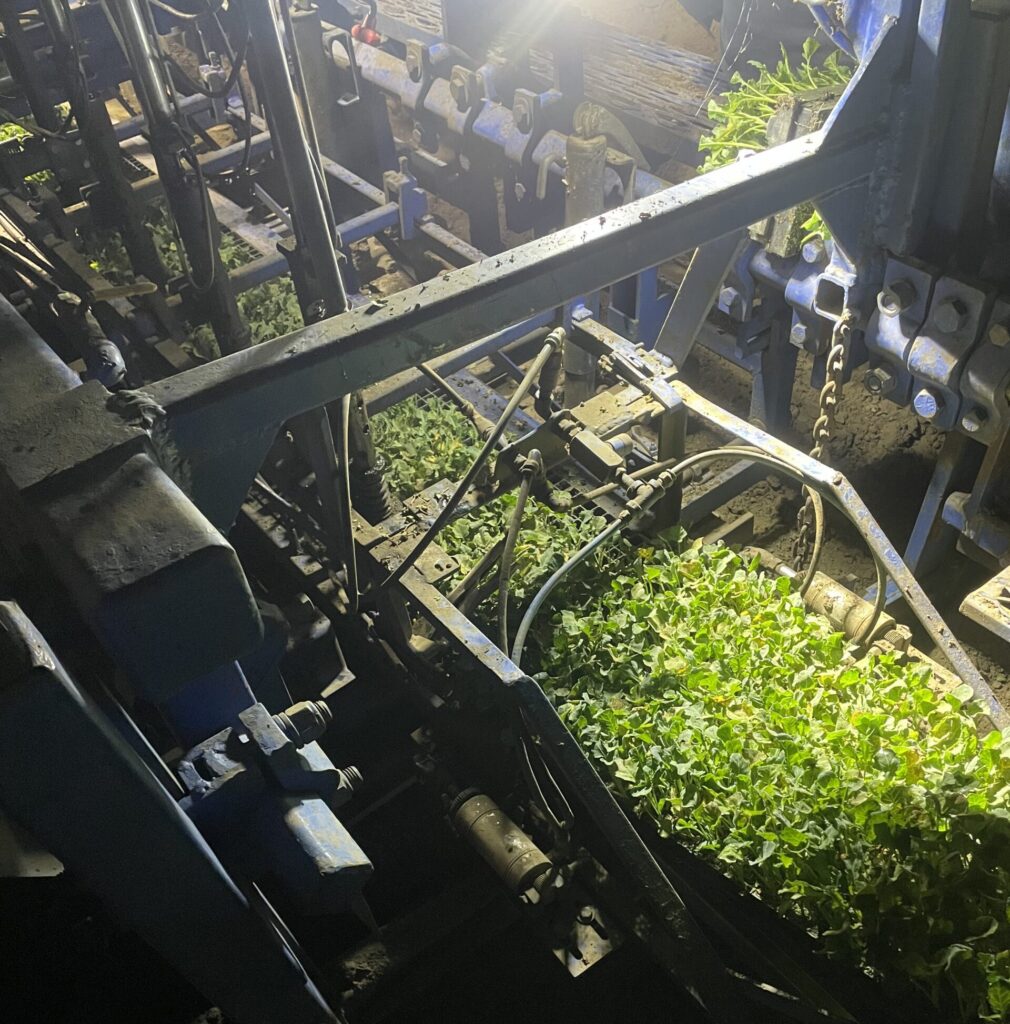 Lettuce starts on the planting machine that Sanchez devised.
Courtesy of Israel Sanchez
That is when I began tinkering with the transplant machine that I was working with. On the farms we would mainly focus on lettuce, cabbage and broccoli, plants that could be grown in a nursery for about a week or two, which would then be transported to the field where they would be transplanted. We would use carousel transplant machines: Workers feed each individual seedling into a rotating device, which places them in a hole in the ground. It typically requires around 25 people, sometimes 30, to get those plants in the ground, depending on how big the machine is. So it was pretty labor intensive and it was slow. We could do about an acre an hour depending on the soil conditions.
There are alternatives like automatic machines, but they are pretty expensive and break frequently. My bosses had one and that was only for testing. I said, “What if I could combine both of them and make the carousel better? What if I could just come to the farm one day, during a weekend, work on it, fix some things that have been bothering me?” It’s kind of like a hair sticking out on your head, and you’re like, “Well, what if I just grab the scissors and cut it off?”
The number one change was I made a machine that will automatically clean itself. The reason why machinery would break down was because it would clog. That would require people to stop the crew and clean out the machine, which would delay us by about half an hour.
The problem was the heat. During the summers, temperatures would reach 100, 105 degrees. Workers would clock in at two in the morning to beat the heat, and temperatures would rise fast — I’m talking from two in the morning to three in the morning, the temperature difference was eight degrees. So every minute counted. When we were delayed by half an hour, we would extend the time people would clock out, and plants would dry up. So that was a big challenge.
With my changes, we were also able to cut down workers all the way to only two people — the tractor driver and the machine operator. We sliced down labor costs. We reduced the need for hands.
My employers pulled me in and asked me how I did it. And more than anything, my employer said, “You have to go to school. This isn’t something that you just do for one morning. This industry, this job, isn’t for you. Go out and seek better.”
That was the first time I ever heard those words, and I truly felt like that was my actual point where I could take flight. And Berkeley was the northern star.
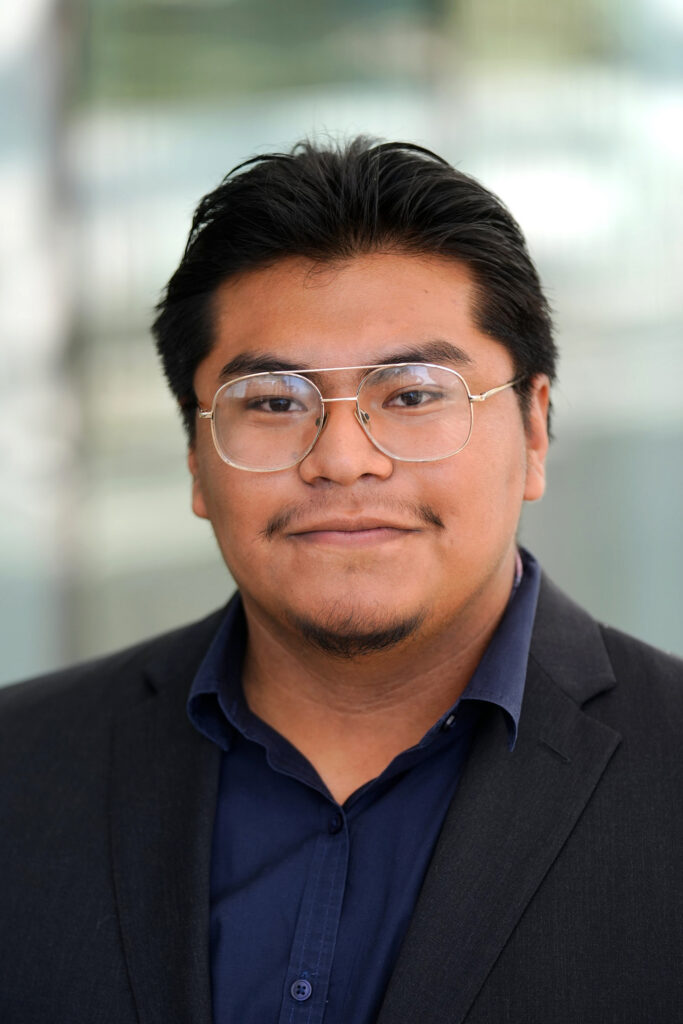 Israel Sanchez plans to make the most of the many opportunities UC Berkeley offers.
Photo by Adam Lau/UC Berkeley Engineering
Something I’m excited about at Berkeley is trying out everything that I did not have access to where I come from, every resource that I’ve got at my disposal — trying to make the best of what Berkeley is and uphold its values.
When I got introduced to research opportunities, I said, well, that’s interesting, I could do that! And then I got interested in clubs, and then there is the startup culture here in the Bay Area — that’s my niche! And then the interesting classes that I heard about — what if I could take a million different classes?
I may start with engineering, to try to find solutions to better our labor practices. But I know I want to expand to something humanitarian, like public health.
When you take the position of an actual farm worker, you realize that it’s no different than it was 100, 200 years ago. There’s people getting sick. There are people being born with birth deficiencies. And you see the pesticide applications and labor practices, and you realize — I was in their shoes, too, and this isn’t fair. I know there’s a 12-year-old kid somewhere out there that’s doing the exact same thing that I was doing years ago. And I know that I have the potential to change the trajectory of that kid.
I no longer own the rights to the machine. To paint the picture, you’re 17 and you’re sitting in a room with a lot of people in suits. When you’re used to overalls and mud and stuff, it’s pretty overwhelming. They asked, do you want to patent it, do you want to sell it? I wasn’t ambitious enough to say I wanted to own it.
One of the things from my background in agriculture that I truly pride myself on is the ability to quickly adapt. I think that is a skill that really not many people have. It’s something that really helps — and it’s what makes Berkeley Berkeley. Everybody’s scared to do things, but they do them regardless, because there is an optimistic view in trying new things.
The world isn’t perfect, and I understood that from a very early age. But when I got inspired to do something for the greater society, I said, what better place than Berkeley?
This first-person narrative was written from an interview with Israel Sanchez, who began his freshman year at Berkeley this August. Have someone you think we should write about? Contact [email protected].