
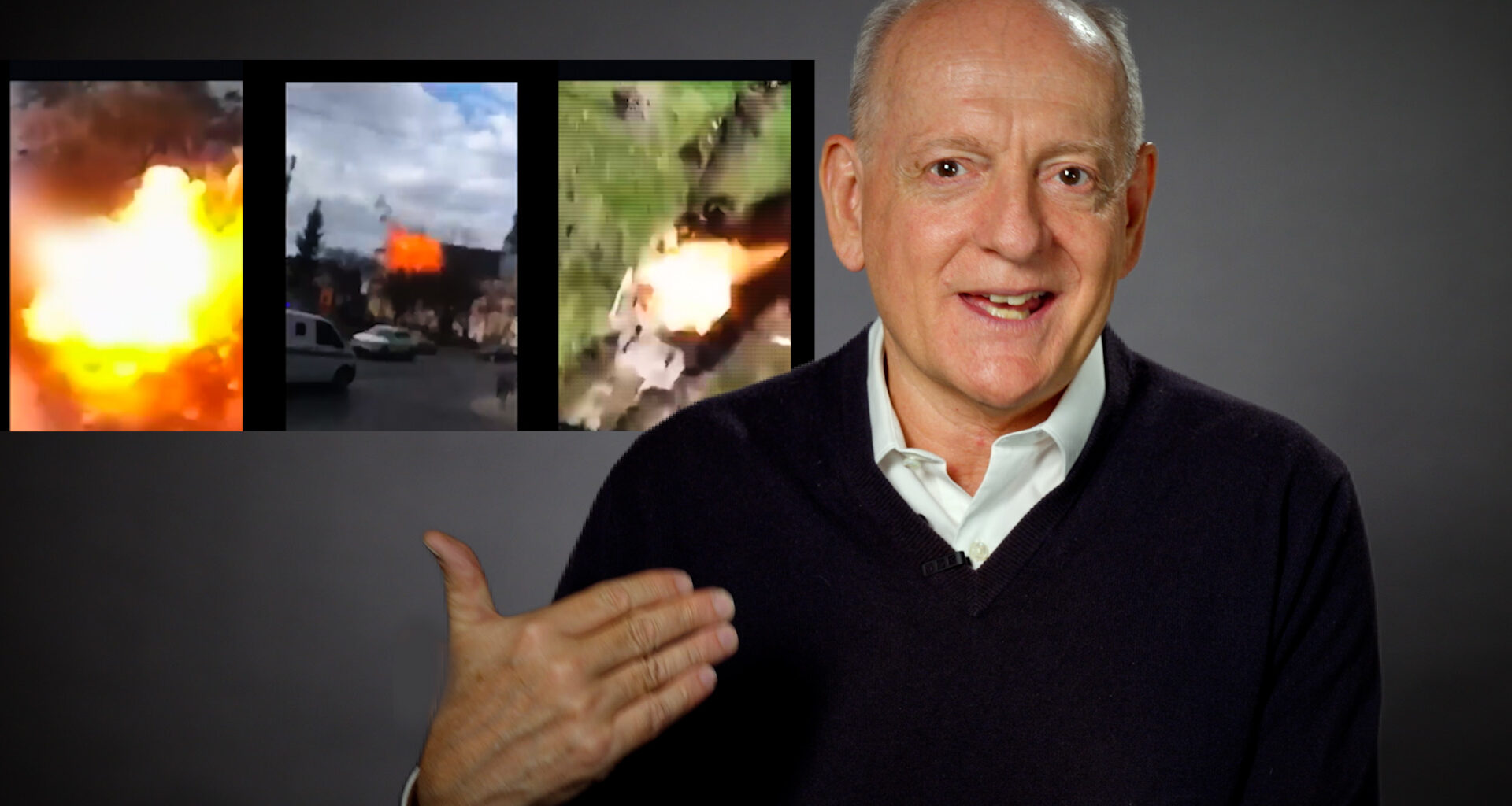
We should act now to regulate autonomous weapons, rather than wait for a mass-casualty event, says UC Berkeley’s Stuart Russell. He’s been delivering this message for more than a decade, yet the development and use of autonomous weapons remains on an alarming trajectory.
Russell is a professor of electrical engineering and computer sciences at Berkeley. In 2017, he co-founded the Center for Human-Compatible Artificial Intelligence and is the president of the International Association for Safe and Ethical AI. He also wrote the textbook from which generations of AI experts have learned about their field.
Russel admits that it can be frustrating to ring alarm bells and feel no one is listening. He has tried many approaches, including producing Slaughterbots, a 2017 short film that depicted the dangers of a world with wildly proliferating AI weapons.
Now, he says, “we are pretty much there.”
That has not stopped him from continuing to work toward changing the trajectory. A place to start, says Russell, is by banning small, anti-personnel autonomous weapons –– these are most likely to be produced cheaply at scale. “With those kinds of weapons,” he adds, “one person could push a button and launch a million weapons and kill a million people,” so they constitute weapons of mass destruction that are easy to proliferate.
The technology is moving in that direction wherever you look. In Russia and Ukraine, while most drones still have a human in the chain of command to confirm a target, evidence indicates that both sides are increasingly shifting toward autonomous target selection as signal-jamming poses issues to human-drone communication. The U.S. and China are both racing ahead to develop AI weapons systems as international law lags behind. Israel uses multiple AI systems to identify targets in Gaza.
“Everyone needs to understand what’s going on,” says Russell. Perhaps, he says, if more of us understand what is at stake, the laws can begin to catch up to the technology.
Watch more 101 in 101 videos featuring UC Berkeley faculty and experts here.