
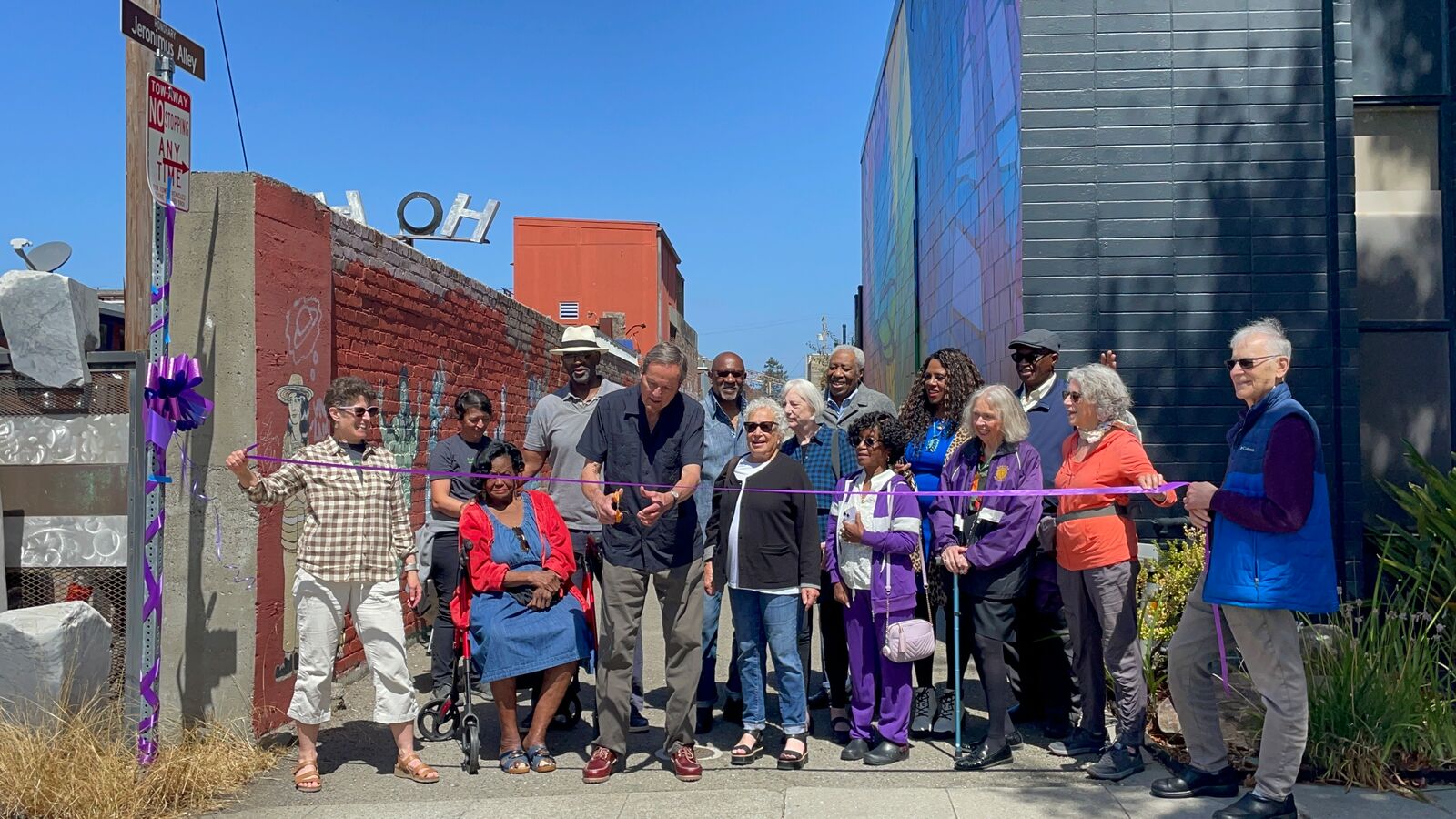
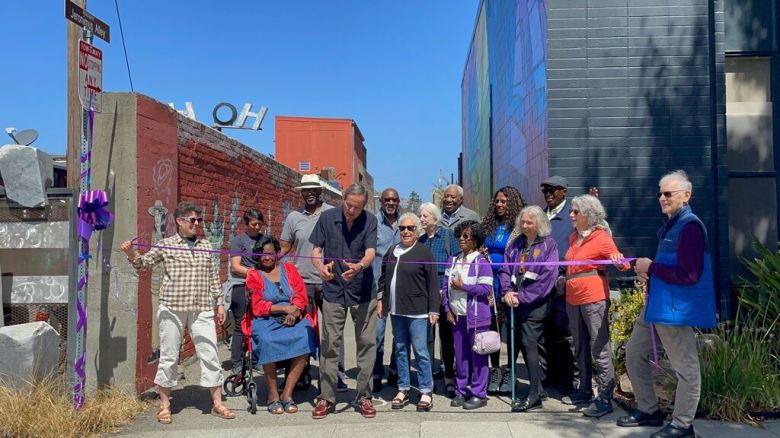
 Wayne Jeronimus, flanked by former colleagues, members of the Berkeley Path Wanderers Association and Berkeley residents, cuts the ribbon for the West Berkeley alley that now bears his name on Aug. 30, 2026. Credit: Daniel Ekonde/Berkeleyside
It’s likely that not many local residents know that until recently there was a street in Berkeley named 5½ Street. Last year, however, the alley running parallel between Fifth and Sixth streets, and between Camelia and Virginia streets, was quietly renamed by the city from 5½ Street to Jeronimus Alley. And, over the weekend, a ribbon-cutting ceremony sealed the deal.
Wayne Jeronimus, a longtime, now-retired city official whose work, among other things, helped preserve nine cottages for low-income first-time homebuyers on Fifth Street, said he was “very grateful and honored” to have the former 5½ Street renamed after him. In fact, 37 years ago Jeronimus jokingly requested for the alley to be named for him.
“I appreciate all the people that have worked so hard to get it done,” Jeronimus, who now lives in Arizona, said on Sunday.
The ribbon-cutting was organized by the Berkeley Path Wanderers Association (BPWA), a volunteer-run group that restores and preserves public paths.
A joke that became reality 37 years later
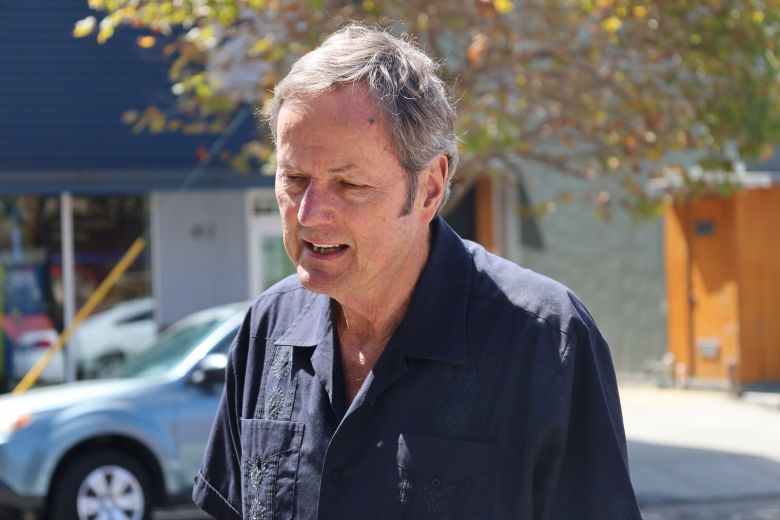 Wayne Jeronimus, who worked on housing for the city of Berkeley, talked about his work there at Sunday’s ribbon-cutting ceremony. Credit: Daniel Ekonde/Berkeleyside
Jeronimus made the joke at a 1988 board meeting of the now defunct Berkeley Redevelopment Agency (BRA) where he worked. Members were discussing how they wanted to recognize employees for their work.
“That’s when I said, ‘Well, if they want to do that, just tell them to name the [5½ Street] alley after me,’” said Jeronimus, who was the agency’s financial project coordinator. The Successor Agency replaced the BRA after its dissolution in 2012. Jeronimus worked on housing rehabilitation, new construction and affordable housing between 1976 and 1999.
Shortly after Jeronimus’ suggestion, and without city approval, his colleagues took matters into their own hands, and posted the first “Jeronimus Alley” sign at the Virginia Street end of the alley. “I don’t even think anyone noticed it,” said Carole Norris, Jeronimus’ colleague at the time. “If they did, they certainly didn’t say anything or do anything about it.”
In an email to the BPWA shared with Berkeleyside, Lucia Mele, another colleague of Jeronimus, recounted how she and the architect who designed the sign drove Jeronimus to see it one evening. “All I cared about was surprising Wayne,” Mele wrote. “And we did!”
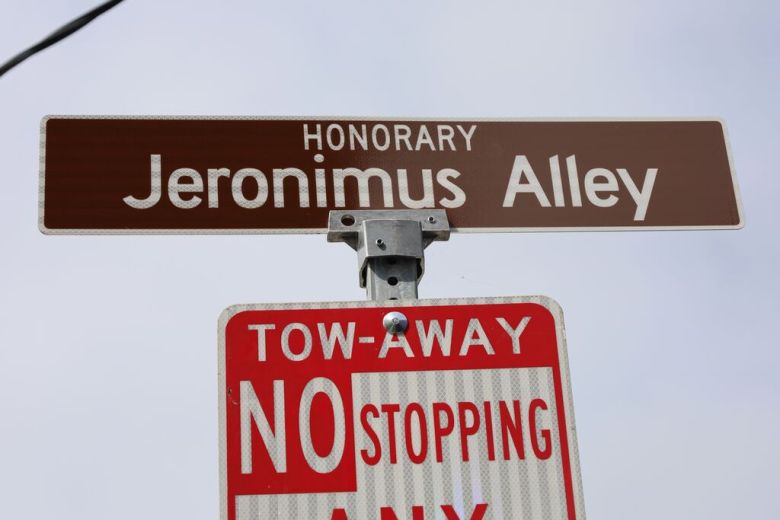 Jeronimus Alley runs parallel between Fifth and Sixth streets, and between Camelia and Virginia streets. Credit: Daniel Ekonde/Berkeleyside
For decades, the alley maintained its 5½ Street name. The campaign to rename the alley gained momentum in 2023 when the BPWA included the renamed alley in its “Berkeley and its Pathways” guide, a specialized street and transit map for navigating the city.
Soon, the BPWA launched a process to have the city formally recognize the alley as “Jeronimus Alley.” “I wrote a proposal and shared it with the Public Works Department, and it brought it to the city,” said Janet Byron, the BPWA’s former president.
Byron said the association learned of Jeronimus’ work in the neighborhood when it collaborated with the Berkeley-based Youth Spirit Artworks to install a 35-foot mural along the alley in 2023, part of an effort to turn the area into a popular spot for murals and art like San Francisco’s Clarion Alley.
Helping low-income people get homes
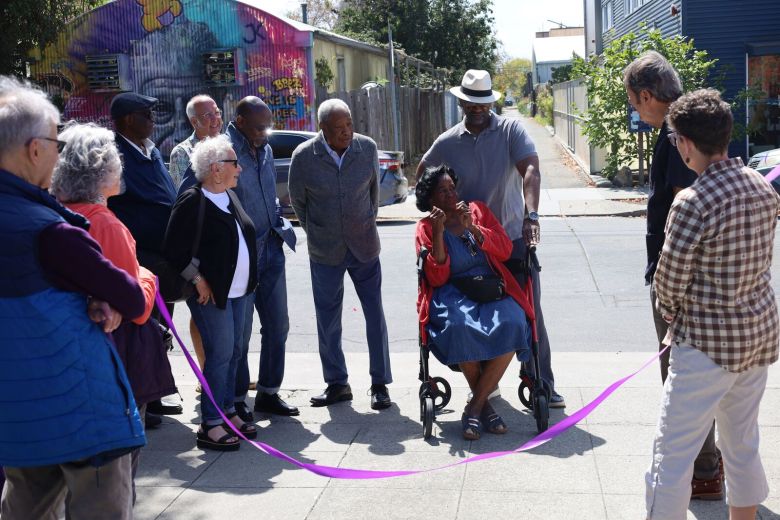 Jean Braxton, seated, meets Wayne Jeronimus, whose office helped her get a loan from the city of Berkeley in 1969. Credit: Daniel Ekonde/Berkeleyside
Jean Braxton, 86, attended the ribbon-cutting on Sunday. Braxton was a single parent and working as a mail carrier in 1969 when she bought a three-bedroom house on Francisco Street and was given a $25,000 loan from Jeronimus’ office to renovate the house.
“I was still low income, and that helped me get what I needed,” she said.
“We were supposed to be loaning to people that were not able to get bank loans, so they could get money from the city of Berkeley,” Jeronimus explained.
Braxton said Jeronimus was a “good man,” who helped people without any racial discrimination. “I’m glad [because] he deserves it,” she said.
The highlight of Jeronimus’ work was when, through the Berkeley Redevelopment Agency, he preserved nine “working-man” cottages slated for demolition.
Through a lottery, his team picked nine low-income, first-time homebuyers to purchase the properties. He said the goal was to keep the houses affordable permanently, “so they [the homebuyers] wouldn’t spend more than 30% of their income on housing.”
Jeronimus said he believed “a lot of Hispanic people” had been displaced before the redevelopment agency took them over.
When Jeronimus retired, he moved to Calistoga with his wife and wrote columns for the Weekly Calistogan newspaper for many years, including a famously titled one, “Berkeley Berzekeley,” where he described the ironic twist of working in liberal Berkeley while he was living in upscale Piedmont.
At 80, Jeronimus is still a jokester, but this time, he’s dreaming a little bigger.
“Next, I want to get my name added to the Kennedy Center,” he quipped.
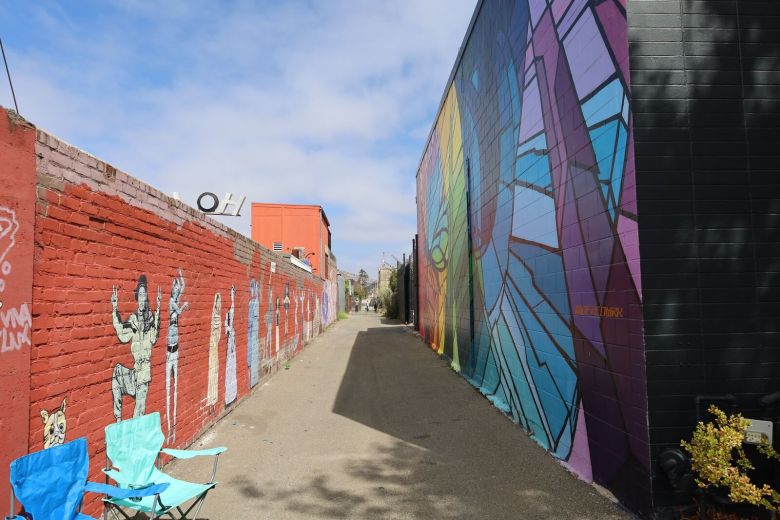 A stretch of the Jeronimus Alley adorned with colorful murals, Aug. 30, 2026. Credit: Daniel Ekonde/Berkeleyside
“*” indicates required fields