
 Justin Sullivan/Getty Images
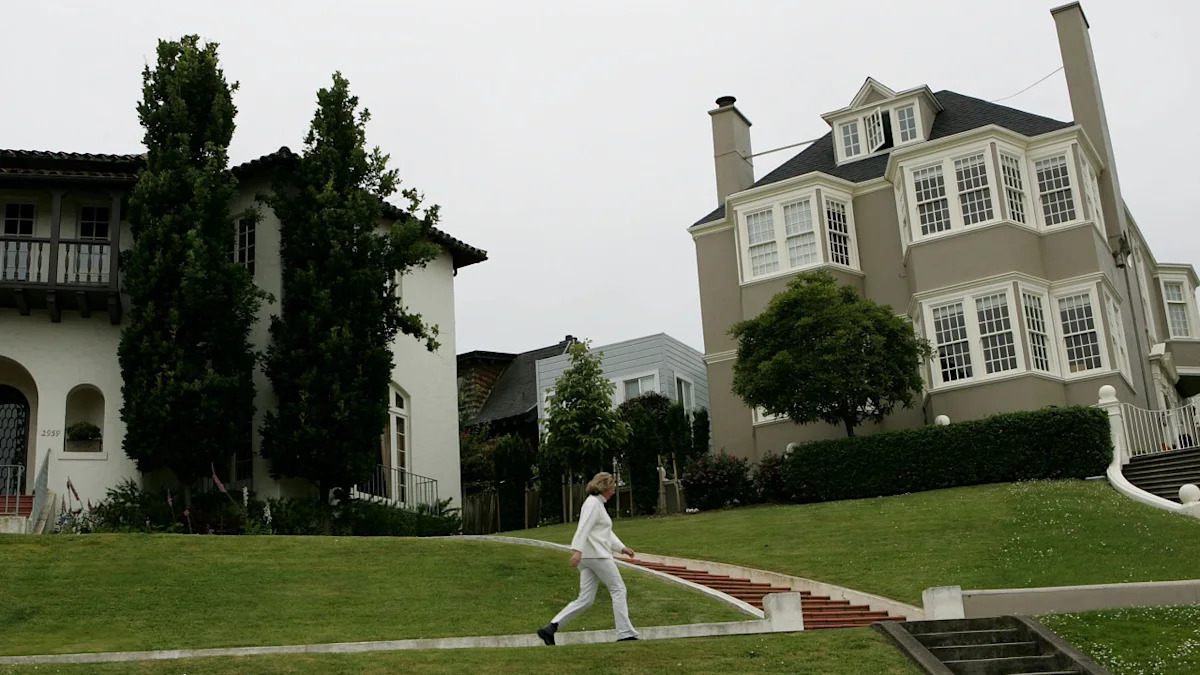
San Francisco’s median home price has been above $1 million since 2014. Now having the money isn’t even enough to buy a house.
Collin Russell, for example, got to an open house two minutes after the doors opened, hoping to buy a home, and there were already 10 people inside.
Must Read
He and his wife moved back to San Francisco in June after two years away for graduate school. He has a new job and good money coming in, but still can’t find a two-bedroom he can afford. He told NPR he couldn’t have timed the move worse.
Russell isn’t alone. In the first six months of 2026, 144 homes in San Francisco sold for at least $1 million over asking price. In the same stretch of 2025, only eight did. These are expensive houses to begin with — the ones that sold that far over ask listed for an average of $3.8 million. A small number of very rich buyers are chasing a supply that barely exists, and it isn’t only happening in California.
Why there’s almost nothing at the top to buy
Start with supply: At the end of June, the entire city had 590 single-family homes and condos listed for sale. Only a fraction of those are large family homes, so buyers who want one end up bidding on the same few properties.
The best homes also almost never come up. Their owners bought long ago, they’re comfortable, and their property tax bills still reflect what they paid back then, so there’s no financial reason to sell, Compass luxury residential agent Ronda Priestner told the New Fillmore.
Redfin found the same thing nationally — owners of expensive homes have a tax incentive not to sell, and many hold old mortgages at rates they can’t get again. Priestner says the result in San Francisco is that these homes reach the market once in a generation.
“Broadway is one of the few streets in America where scarcity is permanent,” she said, referring to the downtown street in San Francisco.
San Francisco is the center of the artificial intelligence (AI) boom, and two companies based there are heading for the stock market: OpenAI filed confidentially in June, a week after Anthropic. Some employees are turning their shares into cash through private sales and loans, and buying before the IPO. Compass wrote in its August market report that “The AI boom has spiked demand, especially for family-ready homes in specific neighborhoods.”
Story Continues
What the bidding looks like from inside
Paul Kitchen, a Compass agent, told NPR that one client’s bid turned out to be one of 50 on a single listing. Money doesn’t solve it either: at the very top of the market, even buyers offering $25 million in cash are still losing.
In August, a 12-acre estate in Hillsborough sold for $70 million, double the town’s record of $35 million set in 2022. Listing agent Jenn Gilson wouldn’t name the buyer, but said the person works in AI. “I definitely think it’s a connection in the AI world,” she said.
Renters are competing the same way. Ally Alessio, 27, and Aidan Cahill, 31, searched from San Diego for months and watched apartments collect 200 inquiries within four hours of going up. They eventually took a two-bedroom at $5,200 a month after a friend checked it for them. David Blosser, who runs leasing at RentSFNow, told NPR that agents he knows have been offered gifts to hand over a unit at a set rent — one renter even offered a new television.
The pressure doesn’t stay in San Francisco. “You can’t buy in California — [you’ve got] to move to Texas,” Compass Chief Economist Mike Simonsen told NPR, arguing that a shortage in one state pushes prices up in others as priced-out buyers leave.
What this means for your money
If you’re worried there’s a chance this will come to your town, the San Francisco version probably won’t.
Nationally, things are quiet — the national median home price is up 2.0% from a year ago to $434,100, and out West, California included, prices barely moved at all, up 0.2% from July 2025.
A milder version is showing up, though. Expensive homes keep climbing while everything under them sits flat. From March through May, the priciest homes nationally rose 4.7% while everything else moved 1.5%. In Tampa, luxury homes went up 15.6%, regular ones fell 0.5%.
Which means if you’re shopping at the top of your own market, waiting for a rate cut won’t help. Cash paid for 26% of July sales, so your competition often isn’t borrowing at all.
And if you’re buying anywhere else, ignore the $70-million headlines. Ask your agent how many months of supply your county has. That’s how long it’d take to sell every home currently listed. Nationally, it’s 4.6 months. If it’s lower, a seller who turns you down may have another offer by next week. If it’s higher, homes are sitting, and turning you down could cost them. That’s how you know whether you can negotiate the price.
What To Read Next
Join 250,000+ readers and get Moneywise’s best stories and exclusive interviews first — clear insights curated and delivered weekly. Subscribe now.
This article originally appeared on Moneywise.com under the title: 144 San Francisco homes sold $1 million over asking in 6 months — up from 8 last year — as AI drives ‘mansion shortage’
This article provides information only and should not be construed as advice. It is provided without warranty of any kind.