
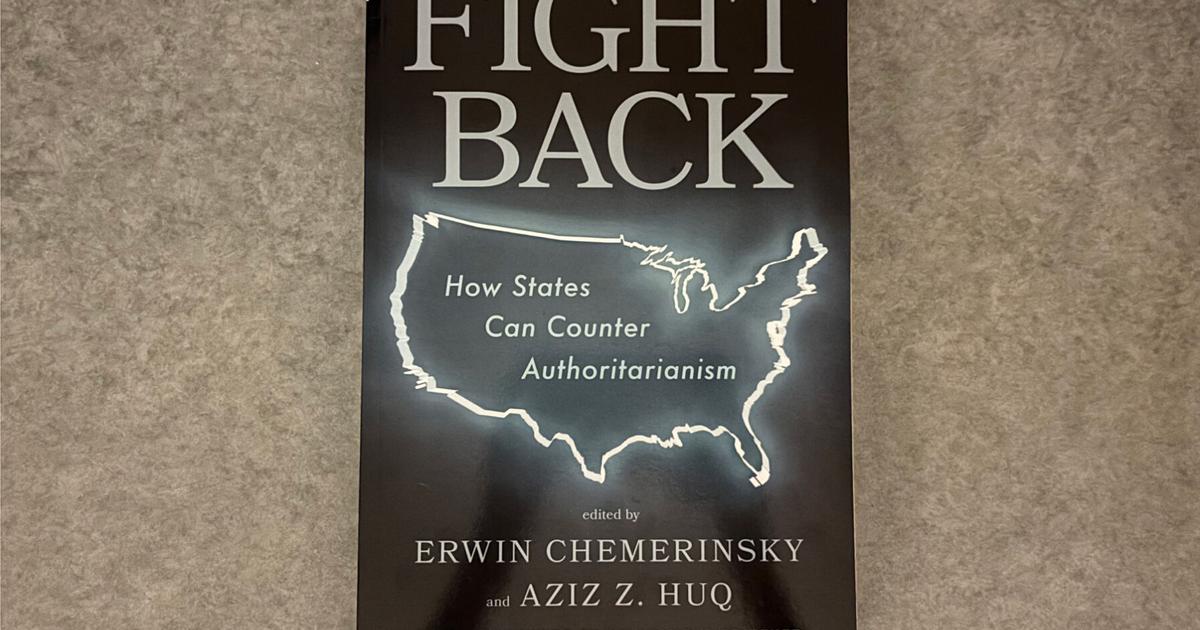
In order to challenge “repressive federal actions,” state governments need to lead the way, according to the speakers at Edley Center on Law & Democracy’s symposium. The symposium looked into the upcoming book co-authored by UC Berkeley School of Law Dean Erwin Chemerinsky, “Fight Back: How States Can Counter Authoritarianism.”
Held at Booth Auditorium, the symposium featured two panels of legal scholars and a fireside chat between Chemerinsky and Washington State Attorney General Nick Brown.
“We’ve never seen the extent of corruption that we’re witnessing with regard to this president and this administration,” Chemerinsky said at the event. “In this context, it’s so important that state and local governments can step up and continue to step up to fight back.”
One of the primary ways to do that is by challenging unconstitutional federal actions — such as illegally terminating grants — in court, Chemerinsky said.
Under Brown’s leadership, Washington has filed 74 lawsuits against President Donald Trump’s administration, challenging everything from tariffs to student loan caps.
“(I) very quickly realized that 90% of the things that I cared about, and just worried about as a resident of my state, were happening in my state capital,” Brown said at the fireside chat. “How much taxes I pay, public safety, healthcare, education, traffic — the things that most of us spend most of our time thinking about — had nothing to do with Congress, and it had nothing to do with the presidency. It had almost everything to do with state government and local government.”
According to Brown, state attorney generals are winning about 80% of their cases against the federal government. Still, Brown says suing the Trump administration is costly and time-consuming, something he said few states have the capacity to do.
For Atasi Uppal, a former UC Berkeley Law lecturer, her motivation for attending the event, and concern of rising authoritarianism, stemmed from her family.
“I have children. I’m a mom, in addition to being an advocate. And, for me, the biggest instinct I have right now is to teach my kids to say something if they feel like what they’re seeing — how they’re seeing others be treated — is wrong,” Uppal said. “I think the seeds of that are so important to plant right now in our youngest generation because who knows how long the impacts of the last two Trump administrations will last.”