
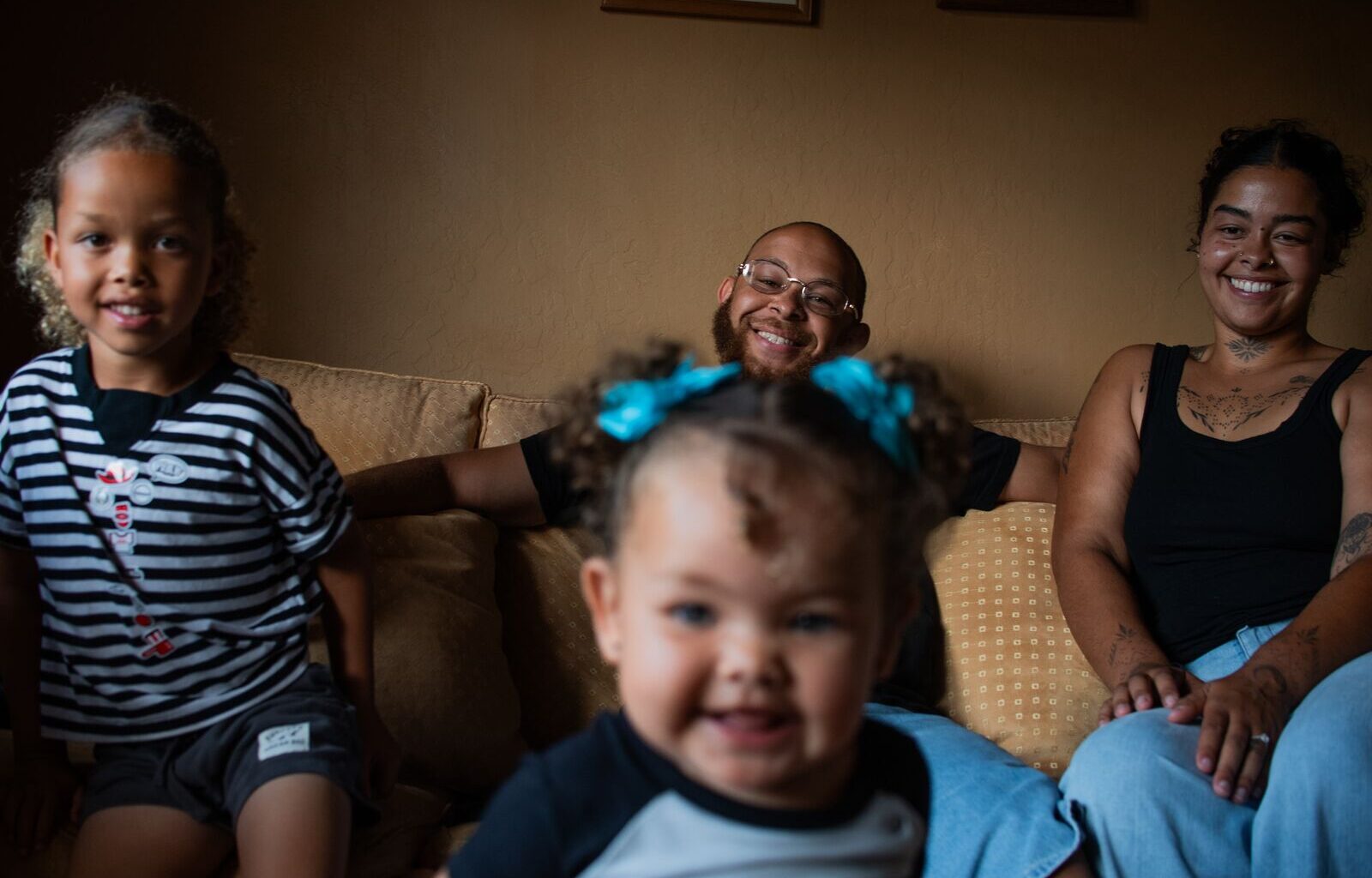
The past two years have been a whirlwind for the Oakland artist Jwalt. The rapper, born Justin Carter Walton, released the album “Every Version of Me” last year, and he has been everywhere — from freestyling alongside rapper Bow Wow on the Sirius XM Radio show Sway’s Universe earlier this year, to performing locally at events like the Temescal Street Fair and LakeFest, to throwing the first pitch at the Oakland Ballers home opener, to his song “Love Myself” reaching No. 74 on the charts. He also graduated from NYU, got engaged to his fiancé Nataya Walton, and welcomed their second child.
It has been quite a journey for the young artist who has been writing poetry since he was 8 years old and launched his professional career while still in high school.
On Aug. 14, Jwalt, 24, released his first spoken-word EP, “How Love Grows,” inspired by his Oakland upbringing and his time as a father to his children Massaiah and Amirah Rae.
“I was moving a lot, traveling a lot, there were a lot of good, powerful things. But, it was also draining,” he said. “After Amirah was born, I was doing a lot of writing, a lot of reflecting on fatherhood, my relationship with my children, and with my father, and what I learned about the perception of fatherhood.”
Jwalt wasn’t sure what to do with all that writing. He thought about a poetry collection, as poetry was what kickstarted his artistic journey as a kid, when he performed at Oakland Unified School District’s Martin Luther King Jr. Oratorical Festival. It was conversations with two friends, the playwright and screenwriter Chinaka Hodge and the actor and producer Daveed Diggs, that convinced him to release the material as a spoken word album.
He teamed up with producer ClayDough — the two had attended Oakland School for the Arts — to work on the project. They pulled in 16-year old singer Abayomi, a current OSA student who competed on season 24 of American Idol for background vocals on one track, “Amirah Rae.”
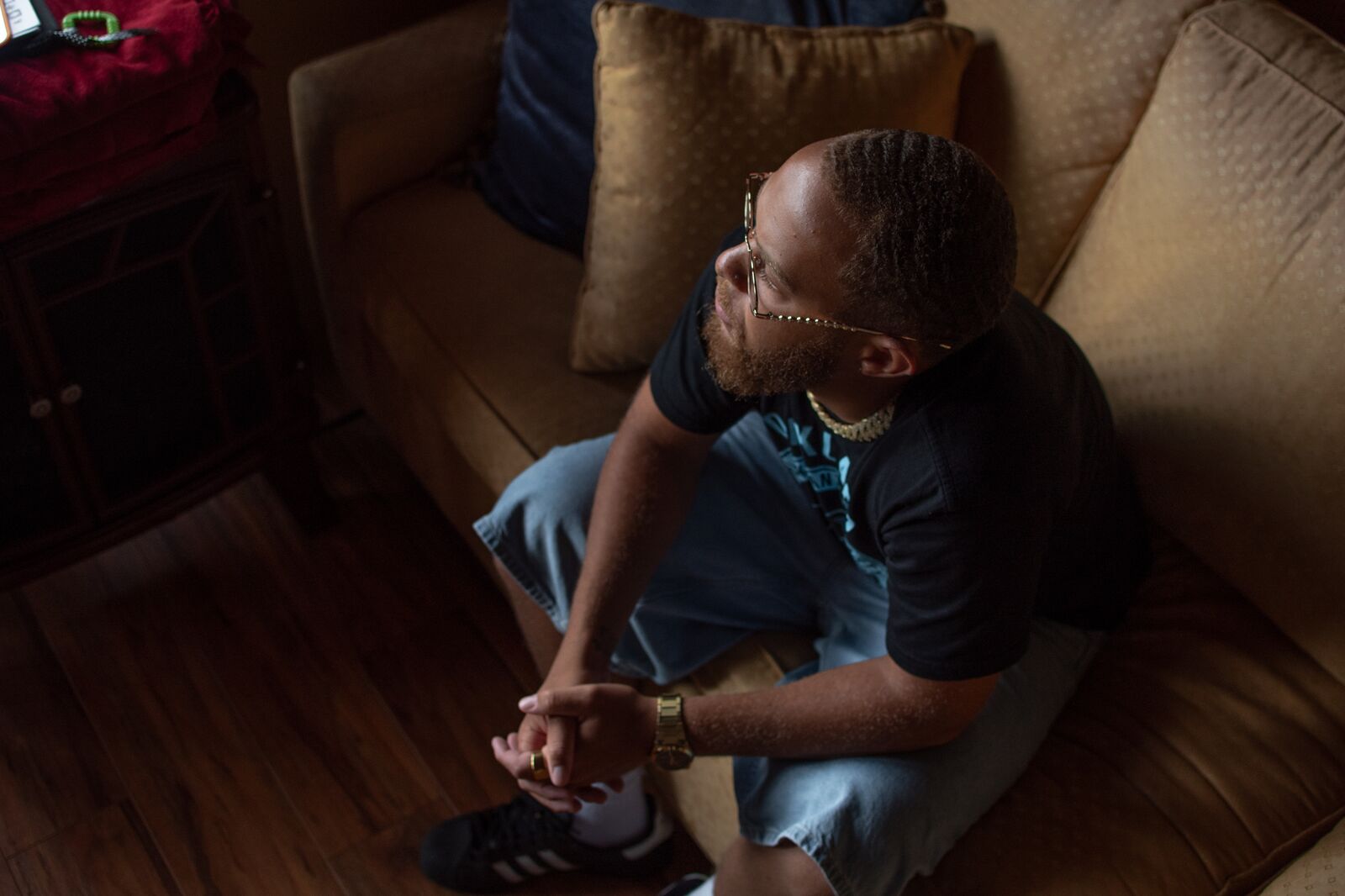 Jwalt’s new project is a spoken-word album that explores Black fatherhood and community. Credit: Ximena Natera for The Oaklandside
Before you were born, I thought strength
Was how long a man could stand without breaking.
But then I watched your mother bring heaven into our home barefoot.
No hospital lights. No waiting rooms
Just breath, warm water, pain, love, and God
Standing quietly in the corner of the room like a witness.
You came into this world in water. Like something ancient,
Like the ocean itself decided to place a miracle in my hands.
Two veteran Bay Area lyricists also participated in the EP, Oakland rapper and community activist Mistah F.A.B. and San Francisco poet laureate Tongo Eisen-Martin, who each contributed their voices to the track “Hood Like This.”
On the day The Oaklandside spoke to Jwalt, he was with his fiancé Nataya and their kids at the Leona Heights home of his maternal grandparents, Tina and Anthony Jones. The home is filled with family photographs, including baby photos of Jwalt, his twin brother Jordan and his youngest brother Trevor, and various wedding photos.
“Whenever it’s someone’s birthday, my grandma prints tons of photos to decorate all around the house,” Jwalt said.
This is the home where the extended family meets every week for family dinner, and where the Joneses raised their own kids, and now watch over their grandkids. The home also serves as the backdrop for the video of the track “Fatherhood.”
“We’ve had Sunday dinner every week for the past 27 years,” Anthony Jones said.
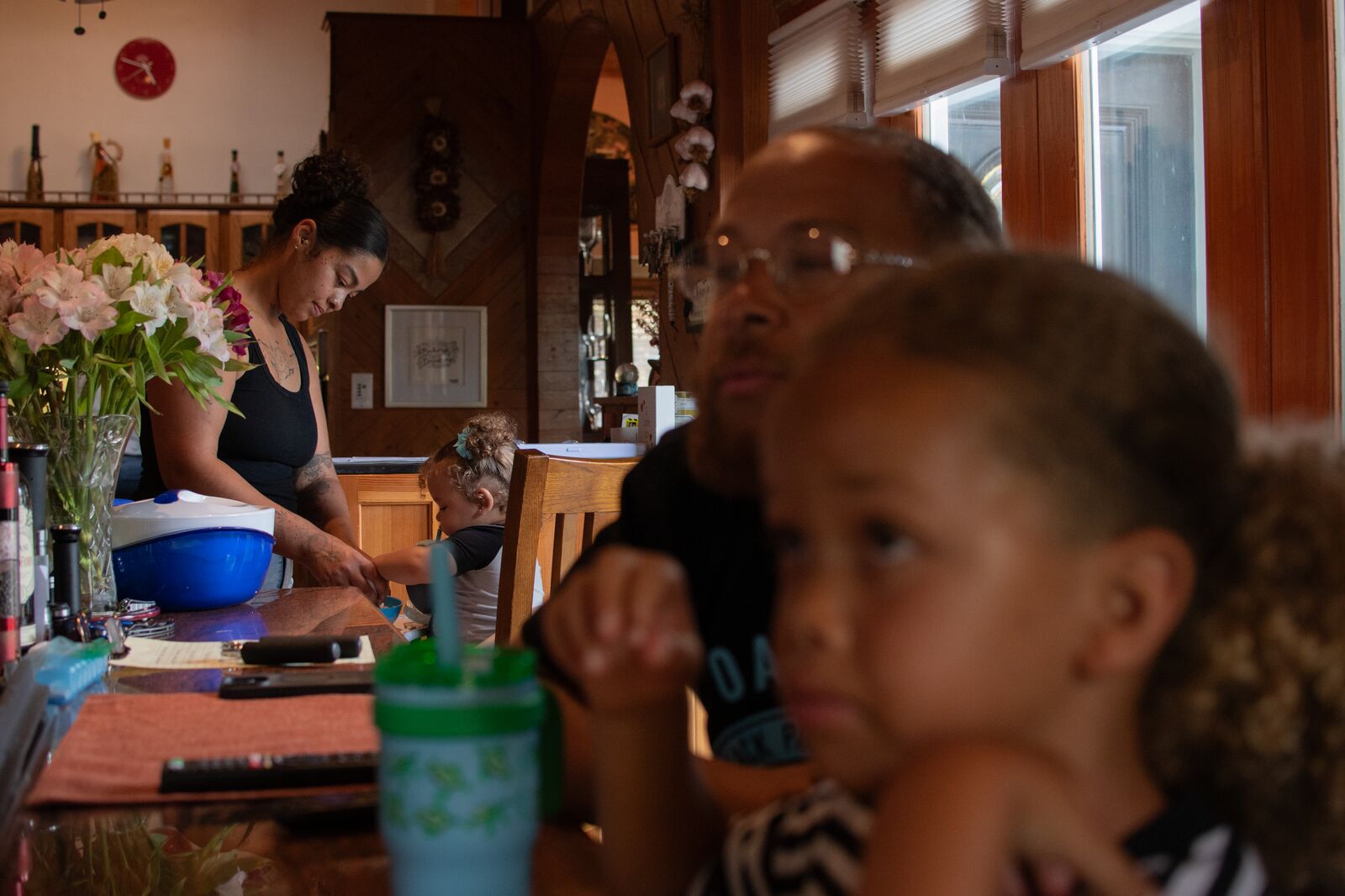 Jwalt sits by his son Massaiah during dinner while his fiancé, Nataya Walton, feeds their one-year-old daughter, Amirah Rae. Credit: Ximena Natera for The Oaklandside
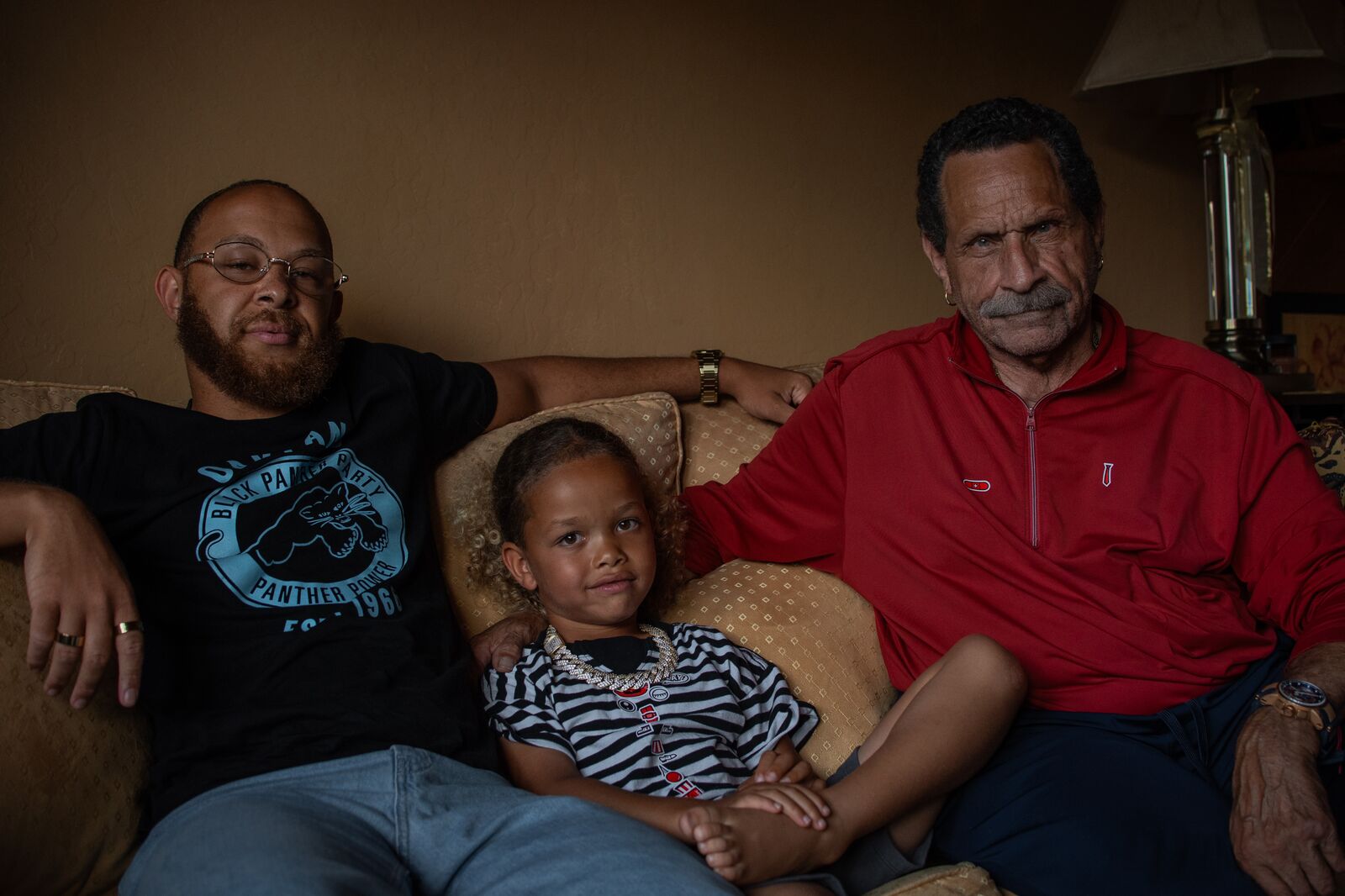 From left to right: Jwalt, his son Massaiah and Anthony Jones, his grandfather, pose for a portrait in Jones’s living room. Credit: Ximena Natera for The Oaklandside
‘Dada, be cool’
“Dada, be cool,” Massaiah tells his dad as Ximena Natera, The Oaklandside’s photographer, starts snapping photos on the patio.
“What should I do?” Jwalt asks his son as he tries out poses.
“Like that, dada,” Massaiah says.
His grandparents are nearby in the kitchen, and Nataya is watching after Amirah Rae as she wobbles around the house.
Jwalt said his maternal grandparents moved here from Baltimore to begin their now three-generation Oakland family. His father’s side of the family is from Southern California.
“Oakland is like no place in the world,” he said. “I’ve been lucky enough to travel all over the world and I still come back to there’s no place like Oakland, no place like home.”
These moments with family are what the new EP is all about.
One of the tracks, titled “My Father’s Hands (Black Fatherhood),” pays tribute to his father Dewayne Walton, recognizing how hard he worked to provide for the family.
I remember my father’s hands.
How they wrapped around my back when I was down,
Fixed broken things around the house,
Held my childhood together without looking for a thank you.
The track includes a recording of his paternal grandfather speaking.
“It’s really special to me to have my grandfather’s voice on the project,” he said. ‘That’s something that’s gonna live forever.”
“My whole project, I see it as a time capsule in a way,” Jwalt said. “It’s something that my kids will be able to go back to and listen to, and get to hear what I say about them, or even hearing about my relationship with my dad, their grandfather, and how that shaped me.”
In another track, titled “Fatherhood,” he touches on the trials, tribulations and joy of being a young father — he first became a dad at 19 — and the need to own up to mistakes, and to be honest and be present.
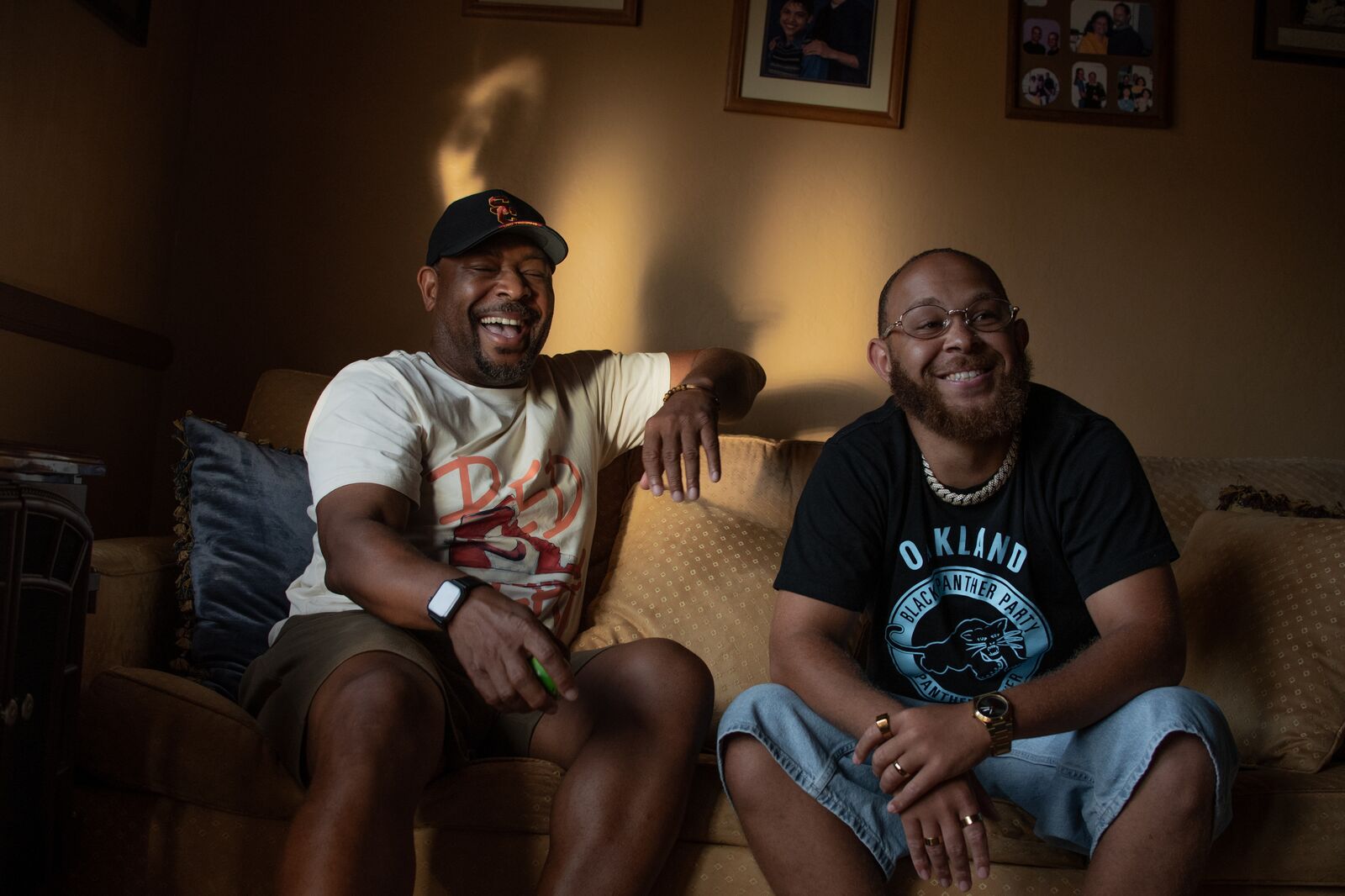 Jwalt and his father, Dewayne Walton. Both men became fathers at a young age, which has help them bond. Credit: Ximena Natera for The Oaklandside
Jwalt said he learned many lessons from his father, Dewayne Walton, about how to navigate his way through life.
“You don’t have to feel like you have to do it by yourself,” he said. “A lot of my family, we lean on each other. Especially, sometimes as men, we feel like we can’t be emotional, or we can’t ask for help. I had good figures in my life that showed that it was OK.”
‘Hard work and faith’’
Jwalt said his father cried the first time he heard the EP.
“He thought it was powerful,” Jwalt said. “Both my parents loved it. They’re very proud of this piece and the work on this album.”
At one point during the photo session with The Oaklandside, he pauses to take a call from his dad.
“I’m doing an interview,” het says. “Can you come by so the reporter can talk to you?”
His parents only live about five minutes away, so not 15 minutes later, his parents and his younger brother Trevor appear. His mom, Alexsandra Walton, quickly scooped up her granddaughter and propped the toddler on her hip.
Her husband Dewayne said the best part of fatherhood was seeing the journey his children have been on.
“The past 24 years have been like flipping through a picture book,” he said. “It’s gone so fast, but I remember every minute detail.”
Dewayne said that his children have strong family roots on both sides of the family. Alexsandra’s parents have been married for over five decades, he said, while his own have been married for over six decades.
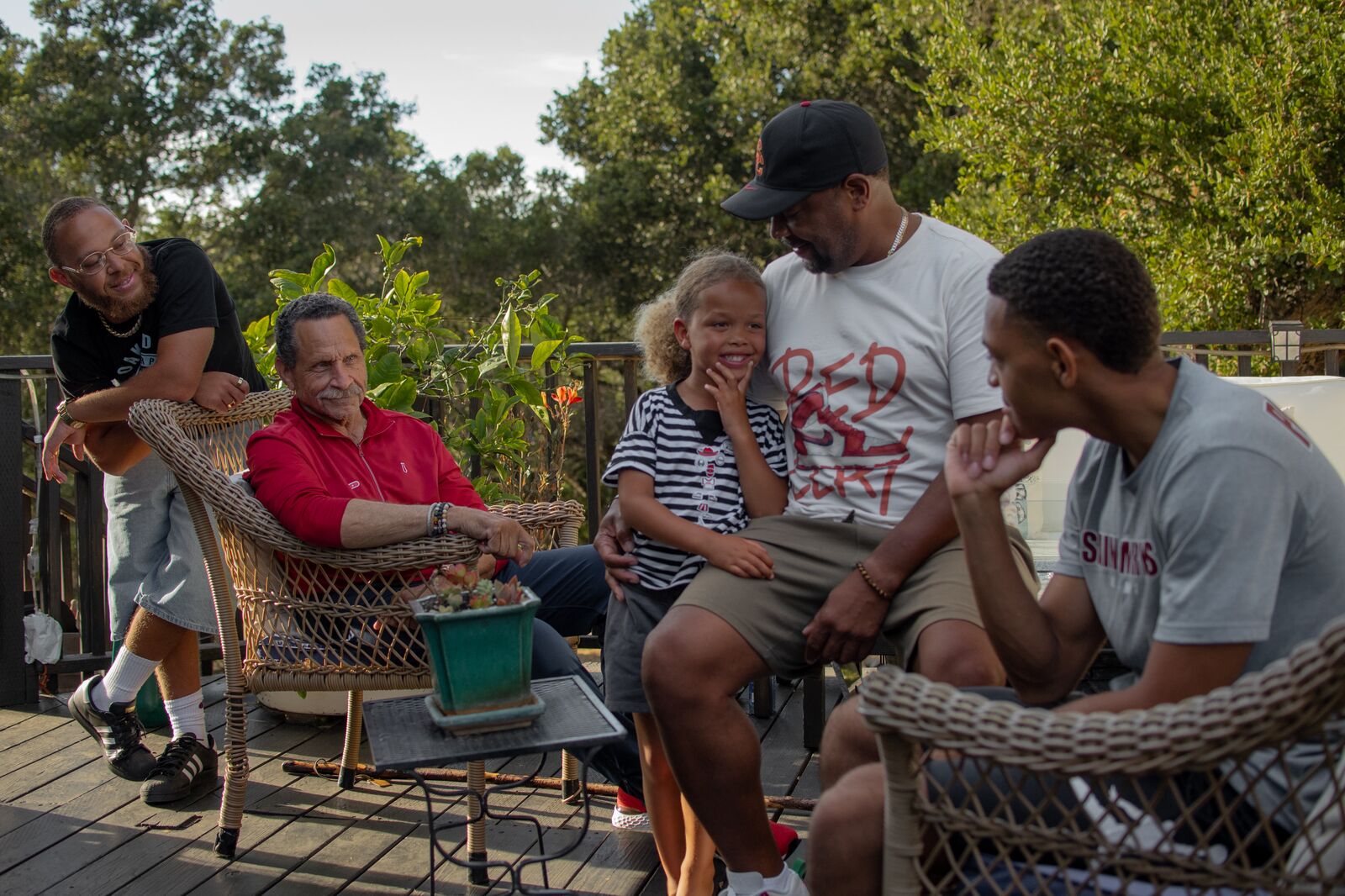 From left to right: Jwalt, his grandfather Anthony Jones, his son Massaiah Walton, his father Dewayne Walton and his younger brother Trevor Walton. Credit: Ximena Natera for The Oaklandside
Faith plays a strong role in Jwalt’s life and the life of his family, and it shows up on the album in the track “Massaiah,” in which he can be heard praying with his young son.
“I just got off the phone with my dad just before I came down here, and he’s always telling me to be thankful and and thank God for what you have because you got to put in the work,” Jwalt’s father Dewayne said. “We are all a very Christian-based family. So, hard work and faith. Those are the two things that we instilled in them now as they’re growing up.”
Jones’ pride in his grandson is evident as he speaks about Jwalt’s accomplishments as a father and as an artist.
“He has stuck to what he wanted to do, and he’s done a really great job,” Jones said. “He’s a great kid.”
“For me, to see how they raise their kids, and I know it comes from the way we raised them, treated them, and they are passing that on — it’s a full circle.”
Jwalt said the lessons he learned from his grandfathers and his father help him serve as a role model as well, not just for his own children but for other Oakland kids, through his work. He likes to give back to all the places that helped him learn his craft, such as Youth Speaks and Youth Radio, where he mentors younger kids who, he said, look like him.
“I’ve always wanted to show that first of all, it’s possible to follow and achieve your dreams,” he said. “But it’s also possible to make it bigger than your city. A lot of folks sometimes get caught up and feel like it’s not possible to leave Oakland. I try to be a testament to show that it is possible. You can do what you want to do. You just got to put in that work.”
Now, raising a second child back home in North Oakland, he feels more grounded, and more established.
“At the end of the day, because my family is what I always come home to, it’s what always rebalances me,” Jwalt said. “My family keeps me grounded, and it also motivates me to keep on going.”
“*” indicates required fields