
By Fritz Hahn and Maxine Wallace, The Washington Post
Every American state has designated an official flower, as have the five inhabited U.S. territories and Washington, D.C. Their choices, whether selected by state legislatures or voted on by schoolchildren, are America in miniature: wildflowers on the Midwestern plains, colorful plants from tropical islands and orchids in Minnesota bogs. Some are sweet-scented blooms that fill the branches of Southern trees.
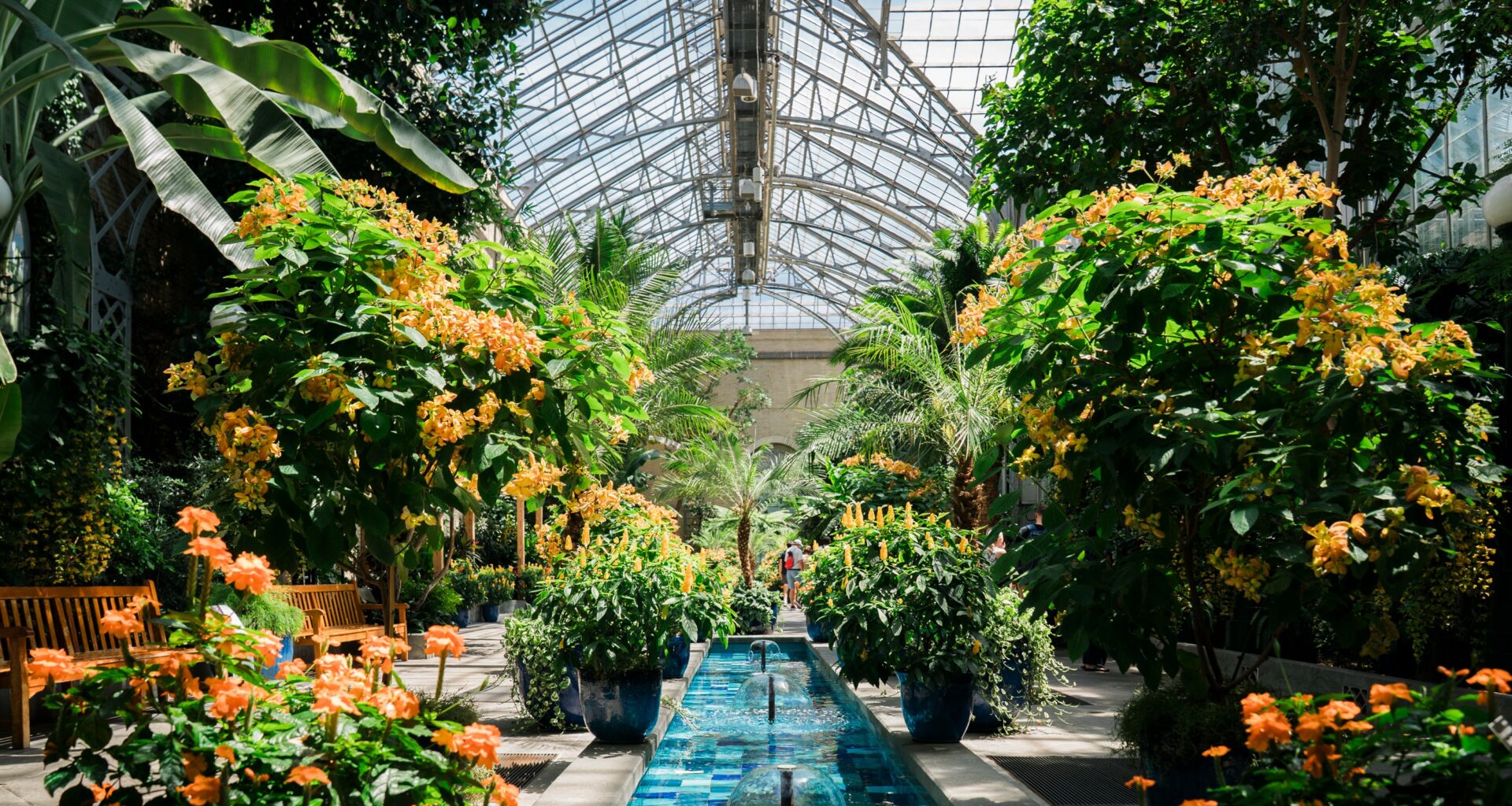
This year, as part of its celebrations of America’s 250th anniversary, the U.S. Botanic Garden has opened an exhibition called “America’s State Flowers,” extolling the beauty and variety of these “official” plants. The display, indoors and out, is constantly shifting, as flowers – particularly the outdoor specimens – come in and out of bloom. But an exhibit case near the entrance to the Conservatory shows re-creations of all 56 official flowers crafted from paper by artist Emily Paluska.
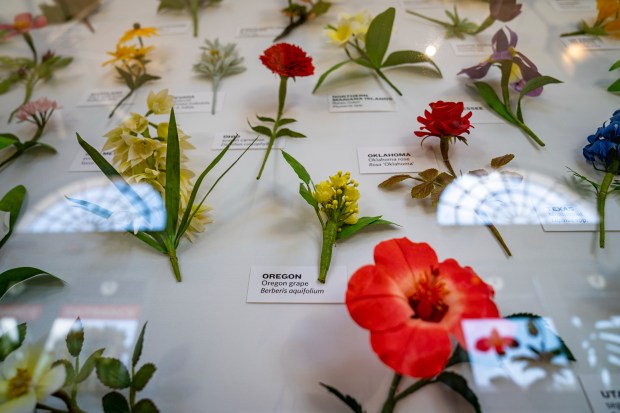 A display by botanical artist Emily Paluska features all 56 official flowers made out of paper. (Maxine Wallace, The Washington Post)
As summer wanes, and along with it blooming flower gardens, we celebrate the beautiful blossoms that brighten our forests, yards and homes.
The Conservatory exhibit is open daily in Washington , D.C. through Oct. 12. For a complete list of state flowers featured in the exhibition, visit usbg.gov.
American Dogwood
North Carolina and Virginia
The dogwood is native to the East Coast of North America and has a long history in Virginia: Thomas Jefferson grew flowering dogwood trees at Monticello and sent seeds to friends in Paris. It became the state flower in 1918 and then the state tree in 1956. North Carolina’s legislature selected it in 1941, calling the plant “a radiantly beautiful flower which grows abundantly in all parts of this State.”
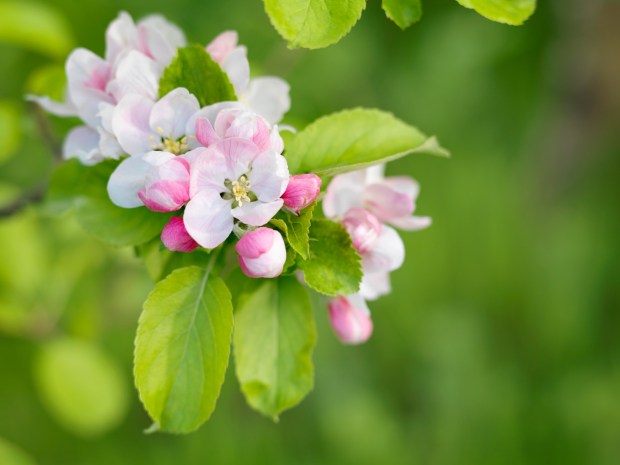 The apple blossom was designated Michigan’s state flower in 1897. (Michigan Secretary of State’s office)
Apple Blossom
Arkansas and Michigan
Michigan and Arkansas chose their state flowers within a few years of each other – 1897 and 1901, respectively – and both decisions reflect the importance of a cash crop. Michigan has long been a center of apple production, ranking second in the United States as recently as 2024, while Arkansas once grew 400 varieties. Still, despite the bottom line, no one can deny the appeal of the plant’s sweet, floral fragrance and delicate white blossom.
Black-eyed Susan
Maryland
The sunny yellow leaves and stumpy black cone of the black-eyed Susan are a familiar sight in Maryland gardens, as the hardy flower is a favorite of butterflies and other pollinators. It’s a popular symbol of the state, since its colors mirror the two black-and-gold fields on the state flag, and during Preakness Stakes weekend, it lends its name to both a horse race and the official cocktail.
Bluebonnet
Texas
The bluebonnet became the state flower of Texas in 1901, beating competitors including the cotton plant and pear cactus. Its soft blue petals are a familiar sight along the Lone Star State’s roadways, thanks to a beautification program established by the Texas Highway Department almost a century ago.
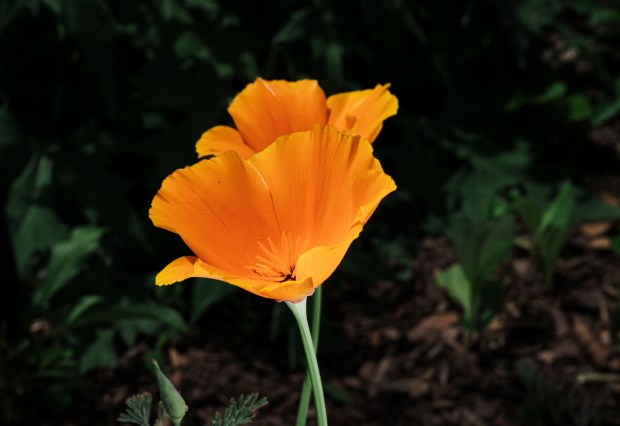 The California Poppy was chosen the state flower in 1903. (Maxine Wallace/The Washington Post)
California poppy
California
Images of the golden poppy greet everyone driving into the Golden State, as the orange flower is featured on “Welcome to California” signs and scenic route markers. It found viral fame in 2019, when a superbloom of poppies in Southern California’s Walker Canyon led to overwhelming crowds of Instagrammers that was dubbed the “poppy apocalypse.”
Camellia
Alabama
The camellia is actually Alabama’s second state flower. The goldenrod was the state symbol from 1927 to 1959, when a group of camellia growers lobbied to change the state symbol. They argued that the goldenrod “was a weed,” according to a historic marker outside Alabama’s state capitol, where dozens of colorful camellias are planted. Two varieties of camellias have been named after Alabama governors Lurleen B. Wallace and Kay Ivey.
Coast rhododendron
Washington state
Washington was the first state to designate an official flower. In 1892, the women of Washington voted for the coast rhododendron to be featured in a floral exhibit at the 1893 World’s Fair in Chicago. (The Washington legislature’s website notes that this election took place before women had the right to vote.) The decision was codified by the legislature in 1959.
Columbine
Colorado
Colorado schoolchildren voted to make columbine the state flower in 1899. The blue-and-white wildflower is notable for its distinctive spurs that point backward, away from the stamen and petals.
Flor de maga
Puerto Rico
The flor de maga tree is endemic to Puerto Rico, meaning that it grows naturally nowhere else in the world. Its large, cup-shaped flowers, in striking shades of pink and red, became the national flower of Puerto Rico in 2019, though it has long been a symbol of the island’s character.
Instead of an example of a flor de maga, the Botanic Garden has a red hibiscus flower on display. The garden tried to acquire a flor de maga for the exhibit, but because it grows on trees, transportation would have been difficult. Instead, says Devin Dotson, the Botanic Gardens’ senior communications specialist, “we’ve chosen a cousin species. It’s a very good visual representation.”
Flores mayo
Northern Mariana Islands
The fragrant flores mayo, or plumeria flowers, are a symbol of the Northern Mariana Islands, featured on the flag of the western Pacific territory and used in head garlands by the islands’ Carolinian people.
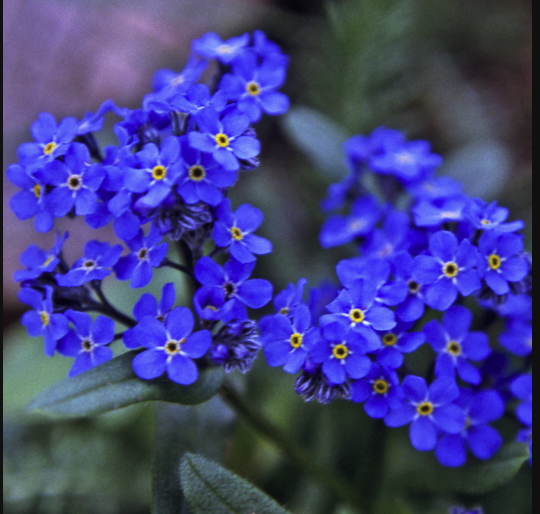 The Alpine Forget-Me-Not was made the territorial flower in 1917 and affirmed as the state flower in 1959, when Alaska joined the union. (U.S. Forest Service)
Forget-me-nots
Alaska
The familiar blue flowers of the forget-me-not, which was selected as the territory’s floral emblem in 1917, was the inspiration for the blue field of Alaska’s flag, adopted in 1927. The emblem and the flag were used for decades before Alaska became the 49th state in 1959.
Iris
Tennessee
In 1973, when the Tennessee General Assembly named the iris the “official state cultivated flower,” they failed to specify a color and species. According to the Tennessee secretary of state’s office, the purple iris is considered the state cultivated flower “by common acceptance.” Schoolchildren selected the passion flower as the state flower in 1919, but the legislature overrode their vote in favor of the iris in 1933. The passion flower was later designated the state wildflower.
Magnolia
Louisiana and Mississippi
The large, showy white flowers of the magnolia tree and their heady perfume have become potent symbols of the South, referenced in films as diverse as “Gone With the Wind” and “Steel Magnolias” and appearing in the titles of works by Langston Hughes and Zora Neale Hurston. The flowers are the official state symbols of Mississippi – nicknamed “the Magnolia State” – and Louisiana, with both states choosing the magnolia in 1900.
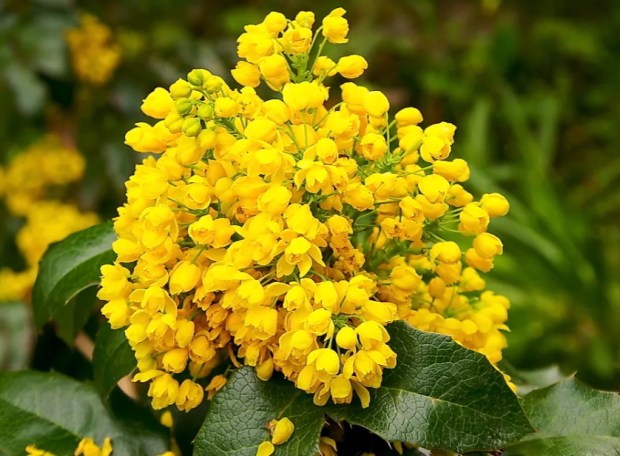 The Oregon Grape is not a true grape but an evergreen shrub with holly-like leaves. It was designated the state flower in 1899. (U.S. National Park Service)
Oregon grape
Oregon
Sorry, wine lovers, the Oregon grape is not a true grape but an evergreen shrub found in the Pacific Northwest and California. The plant features bright yellow flowers and holly-like leaves. Among its many uses: The blue-black grapes can be made into jelly, and Native Americans produced a decorative yellow dye from its bark and roots.
American pasqueflower
South Dakota
“The blooming of this lavender flower is one of the first signs of spring in South Dakota,” says the secretary of state’s website. The prairie wildflower’s early growing season is one of the reasons it is also known as the Easter flower and the May Day flower. But although this member of the buttercup family is beautiful to look at, be careful: All parts of the plant are toxic.
Peony
Indiana
The peony replaced the zinnia as the state flower of Indiana in 1957. Although peonies aren’t native to Indiana, the large, fragrant blossoms are cultivated across the state in a variety of colors. (The law did not specify any color or variety as the “official” peony.) It is traditionally used to decorate graves on Memorial Day.
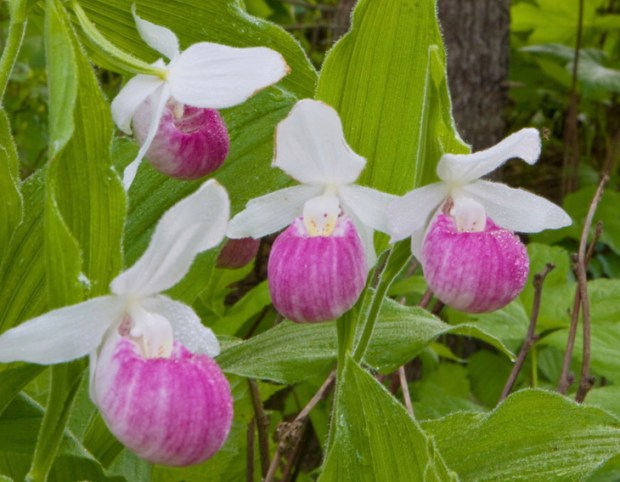 Found in bogs and swamps, the orchid can live up to 50 years. It was designated Minnesota’s state flower in 1902. (Minnesota Secretary of State’s office)
Pink and white lady’s slipper orchid
Minnesota
Minnesota is the only state to select an orchid as its state flower, choosing the pink and white lady’s slipper in 1902. Found in bogs, swamps and fens, the plant can live up to 50 years. If you see one in the wild, take nothing but pictures: Minnesota state law makes it illegal to pick flowers or uproot the plants.
Puti tai nobio
Guam
Guam’s flower is also known as the “paper flower,” because of the crinkled texture of the vibrant pink, purple, red or orange bracts (leaves) that surround the small, delicate white flowers. In the local Chamoru language, it is called “puti tai nobio,” which is translated as “it hurts not to have a boyfriend.”
Rose
Iowa, New York, North Dakota, Oklahoma and Washington, D.C.
While four states and the District of Columbia have claimed the rose as the official flower, each has selected different varieties. Georgia chose the Cherokee Rose; Iowa the Wild Rose, North Dakota the Wild Prairie Rose, Oklahoma the Oklahoma Rose and D.C. the American Beauty Rose. New York kept it simple, naming the rose “in any color or combination of colors common to it” in 1955.
Scarlet carnation
Ohio
President William McKinley was a lover of the fiery red scarlet carnation, wearing one in his lapel for good luck daily throughout his political career, which began in his home state of Ohio. McKinley was shot in Buffalo in September 1901 – an Ohio historic marker claims it was shortly after giving away his carnation “to a young admirer” – and died a week later. Ohio named the scarlet carnation the state flower in 1904 “as a token of love and reverence” for the fallen president.
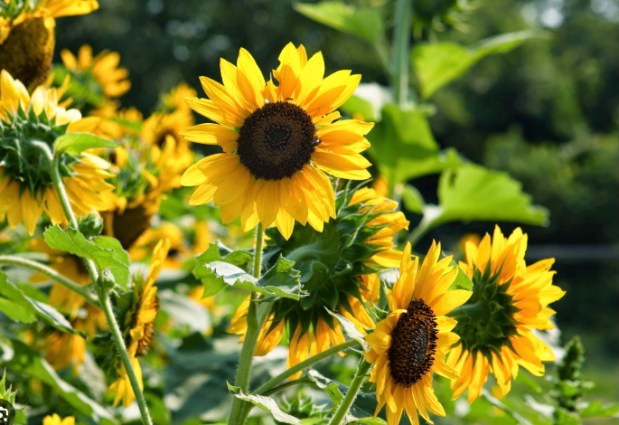 The common, wild native sunflower was designated Kansas’ official flower in 1903. (Kansas State University extension)
Sunflower
Kansas
Kansas is known as the Sunflower State, thanks to fields of the towering flowers filling its prairies, and both its state flag and state banner prominently feature golden sunflower heads. It’s not surprising to learn that Kansas had a state flower – you guessed it, the sunflower – more than two decades before it had a state flag.
Sweetbay magnolia
Georgia
When the Georgia legislature approved the Cherokee rose as its state flower in 1916, it was under the impression that the white-and-gold flower was native to Georgia. In fact, it was an invasive species from Southeast Asia. Earlier this year, a bill replaced the Cherokee rose with the white flowers of the sweetbay magnolia, an evergreen tree native to Georgia that, according to the Georgia Native Plant Society, is a host for the Eastern tiger swallowtail (the state butterfly) and other important pollinators.
Violet
Illinois, New Jersey, Rhode Island and Wisconsin
Four states have species of violets as their state flower. Blame schoolchildren, who voted for it in Rhode Island (1897), Illinois (1907) and Wisconsin (1909), though the Rhode Island legislature didn’t formally approve the decision until 1968. New Jersey made the violet its state flower in 1971, though the state says it “has considered the violet as the state flower since 1913.”
White pine cone and tassel
Maine
When it came time for Maine to choose a state flower, the Maine Floral Emblem Society put forward three candidates: The apple blossom, the goldenrod and the white pine cone and tassel. The pine cone and tassel won the popular vote, the Smithsonian notes, “despite the fact that botanically, the White Pine Cone and Tassel is not a flower.” The legislature approved the result in 1895. The cones and tassels – a cluster of needles – grow on the Eastern white pine, the largest conifer in the northeastern United States.
Yellow elder
U.S. Virgin Islands
Known by multiple names, including ginger Thomas and fever bush, the yellow, trumpet-shaped flowers of the yellow elder attract hummingbirds, bees and butterflies. Different parts of the plant are used in traditional medicine.
Yucca
New Mexico
Drought-tolerant yucca plants are a common sight in New Mexico’s deserts. Some species can grow 30 feet tall, crowned with clusters of flowers, while others are closer to the ground with long, swordlike leaves. It had many uses for Native Americans in the region: Ropes and bow strings were made from the fibrous leaves, fruit and flowers were consumed, and roots were turned into soap.