
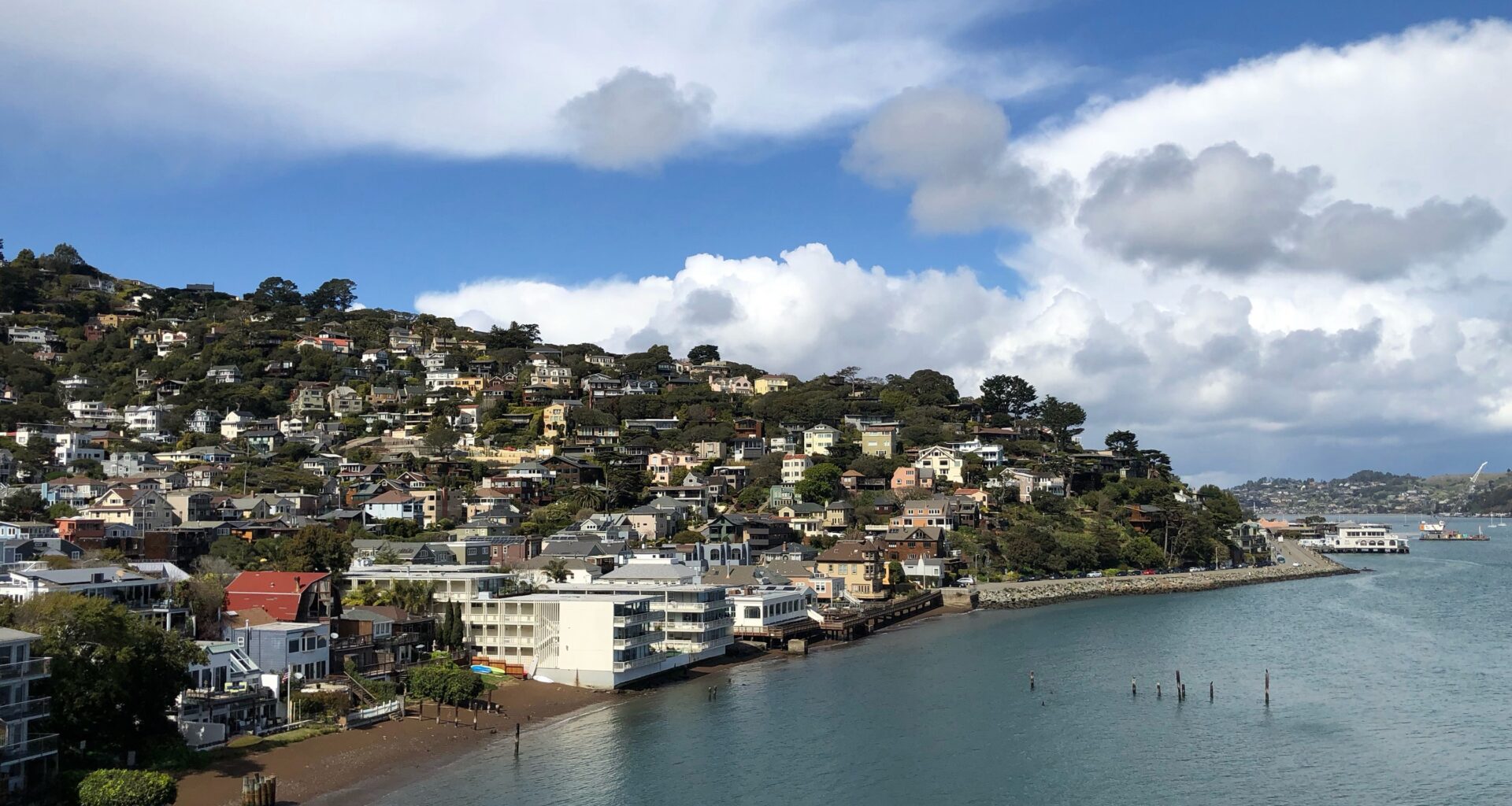
Sausalito might create a special financing district to pay for infrastructure improvements.
The City Council created a committee Tuesday to confer with regional officials about starting an “enhanced infrastructure financing district,” or EIFD.
The districts capture a percentage of local tax revenue that otherwise would be allocated to governmental bodies outside the city. The funds are used for long-term projects.
“The fundamental purpose of the enhanced infrastructure financing district is to allow the increased taxes received from new development or increased property tax assessment to allow a greater proportion of those dollars to stay local,” Sausalito Mayor Steven Woodside said. “That’s the key.”
“The issue is, do we want to set in motion approaching the county, approaching the fire district, and saying to them, join with us so that we can address our infrastructure needs?” he said.
The council appointed Woodside and Councilmember Joan Cox to reach out to Marin County Executive Derek Johnson and the Southern Marin Fire Protection District.
Special financing districts can vary in purpose but must be used for infrastructure intended to last 15 years or longer, said Brandon Phipps, the interim city manager.
A district, for example, can focus on mitigating shoreline sea-level rise, a major challenge in Sausalito, or have a broader community focus such as public safety, transit or housing.
Once established, the districts allow municipal governments to retain a greater share of locally collected taxes and fees. The districts can also issue bonds or loans for capital projects.
“Four features are worth holding onto,” Phipps said. “First, it imposes no new tax and no new fees on property owners. Second, the city keeps local control. Third, it’s a long-term tool able to operate for up to 45 years from its first bond or loan. And fourth, it can be formed without an election unless 25% or more of affected property owners or residents protest.”
“A few guardrails matter here,” he said. “An EIFD cannot capture the school or any other educational agency share of the property tax. So schools are held harmless.”
Woodside gave the example of the possible sale by the federal government of the large dilapidated World War II “machine shop” warehouse in the Marinship district.
“So, for example … somebody buys it suddenly,” he said. “Right now the city gets 11% of those new tax dollars. … It’s possible to increase that percentage substantially.”
During public comments, several speakers said the special district’s impact would be limited in the Marinship area unless longtime development restrictions were amended.
In the Nov. 3 election, Sausalito voters will decide on Measure X, a citizens initiative that would ease 40-year-old zoning restrictions in the Marinship area and the city’s central waterfront.
“When you look at the tax base and the yield of that land, it’s severely restricted by the land-use regulatory framework,” said Curtis Havel, Clipper Yacht Club harbormaster.
“It’s not economical to build anything in the Marinship today,” said Adrian Brinton, a Measure X co-author and one of four City Council candidates seeking two seats in the election.
“If we do this EIFD and we don’t do Measure X, it’s kind of a waste of time,” he said.
During council discussion, Cox, who is seeking reelection, said an EIFD could help the Marinship area by financing “improvements in a public-private partnership with property owners.”
Cox suggested, and the council agreed, that the city wait until after the November election to formally start the process of creating the districts.
But as a first step, she and Woodside said they would gauge the interest of the county executive and the fire district.
“I volunteer to assist in any way,” she said. “I will absolutely reach out.”