
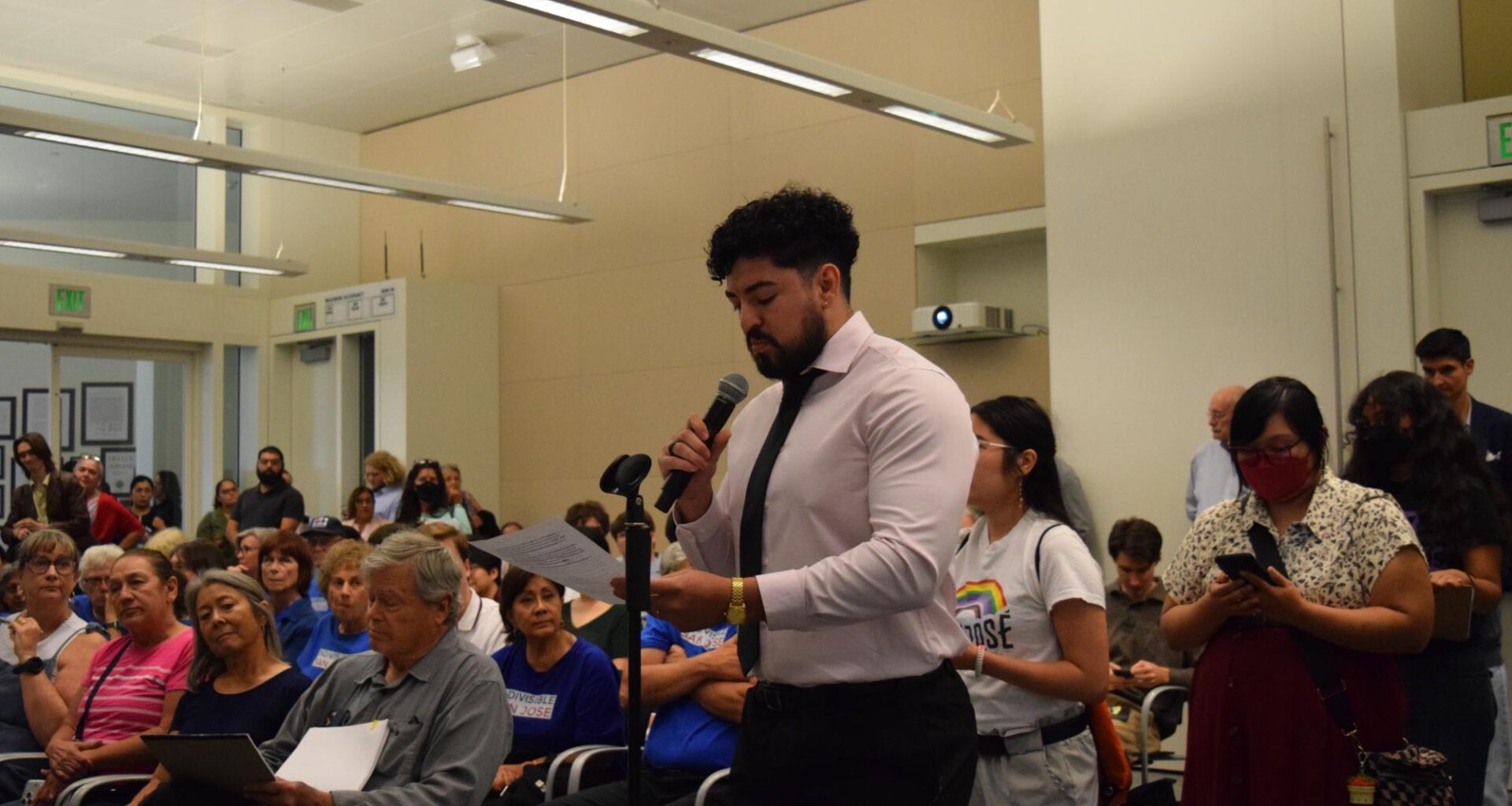
Over 100 San Jose residents recently contested data center implementation at a community listening session, calling for a temporary halt on data center activity in a meeting held at San Jose City Hall on Wednesday, Aug. 19. The meeting was the first listening session inviting residents to give feedback on future data center regulation. Amid rising debate over the environmental and public health impacts of data centers, residents cited both statistics and personal experiences with public health.
San Jose currently has 57 data center sites, with several more applications being reviewed for future consideration. While private developers build the centers, Deputy City Manager Manuel Pineda says the city evaluates proposed projects. Although the City Council ultimately makes the final decisions based on city policy, residents are able to provide their respective input for the data centers.
“We wanted to make sure that we came up with standards that put it all in one place so it’s easier for the community to understand and follow,” Pineda said. “We’re really going to listen to people, to their concerns, their feedback, what they would be looking for in standards — even beyond what we do today.”
Lack of inclusion of Residents in Decision-Making
Many residents believe that the city has not provided sufficient opportunities to voice their concerns. Lori Katcher, who spoke at the meeting and is a staff organizer for her local Showing Up for Racial Justice chapter, points out how residents were only given 60 seconds to speak. She says due to the high turnout, attendees who weren’t speaking were redirected to an overflow room, which made her question the sincerity of the city’s outreach.
“It absolutely matters that residents be given a chance, and it needs to be more than tonight,” Katcher said. “It’s obvious the administration wasn’t prepared for how many people were going to show up, which concerns me a little bit. Are they aware or not of the realities of the concerns of everyday people in San Jose and Santa Clara County? If you’re not prepared to receive the community in appropriate ways, then do you really want their input?”
Cousins Jariah Jaug and Althea Lanh, lifelong residents of San Jose who live near data centers, agree with Katcher’s sentiment. While both approve of San Jose’s public outreach, Jaug and Lanh believe there is room for improvement. Jaug notes that most city council meetings or information sessions took place during weekdays, making it difficult for people who work at that time to attend despite being passionate about the issue.
“They were approving data centers around four or five years ago, and they’ve never had public comments like this,” Jaug said. “It’s a little too late, but I’m happy they’re finally doing it. The city staff is trying their best, and this is something new and unique to them. This is just such a controversial issue. They don’t know how to handle this amount of public engagement.”
Concerns Regarding Environmental Impact
Among many reasons why data centers remain a controversial issue, rising electricity bills, endangerment of water supplies and air pollution rank highest. Currently, decisions about where to implement data centers depend on direct access to power grids and immediate water supplies, rendering neighborhoods ideal.
“To me, it seems like the potential and the impact of these data centers in our communities deserve so much more community input,” Katcher said. “We’re the ones that are going to be living here. We’re going to be the ones living with the water, the air, the sound, the noise, not to mention the animals and the environment around us.”
Lanh wishes San Jose dedicated more resources and funding to other areas of focus rather than on data centers. For example, she recognizes that affordable housing is a main area of concern for many San Jose residents, with San Jose being ranked the least affordable city for first-time buyers.
“We should be using our time and resources to be doing other things versus spending all this time on making data centers,” Lanh said. “We have so much open space and land in the city of San Jose, and so tech corporations are just going to keep coming and squeezing anything out of the city. If that means more data centers, that’s what they’ll do.”
Data centers across the U.S. Interactive tool courtesy of OpenStreetMap
Value of Resident Contribution
Pineda, who previously hosted many community meetings while acting as deputy director for the Department of Transportation in San Jose, emphasizes the value of input from residents. He explains how residents can be helpful in the decision-making process because their experience allows them to offer feedback that can’t be fully recognized from non-community members.
“One thing I always acknowledge is that the residents are the experts in their community, because even though I lived here most of my life, I am not in their community 24/7 like they are,” Pineda said. “I want to make sure that I’m listening to them intently because they might be seeing something that I might not. They’re going to have that day-to-day life experience that I don’t have.”
Ellina Yin, CEO and founder of civic-tech nonprofit, Dreaming Collaborative, works specifically on making civic participation easier to understand, giving residents an opportunity to make the impact that Pineda values. They attend meetings such as the San Jose listening sessions and translate that into civic education for people who may be unfamiliar with public comment or meeting agendas. Yin believes that public feedback is critical and impactful, recognizing that the concerns of residents are not necessarily based on an anti-technology mindset, but rather geared toward ensuring a healthy quality of life for the city.
Moving Forward
Going forward, Pineda explains the council will synthesize the comments they receive to decide which suggestions to incorporate. He adds that they will host small group discussions to gather more perspectives before his team ultimately develops the standards and presents them to the council in December. One suggestion from a citizen at the meeting that has already been implemented — the council is expanding the total group discussion capacity from 32 to 64 people. Despite this, Yin and Katcher are still frustrated with the limited opportunities for resident input, since 64 voices still represent only a fraction of a population of about a million.
“The reason we got the community listening session was that people have been using their one to two minutes for the past six months demanding something, and now it’s here,” Yin said. “They’re only doing this because we have been organizing, but it’s still a real opportunity to negotiate as much as we can, and, like the woman who said, we want more meetings, and we now have 64. It’s still not enough, but it’s more than what we had before her comment.”
To Yin, the future of San Jose relies on the community, where every input, regardless of background, can effect change. Yin believes that elected officials have the opportunity to treat community listening sessions with more reverence and dignity, while listening to the hundreds of people who advocate for change. She also acknowledges the privilege that San Jose and California residents have, noting that some states don’t allow constituents to even view the items on meeting agendas.
“If I choose to believe that these meetings don’t matter, then the fate of San Jose and all these data centers is sealed: ‘it’s coming and there’s nothing we can do,’” Yin said. “If I choose to believe that this process might yield something different, then I don’t know what that ‘different’ is, but it’s not the same as that sealed fate. It’s important for you to believe that your participation matters, and then having elected representatives treat that participation with seriousness. You can absolutely change the outcome and the fate of your community.”
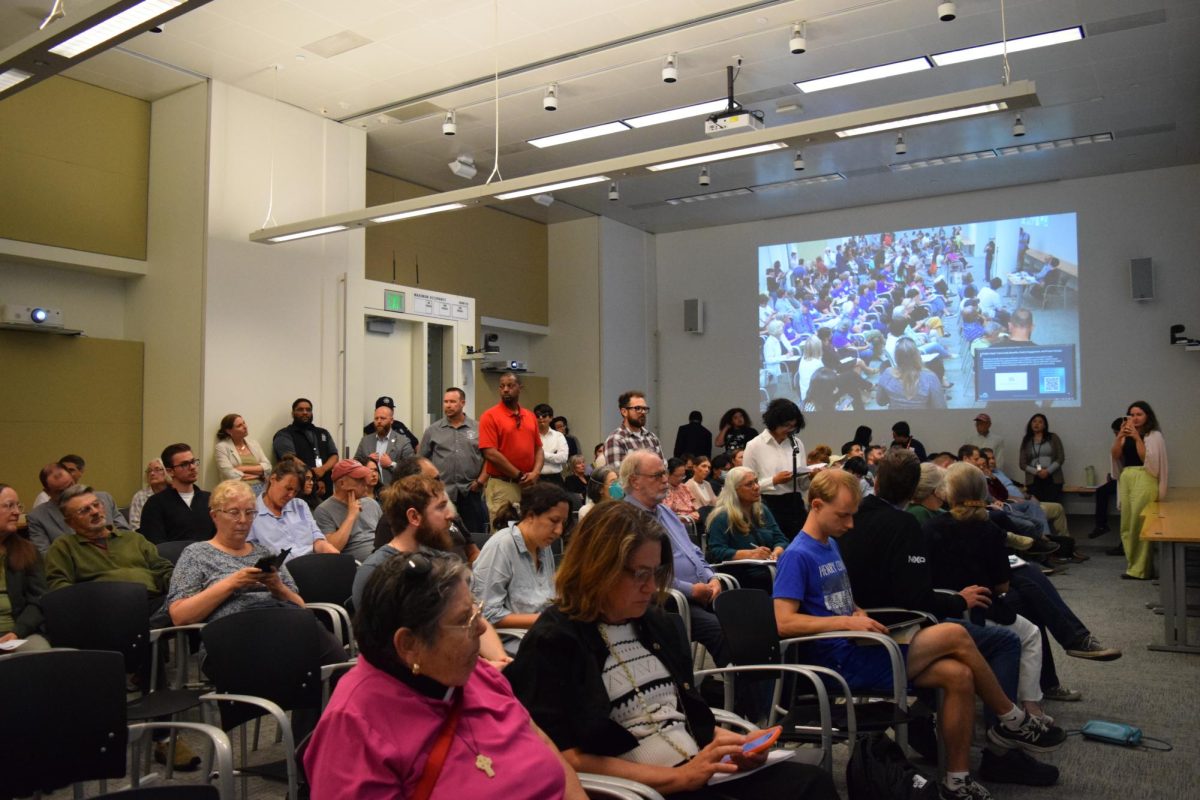
More than 100 community members attended the session to listen and provide input, with several others in an “overflow” room, watching the live zoom recording. Photo | Radhika Dharmapurikar