
By Gwyneth K. Shaw
A new fellowship program at the Berkeley Center for Law & Technology’s (BCLT) Life Sciences Law & Policy Center (LSLP) is giving J.D. students unprecedented opportunities to do academic-grade research — and get it published on the center’s blog.
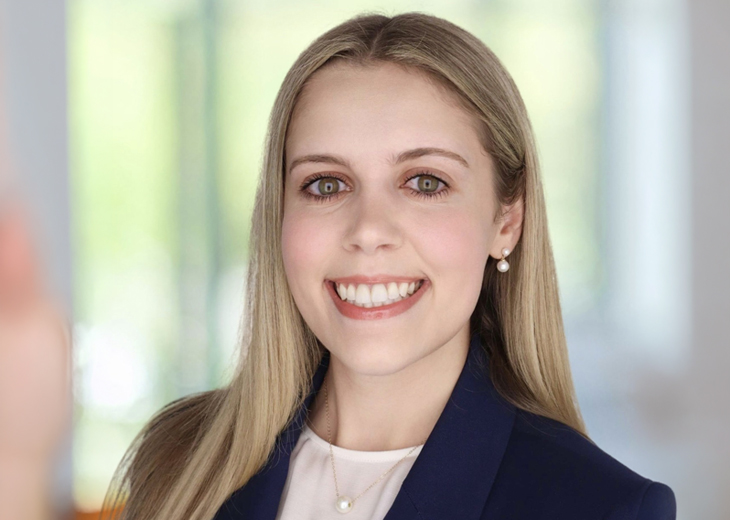 3L Megan Birmingham is in the inaugural cohort of fellows and recently posted her first piece on the Berkeley Law Life Sciences Forum blog.
The inaugural cohort of LSLP Student Fellows comes from a wide range of disciplines, and students are already posting their pieces on the Berkeley Law Life Sciences Forum. Their research covers a spectrum of topics, from the U.S. Food and Drug Administration’s (FDA) approach to digital health devices to the consequences of the Inflation Reduction Act’s Medicare Drug Price Negotiation Program for innovation.
The program is the latest advance for the LSLP, which launched in late 2021 and has blossomed into a crucial hub for practitioners, students, scholars, and life sciences entrepreneurs. Berkeley Law is offering 17 life sciences and health law courses this year, including the new Law, Bioethics, and Emerging Technologies class, taught by LSLP Director Vincent Joralemon ’24.
Life sciences students contribute a steady stream of research to the Berkeley Technology Law Journal and recently started the Health and Life Sciences Law Society. National Jurist recently named Berkeley Law to its list of top law schools for health law.
Covering new ground
Joralemon spent his 3L year at Harvard Law School and was a student fellow at the Petrie-Flom Center for Health Law Policy, Biotechnology, and Bioethics. When he returned to Berkeley Law last year, starting a similar fellowship was a top priority.
“It was easily the best thing I did there,” he says. “My favorite thing about it was that it felt like they were really trying to promote student voices — something I think academics forget to do in the current higher ed landscape that is so obsessed with professor publications. I really felt like I was treated as an expert after I did the fellowship. I wrote about psychedelics for my big project, and by the end, I felt I could go toe-to-toe with even the most preeminent scholars in that field.”
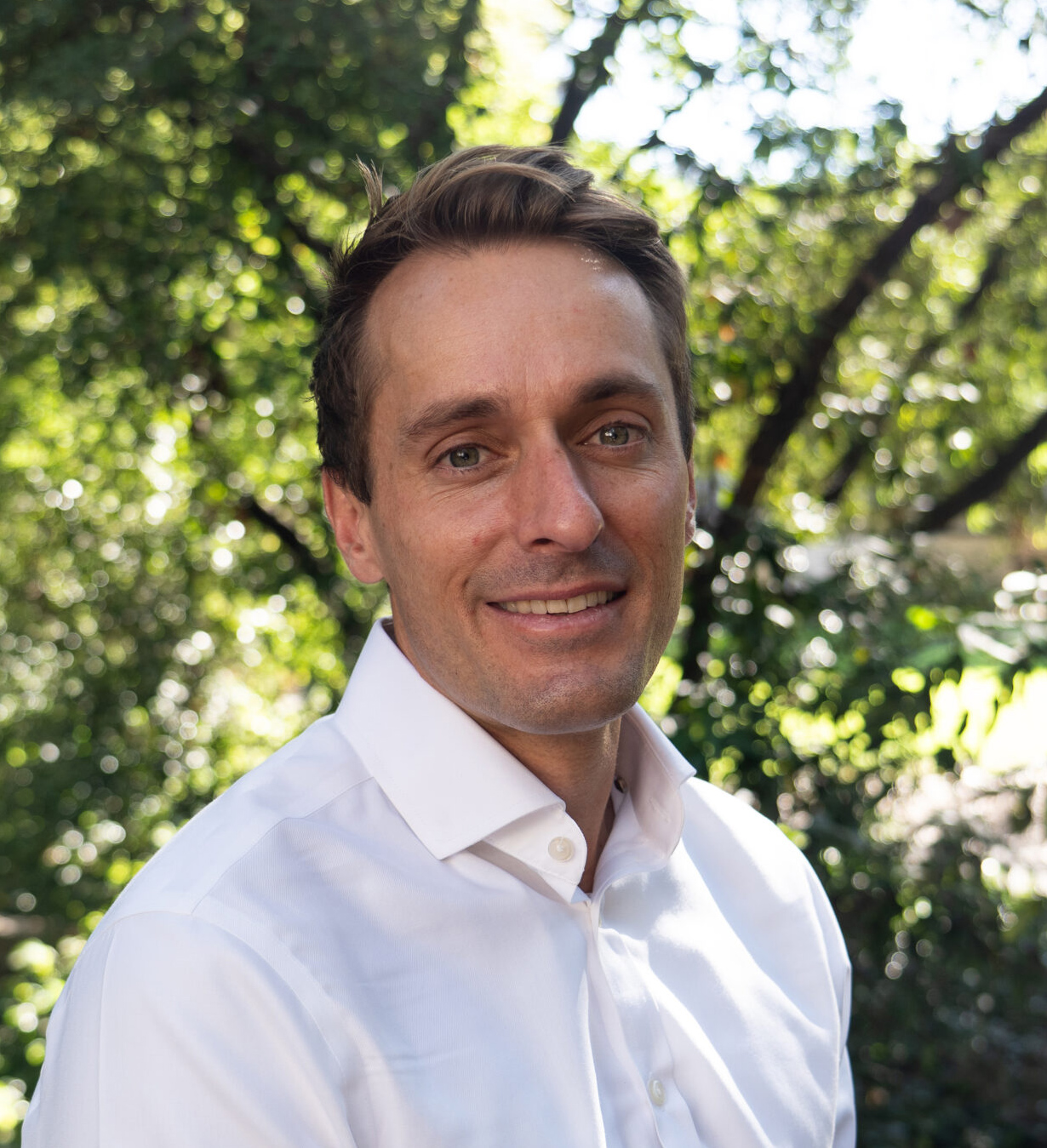 Vincent Joralemon
The program connected him with other fellows, Joralemon adds, and gave him support to write both a full-length law review article over the course of the year as well as a platform for smaller pieces on Harvard’s Bill of Health blog, which has over a million readers each year.
“It was very high stakes, which pushed me to make sure I got things right,” he says. “That was good practice as a lawyer and an academic. So when I started at the Life Sciences Law & Policy Center, I really wanted to build something that emulated that — something that built community, supported student research, and most importantly really promoted their work.”
Student fellows take either Law, Bioethics, and Emerging Technologies or the Law and Technology Writing Workshop, also taught by Joralemon with Professor Tejas N. Narechania. Both culminate in a big writing project: A policy brief for the bioethics course and a law review article in the workshop.
“That gives students this big anchor piece they are working towards all year, and they can use that to draw ideas from for more specific topics that they can publish to the Life Sciences Forum,” Joralemon says.
A unique experience
3L Megan Birmingham recently published her first Forum piece, “Charity Care Isn’t Optional: Why Suing Low-Income Patients for Unpaid Medical Bills Undermines Nonprofit Hospitals’ Tax-Exempt Status.” It examines why the practice of suing resource-strapped patients is hard to reconcile with a nonprofit hospital’s tax-exempt status, a topic she learned about during Professor Brian Galle’s Nonprofit Law course last spring.
“I came into law school knowing that I wanted to pursue a career in health law, and that’s what I’ll be doing after graduation, so this program was a natural fit for me,” she says. “What especially drew me to it was the opportunity to explore areas of health law and policy that go beyond what I encounter in a typical law school class. I’ve really enjoyed being exposed to emerging issues, novel ideas, and connecting with other students with similar interests.
“I saw the program as a way to deepen my understanding of the field while also preparing for the kind of work I hope to do after law school.”
Birmingham is taking Joralemon’s bioethics course and says she’s excited Berkeley Law has expanded its health and life sciences offerings each year she’s been a student. The fellowship program is adding another dimension to her experience, she says.
“I think it’ll be valuable as I continue to pursue a career at the intersection of law, healthcare, public health, and social policy,” she says. “The program has brought me into conversations that I wouldn’t have had otherwise and I’m regularly exposed to novel ideas and emerging issues that wouldn’t come up in a typical class. Writing for the LSLP Forum has also given me practice translating complex questions into something accessible for a broader audience, which I think will serve me well wherever my career takes me.”
Building blocks
The main goal of the fellowship program is to get students to become thought leaders on a subject they’re passionate about. Joralemon credits Berkeley Law’s terrific 1L course professors, and particularly the strong Legal Research, Analysis, and Writing Program faculty, for giving students the skills to dive deep into a topic and then craft their knowledge into a strong piece of research.
“I want to give these fellows a platform to realize that potential — to pick some technology or bioethics issue they are passionate about, to spend a year digging into the research on it, and to emerge with these public-facing products that help to establish them as true thought leaders in the field,” he says.
Funding for the program comes from BCLT, which gets significant support from sponsoring firms, and individual donors. Now that it’s off the ground, Joralemon says, the next goal is to build it into a lasting law school institution.
“I’ll be knocking on a lot of doors to get this funded for 5, 10, 20 years into the future,” he says. “We are always excited to get more donors on board, and the more support we have, the more students we can support for the program.”
Joralemon adds that he’s grateful for support across the law school and particularly from BCLT Executive Director Wayne Stacy and Web & Digital Media Director Susanna Spiro, who got the Forum site and other program pages up and running.
“It’s one thing to have an idea, but it really takes a village of support to get that idea off the ground,” he says.