
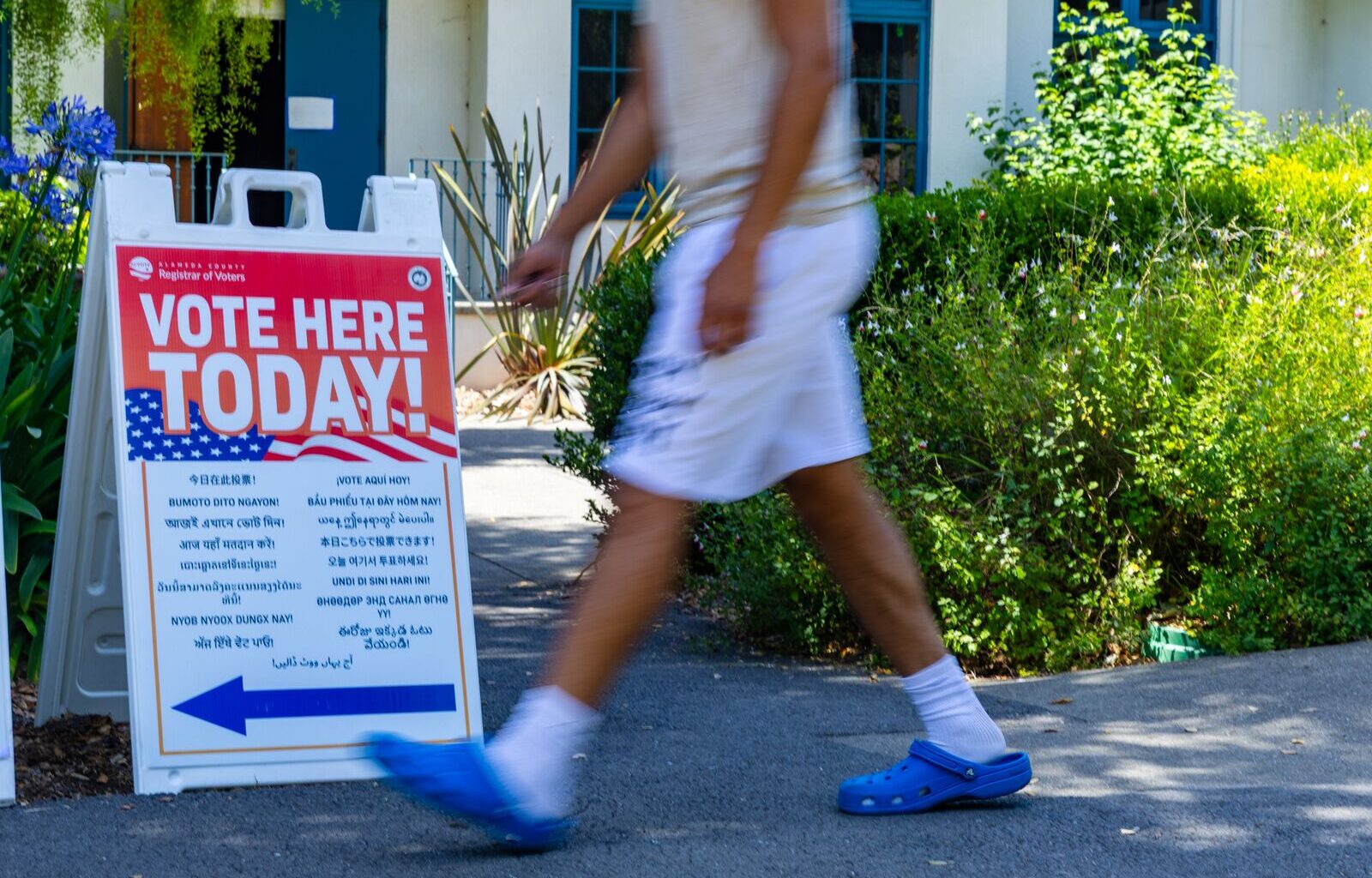
As November nears, many eyes are fixed on the national midterm elections, with voters wondering whether the House and Senate will flip in favor of the Democrats, what big money will buy, and how regular people will fare once the polls are closed.
The local elections are a bit sleepier this time. In Oakland’s April special election, there were 10 candidates for mayor. This time, there are four. One city councilmember is running entirely unopposed.
Even so, there are still plenty of important decisions facing Oakland voters.
Locally, they’ll decide on the mayor, three City Council seats, three school board posts, and two ballot measures. There are also 14 California propositions plus races for regional, state, and federal reps.
Read on for what you need to know about the Nov. 3 election.
Have a question this guide didn’t answer? Let us know by filling out the feedback form at the bottom of this post.
Sept. 24 — Official voter information guide mailed to registered voters
Oct. 5 — First day of voting! Mail-in ballots are sent out and can be returned anytime up until Nov. 3. Ballot drop boxes open. Early voting in person also begins.
Oct. 19 — Last day to register to vote
Oct. 24 — 10-day voting centers open for in-person voting
Oct. 27 — Last day to request a vote-by-mail ballot
Oct. 31 — 4-day voting centers open
Nov. 3 — Last day to vote. Preliminary results will be posted after 8 p.m.
When do I get my ballot?
If you’re registered to vote, you will receive a ballot through the mail on or shortly after Oct. 5. By then, you should have also already gotten the official voter guide from the Alameda County Registrar of Voters. It’ll have a lot of good information in it about how to take part in the election.
How do I make sure my ballot was counted?
If you can, mail in your ballot well before the Nov. 3 deadline.
Late last year, the Trump administration changed the rules around the postmarking of mail, causing some ballots to get stamped later. So, ballots mailed on or close to Election Day may not get the Nov. 3 postmark they need to qualify to be counted. The administration has taken other steps recently to try to restrict mail-in voting. That’s why some California election officials are even urging voters to forgo mailing ballots back to the registrar and instead deliver them via drop boxes or in person (more about these methods below).
There is a way to track your ballot while it’s in transit. By logging into the Where’s My Ballot website, you can get updates on the status of your ballot as it leaves the county registrar’s office and makes its way via the USPS to your mailbox, and after you mail it back or deliver it in person.
How do I register to vote or check my voter registration?
Go to the California Secretary of State’s website and be prepared to enter your driver’s license or state ID number, the last four digits of your Social Security Number, and your date of birth. If you don’t have a license or ID, you can still register, but there are a few additional steps.
To register, you must be:
18 or older
A U.S. citizen and resident of California
Not currently serving a federal prison sentence for a felony
Not currently found mentally incompetent to vote by a court
Voters have rights, including the right to a ballot and materials in a language other than English, the right to vote without anyone bothering you or telling you how to vote, and the right to report illegal or fraudulent activity. California voters’ full rights are described on the Secretary of State’s website.
The deadline to register to vote is always 15 days before an election. But don’t worry if you miss that. You can still vote by conditionally registering, even on the same day as the election. It’s called conditional registration, and it’s not hard. For more information, check out the Secretary of State’s website.
What’s on the ballot?
There’s a lot on the ballot. The following is a list of almost everything you’ll vote on if you’re an Oakland voter. Not all Oakland voters will have the same choices because the lines for City Council and school board districts, congressional districts, state assembly boundaries, and the wards for transit and utility boards cut across different parts of the city.
Oakland ballot measures
Rewriting the Oakland City Charter: If approved, this measure would dramatically shift power in Oakland’s government. It would make the mayor the city’s chief executive, giving them the authority to direct the city’s operations and a line-item budget veto. The council would have a veto override and some new powers of its own. Learn more.
Real estate transfer tax: This measure would ensure that Oakland’s real estate transfer tax, a big source of revenue, would apply to foreclosures, with some exceptions. Learn more.
Oakland city officials
We’re gearing up to publish in-depth coverage of all these races and candidates before you get your ballot in the mail. Check back here for updates, or subscribe to our newsletter to get our reporting in your inbox.
Mayor: Brenda Grisham, Barbara Lee, Mindy Pechenuk, and Julius Robinson
City Council District 2: Nathaniel Adams, Charlene Wang
City Council District 4: Janani Ramachandran
City Council District 6: Kevin Jenkins, Nancy Sidebotham
City auditor: Michael Houston
Oakland Unified District 2: Jennifer Brouhard, Arielle Fleisher
Oakland Unified District 4: Kathryn Camp, Mike Hutchinson, Sylvia Williams
Oakland Unified District 6: Valarie Bachelor, LeAna Powell, Alexandra Williams
Alameda County
Peralta Community College District board seats 1, 3, 5, and 7
AC Transit District board seats 1, 3, 4, 5, and 7
BART board districts 4 and 6
EBMUD board wards 3, 4, and 7
East Bay Regional Park District wards 3 and 5
Regional Transit Measure: If approved, this measure would impose a 0.5% sales tax in Alameda County (and similar taxes in other neighboring counties) to raise nearly $1 billion per year over 14 years to prevent cuts to BART, AC Transit, and other regional bus and rail agencies.
California
14 propositions: From the much-talked-about billionaire tax to bonds for affordable housing and medical research and CEQA changes. For more information, check out the Secretary of State’s official voter guide, CalMatters’ guide, or the Los Angeles Times’ guide.
Governor
Lt. Governor
Secretary of State
Controller
Treasurer
Attorney general
Insurance commissioner
Member, State Board of Equalization, District 2
State Assembly, 14th District: Mark Rendon, Buffy Wicks
State Assembly, 18th District: Mia Bonta, Andre Sandford
Congress
United States Representative, 12th District: Lateefah Simon, Jamie Joyce
What do I do with my ballot?
Once you have your ballot, there are several ways to vote:
Fill it out and mail it back to the registrar so it’ll be counted. If you do this, you may want to drop it off at a post office or mailbox well before Nov. 3 to be extra sure it’s counted.
Fill out the ballot you got in the mail and deliver it to a dropbox. The registrar sets up 24-hour drop boxes across the county starting on Oct. 5 Here’s a map of the dropbox locations.
Vote in person at one of the voting centers in the county. You can bring your mailed ballot, or you can request a ballot at the center. Some voting centers open 10 days before Nov. 3, while others open 4 days before. For a full list, check out the registrar’s website.
Wait, didn’t Trump restrict voting by mail?
No, but over many years, President Donald Trump has repeatedly criticized voting by mail and spread conspiracy theories about it, despite taking advantage of this voting method himself.
Over the past year, the Trump administration has tried to make voting by mail much more difficult by adding layers of new restrictions.
In March, Trump signed an executive order that would ban the postal service from delivering ballots to anyone who isn’t on a list of citizens deemed eligible to vote by the Department of Homeland Security. Voting rights groups and the leaders of Democratic-led states filed suit to block implementation of this order, arguing that it’s unconstitutional for the federal government to intervene in elections and that trying to carry this plan out would throw the election into chaos.
So far, federal courts have blocked Trump’s order. But the administration has appealed this to the Supreme Court.
As of now, you should expect to get your ballot in the mail.
What are some other trustworthy voter resources?
“*” indicates required fields