
This story is part of our September 2026 issue. To read the print version, click here.
Not long ago, the idea that a fizzy, flavored, fermented tea
could earn its place alongside craft beer and coffee might have
seemed plum crazy. But Plum Crazy, a hard kombucha from
Rocklin-based Mindscape Fermentations, clocks in at 3.0 percent
ABV and shows why this once-niche drink is finding a place on
craft beverage menus. Part of a rotating series made with
seasonal ingredients, Plum Crazy is fruity and refreshing yet
complex, without the funky aftertaste found in many store-bought
kombuchas.
Kombucha is made by fermenting sweetened tea with a culture of
bacteria and yeast, producing a tart, fizzy drink commonly
associated with probiotics and gut health. Though the name is
Japanese for “seaweed tea,” it is neither Japanese nor made with
seaweed; an unknown Westerner gave it the name in the 20th
century in reference to the algae-like SCOBY (symbiotic culture
of bacteria and yeast) that forms on top of the brew.
Grand View Research estimates the global kombucha market will
reach $5.5 billion in 2026 and top $9 billion by 2033. The local
kombucha scene has been slower to take root, with three
commercial kombucha makers operating in the 10-county Capital
Region compared with dozens of craft breweries.
Even so, kombucha has found its way onto menus at restaurants,
breweries and coffee shops, offering another option for customers
looking beyond beer, coffee and soda. Recent closures, however,
underline the challenges local kombucha still faces in a crowded
craft beverage scene.
From farmers markets to local menus
Born in Oak Park, KC Kombucha has become widely available
throughout the Sacramento area, with close to 50 wholesale
accounts, from restaurants like The Kitchen and Bacon & Butter to
craft breweries and all five Old Soul Co. locations. KC also
continues to pour where it started: farmers markets.
“Farmers markets are where we see the majority of our refills,”
KC Kombucha owner and master brewer Michelle Grubbs says. “The
last couple of times we’ve brought out kombucha to any of our
markets, we can’t keep enough in stock.” Grubbs works with farms
in Chico, Delhi, Monterey and Marysville to source seasonal
ingredients. “I get it directly from them at the farmers market,
so it’s at the peak of freshness.”
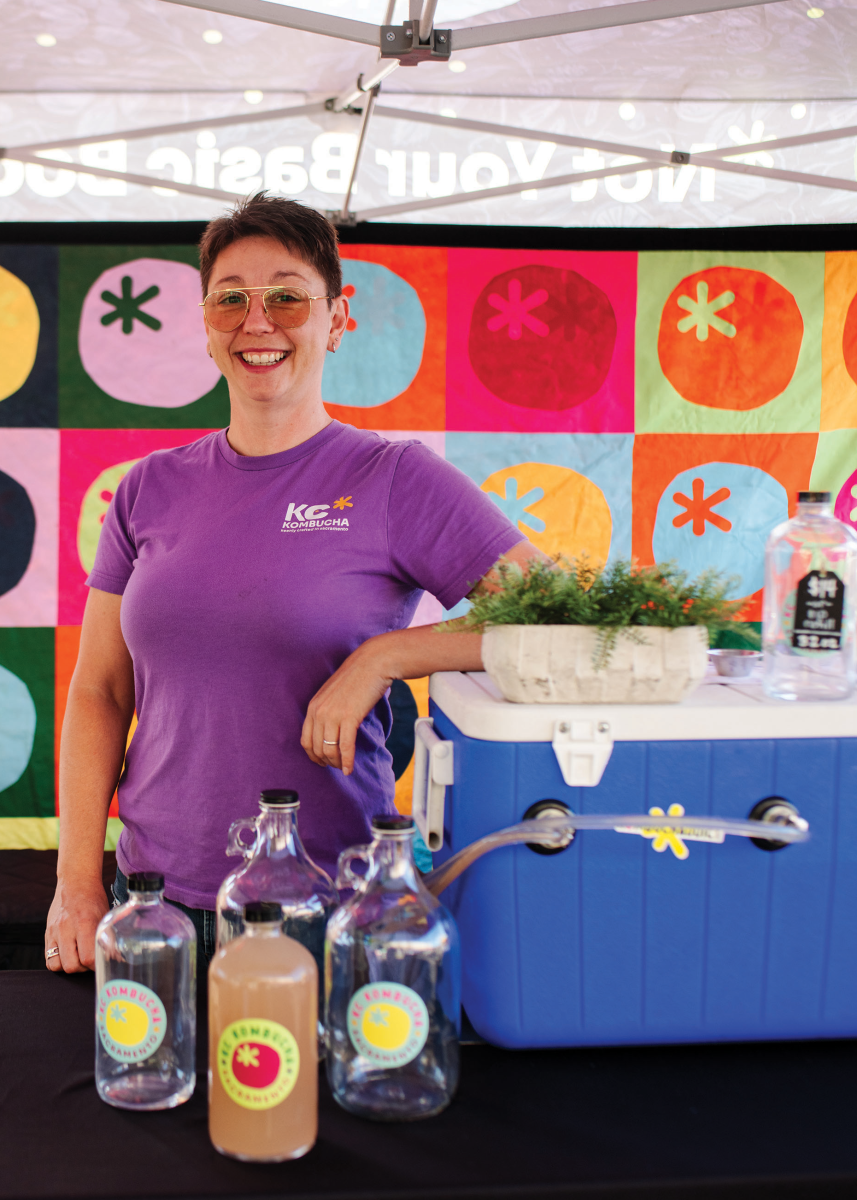
Courtney Edwards is co-founder of KC Kombucha, which is available
at restaurants, breweries and Old Soul coffee shops in the
Sacramento area. (Photo by Rachel Valley)
Grubbs first got involved with KC Kombucha by
donating fruit from her backyard trees to the fledgling company.
She became friends and coworkers with original KC owners Courtney
Edwards and Kevin O’Toole before purchasing the company in 2025.
Although KC force-carbonates to keep its kombucha below the
legally non-alcoholic threshold of 0.5 percent ABV, Grubbs says
taste matters more than potential probiotic benefits. “There
could be 1,000 health benefits, but if you don’t like it, you
shouldn’t drink it,” she says.
While kombucha drinkers are increasingly diverse, Grubbs
identifies three core audiences for her products. “One is the
health-conscious group who is looking to increase the number of
probiotics they’re getting in their diet,” she says. “And then we
have people who are trying to decrease the amount of soda or
alcohol they’re drinking. But I think the number one reason is
the taste.”
Growing demand helped KC Kombucha expand, but it also exposed the
limitations of its tiny Oak Park taproom. After taking over the
recently closed Zeal Kombucha’s brewing space and equipment in
2023, KC increased capacity for wholesale accounts. Maintaining a
taproom separate from its brewing space became impractical, and
Grubbs made the difficult decision to close the Broadway location
in April 2025.
“That space on Broadway didn’t have a way to get pallets in and
out,” she says. “It just made it very difficult to transfer all
the kombucha from one location to another.” A winner of the
Sacramento County Sustainable Business Award in 2025, KC also
decided to eliminate cans and bottles, focusing on a keg-first
approach to bulk distribution. “We just want to be as sustainable
as possible,” Grubbs says.
A wider world of fermentation
If KC shows how kombucha can spread across local menus, Mindscape
shows how far fermentation can stretch. Founded in 2022 by beer
industry veterans, Mindscape is the only business in the area to
produce both craft beer and hard kombucha. It is also the only
fully female-owned and -operated brewery in the Capital Region.
“Beer and kombucha was definitely the first original baby
vision,” co-founder Lauren Houston says. “The idea was that we
want to feel good about what we’re putting in people’s bodies and
keep things exciting for the customer.”
Today, Mindscape’s menu stretches well beyond beer and kombucha,
with hard seltzers, kefir waters, probiotic sodas and a wide
variety of fermented foods.
For Houston, quality, freshness and sustainability matter more
than wellness claims. “The biggest thing that we try to do is
balance flavor and character,” she says. “There’s a lot of
kombuchas out there that are either overly sweet, or they’re
really sour almost like vinegar, and so we try to find the
balance right in between with the way we ferment it and how long
we ferment it.”
That leads to Plum Crazy, whose silky vanilla backbone supports
lovely plum flavors so hyper-local that they came from Houston’s
neighbor’s yard. “We actually know a lot of people locally that
just have too much fruit on their trees, and so we welcome them
to bring it in as long as they don’t use pesticides,” she says.
“They’ll bring in their excess, and we’ll make something
delicious out of it.”
Finding a place on tap
Is Sacramento a good kombucha town? “Well, honestly, I don’t know
that it is,” Grubbs says. Besides Zeal Kombucha, other recent
closures include short-lived hard kombucha brewery Shorebirds
Brewing Company in Rancho Cordova, as well as Nash’s Kombucha in
Auburn. Gold Vibe Kombuchary, which produces both hard and
non-alcoholic kombucha, continues to operate in Grass Valley.
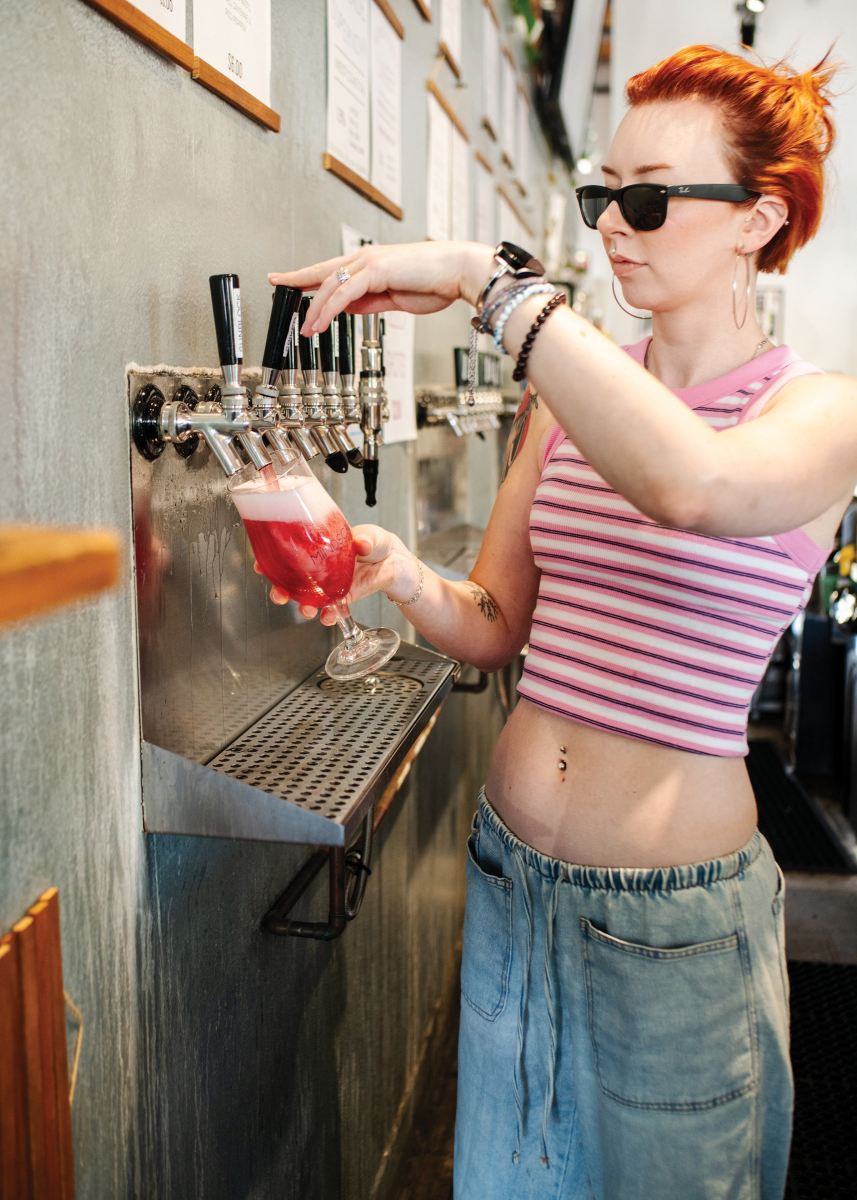
Brewer and bartender Darian Chanelle pours some of Mindscape
Fermentations’ offerings at the Rocklin location. (Photo by
Rachel Valley)
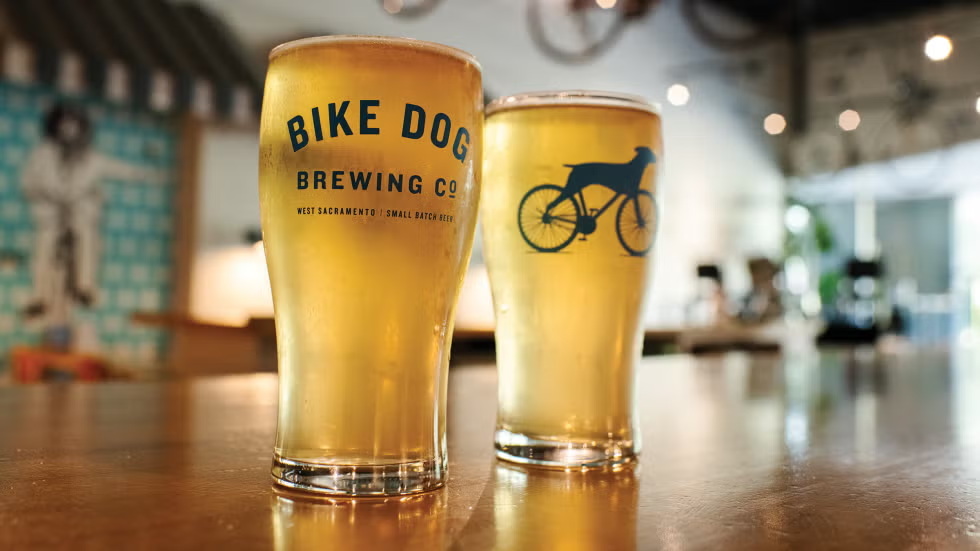
Still, KC Kombucha is on tap all over town,
including at all three Bike Dog Brewing Company taprooms. “We
didn’t want to dabble in kombucha ourselves,” Bike Dog co-owner
Raef Porter says. “But we did want to have more non-alcoholic or
low-alcoholic options.”
Bike Dog has even started blending non-alcoholic KC Kombucha with
its sour beers to create a more flavorful yet lower-alcohol
option. “We’ve got a lot of people who come in and want either a
low- or no-alcohol option,” Porter says. “People say, ‘I like
your sour, but I don’t want an 8 percent beer,’ so we’ll put a
little kombucha in there and bring it down.”
Mindscape’s hard kombucha also turns up alongside craft beer at
nearby establishments like the Moksa Barrel House in Roseville.
Moksa Brewing Company owner and CEO Scott Williams estimates that
the Barrel House goes through a keg of Mindscape kombucha a week.
“We like to bring in things for that alternative stuff that we
just don’t make,” he says. “I don’t necessarily know if it’s
healthier for you, but a lot of people think that it is, even
though it’s got alcohol in it.”
That same shift is reaching beyond breweries and into coffee
shops, where Old Soul Co. sees an opportunity for
evening-friendly non-alcoholic drinks. “We are seeing the trend
of where alcohol is heading,” Daniel Bear, director of operations
at Old Soul Co., says. “I feel a lot of Americans are opening
their eyes to the fact that we don’t need to have an alcoholic
beverage every night.”
Old Soul is testing out kombucha mocktails in its coffee shops,
blending fruity KC Kombucha with a vinegar shrub to create a
flavorful, full-bodied drink built for slower sipping. “It’s this
great, full, intense drink without alcohol,” Bear says. “You
start to really evaluate it like you would with a nice wine or a
great cocktail.”
Back at Mindscape Fermentations in Rocklin, Houston has noticed
that fruity kombuchas have become an easier sell. “The
demographic is much wider than we initially thought it would be,”
she says. “We’ll get the stereotypical macho man in here that
will only drink beer. And the next thing we look, every guy in
the bar has a pink drink in front of him.”
–
Stay up to date on business in the Capital Region:
Subscribe to the Comstock’s newsletter
today.