
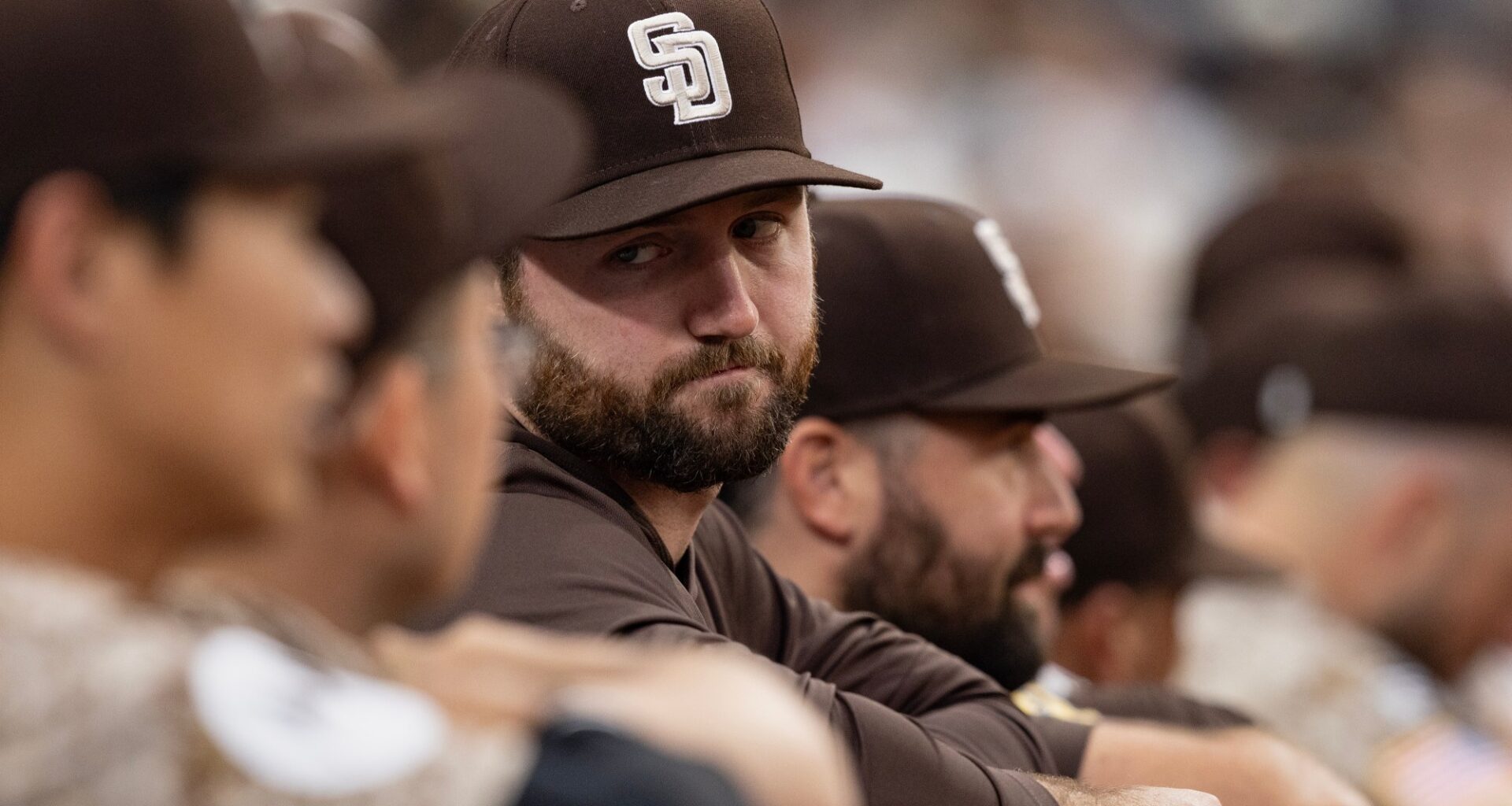
The Padres acquired Casey Mize from the Detroit Tigers at the trade deadline with hopes that the right-handed starting pitcher would help their playoff push.
The Tigers selected Mize with the No. 1 overall pick in the 2018 MLB Draft. He made his major league debut in 2020 and emerged as a full-time starter in 2021, making 30 starts before injuries derailed the next two seasons. Mize underwent Tommy John surgery and back surgery before returning to the mound in 2024. His comeback season was interrupted by a hamstring injury, and he struggled with inconsistency.
Mize rebounded in 2025, earning his first All-Star selection. He produced a 2.70 ERA in 16 starts for Detroit this season. His transition to San Diego has been bumpier, however, as he has a 6.34 ERA through seven starts with the Padres. He rolled his ankle during his fourth start but did not miss a turn in the rotation.
An Alabama native, Mize and his wife welcomed their first child, a daughter, last October.
This interview has been lightly edited for length and clarity.
How did you get your start in baseball and when did you know you could really pitch?
A: I started playing baseball when I was 4 or 5 years old. My brother played; he’s 4 1/2 years older than me, so I just wanted to do whatever he did. I loved baseball because he did. I played shortstop and I pitched growing up. I think junior year in high school, my travel baseball coach said, “Hey man, pitching is your future. Shortstop is not.” That made me sad at first because I was a huge Derek Jeter fan. I wanted to be Derek Jeter. But I said “OK” and started focusing on pitching. I think he made the right call.
I read that when you were about 11 or 12, your mom wanted to get you an Xbox or a PlayStation and you said, “Nope, it’s going to take up too much of my time.” Is that true?
A: Yeah. I knew that I would love it and a lot of my time would go towards that, and I wanted my time to go towards baseball. So I was like, “Please don’t do that. I know I’ll get addicted to this just like all my other friends are.” … I enjoy playing video games. Just during that time, I said, “I think it’s more important for me to practice baseball.”
It speaks to how disciplined you were even as a young kid.
A: Yeah, probably too much. I probably should have played some video games and been OK with that. But I loved baseball and I wanted to play baseball all the time.
You went undrafted out of high school, but you were the No. 1 pick coming out of college. What changed at Auburn?
A: Oh, a lot. I got a lot stronger. I put on about 45 pounds, like 15 pounds a year. I walked into college super skinny. I had a lot of area to grow in the weight room. Started throwing harder. Had some great coaches there. Butch Thompson was my head coach. He’s a huge pitching guy. He had a huge impact on my career. Played with some great teammates, great players there, and I got better every single year and just took off. … After my freshman year, I didn’t really know if I was going to be a starter or be a reliever. Sophomore year is really when I took off and I realized, “OK, I really see my dream being (possible) of being a major league player, and being a quality one at that.”
You played with Gavin Sheets in the Cape Cod League. What was young Gavin like?
A: The same. He looks the same, swings the same, all of it’s the same. He was great. He was the only guy I knew when I got (to the Padres). Like the only person I’d met prior to coming here. It was good to see him.
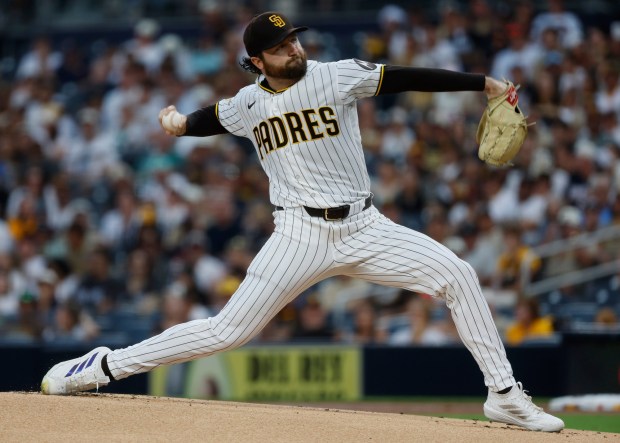 Casey Mize of the San Diego Padres pitches against the Washington Nationals at Petco Park on September 8, 2026 in San Diego, CA. (K.C. Alfred / The San Diego Union-Tribune)
Do you still eat a banana on your way in from your bullpen before every start?
A: I eat them during the start now.
How long has that been your thing?
A: In college, I think I started doing that. Now I eat a couple of bananas during the game. It helps for anti-cramping and all that stuff. And it’s a comfort thing for me. It’s just something I’ve done. I eat honey (packets) now as well.
At Auburn, you would clean the clubhouse, distribute luggage on road trips and choose younger players as your throwing partners. Who instilled that in you?
A: Well, my parents at first. They were big on discipline and doing your part around the house and on the field or in the dugout or clubhouse. And when I got in college, my head coach reinforced that. “Sweep the sheds” was something he was big on, and lead from the front.
Your dad is a police sergeant, correct?
A: He retired, and now he’s the police chief in my town I grew up in.
Did that shape you in any way growing up?
A: Definitely. My grandfather was a police officer. My dad, and now my brother is as well. It’s just in our family. It’s a family of service and discipline. I think it definitely shaped me. We were looked after and very disciplined, and Dad ran a tight ship. I’m thankful for it. It was great.
Did you know Detroit was going to take you with the No. 1 overall pick?
A: So I did all my scouting meetings with all 30 teams in the fall. I told my agent and my head coach, “Hey, I don’t want to do anything in the spring. When the spring comes, I want to just focus on our team.” Then in about May, I get a call. “Hey, we need to have a couple more meetings.” And I said, “No, we’re done.” They’re like, “It’s the Tigers and the Giants. They pick one and two.” And I was like, “Oh, OK. I should probably take those meetings.” At that point, I had a pretty good idea that I was going to go really high in the draft. Then we ended up knowing the night before the draft that the Tigers were going to take me.
What were your emotions when it happened?
A: It was really relief and finally, like, an acceptance. I knew the night before, but it’s like, I don’t know. We’ll see when my name gets called. I’ve heard too many horror stories of things changing. So it was just relief and final acceptance of, “Hey, this is happening and this is here.” It’s pretty unbelievable. I wanted to be a big leaguer and I wanted to be a pro player, and I thought that was all possible. Never did I think I was going to be the first overall pick. That never was a goal of mine or ever came up. It was a pretty cool moment that I got to share with my family and friends, and my whole team and staff was there as well.
You spent six seasons with the Tigers. What does that organization mean to you?
A: It means a lot. I came into the organization (when) obviously, we weren’t winning much. That’s how they got a couple No. 1 overall picks. So I’ve seen multiple phases of that organization and was proud to be a small part of getting them back to the postseason for a couple years and back to winning baseball. To see that whole process and be there was special for me. I wish we would have won every year, but that wasn’t the case. But at least I have experience of what it’s like to play non-meaningful baseball at times, and meaningful baseball. Now I only want to play meaningful baseball because it’s way more fun. But it’s a special place. I have a lot of good things to say and so many people I care about there, and I know (they) care about me. I certainly enjoyed my time there.
You lost two seasons to Tommy John surgery and back surgery. What was that period like?
A: It was really difficult. … When you can’t play the game you love for two years and be a part of a team, it was frustrating and it was difficult. It was probably the toughest time in my career by far. But I knew when I came back, I wanted to be the best player I could be. Then ‘24 didn’t go as planned. I missed a couple months with a hamstring injury and I just didn’t play my best, but I did some good things I knew I could build on. I went into ‘25 really motivated to come out on the other end of that three-year period, which was difficult on me, and start to provide some value and do my part and play at the level that I knew I was capable.
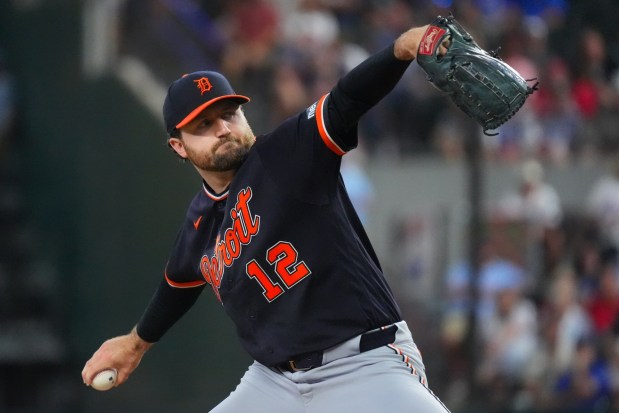 Detroit Tigers starting pitcher Casey Mize throws during the first inning of a baseball game against the Texas Rangers, Sunday, July 5, 2026, in Arlington, Texas. (AP Photo/LM Otero)
Did those years change your perspective in any way?
A: One hundred percent, yes. I look back on it and in a way, I’m thankful for it. I kind of feel more relatable to some of the guys, whereas I honestly had never been through a ton of adversity in my career throughout high school, college, minor leagues, whatever, up until that point. I just viewed it as, “Hey, this is what I do, and I just keep moving forward.” And when all that gets stopped for a bit, you (understand) that this is not going to be here for me every day. I can’t be a part of a team. This is a real struggle for me. It became more relatable for me to a lot of my teammates who had been through difficult times and been through injuries and been through some failure throughout their careers. I was happy that I learned that at such a young age versus later in my career. It gave me perspective over the last three years that I think has been really beneficial for me as a player and as a teammate.
You made the All-Star Game last year and put together a good season with Detroit this year. How validating is that?
A: Certainly validating. This is what I expected — this level of performance — the second I got in the big leagues, and it didn’t go that way. But to have it now, after years of struggle and injury, it’s good to have it. I don’t take it for granted. I think I’m more thankful for it now than I maybe would have been in another scenario. It feels good to be able to provide value and put together some quality years in a row. Making the All-Star team was super special for me and my family, and it was in Atlanta, so everybody just popped over from Alabama. It was great. Just to be able to play at the level that I thought I could play at was pretty cool.
It can be easy to overlook how difficult it is to join a new team and immediately be thrust into a playoff race three-quarters of the way through the season. Why do you think your outings haven’t been quite as strong as they were before the trade deadline?
A: There’s been a multitude of reasons. It was kind of a shock to the system coming here. Not saying that was bad. I was shocked (with) very positive energy and super excited to get here and play in this stadium in front of these fans. I played here before and I loved it. I love everything about here except for my performance so far, honestly. That’s been the negative. I know that’s why I was brought here, is to perform. So that’s been frustrating for sure. I’ve had a couple good games, but outside of that, I’ve had four that I wasn’t pleased with. Coming from Detroit, it was the only place I’ve ever known. You come here and it’s brand new. It’s my first new organization. It was different to try to learn these guys and see how they go about things. But everybody’s been awesome. Everybody’s been super accepting and helping me along, which has been great. The guys have been awesome and the staff has been great, trying to make that transition easier. And then I roll my ankle in the dugout, and that was frustrating. So it’s kind of been this choppy experience so far performance-wise, which I’m frustrated about because I know I’m capable of much more, and I know that I was brought here to perform at a much higher level. I look forward to finishing strong and obviously making the second month better than the first.
You and Tarik Skubal were roommates, debuted a day apart, and were both traded at the deadline. What’s your relationship like and do you guys keep in touch?
A: We’re really close. We were drafted in ’18 together. We’ve played together in the minor leagues and in the big leagues. We’ve had a ton of success together, a ton of failure. We’ve gone through injuries together. I’ve watched him blossom into the best pitcher in baseball, which has been amazing. He led our team in Detroit to the playoffs back-to-back years, and now he’s with the Dodgers and he’s doing his thing there. So, super proud of him. … We’re still really close. We talk a lot. Our families are close. Definitely care about him a lot.
There’s been some controversy over the espresso machine he bought and took with him when he was traded. You were part of that in Detroit. How would you rate your barista skills?
A: I’m gonna have my boy Skubes’ back here for a second, because in spring training I bought a little $200 machine because we didn’t like some of our coffee options in spring. We needed some espresso. And he said, “I’m gonna get us a really nice one in Detroit.” It took a while for it to ship and get in. He had just gotten it dialed in, I think maybe a month before the trade deadline. And this machine is like $10,000. It’s a very expensive machine. He had just got it the way he wanted. So he was like, “Yeah, sorry, I’m gonna take it with me.” Which I totally understand. It’s kind of blown up a little bit. I understand he’s good for it. He probably could have bought another one. But he likes his coffee a certain way, and he finally got it the way he wanted, so he wanted to keep it. His barista skills are better than mine, I would say. But I definitely could run the machine. I finally figured it out. So thanks, Skube, for getting that machine for us. And I understand you taking it with you. It’s OK by me.
What’s your coffee order?
A: I get a hot Americano in the morning with a little bit of honey on the side that I add. I like a cortado in the afternoon.