
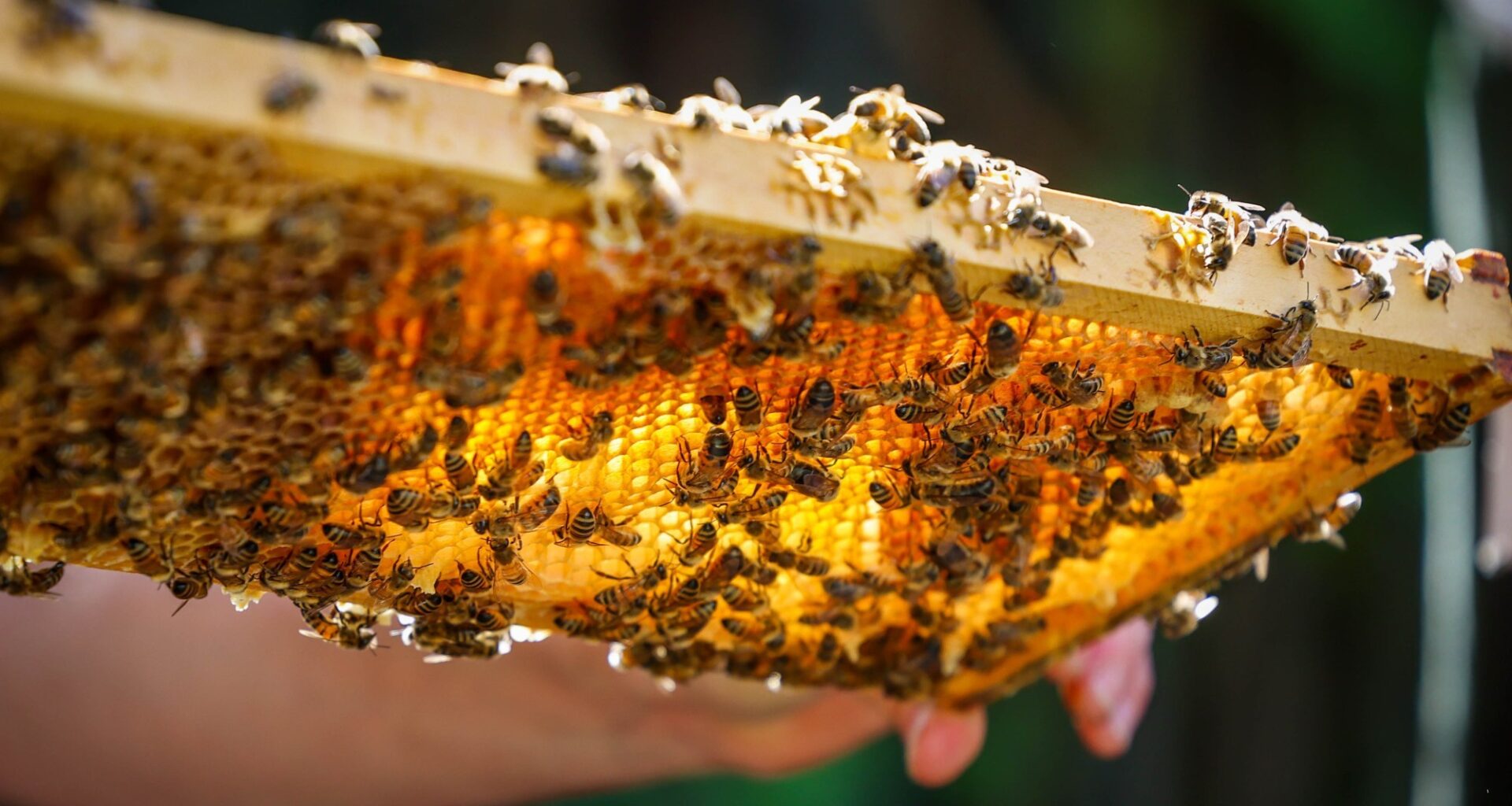
Paula Breen had just moved into her home in San Leandro in 2017 when a swarm of bees landed in her front yard.
The 55-year-old healthcare worker has been fascinated by bees and other insects since she was a kid, so rather than calling someone to remove the swarm she decided to “just go for it” and set up her first backyard hive.
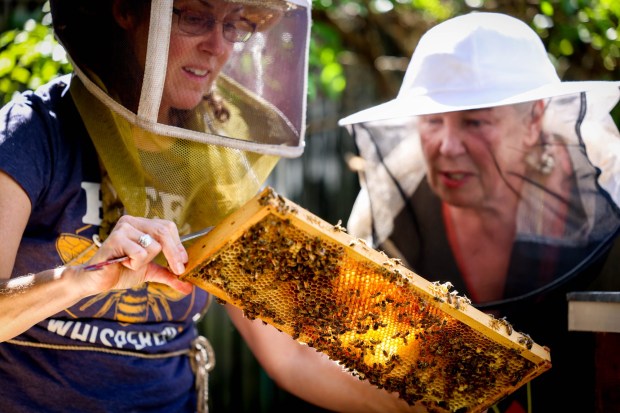 Sweet Serendipity Honey beekeeper Paula Breen, left, and Liz Griffiths looks at a colony of bees from their beehives at Breen’s garden in San Leandro in 2024. (Ray Chavez/Bay Area News Group)
“I was just over the moon, and very passionate about it very quickly,” she said. “When a swarm lands in your yard and you become a beekeeper that way — I know this sounds a little bit ‘woo-woo,’ but it feels like they came to me.”
Breen wasn’t initially planning to sell the honey her bees produced, but as she ended up with more and more bees, she found herself giving away so much honey that she eventually decided she should just start her own small business. That grew into Sweet Serendipity Honey, where Breen sells bee products produced from the 30 hives she oversees in Alameda and Contra Costa counties – from honeycomb and creamed honey to beeswax candles and homemade salves.
She is one of many local Bay Area beekeepers who care for their own hives – in their backyards, on the roofs of local hotels, at farms growing a variety of crops – then bottle and sell honey and other bee products.
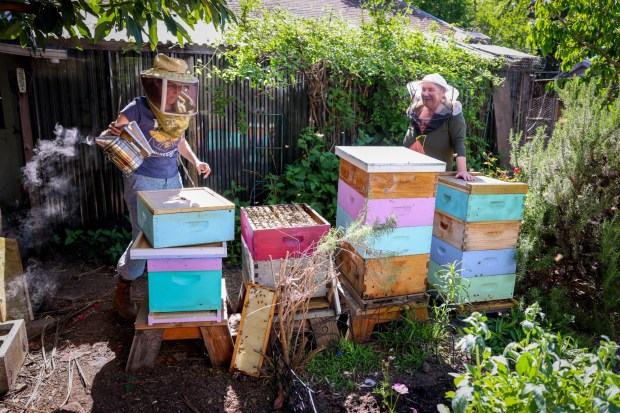 Sweet Serendipity Honey beekeeper Paula Breen, left, uses a bee smoker to calm honey bees in their beehives as assistant Liz Griffiths stands by at Breen’s garden in San Leandro in 2024. (Ray Chavez/Bay Area News Group)
Beekeepers can oversee a number of hives and often catch swarms in the wild. These bees then pollinate surrounding flora and produce honey, which can be harvested and bottled into local varietals, with flavors depending on the flowers and crops the bees find to pollinate.
In the Bay Area, bees often feed on plants such as eucalyptus, star thistle, berries, spring flowers and more.
Beekeepers tout the benefits of purchasing locally produced honey – not the least of which is that it tastes better than what can be bought at the grocery store.
Breen, who offers small-batch honey produced by her bees, places an emphasis on collecting small harvests of honey frequently instead of waiting until the end of the season, and said each harvest tastes completely different.
“A lot of beekeepers just wait until the end of the season, pull everything off at once, harvest, bottle,” Breen said. “To me, that’s like taking all kinds of nice specialty wines and mixing them all in a vat and throwing them in bottles.”
Honey can also help build up the immune system against allergies as well as colds and illness, said Kelly Knapp, owner of Brentwood-based Miss Bee Haven Honey.
“There’s just a lot of minerals and there’s vitamin Bs and antioxidants in honey that are really good for you,” Knapp said.
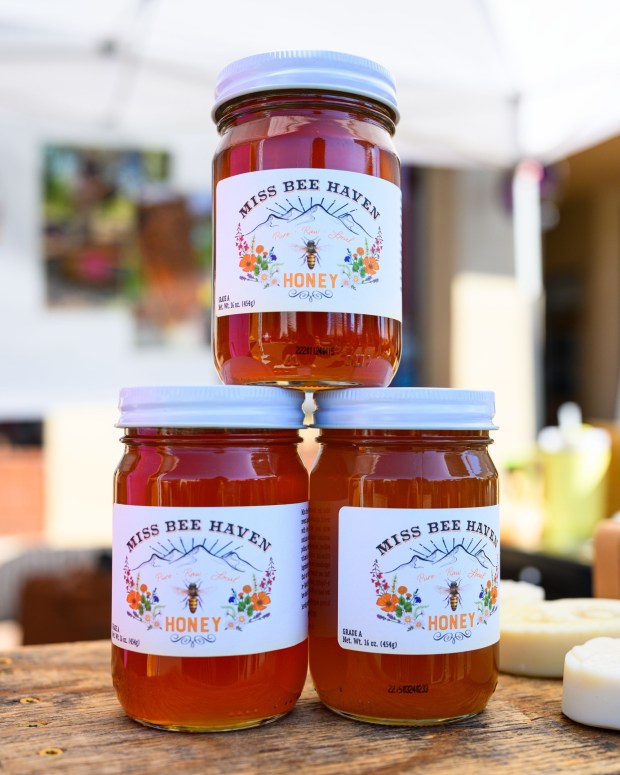 Honey bottles sold by Miss Bee Haven Honey are photographed at a booth at the Martinez Farmers Market in Martinez, Calif., on Sunday, June 14, 2026. (Jose Carlos Fajardo/Bay Area News Group)
Miss Bee Haven Honey sells its bee products at farmers markets across the East Bay – from honey and beeswax candles to chapstick and herbal balms to treat rashes and wounds. The business also offers seasonal products such as infused honey and soap varieties.
Over the course of the first summer that she started beekeeping, Knapp acquired 18 hives, she said. Within three years, she had started selling her honey at a local farmers market in Brentwood while also being a mom and working part-time for a school district. Her business has now grown to have 450 hives.
“I loved it, I loved the bees and so I slowly just started doing honey and honeycomb and then I slowly built up my products into what it is today,” Knapp said.
Knapp took the plunge and quit her job about eight years ago to beekeep and sell honey full-time, she said. Many of her honeys are fruit-based as her bees pollinate the fields of local crops such as cherries, apricots and peaches.

Kelly Knapp, the founder, and head beekeeper at Miss Bee Haven Honey with honey bee hives in an apricot orchard on Monday, June 15, 2026, in Byron, Calif. (Aric Crabb/Bay Area News Group)

Honey bee hive in an apricot orchard on Monday, June 15, 2026, in Byron, Calif. (Aric Crabb/Bay Area News Group)

Kelly Knapp, the founder, and head beekeeper at Miss Bee Haven Honey with honey bee hives in an apricot orchard on Monday, June 15, 2026, in Byron, Calif. (Aric Crabb/Bay Area News Group)

A jar of Miss Bee Haven Honey on Monday, June 15, 2026, in Byron, Calif. (Aric Crabb/Bay Area News Group)
Show Caption
1 of 4
Kelly Knapp, the founder, and head beekeeper at Miss Bee Haven Honey with honey bee hives in an apricot orchard on Monday, June 15, 2026, in Byron, Calif. (Aric Crabb/Bay Area News Group)
Because of California’s climate, beekeepers are able to harvest honey from local bees from April all the way through October, depending on the weather, said Knapp.
“Here in California, we’re pretty lucky,” she said. “I’ve been doing it so long that I know where the honey is really good and the bees stay healthy. (The flavors) all just depend on the flowers that are in bloom and what time of year it is.”

Employee Mohammed Alkharbi speaks to customers purchasing honeybee supplies at Bee Healthy Honey Shop in Oakland, Calif., on Monday, June 8, 2026. (Jose Carlos Fajardo/Bay Area News Group)

An assortment of candles made from beeswax is on display at Bee Healthy Honey Shop in Oakland, Calif., on Monday, June 8, 2026. (Jose Carlos Fajardo/Bay Area News Group)

Bottles of honey are on display at Bee Healthy Honey Shop in Oakland, Calif., on Monday, June 8, 2026. (Jose Carlos Fajardo/Bay Area News Group)
Show Caption
1 of 3
Employee Mohammed Alkharbi speaks to customers purchasing honeybee supplies at Bee Healthy Honey Shop in Oakland, Calif., on Monday, June 8, 2026. (Jose Carlos Fajardo/Bay Area News Group)
Khaled Almaghafi is a third-generation beekeeper who brought his skills to the United States after learning from his father in Yemen. Almaghafi came to the United States in 1986 and started working with bees professionally just one year later. Now he owns Bee Healthy Honey Shop in Oakland, where he sells a number of varieties including Yemeni Sidr honey, which is produced from bees who pollinate the Sidr tree in desert regions of Yemen. Almaghafi, who also removes bee swarms from houses and takes them around the region to pollinate, takes his honey offerings to Bay Area farmers markets as well, he said.
“It started from childhood,” he said. “Slowly, I got into beekeeping until it became a good habit. I cannot live without them.”
After his restaurant shut down during the COVID-19 pandemic, Bryan Godfrey, owner of San Jose’s Mango Blossom Apiary, decided to turn what had been a hobby into his job.

Mango Blossom Apiary owner and beekeeper Bryan Godfrey of San Jose demonstrates transferring honey bees to a larger beehive in his backyard on Tuesday, June 9, 2026. (Dai Sugano/Bay Area News Group)

Beekeeper Bryan Godfrey of San Jose shows honey on a hive frame during a demonstration on June 9, 2026, in San Jose, Calif. (Dai Sugano/Bay Area News Group)

Bottles of honey showing various natural colors, produced by Mango Blossom Apiary owner and beekeeper Bryan Godfrey of San Jose, are shown on Tuesday, June 9, 2026. (Dai Sugano/Bay Area News Group)
Show Caption
1 of 3
Mango Blossom Apiary owner and beekeeper Bryan Godfrey of San Jose demonstrates transferring honey bees to a larger beehive in his backyard on Tuesday, June 9, 2026. (Dai Sugano/Bay Area News Group)
He got started by placing hives in the backyards of his neighbors. After his first season of overseeing the bees, he began making honey, and shortly later, he started to sell it out of a stand he set up in a nearby park, he said. His company now employs 18 people Mango Blossom Apiary honey is available at farmers markets, festivals and other events across the Bay Area, selling at more than a dozen farmers markets per week.
As an urban beekeeper, Godfrey keeps bees in backyards across San Jose and surrounding cities – even on the roof of the Four Seasons Hotel in East Palo Alto. Some bees pollinate the fields of a farm in Gilroy as well, he said.
Godfrey calls the hobby “the craziest thing in the whole world.” “I equate beekeeping to scuba diving. It’s doing something that is so incredibly unnatural. … Being in a bunch of bees, where your whole life you’ve been swatting them, scared of them, you’d run your car off the road if a bee got in your car. And to be in that environment where you know you’re not going to get stung and you just kind of listen and you’re looking.”
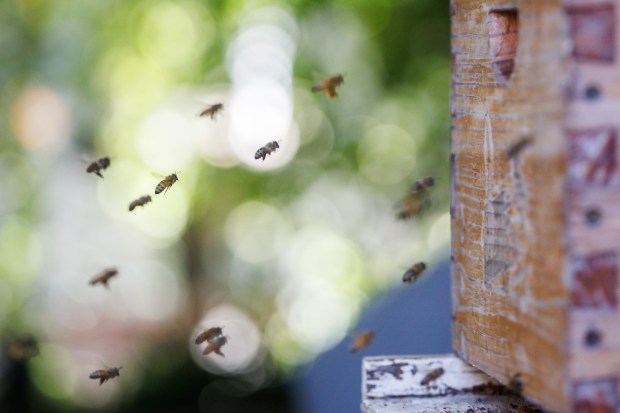 Honey bees fly around a beehive in the backyard of beekeeper Bryan Godfrey of San Jose during a demonstration on June 9, 2026, in San Jose, Calif. (Dai Sugano/Bay Area News Group)
He notes that bees have a positive impact on the environments they are in, pollinating native flora and allowing nearby yards and plants to flourish. They typically prefer to stay within a mile of their hive, although they will travel as far as five miles away.
“They’re just out foraging,” Godfrey said. “Everything just goes bonkers when you have more pollinators because so many things need to be pollinated.”
Campbell residents Niki Canotas and Mike Ryan also started beekeeping as a hobby before founding Mike & Niki’s Honey Company.
“His mother trudged over 40-year-old bee equipment,” Canotas said. “We got one hive and then three hives and then two farms and then three farms, and then we just decided it was starting to build. We thought we’d do more because everyone wanted our honey.”
Mike & Niki’s Honey sells a wide range of offerings, from local honeys and bee propolis to flavored options like hot honey. Sizes range from two-ounce honey bears to 50 pound buckets. The local company produces more than 92 varieties of honey from the flora of different neighborhoods.
It also offers 90 minute “bee experiences” where people, including children six and older, can suit up as beekeepers to tour the hives and see the queen bee. These experiences cost $50 per person for a small group, $45 per person for a large group or $150 for a private session for one to two people.
Whether sold online, from a beekeeper’s front door or at local shops and farmers markets, options abound to experience the benefits of local honey in the Bay Area.
“I tell people all the time, ‘I don’t care if you buy honey from me or not, but always buy it from a local beekeeper,’” said Godfrey.
On every label of his Mango Blossom Apiary products, he asks the question: “How do you know it’s pure honey if you don’t know the beekeeper?”
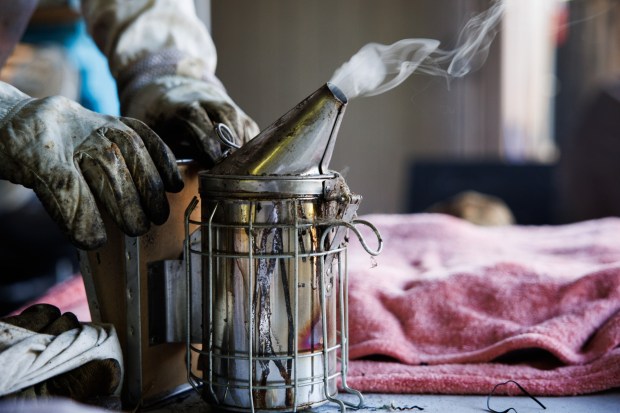 Beekeeper Bryan Godfrey of San Jose prepares a smoker as he demonstrates transferring honey bees to a larger beehive in his backyard on Tuesday, June 9, 2026. (Dai Sugano/Bay Area News Group)
Sweet Serendipity Honey
San Leandro, see sweetserendipityhoney.com for ordering information.
Bee Healthy Honey Shop
2950 Telegraph Ave., Oakland; beehealthyhoneyshop.com.
Miss Bee Haven Honey, Brentwood
Brentwood, see missbeehoney.com for products and farmers market schedule.
Mike & Niki’s Honey, Campbell
3495 S Bascom Ave., Campbell. Also available at the Gate 26 gift shop in San Jose Mineta International Airport; mikeandnikishoney.com.
Mango Blossom Apiary, San Jose
5330 Mango Blossom Ct, San Jose; mangoblossomapiary.com.